
Thomas T. C. Hsu – författare
1 850 kr
Skickas inom 5-8 vardagar
2 135 kr
Läs direkt efter köp
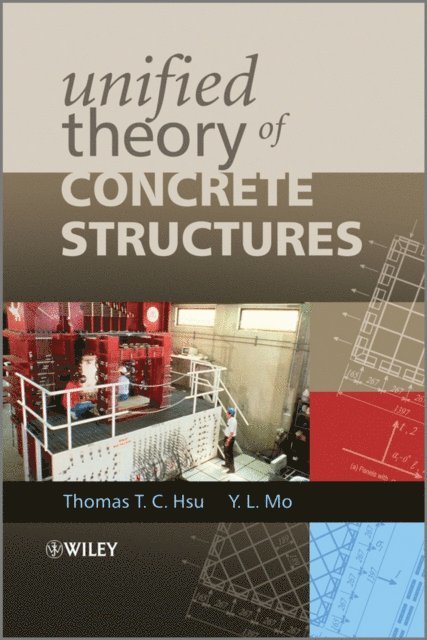
The unified theory is divided into six model components: a) the struts-and-ties model, b) the equilibrium (plasticity) truss model, c) the Bernoulli compatibility truss model, d) the Mohr compatibility truss model, e) the softened truss model, and f) the softened membrane model. Hsu presents the six models as rational tools for the solution of the four basic types of stress, focusing on the significance of their intrinsic consistencies and their inter-relationships. Because of its inherent rationality, this unified theory of reinforced concrete can serve as the basis for the formulation of a universal and international design code.
Includes an appendix and accompanying website hosting the authors’ finite element program SCS along with instructions and examples Offers comprehensive coverage of content ranging from fundamentals of flexure, shear and torsion all the way to non-linear finite element analysis and design of wall-type structures under earthquake loading. Authored by world-leading experts on torsion and shear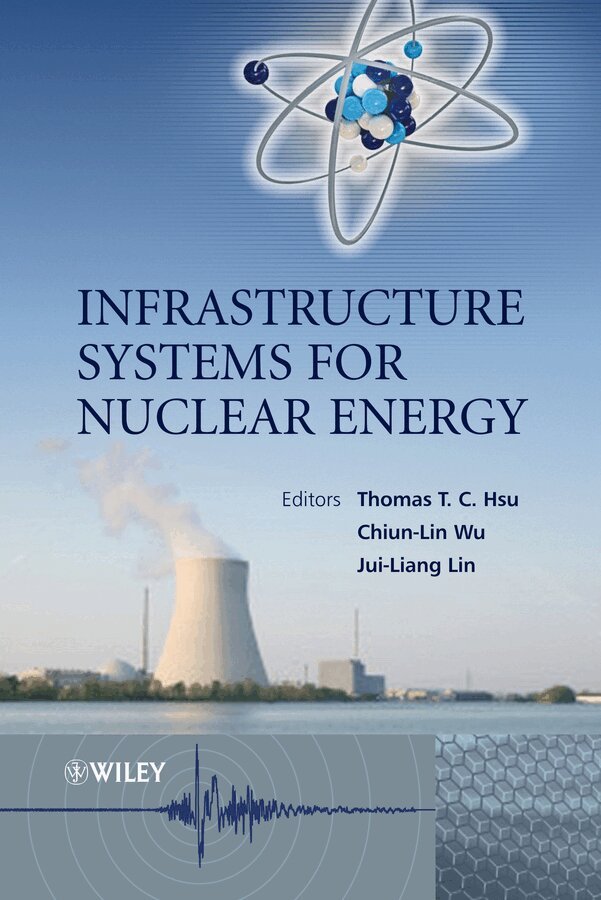
1 847 kr
Läs direkt efter köp
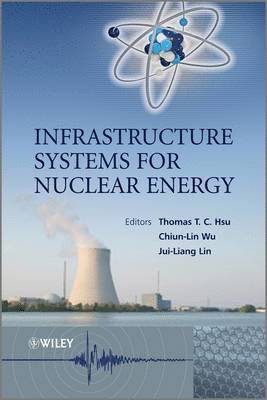
Developing sufficient energy resources to replace coal, oil and gas is a globally critical necessity. Alternatives to fossil fuels such as wind, solar, or geothermal energies are desirable, but the usable quantities are limited and each has inherent deterrents. The only virtually unlimited energy source is nuclear energy, where safety of infrastructure systems is the paramount concern.
Infrastructure Systems for Nuclear Energy addresses the analysis and design of infrastructures associated with nuclear energy. It provides an overview of the current and future nuclear power industry and the infrastructure systems from the perspectives of regulators, operators, practicing engineers and research academics. This book also provides details on investigations of containment structures, nuclear waste storage facilities and the applications of commercial/academic computer software.
Specific environments that challenge the behavior of nuclear power plants infrastructure systems such as earthquake, blast, high temperature, irradiation effects, soil-structure interaction effect, etc., are also discussed.
Key features:
Includes contributions from global experts representing academia and industry Provides an overview of the nuclear power industry and nuclear infrastructure systems Presents the state-of-the-art as well as the future direction for nuclear civil infrastructure systemsInfrastructure Systems for Nuclear Energy is a comprehensive, up-to-date reference for researchers and practitioners working in this field and for graduate studies in civil and mechanical engineering.
1 914 kr
Läs direkt efter köp
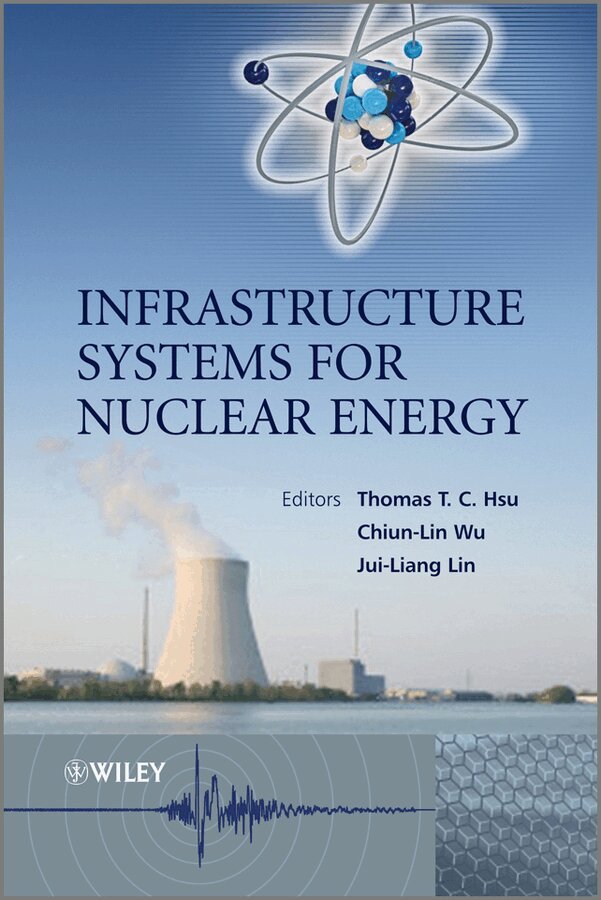
Developing sufficient energy resources to replace coal, oil and gas is a globally critical necessity. Alternatives to fossil fuels such as wind, solar, or geothermal energies are desirable, but the usable quantities are limited and each has inherent deterrents. The only virtually unlimited energy source is nuclear energy, where safety of infrastructure systems is the paramount concern.
Infrastructure Systems for Nuclear Energy addresses the analysis and design of infrastructures associated with nuclear energy. It provides an overview of the current and future nuclear power industry and the infrastructure systems from the perspectives of regulators, operators, practicing engineers and research academics. This book also provides details on investigations of containment structures, nuclear waste storage facilities and the applications of commercial/academic computer software.
Specific environments that challenge the behavior of nuclear power plants infrastructure systems such as earthquake, blast, high temperature, irradiation effects, soil-structure interaction effect, etc., are also discussed.
Key features:
Includes contributions from global experts representing academia and industry Provides an overview of the nuclear power industry and nuclear infrastructure systems Presents the state-of-the-art as well as the future direction for nuclear civil infrastructure systemsInfrastructure Systems for Nuclear Energy is a comprehensive, up-to-date reference for researchers and practitioners working in this field and for graduate studies in civil and mechanical engineering.
1 640 kr
Skickas inom 11-20 vardagar
1 621 kr
Skickas inom 10-15 vardagar
2 049 kr
Läs direkt efter köp
This book gathers 23 papers by top experts from 11 countries, presented at the 3rd Houston International Forum: Concrete Structures in Earthquake. Designing infrastructures to resist earthquakes has always been the focus and mission of scientists and engineers located in tectonically active regions, especially around the “Pacific Rim of Fire” including China, Japan, and the USA. The pace of research and innovation has accelerated in the past three decades, reflecting the need to mitigate the risk of severe damage to interconnected infrastructures, and to facilitate the incorporation of high-speed computers and the internet. The respective papers focus on the design and analysis of concrete structures subjected to earthquakes, advance the state of knowledge in disaster mitigation, and address the safety of infrastructures in general.