1 551 kr
Beställningsvara. Skickas inom 11-20 vardagar. Fri frakt över 249 kr.
Beskrivning
Produktinformation
- Utgivningsdatum:2014-01-31
- Mått:178 x 252 x 32 mm
- Vikt:1 052 g
- Format:Inbunden
- Språk:Engelska
- Antal sidor:576
- Förlag:John Wiley & Sons Inc
- ISBN:9781119975854
Utforska kategorier
Mer om författaren
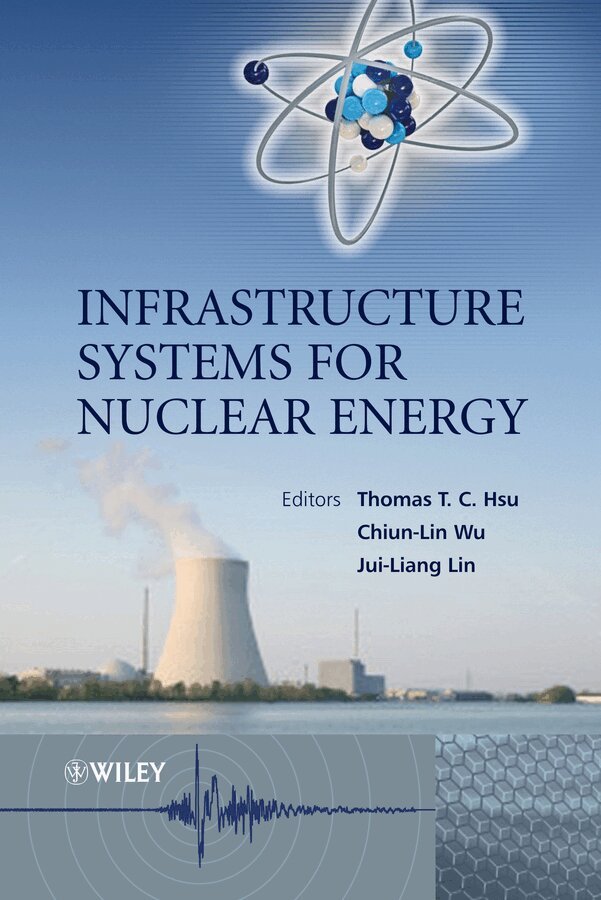
Thomas Hsu, University of Houston is Moores Professor of Civil Engineering in the department of civil and environmental engineering at the University of Houston. Professor Hsu has been Principal and Co-Principal Investigator on funded projects for over 30 years, and has received project funding amounting to over $3.5 million. He established the University of Houston's Structural Research Laboratory, and his research work has formed the basis for the shear and torsion design provisions in the American concrete Institute Building Code. He has won numerous awards for his teaching and research, and has authored or edited 4 books on reinforced concreteJui-Liang Lin, National Center for Research on Earthquake Engineering (NCREE), Taiwan, is an associate researcher with NCREE, TaiwanChiun-lin Wu, National Center for Research on Earthquake Engineering (NCREE), Taiwan, is an associate researcher with NCREE, Taiwan
Innehållsförteckning
- List of Contributors xvPreface xixAcronyms xxi1 Introduction 1Thomas T. C. Hsu, Chiun-Lin Wu, and Jui-Liang Lin1.1 International Workshop on Infrastructure Systems for Nuclear Energy 11.2 Overview of Nuclear Power Plants 41.3 Infrastructure for Nuclear Power Industry 51.4 Containment Structures 71.5 Nuclear Waste Storage Facilities 13Part One Infrastructure for Nuclear Power Industry2 Current Status and Future Role of Nuclear Power 19Philip G. Tipping2.1 Introduction 192.2 Installed Nuclear Power Capacity in 2011 212.3 Discussion 282.4 Conclusions 302.5 Further Reading 31References 333 Seismic Probabilistic Risk Assessment for Nuclear Power Plants 35Yin-Nan Huang and Andrew S. Whittaker3.1 Introduction 353.2 Conventional SPRA Methodologies 363.3 The Methodology of Huang et al. 443.4 Summary and Conclusions 48References 484 Seismic Abatement Method for Nuclear Power Plants and Seismic-Isolation Systems for Structural Elements 51Evgeny Kurbatskiy4.1 Main Principles of the Method 514.2 Theorem and Proof 524.3 Finite Element Construction 534.4 Pros and Cons of the Method 564.5 Application of the Method to Seismic Isolation Design of Whole Building 574.6 Seismic Isolation Devices to Protect Various Elements and Units 584.7 Applications 594.8 Conclusions 61References 615 Framework for Design of Next-Generation Base-Isolated Nuclear Structures 63Eric Keldrauk, Michael Mieler, Boidar Stojadinović, and Per Peterson5.1 Introduction 635.2 Development of Seismic Isolation Systems 655.3 Seismic Isolation of New Nuclear Power Plant Structures 675.4 Performance-Based Design and Evaluation Framework 705.5 Conclusions 73References 746 Development of Nuclear Energy in Taiwan 77Hwai-Chiung Hsu6.1 Introduction 776.2 Brief Illustration of Nuclear Power Plants 786.3 Safety of Nuclear Power Generation 816.4 Nuclear Safety Enhancement 826.5 Radioactive Waste Management 826.6 Conclusions 837 Regulatory Challenges on Safety of Nuclear Power Plants in Taiwan 85Chuen-Horng Tsai, Yi-Bin Chen, Shin Chang, Wen-Chun Teng, Ching-Hui Wu, Gung-Min Ho, Ta-Kang Hsiung, Syh-Tsong Chiou, and Wen-Chuan Chen7.1 Introduction 857.2 Challenge I: New Evidence of Active Faults Near Plants 867.3 Challenge II: Aging Management 887.4 Challenge III: Risk-Informed In-Service Inspection (RI-ISI) 927.5 Challenge IV – Chinshan Independent Spent Fuel Storage Installation (ISFSI) Program 947.6 Challenge V: Post-Fukushima Safety Reassessment of NPPs 997.7 Concluding Remarks 101References 1028 Concrete Properties, Safety, and Sustainability of Nuclear Power Plant Infrastructures: New Tools and Themes for Future Research 103Jacky Mazars, Bruno Capra, Alain Rouquand, and Christophe Pontiroli8.1 Introduction 1038.2 Tools for Design and Analysis: Advanced Damage Modeling 1048.3 Application to Reinforced Concrete Structures 1108.4 Aging Monitoring 1198.5 Perspectives and Conclusions 123References 1249 Small Modular Reactors: Infrastructure and Other Systems 127David Diamond9.1 Introduction 1279.2 Advantages of SMRs 1279.3 Regulatory and Technical Issues 1289.4 Design Features of iPWRs 1289.5 Conclusions 131Part Two Containment Structures10 Seismic Design of Reinforced Concrete Structures in Japan: NPP Facilities and High-Rise Buildings 135Tetsuo Kubo10.1 Introduction 13510.2 Safety Review System of Facilities in Japan 13510.3 Design Earthquake Motion for Structures 13710.4 Modeling of Structures for a Response Analsyis 14210.5 Design Criteria of Structures 14910.6 Concluding Remarks 151References 15211 Nonlinear Modeling of 3D Structural Reinforced Concrete and Seismic Performance Assessment 153Koichi Maekawa and Naoyuki Fukuura11.1 Introduction 15311.2 Construction of a Non-Orthogonal Cracking Model for Three Dimensions and Six Directions 15611.3 Path-Dependent Variables Defining the Non-Orthogonal Crack Group and its Setting 16211.4 Verification at the Element Level (Uniform Field) 16411.5 Verification at the Member Level (Uniform Stress Field) 16611.6 Conclusions 183References 18312 Shear Ductility and Energy Dissipation of Reinforced Concrete Walls 185Thomas T. C. Hsu12.1 Introduction 18512.2 Shear Theory 18512.3 Softened Membrane Model (SMM) 18712.4 Conversion of Biaxial Strains to Uniaxial Strains 18912.5 Constitutive Model of Concrete in CSMM 19012.6 Constitutive Model of Mild Steel Bars in CSMM 19412.7 Hysteretic Loops 19412.8 Cyclic Shear Ductility and Energy Dissipation 19412.9 Framed Shear Walls Under Cyclic Loading 19712.10 Earthquake Application 20012.11 Conclusions 201References 20213 Behavior of Reinforced Concrete Elements Subjected to Tri-Directional Shear Stresses 203Moheb Labib, Yashar Moslehy, and Ashraf Ayoub13.1 Introduction 20313.2 Previous Research Studies on Structures Subjected to a 3D State of Stress 20413.3 Modeling of RC Elements under a 3D State of Stress 20713.4 The Universal Panel Tester 20913.5 Installation of Out-of-Plane Hydraulic Cylinders 21013.6 Application of Out-of-Plane Shear in the Universal Panel Tester 21113.7 Test Program 21313.8 Behavior of Test Panels Under Tri-Directional Shear Loads 21613.9 Interaction Surface of Bi-Directional Shear Stresses 22213.10 Summary and Conclusions 223Acknowledgments 223References 22414 Pre-Stressed Concrete Containment Structural Design in China 227Zufeng Xia14.1 Introduction 22714.2 Design Improvements of Pre-Stressed Concrete Containment in Chashma Nuclear Power Plant 22914.3 Performance Analysis and Experiment Investigation of Third-Generation Containments 23014.4 Applications of Other Containment Structures in Domestic Nuclear Power Plants 23214.5 Conceptual Design of Spherical Pre-Stressed Concrete Containment Structures 23314.6 Conclusions on Pre-Stressed Concrete Containments 234References 23515 Steel Plate Concrete Walls for Containment Structures in Korea: In-Plane Shear Behavior 237Sung-Gul Hong, Seung-Joon Lee, and Myung-Jae Lee15.1 Introduction 23715.2 Fundamentals 23815.3 In-Plane Shear Behavior Models 23815.4 Experimental Programs 24815.5 Conclusions 257References 25716 Lessons Learned from Kashiwazaki-Kariwa NPP after Niigataken Chuetsu-Oki Earthquake (2007) in View of SSI Effect 259T. Nishikawa, H. Inoue, S. Motohashi, and K. Ebisawa16.1 Introduction 25916.2 Outline of the Earthquake, KK-NPP, and Observed Events 26016.3 Simulation Analyses of Observation Records 26516.4 Parametric Study on Floor Response 27116.5 Conclusions 275References 27617 Blast, Shock, and Impact Hazards to Nuclear Structures 277Theodor Krauthammer17.1 Introduction 27717.2 Hazard Environments and Loads 27917.3 Experimental Observations 28117.4 Computational and Experimental Analysis 28317.5 Design and Construction 28417.6 Summary 285References 28618 History of Shear Design Provisions in the ASME/ACI Code for Concrete Reactor Vessels and Containments 287Ralph G. Oesterle, W. Gene Corley, and Ahmed Elremaily18.1 Introduction 28718.2 Background of ASME/ACI Code 28818.3 Tangential Shear Design Provisions 28918.4 Peripheral Shear Design Provisions 29918.5 Radial Shear Design Provisions 30218.6 Summary 304References 30419 US NRC Requirements for Containment Structure Design 307John S. Ma, Bret A. Tegeler, and Brian E. Thomas19.1 Introduction 30719.2 Seismic Analysis for Containment Structures 30719.3 Design of Containment Structure 31219.4 Conclusions 316Disclaimer 317References 317Part Three COMPUTER SOFTWARE FOR CONTAINMENT STRUCTURES20 FE Program SCS for Analyzing Wall-Type Concrete Structures 321Y.L. Mo, Padmanabha Rao Tadepalli, Norman Hoffman, and Thomas T.C. Hsu20.1 Introduction 32120.2 Material Scale 32320.3 Element Scale 32720.4 Structure Scale 33020.5 Validation 33220.6 Conclusions 340References 34121 Modeling and Analysis of Nuclear Power Plant Structures Using ANATECH-ANACAP Software System 345Joseph Y.R. Rashid, Randy J. James, and Robert S. Dunham21.1 Introduction 34521.2 Concrete Constitutive Formulation in ANACAP-U 34621.3 Example Applications 352References 36322 SASSI FE Program for Seismic Response Analysis of Nuclear Containment Structures 365Mansour Tabatabaie22.1 Introduction 36522.2 Methodology 36622.3 Summary 385Acknowledgments 385References 38523 FE Program LS-DYNA for Analysis of NPP Structures Including Seismic Soil–Structure Interaction 387Ushnish Basu23.1 Introduction 38723.2 Relevant Strengths of LS-DYNA 38823.3 Analysis Framework 38923.4 Perfectly Matched Layer (PML) 39023.5 Effective Seismic Input (ESI) 39223.6 Numerical Results 39423.7 Conclusions 395References 39524 FE Program ATENA for Safety Assessment of NPP Containments 397Jan Cervenka and Vladimir Cervenka24.1 Introduction 39724.2 Material Model for Concrete 39724.3 Validation 39924.4 Nonlinear Analysis of Containment Structures 40024.5 Conclusions 405References 405Part Four Nuclear Waste Storage Facilities25 Properties of Concrete Required in Nuclear Power Plants 409Patrick Bamonte and Pietro G. Gambarova25.1 Introduction 40925.2 Chemical Attack, Freezing-and-Thawing Cycling 41225.3 Permeability and Diffusivity 41325.4 Radiation-Shielding Capability and Irradiation Effects 41525.5 Volume Changes and Creep 41725.6 Thermal and Fire Exposure 41725.7 Concrete for Waste-Disposal Structures 43225.8 Conclusions 434Acknowledgments 436References 43626 Concrete under High Temperature 439Kaspar Willam, Yunping Xi, and Daniel J. Naus26.1 Introduction 43926.2 The Coupling Among Hygro-Thermo-Mechanical Loading 43926.3 Modeling Coupling 44326.4 Acceleration of Basic Creep of Concrete by Temperature 44526.5 Experimental Data 44726.6 High Temperature Test Data 44926.7 Concrete Strength Data 45126.8 Remarks on Temperature Concrete Data 45326.9 Thermo-Elastoplastic Concrete Model 45426.10 Loss of Bounded Material Response 45526.11 Conclusions 456References 45627 Irradiation Effects on Concrete Structures 459Osamu Kontani, Yoshikazu Ichikawa, Akihiro Ishizawa, Masayuki Takizawa, and Osamu Sato27.1 Introduction 45927.2 Background 46027.3 Microstructures 46127.4 Interaction Between Radiation and Materials 46327.5 Mechanism of Concrete Deterioration 46527.6 Gamma Ray Irradiation Tests 46627.7 Conclusions 472Acknowledgments 472References 47328 Activities in Support of Continuing the Service of Nuclear Power Plant Safety Related Concrete Structures 475D. J. Naus28.1 Introduction 47528.2 Concrete Structures 47628.3 In-Service Inspection and Testing Requirments 47828.4 Renewal of Operating Licenses 47928.5 Operating Experience and Material Performance 48128.6 Management of Aging 48428.7 Potential Research Topics 49028.8 Summary 491References 49129 Spent Nuclear Fuel Final Disposal in Taiwan 497Y. C. Peng29.1 Introduction 49729.2 Disposal Program 49829.3 Operation Organization and Work Delegation 49929.4 Nuclear Backend Fund 50029.5 2009 Progress Report 50029.6 Conclusions 502References 50230 Safety Features of Dry Storage System at Chinshan Nuclear Power Plant 503Yuhao Huang30.1 Introduction 50330.2 Major Components and Operation Sequence 50430.3 Major Safety Features 50630.4 Conclusions 516References 51631 Seismic Consequence Modeling for the Yucca Mountain Repository Project 519Stanley A. Orrell and Charles Bryan31.1 Introduction 51931.2 Description of the Repository 52031.3 The Pre-Closure Safety Case 52431.4 The Post-Closure Safety Case 52831.5 Summary 533References 533Index 535
Du kanske också är intresserad av
- Signerad!
- -22%
- -30%
- -22%
- Nyhet
- Signerad!
- Nyhet
Hjärnans akilleshälar : hur din hjärna lurar dig, och vad du kan göra åt det
Anders Hansen
289 kr
- -30%