Thomas Villmann – författare
Visar alla böcker från författaren Thomas Villmann. Handla med fri frakt och snabb leverans.
6 produkter
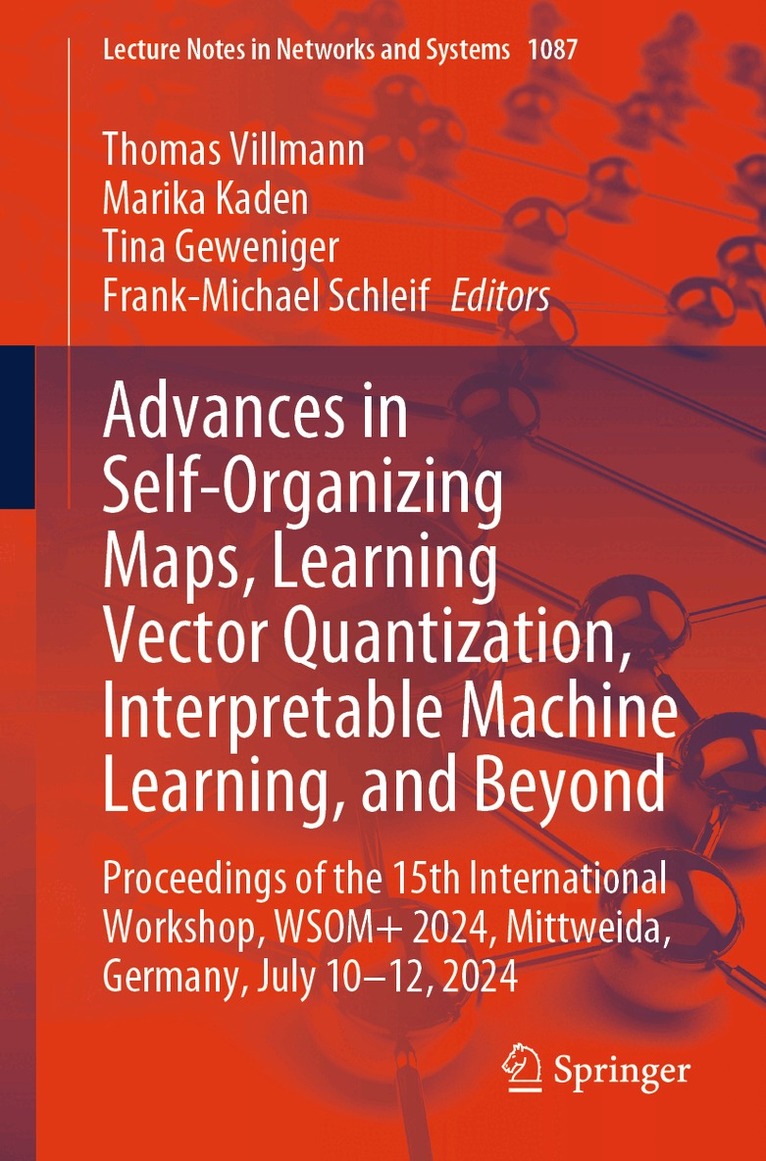
Advances in Self-Organizing Maps, Learning Vector Quantization, Interpretable Machine Learning, and Beyond
Proceedings of the 15th International Workshop, WSOM+ 2024, Mittweida, Germany, July 10–12, 2024
Av Thomas Villmann, Marika Kaden m. fl.
Häftad, 2024
2245 kr
Lägg i varukorg
The book presents the peer-reviewed contributions of the 15th International Workshop on Self-Organizing Maps, Learning Vector Quantization and Beyond (WSOM$+$ 2024), held at the University of Applied Sciences Mittweida (UAS Mitt\-weida), Germany, on July 10–12, 2024.The book highlights new …
Advances in Self-Organizing Maps, Learning Vector Quantization, Interpretable Machine Learning, and Beyond
Proceedings of the 15th International Workshop, WSOM+ 2024, Mittweida, Germany, July 10–12, 2024
Av Frank-Michael Schleif, Tina Geweniger m. fl.
E-bok, 2024
2685 kr
Lägg i varukorg
The book presents the peer-reviewed contributions of the 15th International Workshop on Self-Organizing Maps, Learning Vector Quantization and Beyond (WSOM$+$ 2024), held at the University of Applied Sciences Mittweida (UAS Mitt\-weida), Germany, on July 10–12, 2024. The book highlights new …
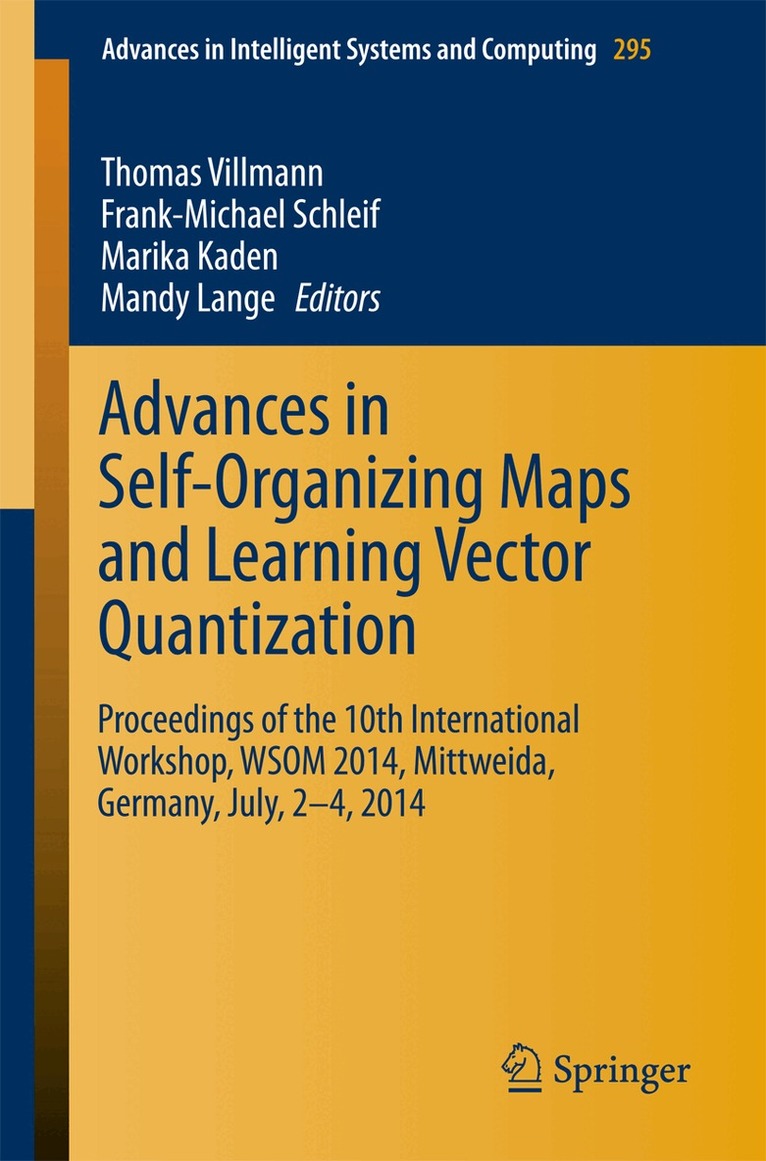
Advances in Self-Organizing Maps and Learning Vector Quantization
Proceedings of the 10th International Workshop, WSOM 2014, Mittweida, Germany, July, 2-4, 2014
Av Thomas Villmann, Frank-Michael Schleif m. fl.
Häftad, 2014
2469 kr
Lägg i varukorg
The book collects the scientific contributions presented at the 10th Workshop on Self-Organizing Maps (WSOM 2014) held at the University of Applied Sciences Mittweida, Mittweida (Germany, Saxony), on July 2–4, 2014. Starting with the first WSOM-workshop 1997 in Helsinki this workshop focuses on …
Advances in Self-Organizing Maps and Learning Vector Quantization
Proceedings of the 10th International Workshop, WSOM 2014, Mittweida, Germany, July, 2-4, 2014
Av Mandy Lange, Marika Kaden m. fl.
E-bok, 2014
3348 kr
Lägg i varukorg
The book collects the scientific contributions presented at the 10th Workshop on Self-Organizing Maps (WSOM 2014) held at the University of Applied Sciences Mittweida, Mittweida (Germany, Saxony), on July 2–4, 2014. Starting with the first WSOM-workshop 1997 in Helsinki this workshop focuses on …
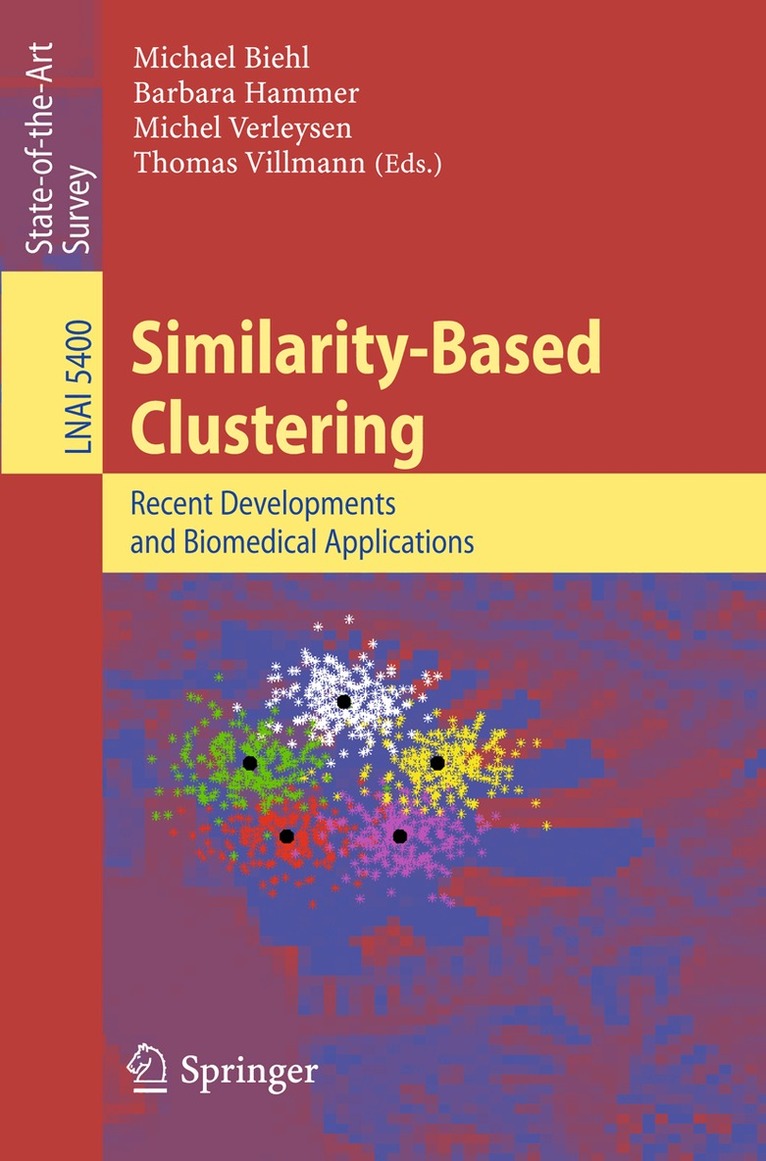
Similarity-Based Clustering
Recent Developments and Biomedical Applications
Av Thomas Villmann, M. Biehl m. fl.
Häftad, 2009
567 kr
Lägg i varukorg
Similarity-based learning methods have a great potential as an intuitive and ?exible toolbox for mining, visualization,and inspection of largedata sets. They combine simple and human-understandable principles, such as distance-based classi?cation, prototypes, or Hebbian learning, with a large …
Similarity-Based Clustering
Recent Developments and Biomedical Applications
Av Michel Verleysen, Barbara Hammer m. fl.
E-bok, 2009
755 kr
Lägg i varukorg
Similarity-based learning methods have a great potential as an intuitive and ?exible toolbox for mining, visualization,and inspection of largedata sets. They combine simple and human-understandable principles, such as distance-based classi?cation, prototypes, or Hebbian learning, with a large …