Thomas W. Kavanagh – författare
Visar alla böcker från författaren Thomas W. Kavanagh. Handla med fri frakt och snabb leverans.
7 produkter
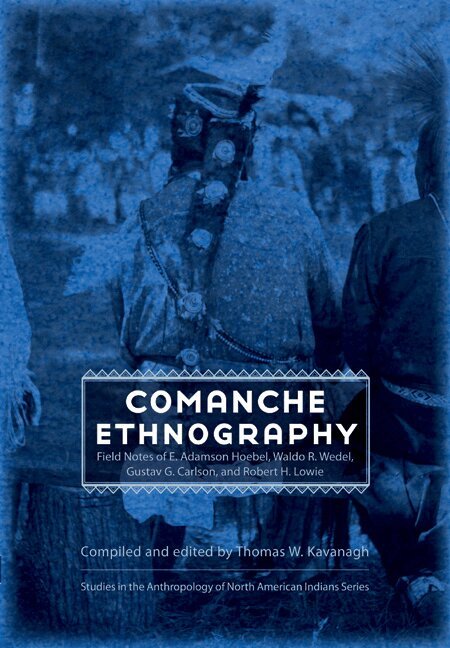
Comanche Ethnography
Field Notes of E. Adamson Hoebel, Waldo R. Wedel, Gustav G. Carlson, and Robert H. Lowie
E-bok, 2008
624 kr
Lägg i varukorg
In the summer of 1933 in Lawton, Oklahoma, a team of six anthropologists met with eighteen Comanche elders to record the latter's reminiscences of traditional Comanche culture. The depth and breadth of what the elderly Comanches recalled provides an inestimable source of knowledge for generations …
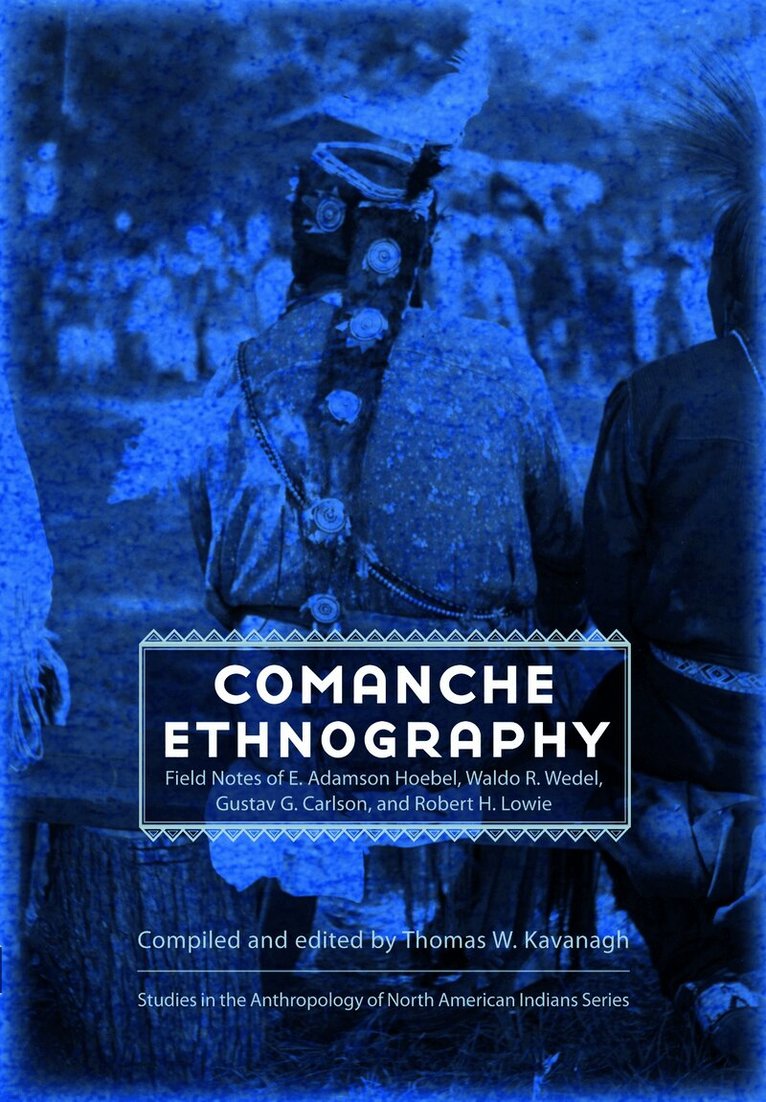
Comanche Ethnography
Field Notes of E. Adamson Hoebel, Waldo R. Wedel, Gustav G. Carlson, and Robert H. Lowie
Inbunden, 2008
614 kr
Lägg i varukorg
In the summer of 1933 in Lawton, Oklahoma, a team of six anthropologists met with eighteen Comanche elders to record the latter's reminiscences of traditional Comanche culture. The depth and breadth of what the elderly Comanches recalled provides an inestimable source of knowledge for generations …
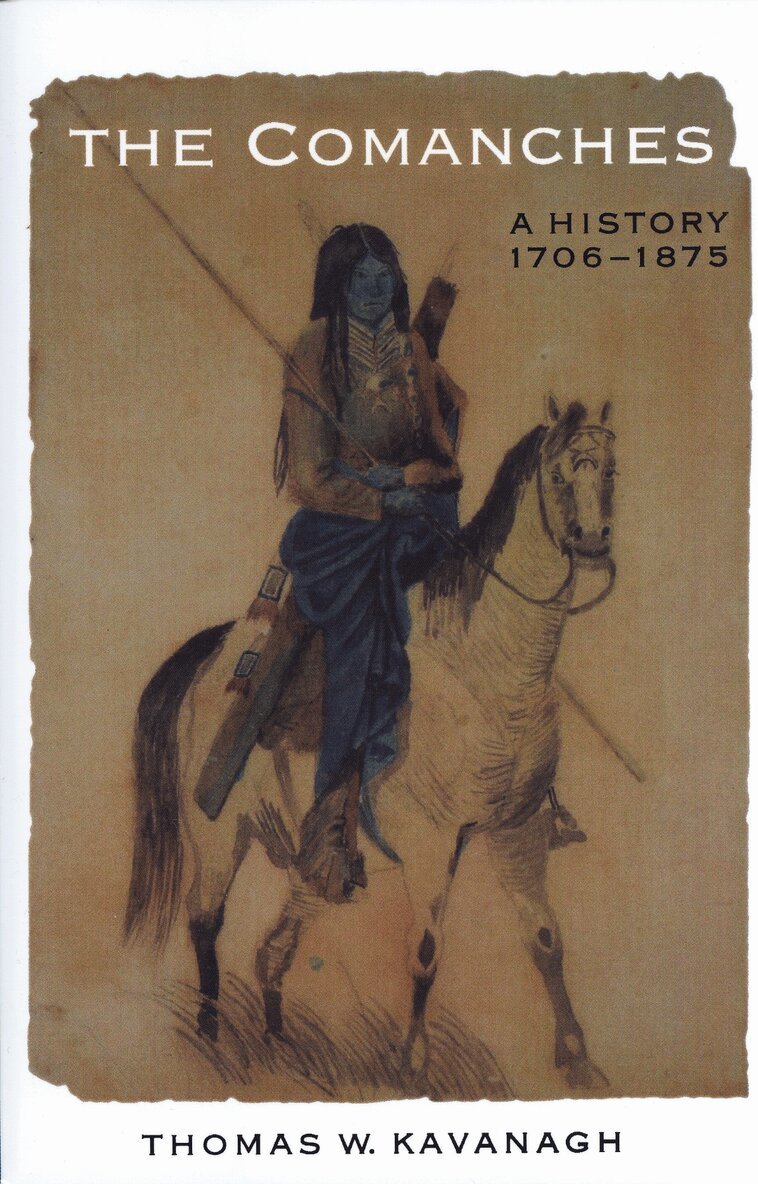
Comanches
A History, 1706-1875
Häftad, 1999
341 kr
Lägg i varukorg
This is the first in-depth historical study of Comanche social and political groups. Using the ethnohistorical method, Thomas W. Kavanagh traces the changes and continuities in Comanche politics from their earliest interactions with Europeans to their settlement on a reservation in present-day …
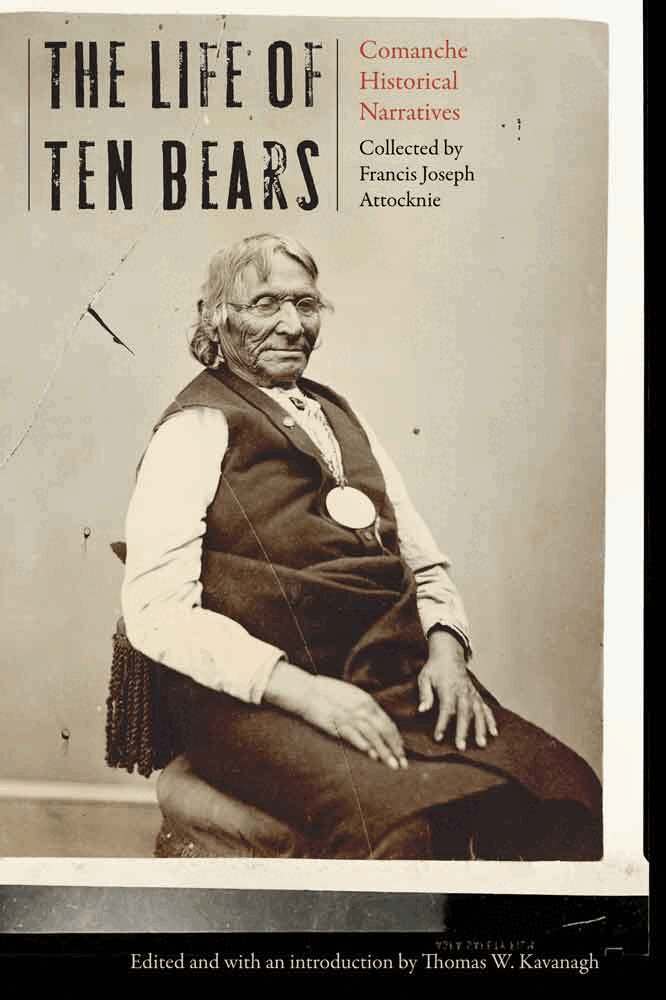
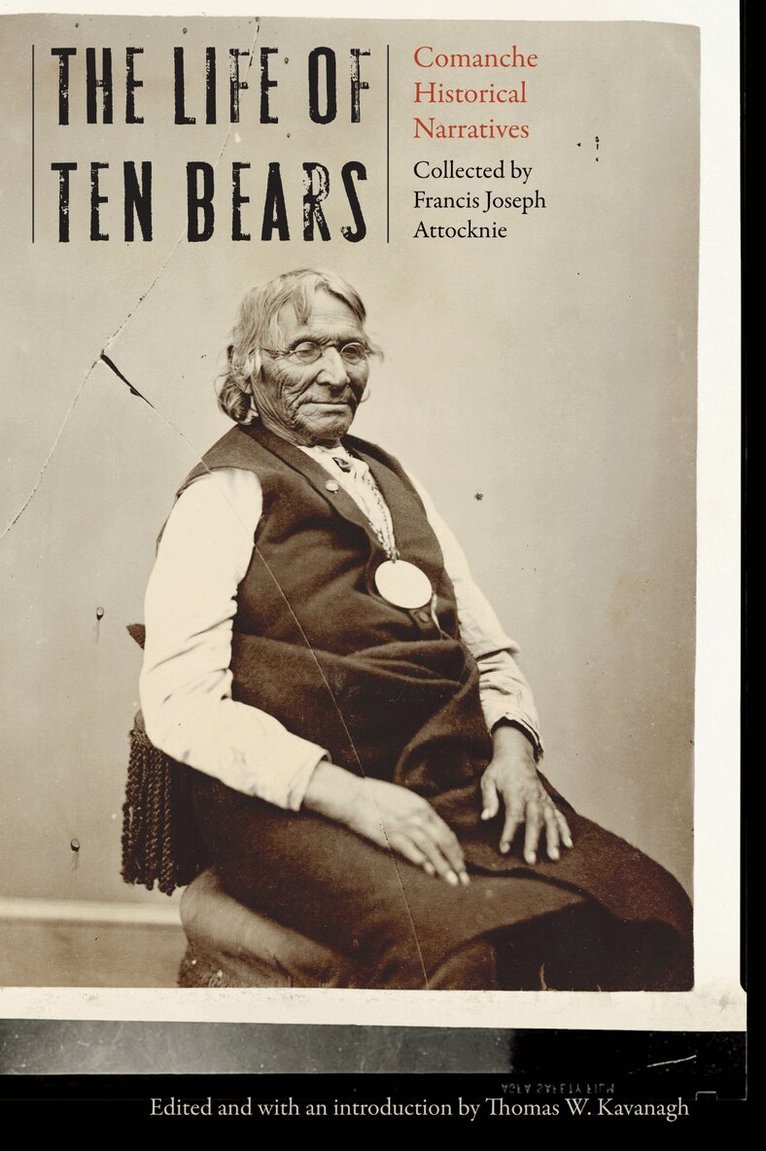
Life of Ten Bears
Comanche Historical Narratives
Inbunden, 2016
761 kr
Lägg i varukorg
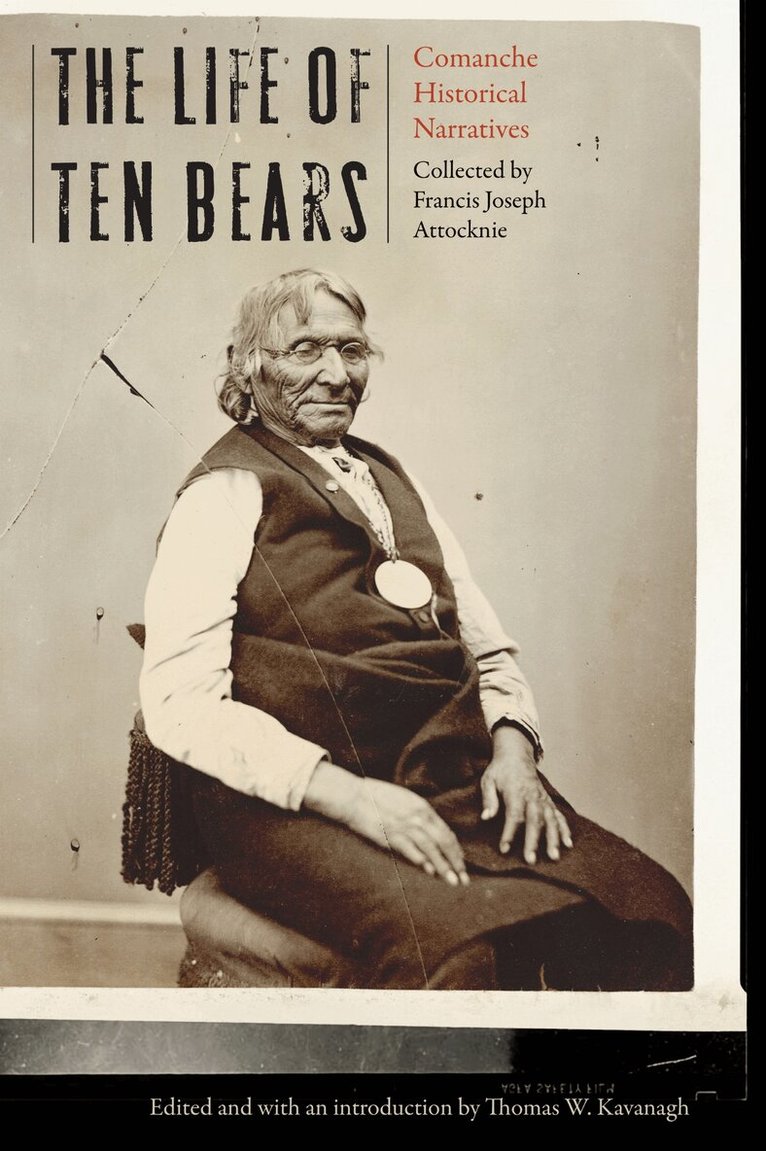
The Life of Ten Bears is a remarkable collection of nineteenth-century Comanche oral histories given by Francis Joseph “Joe A” Attocknie. Although various elements of Ten Bears’s life (ca. 1790–1872) are widely known, including several versions of how the toddler Ten Bears survived the massacre of …
Life of Ten Bears
Comanche Historical Narratives
E-bok, 2016
366 kr
Lägg i varukorg
The Life of Ten Bears is a remarkable collection of nineteenth-century Comanche oral histories given by Francis Joseph “Joe A” Attocknie. Although various elements of Ten Bears’s life (ca. 1790–1872) are widely known, including several versions of how the toddler Ten Bears survived the massacre of …
Life of Ten Bears
Comanche Historical Narratives
E-bok, 2016
358 kr
Lägg i varukorg
The Life of Ten Bears is a remarkable collection of nineteenth-century Comanche oral histories given by Francis Joseph “Joe A” Attocknie. Although various elements of Ten Bears’s life (ca. 1790–1872) are widely known, including several versions of how the toddler Ten Bears survived the massacre of …
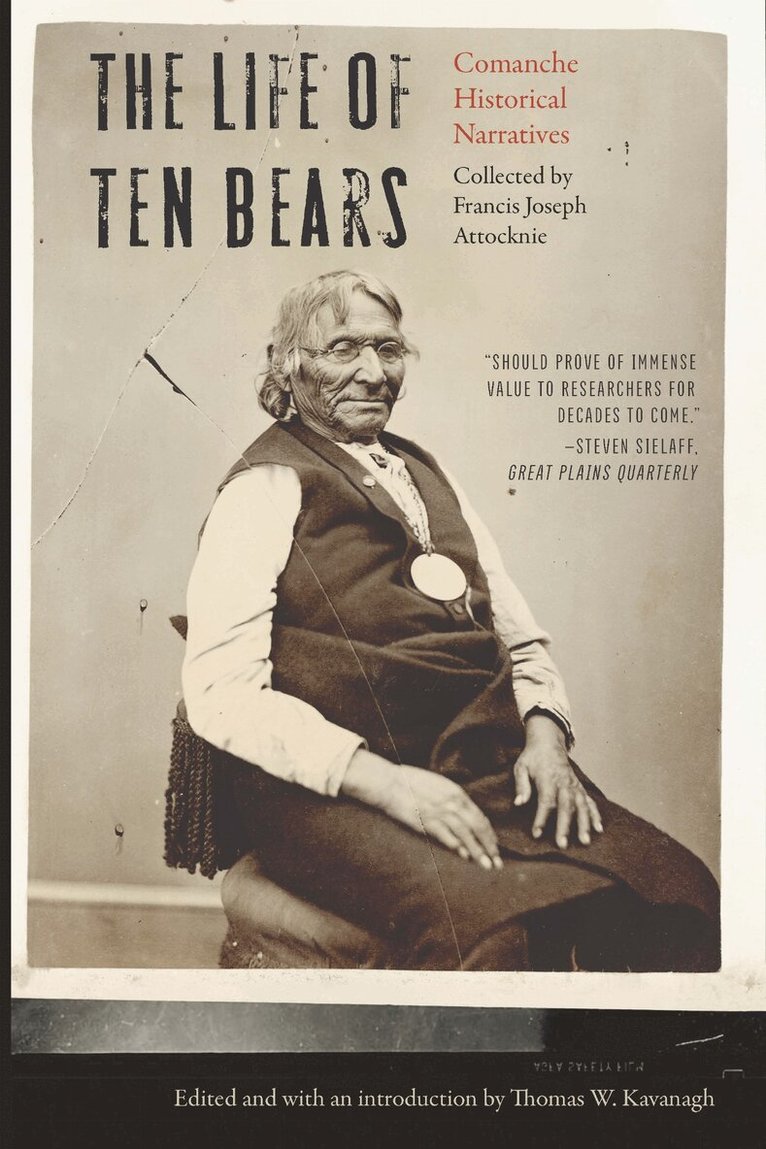
Life of Ten Bears
Comanche Historical Narratives
Häftad, 2026
399 kr
Lägg i varukorg
The Life of Ten Bears is a remarkable collection of nineteenth-century Comanche oral histories given by Francis Joseph "Joe A" Attocknie. Although various elements of Ten Bears's life (ca. 1790–1872) are widely known, including several versions of how the toddler Ten Bears survived the massacre of …