Thomas W. Laqueur – författare
Visar alla böcker från författaren Thomas W. Laqueur. Handla med fri frakt och snabb leverans.
9 produkter
Dog's Gaze
A Visual History
Inbunden, 2026
4,0 utav 5 stjärnor. Totalt antal röster: (2)
388 kr
Lägg i varukorg
What do dogs do in art? A dazzlingly original cultural history from the Cundill Prize-winning historian Long before the phrase ‘man’s best friend’ became common parlance, dogs were already standing beside us in art as in life. In The Dog’s Gaze, the historian Thomas W. Laqueur invites us to explore …
Dog's Gaze
A Visual History
E-bok, 2026
170 kr
Lägg i varukorg
What do dogs do in art? A dazzlingly original cultural history from the Cundill Prize-winning historian Long before the phrase ‘man’s best friend’ became common parlance, dogs were already standing beside us in art as in life. In The Dog’s Gaze, the historian Thomas W. Laqueur invites us to explore …
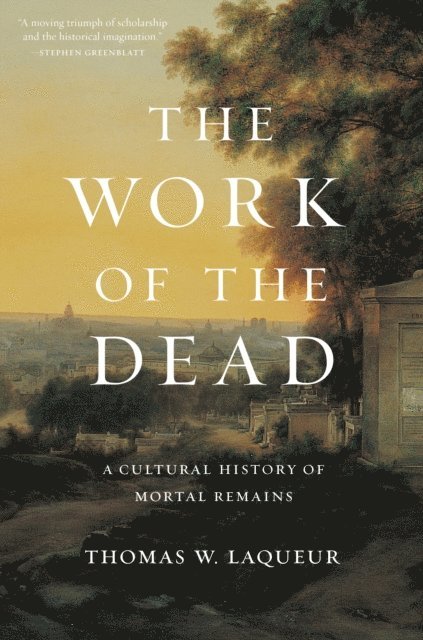
Work of the Dead
A Cultural History of Mortal Remains
Inbunden, 2015
419 kr
Lägg i varukorg
The Greek philosopher Diogenes said that when he died his body should be tossed over the city walls for beasts to scavenge. Why should he or anyone else care what became of his corpse? In The Work of the Dead, acclaimed cultural historian Thomas Laqueur examines why humanity has universally …
Work of the Dead
A Cultural History of Mortal Remains
Häftad, 2018
299 kr
Lägg i varukorg
The meaning of our concern for mortal remains—from antiquity through the twentieth centuryThe Greek philosopher Diogenes said that when he died his body should be tossed over the city walls for beasts to scavenge. Why should he or anyone else care what became of his corpse? In The Work of the Dead, …
Dog's Gaze
A Visual History
Häftad, 2028
160 kr
Kommande
Long before the phrase ‘man’s best friend’ became common parlance, dogs were already standing beside us in art as in life. In The Dog’s Gaze, the historian Thomas W. Laqueur invites us to explore why they feature more than any other animal in the ways in which we picture ourselves and our …
Sexo solitario
Una historia cultural de la masturbación
E-bok, 2023
106 kr
Lägg i varukorg
Sexo solitario es la primera historia cultural de la práctica sexual más usual y extendida: la masturbación. Cuando casi todos los hábitos y las experiencias sexuales cuentan con defensores públicos y a menudo forman parte de las primeras planas de las noticias, la más frecuente de esas prácticas …
Work of the Dead
A Cultural History of Mortal Remains
E-bok, 2015
412 kr
Lägg i varukorg
The meaning of our concern for mortal remains—from antiquity through the twentieth century The Greek philosopher Diogenes said that when he died his body should be tossed over the city walls for beasts to scavenge. Why should he or anyone else care what became of his corpse? In The Work of the Dead …