Thorsten Beck - Böcker
Visar alla böcker från författaren Thorsten Beck. Handla med fri frakt och snabb leverans.
13 produkter
13 produkter
394 kr
Skickas inom 7-10 vardagar
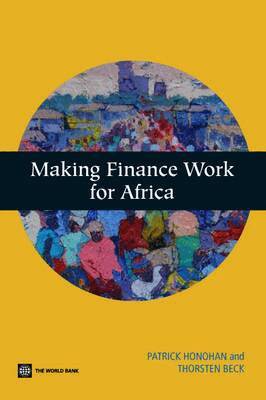
Drawing on its extensive experience in helping restructure and reform financial systems, the World Bank examines the state of African domestic financial systems in a global comparison. It identifies promising trends as well as pinpointing the major shortcomings that are observed across sub-Saharan Africa. Policy recommendations distinguish between those designed to make finance a more effective driver of economic growth and those designed to give low income, small-scale and other excluded groups better access to financial services.
450 kr
Skickas inom 10-15 vardagar
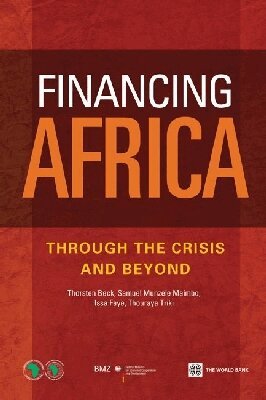
Financing Africa takes stock of Africa's financial systems in light of recent changes in the global financial system - including the greater risk aversion of international investors, a shift in economic and financial powers towards emerging markets and the regulatory reform debate - and the increasing role of technology. Using a wider and more detailed array of data than previous publications, we observe a trend towards financial deepening, more stability and more inclusion leading up to the crisis; serious challenges, however, continue, including limited access to financial services, focus on short-term contracts and hidden fragility, related to weak regulatory frameworks, undue government interference and governance deficiencies. Our policy analysis therefore focuses on (i) expanding outreach, (ii) fostering long-term finance and (iii) improving regulation and supervision. We identify the positive role of innovation and competition, a stronger focus on non-traditional financial service providers, and more emphasis on demand-side constraints as priority areas for policy actions.Specifically, competition from new players outside the banking system, including telecomm companies can increase outreach with technological innovation that changes the economics of retail finance. Moving beyond national stock exchanges that are not sustainable in most African countries towards regional solutions and over-the-counter trades can help foster long-term finance, as can addressing governance challenges in contractual savings institutions, including life insurance companies and pension funds. Finally, there is a need to look beyond supply-side constraints towards users of financial services, focusing more on financial literacy of households and firms, but also consumer protection. In formulating policy messages, we carefully distinguish between different country groupings, differentiating - among others - between low- and middle-income and small and larger economies, with a special focus on resource-based economies and post-conflict countries
394 kr
Skickas inom 10-15 vardagar
This edited volume contains eight studies of financial sector challenges in Africa that served as background studies for Financing Africa: Through the Crisis and Beyond. One of the major challenges for African financial systems is to expand financial services to a larger share of the population. The chapters in this area cover microfinance in Africa, the role of technology, reforms of payment infrastructure, and financing agriculture. Two chapters cover challenges in increasing long-term finance; one covers housing finance and the other the role of sovereign wealth fund. The book also contains a detailed discussion of bank regulation and supervision, especially in light of the current regulatory reforms in Europe and North America. The final chapter provides a political economy perspective, discussing the conditions for activist government policies in the financial sector.
1 964 kr
Skickas inom 10-15 vardagar
This handbook presents a timely collection of original studies on relevant themes, policies and developments in European banking. Part four looks at the relevance of cross-border banking and part five presents a detailed analysis of the main EU banking markets.
4 091 kr
Skickas inom 7-10 vardagar
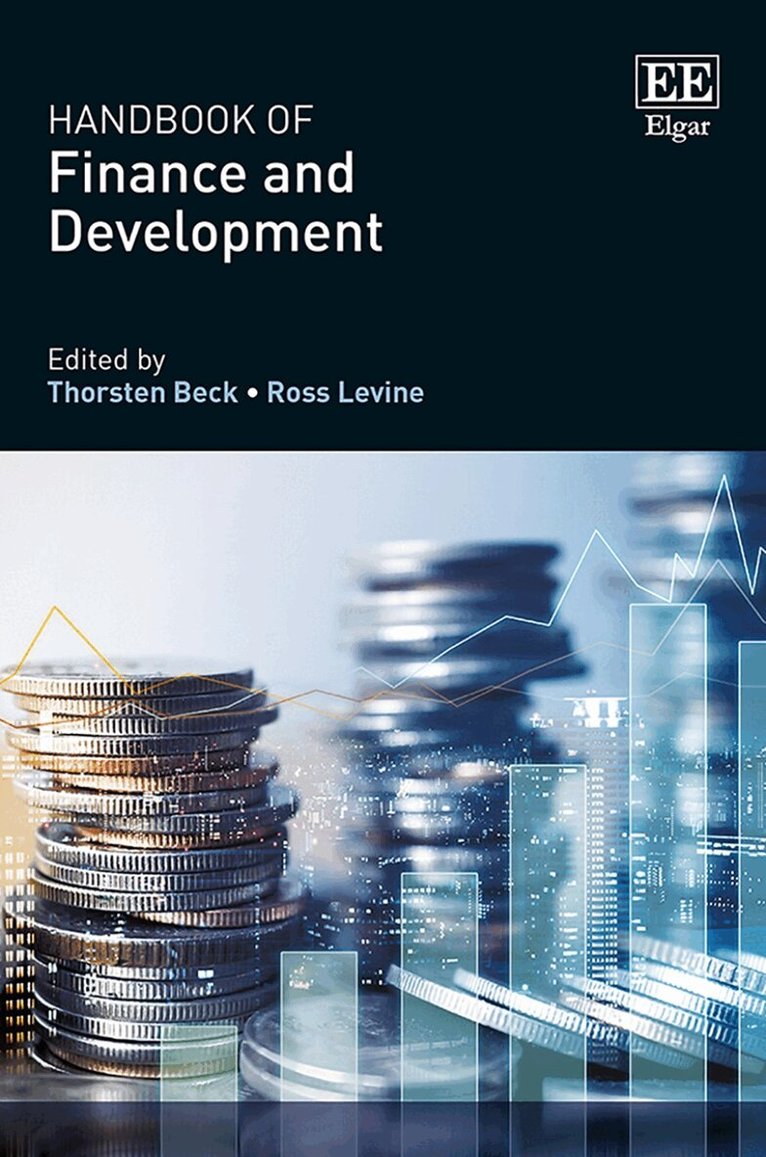
The Handbook of Finance and Development provides a thorough assessment of the existing research on the relationship between the financial system and economic growth. Containing chapters on theory, empirical work and historic accounts, this is the first Handbook to provide a comprehensive overview of the fields of finance and development. As leading researchers in the field the contributors analyse the emergence of, and innovations in, financial instruments, markets, and intermediaries, providing commentary on how these components of financial systems shape resource allocation, poverty, income inequality and aggregate economic growth. They also explore the causes and consequences of financial fragility, the historic development of financial systems and the regulatory and supervisory underpinnings of financial sector development. Further chapters examine financial development at both the aggregate and country levels and assess the degree to which individuals and firms can access financial services. Recent literature on the financial inclusion of households and enterprises is also analysed.The Handbook will be of great value to scholars and researchers who are interested in the fields of finance, development and financial inclusion. Throughout the chapters the contributors highlight how insights drawn from research inform policy debates on the topics at hand making this work a useful resource for policy makers and regulators.Contributors include: F. Abraham, P. Aghion, F. Allen, M. Ayyagari, J. Barth, T. Beck, A. Berger, H. Bodenhorn, C. Burhop, J. Caprio, R. Cull, A. Demirguc-Kunt, S. Frame, X. Gu, T. Guinnane, P. Honohan, P. Howitt, L. Klapper, O. Kowalewski, T. Lambert, R. Levine, N. Loayza, V. Maksimovic, R. Morck, J. Morduch, A. Ouazad, A. Popov, R. Ranciere, R. Roman, S. Schmukler, D. Singer, M. Soledad Martinez Peria, W. Summerhill, R. Tilly, J. Verrier, P. Volpin, H.-J. Voth, B. Yeung
Del 15 - The International Library of Entrepreneurship series
Entrepreneurship in Developing Countries
Inbunden, Engelska, 2009
6 281 kr
Skickas inom 7-10 vardagar
This essential collection contains the most influential articles written over the past two decades that help us to understand the role of entrepreneurs in the development process, both theoretically and empirically. These important papers span a wide methodological range, from theoretical models, over cross-country studies, to firm- and household-level studies, utilizing both regression analysis and simulation techniques.Professor Beck has written an insightful introduction which provides an overview of the area of entrepreneurship in developing countries.
Illusion Freiheit
Eine vergleichende Untersuchung des Phänomens der Isolation in Franz Kafkas "Die Verwandlung" und Walter Rheiners "Kokain"
Häftad, Tyska, 2012
563 kr
Skickas inom 3-6 vardagar
481 kr
Skickas inom 3-6 vardagar
Freudenrausch und Weltenschmerz. Die Entwicklung des Erzählers in Friedrich Hölderlins Roman "Hyperion oder der Eremit in Griechenland"
Häftad, Tyska, 2012
526 kr
Skickas inom 3-6 vardagar
'Andere' als Kategorie der Selbstbestimmung im Denken Jehuda Halevis und Franz Rosenzweigs
"Ein Herz unter den Völkern"
Häftad, Tyska, 2012
514 kr
Skickas inom 3-6 vardagar
US-amerikanische Interessen im Nahen Osten und die Beziehung zu Israel - Eine Untersuchung vor dem Hintergrund der neorealistischen Theorie
Zwischen Ideal und Wirklichkeit?
Häftad, Tyska, 2012
496 kr
Skickas inom 3-6 vardagar
1 315 kr
Skickas inom 3-6 vardagar
Del 29 - World Scientific Studies in International Economics
Social Value Of The Financial Sector, The: Too Big To Fail Or Just Too Big?
Inbunden, Engelska, 2013
2 698 kr
Skickas inom 3-6 vardagar
As a result of the recent financial crisis, there has been significant public debate on the role of the financial sector in bringing about the “Great Depression.” More generally, there has been debate about whether the current industry structure has enhanced social welfare or served a detrimental role.This book is a collection of papers presented at the conference held at the Federal Reserve Bank of Chicago, in November 2012 that examined the social value of the financial sector as currently structured. Issues evaluated include what are the perceived benefits and costs of the current financial system? How valuable have industry innovations been for society? Should regulation be used to “move” the industry in a direction thought to be more valuable for society? Should “big” banks be broken up? What are the welfare implications of the current industry structure? In the book, leading industry scholars debate these issues with a goal of influencing public policy toward the industry.