Tianjian Shi - Böcker
Visar alla böcker från författaren Tianjian Shi. Handla med fri frakt och snabb leverans.
5 produkter
5 produkter
482 kr
Skickas inom 10-15 vardagar
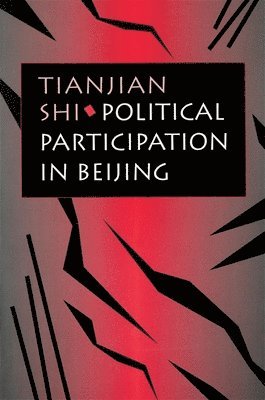
In this first scientific survey of political participation in the People's Republic of China, Tianjian Shi identifies twenty-eight participatory acts and groups them into seven areas: voting, campaign activities, appeals, adversarial activities, cronyism, resistance, and boycotts. What he finds will surprise many observers. Political participation in a closed society is not necessarily characterized by passive citizens driven by regime mobilization aimed at carrying out predetermined goals. Beijing citizens acknowledge that they actively engage in various voluntary participatory acts to articulate their interests.In a society where communication channels are controlled by the government, Shi discovers, access to information from unofficial means becomes the single most important determinant for people's engaging in participatory acts. Government-sponsored channels of appeal are easily accessible to ordinary citizens, so socioeconomic resources are unimportant in determining who uses these channels. Instead, voter turnout is found to be associated with the type of work unit a person belongs to, subjective evaluations of one's own economic status, and party affiliation. Those most likely to engage in campaign activities, adversarial activities, cronyism, resistance, and boycotts are the more disadvantaged groups in Beijing. While political participation in the West fosters a sense of identification, the unconventional modes of participation in Beijing undermine the existing political order.
1 245 kr
Skickas inom 7-10 vardagar
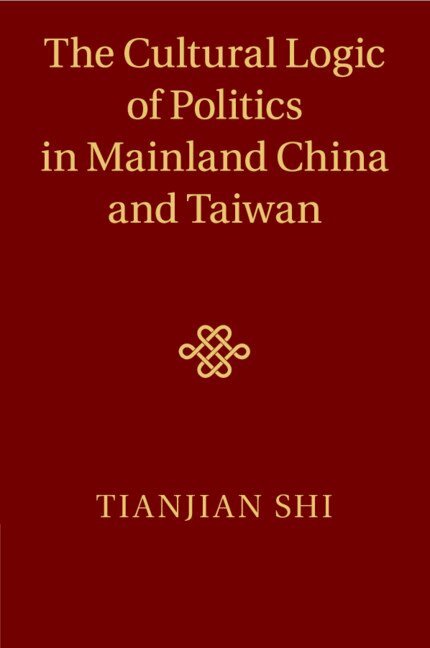
Tianjian Shi shows how cultural norms affect political attitudes and behavior through two causal pathways, one at the individual level and one at the community level. Focusing on two key norms - definition of self-interest and orientation to authority - he tests the theory with multiple surveys conducted in mainland China and Taiwan. Shi employs multi-level statistical analysis to show how, in these two very different political systems, similar norms exert similar kinds of influence on political trust, understanding of democracy, forms of political participation, and tolerance for protest. The approach helps to explain the resilience of authoritarian politics in China and the dissatisfaction of many Taiwan residents with democratic institutions. Aiming to place the study of political culture on a new theoretical and methodological foundation, Shi argues that a truly comparative social science must understand how culturally embedded norms influence decision making.
428 kr
Skickas inom 7-10 vardagar
Tianjian Shi shows how cultural norms affect political attitudes and behavior through two causal pathways, one at the individual level and one at the community level. Focusing on two key norms - definition of self-interest and orientation to authority - he tests the theory with multiple surveys conducted in mainland China and Taiwan. Shi employs multi-level statistical analysis to show how, in these two very different political systems, similar norms exert similar kinds of influence on political trust, understanding of democracy, forms of political participation, and tolerance for protest. The approach helps to explain the resilience of authoritarian politics in China and the dissatisfaction of many Taiwan residents with democratic institutions. Aiming to place the study of political culture on a new theoretical and methodological foundation, Shi argues that a truly comparative social science must understand how culturally embedded norms influence decision making.
Del 17 - East Asian Institute Contemporary China Series
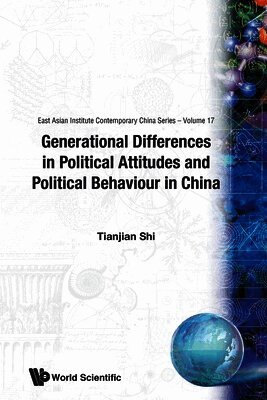
Generational Differences In Political Attitudes And Political Behaviour In China
Häftad, Engelska, 1999
154 kr
Skickas inom 5-8 vardagar
Until recently, generational studies of Communist countries have concentrated primarily on elite changes. Little attention has been paid to the changes within the general public. This study is designed to fill this gap. It reports on: (1) the socio-economic resources of different generations, especially their educational achievements; (2) the psychological resources for people in different generations to get involved in politics; (3) their political resources; and (4) their political participation. The text concludes with an appraisal of the changes among different generations that would help the reader to understand the changes in Chinese society.
Del 24 - East Asian Institute Contemporary China Series
Rural Democracy In China
Häftad, Engelska, 2000
256 kr
Tillfälligt slut
Why does the Chinese government allow village elections? What implications do these grass-roots level popular elections have for the democratization of China? By tracing the history of village level governance reform, one of the premier authorities on electoral reforms in China tackles these fundamental questions in this volume. According to the author, there are two roots to the emergence of village elections in China: structural changes in the village economy and bureaucratic politics. The author also identifies old guard Peng Zhen, himself victimized by lawlessness during the Cultural Revolution, and officials in the Ministry of Civil Affairs — an otherwise powerless bureaucracy that has jurisdiction over rural governance issues — as the driving force behind the reform in the government.The author believes that village elections have enormous political implications for China: they represent yet another aspect of “creeping democratization” of the country. Resistance from the status quo interests will be stiff, but democracy has a chance in the alliance between the disgruntled population and reform-minded elites in the leadership.Does economic prosperity increase the likelihood of political democracy? Using 1993 national survey data, the author examines the relationships between the level of economic development and the rate of semi-competitive village elections. Data analysis suggests that economic prosperity is positively associated with the occurrence of semi-competitive elections only to a certain point, above which the association turns negative. In other words, both the least and the most developed villages are less likely to hold semi-competitive elections for the chair of the village committee, which is officially defined as “an organization of self-governance of villagers”. The author also argues that rapid economic development may delay the process of political development because incumbent leaders can use newly acquired economic resources to consolidate their power.