Till Grune-Yanoff – författare
Visar alla böcker från författaren Till Grune-Yanoff. Handla med fri frakt och snabb leverans.
6 produkter
Boost
How to Make Decisions in a World Designed to Manipulate You
Av Ralph Hertwig, Till Grune-Yanoff
Inbunden, 2027
331 kr
Kommande
A call to rethink behavioral science that empowers people to steer themselves toward good choices. From an internationally acclaimed, multiple award-winning expert on decision making and a leading philosophical voice in behavioral public policy.We all struggle to make good choices—what to eat, …
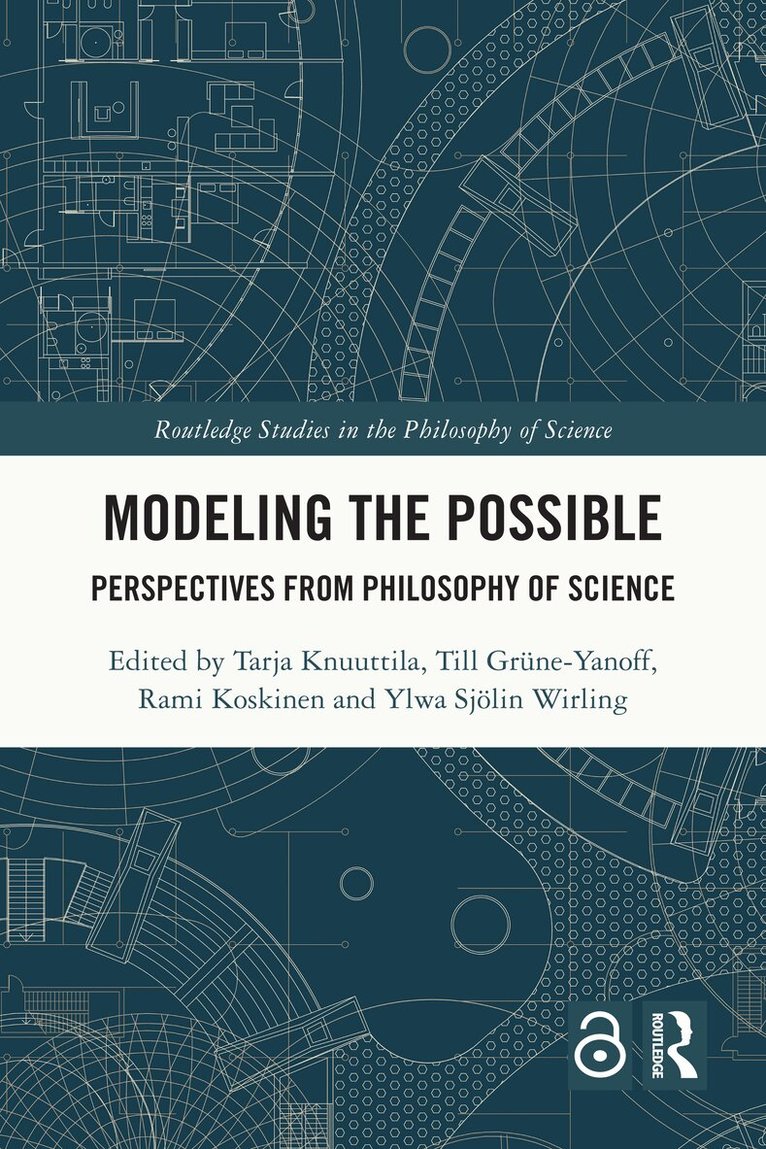
Modeling the Possible
Perspectives from Philosophy of Science
Av Tarja Knuuttila, Till Grüne-Yanoff m. fl.
Inbunden, 2025
2513 kr
Lägg i varukorg
Models are used to explore possibilities across all scientific fields. Climate models simulate the potential future climatic conditions under various emissions scenarios, macroeconomic models investigate the implications of various fiscal and monetary policy initiatives, and infectious diseases …
Modeling the Possible
Perspectives from Philosophy of Science
Av Tarja Knuuttila, Till Grüne-Yanoff m. fl.
Häftad, 2026
706 kr
Lägg i varukorg
Models are used to explore possibilities across all scientific fields. Climate models simulate the potential future climatic conditions under various emissions scenarios, macroeconomic models investigate the implications of various fiscal and monetary policy initiatives, and infectious diseases …
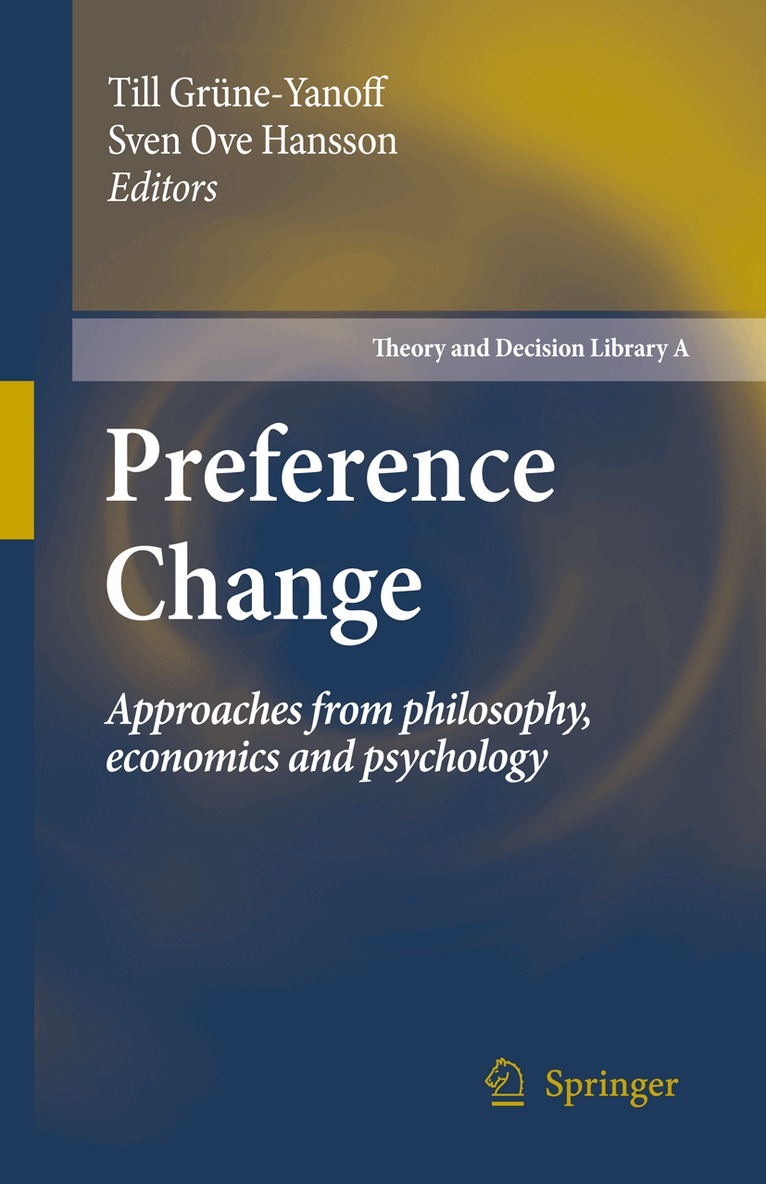
Preference Change
Approaches from philosophy, economics and psychology
Av Till Grüne-Yanoff, Sven Ove Hansson
Inbunden, 2009
1094 kr
Lägg i varukorg
Changing preferencesis a phenomenonoften invoked but rarely properlyaccounted for. Throughout the history of the social sciences, researchers have come against the possibility that their subjects’ preferenceswere affected by the phenomenato be explainedor by otherfactorsnot taken into accountin the …
Preference Change
Approaches from philosophy, economics and psychology
Av Sven Ove Hansson, Till Grune-Yanoff
E-bok, 2009
1413 kr
Lägg i varukorg
Changing preferencesis a phenomenonoften invoked but rarely properlyaccounted for. Throughout the history of the social sciences, researchers have come against the possibility that their subjects’ preferenceswere affected by the phenomenato be explainedor by otherfactorsnot taken into accountin the …
Preference Change
Approaches from philosophy, economics and psychology
Av Till Grüne-Yanoff, Sven Ove Hansson
Häftad, 2010
1094 kr
Lägg i varukorg
Changing preferencesis a phenomenonoften invoked but rarely properlyaccounted for. Throughout the history of the social sciences, researchers have come against the possibility that their subjects’ preferenceswere affected by the phenomenato be explainedor by otherfactorsnot taken into accountin the …