Tim Alan Garrison - Böcker
Visar alla böcker från författaren Tim Alan Garrison. Handla med fri frakt och snabb leverans.
6 produkter
6 produkter
1 588 kr
Skickas inom 3-6 vardagar
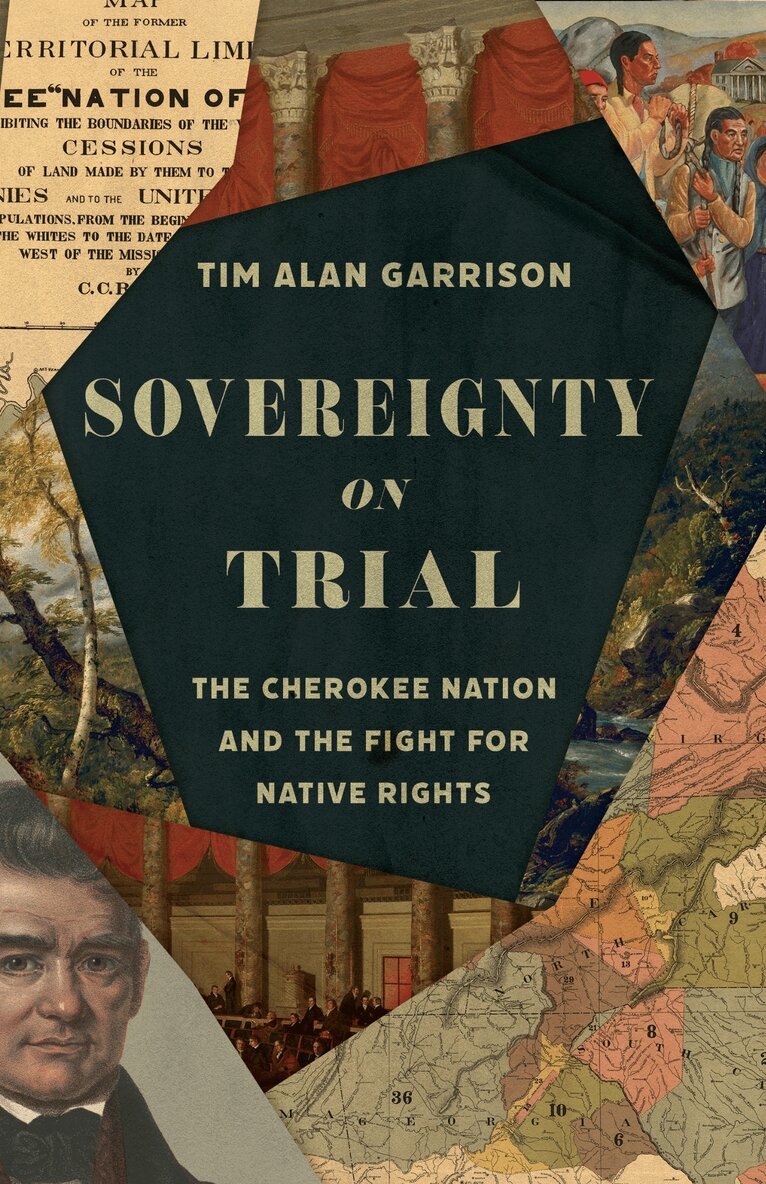
The story of the legal battle between the Cherokee Nation and the State of Georgia that ultimately led to the infamous Trail of Tears and the ongoing struggles for Native sovereignty.Sovereignty on Trial tells the story of a trio of landmark United States Supreme Court cases—Johnson v. M’Intosh (1823), Cherokee Nation v. Georgia (1831), and Worcester v. Georgia (1832)—that considered the legal status of Native nations in the early nineteenth century.Known as the Marshall Trilogy—majority opinions all written by Chief Justice John Marshall—the decisions are inconsistent in their holdings and reasoning, leaving American Indian law and interpretations of Native sovereignty confusing and ambiguous. In M’Intosh, Marshall used the imperial doctrine of discovery to diminish the property rights and autonomy of the Native nations. Subsequent interpretations of Marshall’s opinion in Cherokee Nation, with its “guardian and ward” analogy, ultimately placed Native people in a dependent status with the United States. At the end of his judicial career, however, Marshall came to view Native rights in a different light, and his opinion in Worcester was a powerful acclamation of Native political sovereignty and territorial rights. Courts have tried with little success to find a coherent line through the three rulings.The two Georgia cases resulted from the state’s efforts to extend its jurisdiction over the Cherokee Nation and annihilate its government. These cases were decided against the backdrop of the Indian Removal Act of 1830. When President Andrew Jackson and Congress failed to enforce Worcester, Georgia interned and forcibly removed the Cherokee in the now infamous tragedy known as the Trail of Tears.Tim Alan Garrison places this trio of cases in their broader legal and historical context. Significantly, Garrison explains why Georgia sought to expel the Cherokees from their homeland, how these attacks on native sovereignty tore apart Cherokee national unity, and how the changes in Cherokee political culture determined their strategy in resisting the state’s onslaught. The Cherokee resistance against Georgia was a remarkable example of national courage for the Indigenous peoples of the world, and their determination to fight oppression through the judicial system of the United States left a lasting impact on American Indian law. The Cherokee Cases tells an important, if disturbing, story whose reverberations are felt to the present day.
580 kr
Skickas inom 3-6 vardagar
The story of the legal battle between the Cherokee Nation and the State of Georgia that ultimately led to the infamous Trail of Tears and the ongoing struggles for Native sovereignty.Sovereignty on Trial tells the story of a trio of landmark United States Supreme Court cases—Johnson v. M’Intosh (1823), Cherokee Nation v. Georgia (1831), and Worcester v. Georgia (1832)—that considered the legal status of Native nations in the early nineteenth century.Known as the Marshall Trilogy—majority opinions all written by Chief Justice John Marshall—the decisions are inconsistent in their holdings and reasoning, leaving American Indian law and interpretations of Native sovereignty confusing and ambiguous. In M’Intosh, Marshall used the imperial doctrine of discovery to diminish the property rights and autonomy of the Native nations. Subsequent interpretations of Marshall’s opinion in Cherokee Nation, with its “guardian and ward” analogy, ultimately placed Native people in a dependent status with the United States. At the end of his judicial career, however, Marshall came to view Native rights in a different light, and his opinion in Worcester was a powerful acclamation of Native political sovereignty and territorial rights. Courts have tried with little success to find a coherent line through the three rulings.The two Georgia cases resulted from the state’s efforts to extend its jurisdiction over the Cherokee Nation and annihilate its government. These cases were decided against the backdrop of the Indian Removal Act of 1830. When President Andrew Jackson and Congress failed to enforce Worcester, Georgia interned and forcibly removed the Cherokee in the now infamous tragedy known as the Trail of Tears.Tim Alan Garrison places this trio of cases in their broader legal and historical context. Significantly, Garrison explains why Georgia sought to expel the Cherokees from their homeland, how these attacks on native sovereignty tore apart Cherokee national unity, and how the changes in Cherokee political culture determined their strategy in resisting the state’s onslaught. The Cherokee resistance against Georgia was a remarkable example of national courage for the Indigenous peoples of the world, and their determination to fight oppression through the judicial system of the United States left a lasting impact on American Indian law. The Cherokee Cases tells an important, if disturbing, story whose reverberations are felt to the present day.
668 kr
Skickas inom 10-15 vardagar
In The Native South, Tim Alan Garrison and Greg O’Brien assemble contributions from leading ethnohistorians of the American South in a state-of-the-field volume on southern Native American history from the sixteenth to the twenty-first century. Spanning such subjects as Seminole–African American kinship systems, Cherokee notions of guilt and innocence in evolving tribal jurisprudence, Indian captives and American empire, and second-wave feminist activism among Cherokee women in the 1970s, The Native South offers a dynamic examination of ethnohistorical methodology and evolving research in southern Native American history. Theda Perdue and Michael Green, pioneers who developed the modern historiography of the Native South into a major field of scholarly inquiry, speak in interviews with the editors about how that field evolved in the late twentieth century after the foundational work of James Mooney, John Swanton, Angie Debo, and Charles Hudson.For scholars, graduate students, and undergraduates in this field of American history, this collection offers original essays by MikaËla Adams, James Taylor Carson, Tim Alan Garrison, Izumi Ishii, Malinda Maynor Lowery, Rowena McClinton, David A. Nichols, Greg O’Brien, Meg Devlin O’Sullivan, Julie L. Reed, Christina Snyder, and Rose Stremlau.
Legal Ideology of Removal
The Southern Judiciary and the Sovereignty of Native American Nations
Häftad, Engelska, 2009
518 kr
Skickas inom 5-8 vardagar
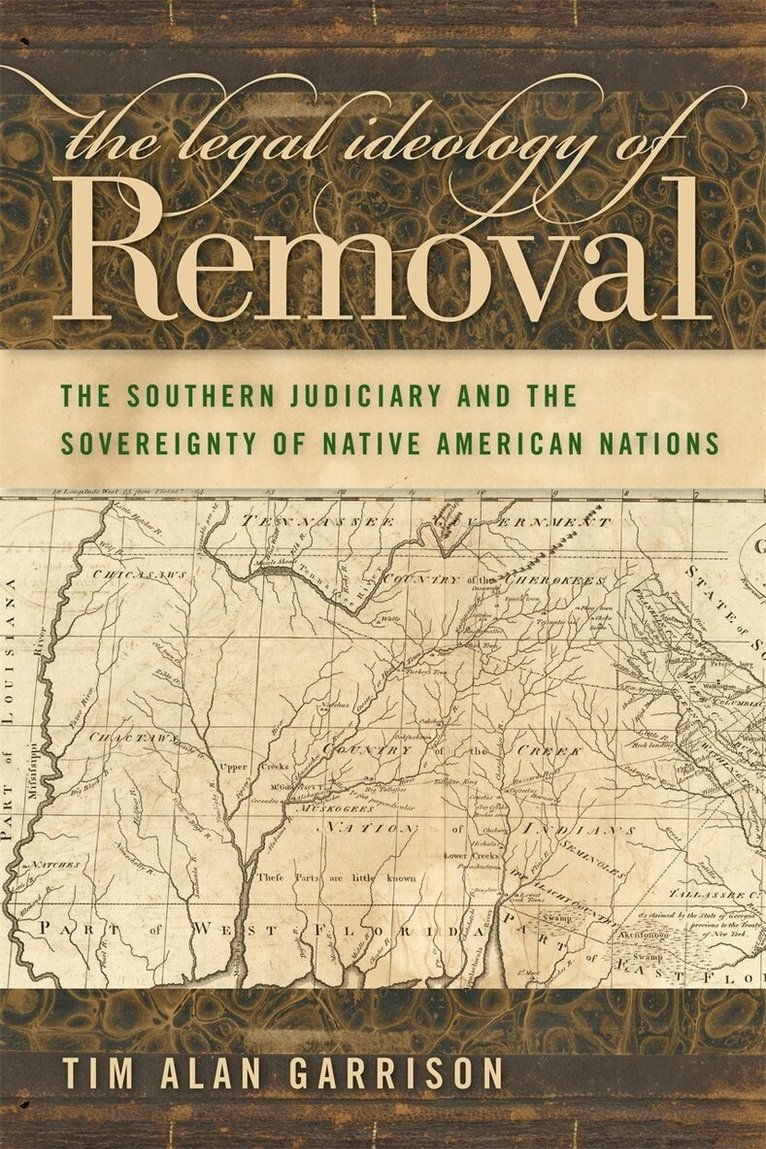
This study is the first to show how state courts enabled the mass expulsion of Native Americans from their southern homelands in the 1830s. Our understanding of that infamous period, argues Tim Alan Garrison, is too often molded around the towering personalities of the Indian removal debate, including President Andrew Jackson, Cherokee leader John Ross, and United States Supreme Court Justice John Marshall. This common view minimizes the impact on Indian sovereignty of some little-known legal cases at the state level.Because the federal government upheld Native American self-dominion, southerners bent on expropriating Indian land sought a legal toehold through state supreme court decisions. As Garrison discusses Georgia v. Tassels (1830), Caldwell v. Alabama (1831), Tennessee v. Forman (1835), and other cases, he shows how proremoval partisans exploited regional sympathies. By casting removal as a states' rights, rather than a moral, issue, they won the wide support of a land-hungry southern populace. The disastrous consequences to Cherokees, Creeks, Choctaws, Chickasaws, and Seminoles are still unfolding.Important in its own right, jurisprudence on Indian matters in the antebellum South also complements the legal corpus on slavery. Readers will gain a broader perspective on the racial views of the southern legal elite, and on the logical inconsistencies of southern law and politics in the conceptual period of the anti-Indian and proslavery ideologies.
324 kr
Skickas inom 10-15 vardagar
In The Native South, Tim Alan Garrison and Greg O’Brien assemble contributions from leading ethnohistorians of the American South in a state-of-the-field volume on southern Native American history from the sixteenth to the twenty-first century. Spanning such subjects as Seminole–African American kinship systems, Cherokee notions of guilt and innocence in evolving tribal jurisprudence, Indian captives and American empire, and second-wave feminist activism among Cherokee women in the 1970s, The Native South offers a dynamic examination of ethnohistorical methodology and evolving research in southern Native American history. Theda Perdue and Michael Green, pioneers who developed the modern historiography of the Native South into a major field of scholarly inquiry, speak in interviews with the editors about how that field evolved in the late twentieth century after the foundational work of James Mooney, John Swanton, Angie Debo, and Charles Hudson.For scholars, graduate students, and undergraduates in this field of American history, this collection offers original essays by MikaËla Adams, James Taylor Carson, Tim Alan Garrison, Izumi Ishii, Malinda Maynor Lowery, Rowena McClinton, David A. Nichols, Greg O’Brien, Meg Devlin O’Sullivan, Julie L. Reed, Christina Snyder, and Rose Stremlau.
4 225 kr
Tillfälligt slut
An essential reference on the reciprocal role that U.S. and Native policy and law have played in American political development Created by a culturally diverse editorial board of major scholars and containing invaluable bibliographic material not found in other publications, this definitive two-volume set examines the history and impact of U.S. relations with Native Americans. Extensive essays trace policies from the Continental Congress to the present day—including the role that managing the "Indian question" has played in American political development—while A to Z entries cover everything critical to a full understanding of the context to U.S./Native American relations, from history, politics, and sociology to civil rights and culture. The set is also the first reference of its kind to incorporate the expanding scholarship reflecting both the Native American viewpoint on and response to federal policies and initiatives over time.