Tim Bayne - Böcker
Visar alla böcker från författaren Tim Bayne. Handla med fri frakt och snabb leverans.
12 produkter
12 produkter
519 kr
Skickas inom 10-15 vardagar
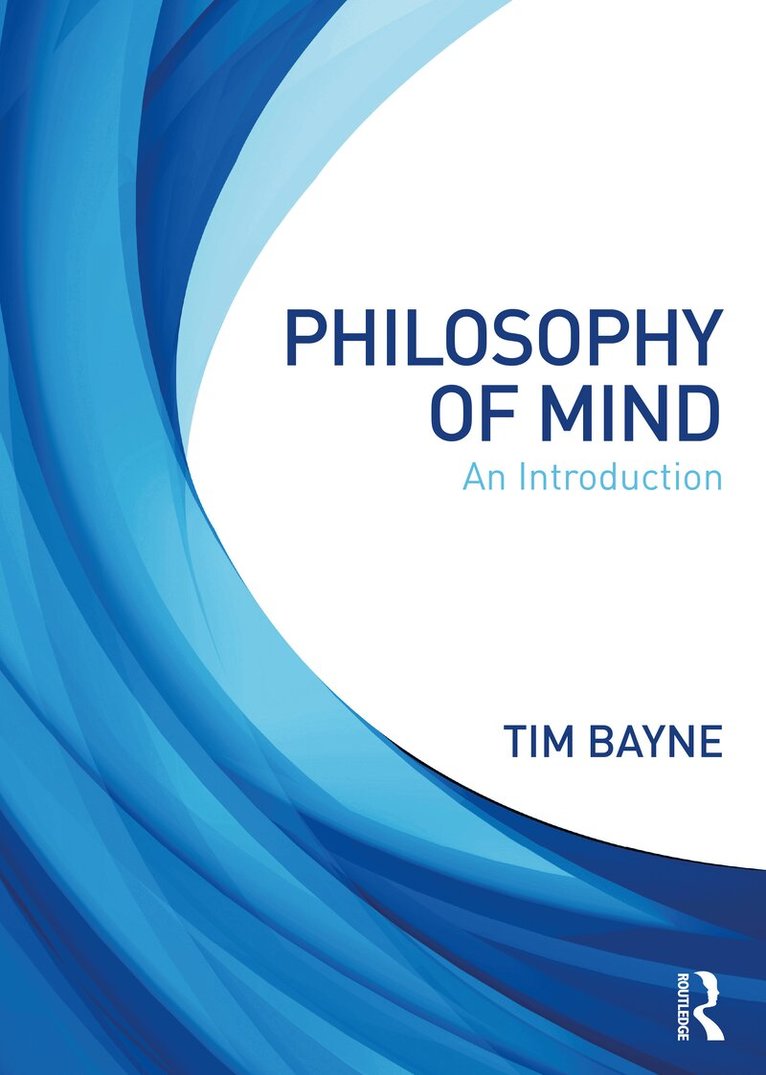
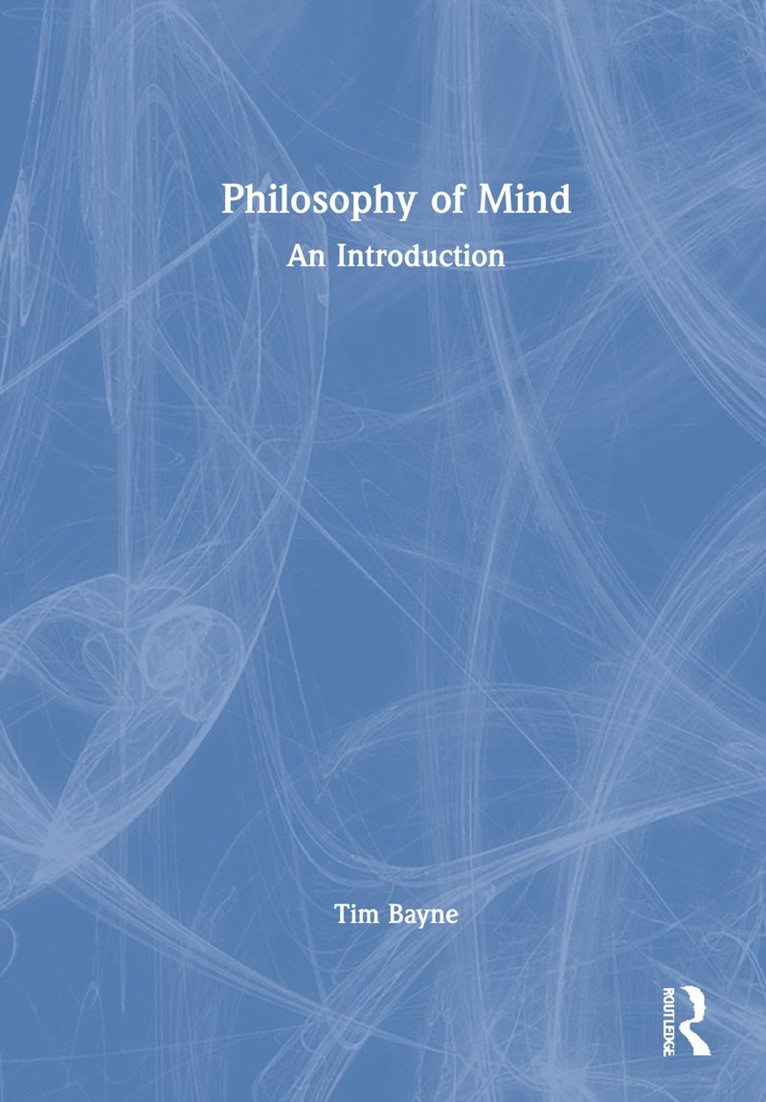
Developments in the philosophy of mind over the last 20 years have dramatically changed the nature of the subject. In this major new introduction, Tim Bayne presents an outstanding overview of many of the key topics, problems, and debates, taking account not only of changes in philosophy of mind itself but also of important developments in the scientific study of the mind. The following topics are discussed in depth: What distinguishes a physicalist conception of the mind? Behaviourism, the identity theory, functionalism, and eliminativism as accounts of the mental The nature of perception, including the issue of perceptual transparency, the admissible contents of perception, and the question of unconscious perception The nature of thought, including the language of thought hypothesis, Searle’s Chinese room argument, and the Turing test The basis of intentional content Externalist accounts of content and the ‘extended mind’ thesis Consciousness-based objections to physicalism, and illusionist and panpsychist conceptions of consciousness Theories of consciousness, including methodological issues in the study of consciousness Mental causation, including both philosophical and scientific challenges The problem(s) of other minds, including knowledge of non-human minds Self-knowledge Personal identity and the nature of the selfThe book features a number of boxes that provide a more in-depth look at particular issues. Also included are chapter summaries, guides to further reading, and a helpful glossary of terms. Written by a leading figure in the field, Philosophy of Mind: An Introduction is an invaluable core text for any student coming to philosophy of mind for the first time.
1 029 kr
Skickas inom 7-10 vardagar
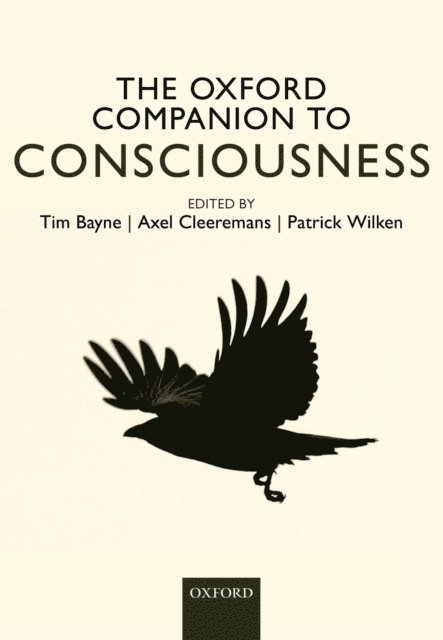
Consciousness is undoubtedly one of the last remaining scientific mysteries and hence one of the greatest contemporary scientific challenges. How does the brain's activity result in the rich phenomenology that characterizes our waking life? Are animals conscious? Why did consciousness evolve? How does science proceed to answer such questions? Can we define what consciousness is? Can we measure it? Can we use experimental results to further our understanding of disorders of consciousness, such as those seen in schizophrenia, delirium, or altered states of consciousness? These questions are at the heart of contemporary research in the domain. Answering them requires a fundamentally interdisciplinary approach that engages not only philosophers, but also neuroscientists and psychologists in a joint effort to develop novel approaches that reflect both the stunning recent advances in imaging methods as well as the continuing refinement of our concepts of consciousness. In this light, the Oxford Companion to Consciousness is the most complete authoritative survey of contemporary research on consciousness. Five years in the making and including over 250 concise entries written by leaders in the field, the volume covers both fundamental knowledge as well as more recent advances in this rapidly changing domain. Structured as an easy-to-use dictionary and extensively cross-referenced, the Companion offers contributions from philosophy of mind to neuroscience, from experimental psychology to clinical findings, so reflecting the profoundly interdisciplinary nature of the domain. Particular care has been taken to ensure that each of the entries is accessible to the general reader and that the overall volume represents a comprehensive snapshot of the contemporary study of consciousness. The result is a unique compendium that will prove indispensable to anyone interested in consciousness, from beginning students wishing to clarify a concept to professional consciousness researchers looking for the best characterization of a particular phenomenon.
485 kr
Skickas inom 5-8 vardagar
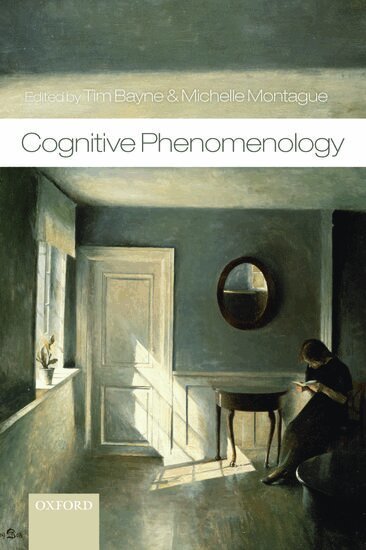
It is widely agreed that there is such a thing as sensory phenomenology and imagistic phenomenology. The central concern of the cognitive phenomenology debate is whether there is a distinctive 'cognitive phenomenology'--that is, a kind of phenomenology that has cognitive or conceptual character in some sense that needs to be precisely determined. This volume presents new work by leading philosophers in the field, and addresses the question of whether conscious thought has cognitive phenomenology. It also includes a number of essays which consider whether cognitive phenomenology is part of conscious perception and conscious emotion. Three broad themes run through the volume. First, some authors focus on the question of how the notion of cognitive phenomenology ought to be understood. How should the notion of cognitive phenomenology be defined? Are there different kinds of cognitive phenomenology? A second theme concerns the existence of cognitive phenomenology. Some contributors defend the existence of a distinctive cognitive phenomenology, whereas others deny it. The arguments for and against the existence of cognitive phenomenology raise questions concerning the nature of first-person knowledge of thought, the relationship between consciousness and intentionality, and the scope of the explanatory gap. A third theme concerns the implications of the cognitive phenomenology debate. What are the implications of the debate for accounts of our introspective access to conscious thought and for accounts of the very nature of conscious thought? Cognitive Phenomenology brings the debate to the forefront of philosophy, and provides a state-of-the-art account of the issues at stake.
1 122 kr
Skickas inom 7-10 vardagar
Consciousness is undoubtedly one of the last remaining scientific mysteries and hence one of the greatest contemporary scientific challenges. How does the brain's activity result in the rich phenomenology that characterizes our waking life? Are animals conscious? Why did consciousness evolve? How does science proceed to answer such questions? Can we define what consciousness is? Can we measure it? Can we use experimental results to further our understanding of disorders of consciousness, such as those seen in schizophrenia, delirium, or altered states of consciousness? These questions are at the heart of contemporary research in the domain. Answering them requires a fundamentally interdisciplinary approach that engages not only philosophers, but also neuroscientists and psychologists in a joint effort to develop novel approaches that reflect both the stunning recent advances in imaging methods as well as the continuing refinement of our concepts of consciousness. In this light, the Oxford Companion to Consciousness is the most complete authoritative survey of contemporary research on consciousness. Five years in the making and including over 250 concise entries written by leaders in the field, the volume covers both fundamental knowledge as well as more recent advances in this rapidly changing domain. Structured as an easy-to-use dictionary and extensively cross-referenced, the Companion offers contributions from philosophy of mind to neuroscience, from experimental psychology to clinical findings, so reflecting the profoundly interdisciplinary nature of the domain. Particular care has been taken to ensure that each of the entries is accessible to the general reader and that the overall volume represents a comprehensive snapshot of the contemporary study of consciousness. The result is a unique compendium that will prove indispensable to anyone interested in consciousness, from beginning students wishing to clarify a concept to professional consciousness researchers looking for the best characterization of a particular phenomenon.
108 kr
Skickas inom 5-8 vardagar
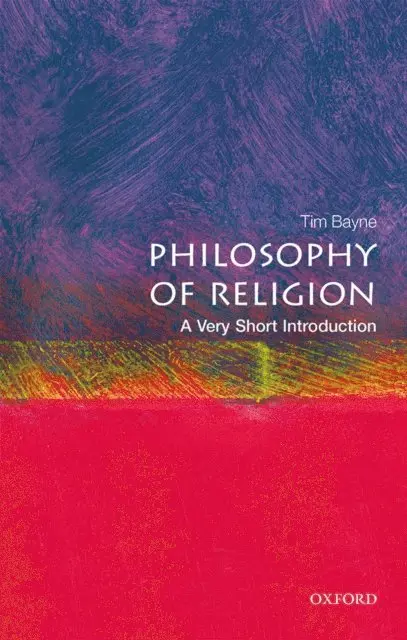
What is the philosophy of religion? How can we distinguish it from theology on the one hand and the psychology/sociology of religious belief on the other? What does it mean to describe God as 'eternal'? And should religious people want there to be good arguments for the existence of God, or is religious belief only authentic in the absence of these good arguments?In this Very Short Introduction Tim Bayne introduces the field of philosophy of religion, and engages with some of the most burning questions that philosophers discuss. Considering how 'religion' should be defined, and whether we even need to be able to define it in order to engage in the philosophy of religion, he goes on to discuss whether the existence of God matters. Exploring the problem of evil, Bayne also debates the connection between faith and reason, and the related question of what role reason should play in religious contexts. Shedding light on the relationship between science and religion, Bayne finishes by considering the topics of reincarnation and the afterlife.ABOUT THE SERIES: The Very Short Introductions series from Oxford University Press contains hundreds of titles in almost every subject area. These pocket-sized books are the perfect way to get ahead in a new subject quickly. Our expert authors combine facts, analysis, perspective, new ideas, and enthusiasm to make interesting and challenging topics highly readable.
904 kr
Skickas inom 5-8 vardagar
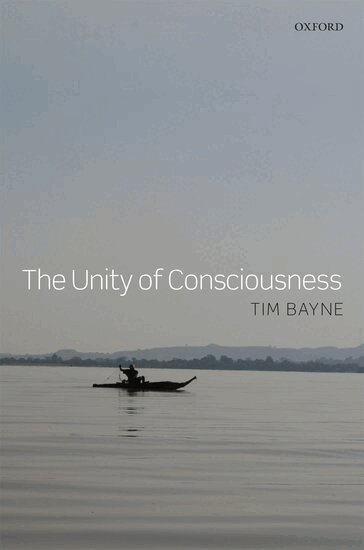
In The Unity of Consciousness Tim Bayne draws on philosophy, psychology, and neuroscience in defence of the claim that consciousness is unified. In the first part of the book Bayne develops an account of what it means to say that consciousness is unified. Part II applies this account to a variety of cases - drawn from both normal and pathological forms of experience - in which the unity of consciousness is said to break down. Bayne argues that the unity of consciousness remains intact in each of these cases. Part III explores the implications of the unity of consciousness for theories of consciousness, for the sense of embodiment, and for accounts of the self. In one of the most comprehensive examinations of the topic available, The Unity of Consciousness draws on a wide range of findings within philosophy and the sciences of the mind to construct an account of the unity of consciousness that is both conceptually sophisticated and scientifically informed.
1 269 kr
Skickas inom 5-8 vardagar
It is widely agreed that there is such a thing as sensory phenomenology and imagistic phenomenology. The central concern of the cognitive phenomenology debate is whether there is a distinctive 'cognitive phenomenology'--that is, a kind of phenomenology that has cognitive or conceptual character in some sense that needs to be precisely determined. This volume presents new work by leading philosophers in the field, and addresses the question of whether conscious thought has cognitive phenomenology. It also includes a number of essays which consider whether cognitive phenomenology is part of conscious perception and conscious emotion. Three broad themes run through the volume. First, some authors focus on the question of how the notion of cognitive phenomenology ought to be understood. How should the notion of cognitive phenomenology be defined? Are there different kinds of cognitive phenomenology? A second theme concerns the existence of cognitive phenomenology. Some contributors defend the existence of a distinctive cognitive phenomenology, whereas others deny it. The arguments for and against the existence of cognitive phenomenology raise questions concerning the nature of first-person knowledge of thought, the relationship between consciousness and intentionality, and the scope of the explanatory gap. A third theme concerns the implications of the cognitive phenomenology debate. What are the implications of the debate for accounts of our introspective access to conscious thought and for accounts of the very nature of conscious thought? Cognitive Phenomenology brings the debate to the forefront of philosophy, and provides a state-of-the-art account of the issues at stake.
108 kr
Skickas inom 5-8 vardagar
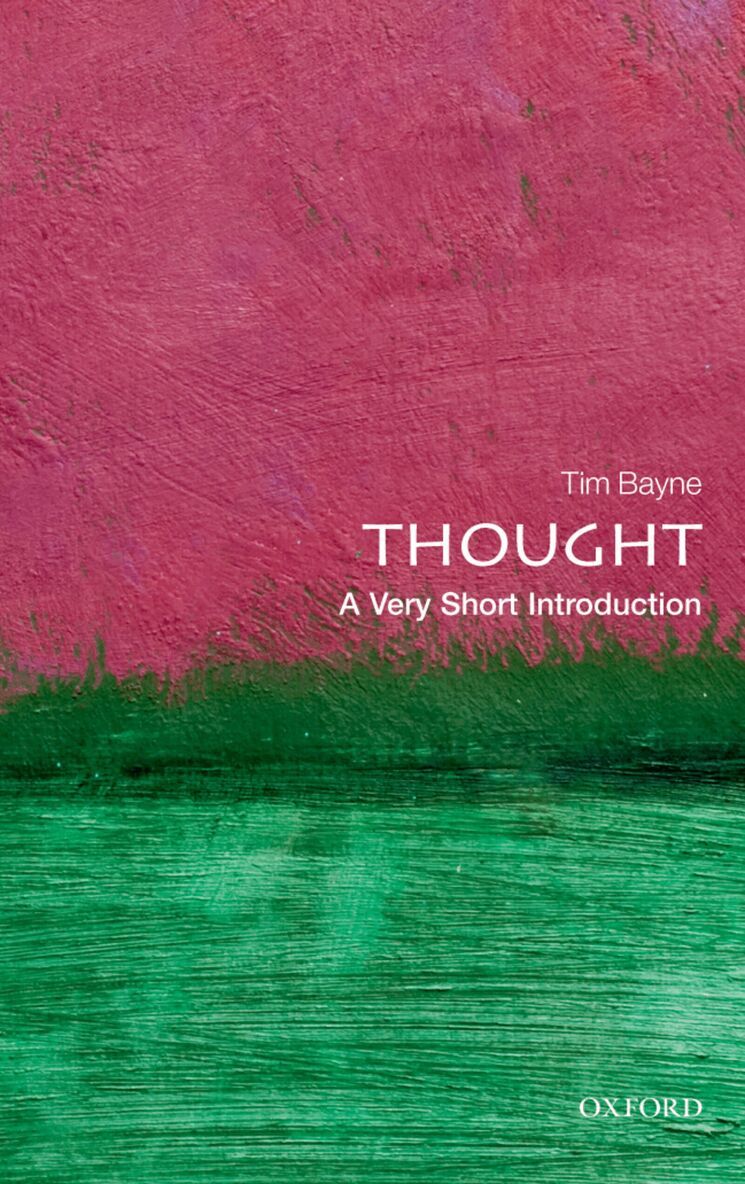
There is no denying that thinking comes naturally to human beings. But what are thoughts? How is thought realized in the brain? Does thinking occur in public or is it a purely private affair? Do young children and non-human animals think? Is human thought the same everywhere, or are there culturally specific modes of thought? What is the relationship between thought and language? What kind of responsibility do we have for our thoughts? In this compelling Very Short Introduction, Tim Bayne looks at the nature of thought. Beginning with questions about what thought is and what distinguishes it from other kinds of mental states, he goes on to examine various interpretations of thought from philosophy, psychology, neuroscience, and anthropology. By exploring the logical structures of thought and the relationship between thought and other mental phenomena, as well as the mechanisms that make thought possible and the cultural variations that may exist in our thought processes, Bayne looks at what we know - and don't know - about our great capacity for thought. ABOUT THE SERIES: The Very Short Introductions series from Oxford University Press contains hundreds of titles in almost every subject area. These pocket-sized books are the perfect way to get ahead in a new subject quickly. Our expert authors combine facts, analysis, perspective, new ideas, and enthusiasm to make interesting and challenging topics highly readable.
442 kr
Skickas inom 5-8 vardagar
In The Unity of Consciousness Tim Bayne draws on philosophy, psychology, and neuroscience in defence of the claim that consciousness is unified. In the first part of the book Bayne develops an account of what it means to say that consciousness is unified. Part II applies this account to a variety of cases - drawn from both normal and pathological forms of experience - in which the unity of consciousness is said to break down. Bayne argues that the unity of consciousness remains intact in each of these cases. Part III explores the implications of the unity of consciousness for theories of consciousness, for the sense of embodiment, and for accounts of the self. In one of the most comprehensive examinations of the topic available, The Unity of Consciousness draws on a wide range of findings within philosophy and the sciences of the mind to construct an account of the unity of consciousness that is both conceptually sophisticated and scientifically informed.
2 088 kr
Skickas inom 10-15 vardagar
Developments in the philosophy of mind over the last 20 years have dramatically changed the nature of the subject. In this major new introduction, Tim Bayne presents an outstanding overview of many of the key topics, problems, and debates, taking account not only of changes in philosophy of mind itself but also of important developments in the scientific study of the mind. The following topics are discussed in depth: What distinguishes a physicalist conception of the mind? Behaviourism, the identity theory, functionalism, and eliminativism as accounts of the mental The nature of perception, including the issue of perceptual transparency, the admissible contents of perception, and the question of unconscious perception The nature of thought, including the language of thought hypothesis, Searle’s Chinese room argument, and the Turing test The basis of intentional content Externalist accounts of content and the ‘extended mind’ thesis Consciousness-based objections to physicalism, and illusionist and panpsychist conceptions of consciousness Theories of consciousness, including methodological issues in the study of consciousness Mental causation, including both philosophical and scientific challenges The problem(s) of other minds, including knowledge of non-human minds Self-knowledge Personal identity and the nature of the selfThe book features a number of boxes that provide a more in-depth look at particular issues. Also included are chapter summaries, guides to further reading, and a helpful glossary of terms. Written by a leading figure in the field, Philosophy of Mind: An Introduction is an invaluable core text for any student coming to philosophy of mind for the first time.
Delusion and Self-Deception
Affective and Motivational Influences on Belief Formation
Häftad, Engelska, 2015
784 kr
Skickas inom 10-15 vardagar
This collection of essays focuses on the interface between delusions and self-deception. As pathologies of belief, delusions and self-deception raise many of the same challenges for those seeking to understand them. Are delusions and self-deception entirely distinct phenomena, or might some forms of self-deception also qualify as delusional? To what extent might models of self-deception and delusion share common factors? In what ways do affect and motivation enter into normal belief-formation, and how might they be implicated in self-deception and delusion? The essays in this volume tackle these questions from both empirical and conceptual perspectives. Some contributors focus on the general question of how to locate self-deception and delusion within our taxonomy of psychological states. Some contributors ask whether particular delusions - such as the Capgras delusion or anosognosia for hemiplegia - might be explained by appeal to motivational and affective factors. And some contributors provide general models of motivated reasoning, against which theories of pathological belief-formation might be measured.The volume will be of interest to cognitive scientists, clinicians, and philosophers interested in the nature of belief and the disturbances to which it is subject.
Delusion and Self-Deception
Affective and Motivational Influences on Belief Formation
Inbunden, Engelska, 2008
2 030 kr
Skickas inom 10-15 vardagar
This collection of essays focuses on the interface between delusions and self-deception. As pathologies of belief, delusions and self-deception raise many of the same challenges for those seeking to understand them. Are delusions and self-deception entirely distinct phenomena, or might some forms of self-deception also qualify as delusional? To what extent might models of self-deception and delusion share common factors? In what ways do affect and motivation enter into normal belief-formation, and how might they be implicated in self-deception and delusion? The essays in this volume tackle these questions from both empirical and conceptual perspectives. Some contributors focus on the general question of how to locate self-deception and delusion within our taxonomy of psychological states. Some contributors ask whether particular delusions - such as the Capgras delusion or anosognosia for hemiplegia - might be explained by appeal to motivational and affective factors. And some contributors provide general models of motivated reasoning, against which theories of pathological belief-formation might be measured.The volume will be of interest to cognitive scientists, clinicians, and philosophers interested in the nature of belief and the disturbances to which it is subject.