Tim Congdon - Böcker
Visar alla böcker från författaren Tim Congdon. Handla med fri frakt och snabb leverans.
12 produkter
12 produkter
175 kr
Skickas inom 5-8 vardagar
By considering recent and historical events such as the Great Depression, episodes of boom and bust in the UK, and the malaise in Japan in the 1990s and the early 21st century, monetary economist Tim Congdon is able to show how monetary policy affects both financial markets and the real economy. In all these episodes, fluctuations in money supply growth led to booms or busts in financial markets and were associated with turbulence in the price level and in output and employment. The crucial linkages between monetary policy and financial markets, argues the author, involve broad money, not narrow money. Non-bank financial institutions, such as pension funds and insurance companies, play a critical role in transmitting fluctuations in money growth to asset prices. This monograph is an important contribution to the crucial debate on the role of monetary aggregates in setting monetary policy. Congdon's argument, that ignoring monetary aggregates can lead to profound instability in the real economy, is compelling.
237 kr
Tillfälligt slut
The author covers the Northern Rock affair and the subsequent instability in the UK financial system in the context of the history and desired future role of the Bank of England as a central bank. Tim Congdon, a respected monetary economist, shows how the Bank of England failed in its duties to provide Northern Rock with proper lender-of-last resort facilities. This helped bring down the bank itself and created instability in financial markets. Congdon argues that the mistakes by the Bank of England arose directly from Gordon Brown's decision to dismember the Bank in 1997. As a result, the Bank lost all its experience in commercial banking. Furthermore, the government and the Bank were unable to coordinate their actions in the way that had been envisaged by the government when it reformed the Bank of England. Congdon proposes a radical new settlement. The Bank of England should be privatised; its capital should be provided by the commercial banks; and it should regulate banks as well as providing them with lender-of-last-resort facilities.He shows how this new structure provides just the right incentives to regulate the banking system in a way that will ensure financial stability whilst allowing banks to provide efficient services to the public.
281 kr
Skickas inom 5-8 vardagar
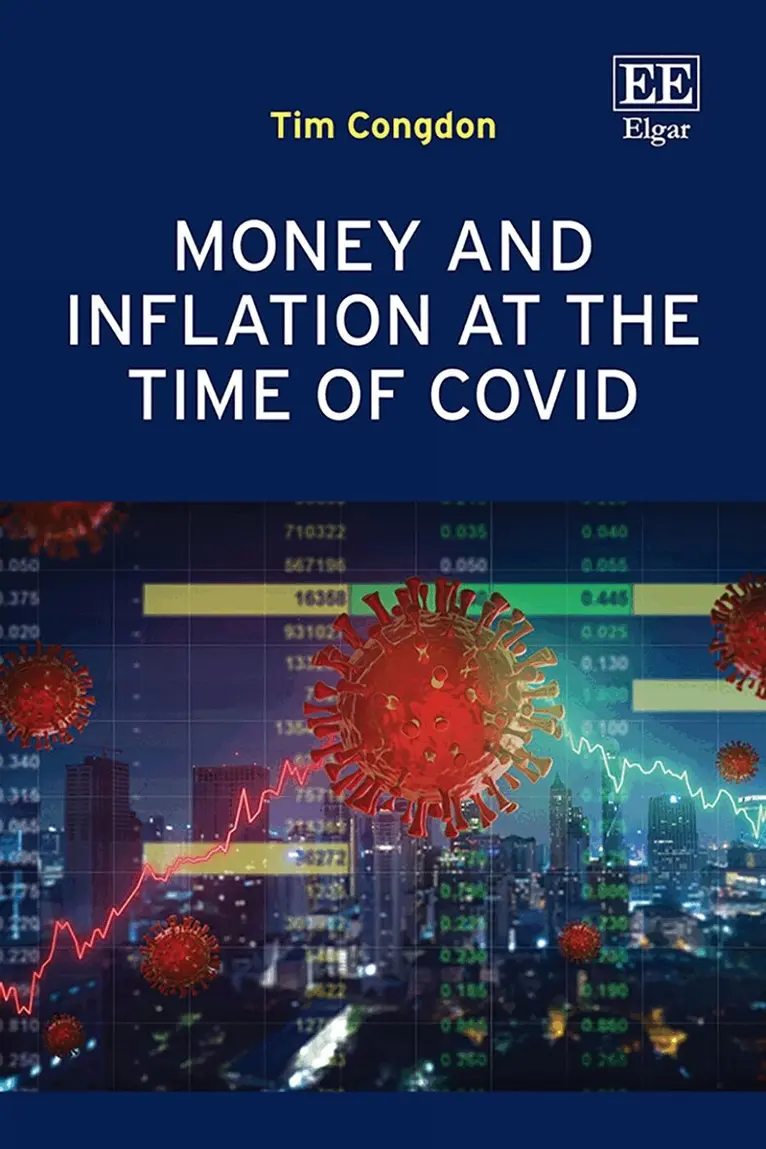
As Covid-19 hit the world’s leading economies, most economists – in central banks and elsewhere – expected years of disinflation or even falling prices. To counter the supposed risks, policy-makers embarked on expansionary measures which caused money growth to reach remarkably high rates in spring and summer of 2020. In the event inflation soared in the next few quarters. In 2022 it reached the highest levels for 40 years in the USA, Europe, the UK and elsewhere. In this bold new book Congdon laments the widespread forecasting failure. From the very start – in late March 2020 – he warned both that rapid money growth was to be expected and that it would lead to a serious inflation flare-up. In rigorous but accessible language, Congdon explains the continuing analytical power of the quantity theory of money. As with other inflation episodes in the past, the inflation of the early 2020s demonstrated the force of Milton Friedman’s dictum that ‘inflation is always and everywhere a monetary phenomenon’.
1 638 kr
Skickas inom 10-15 vardagar
668 kr
Skickas inom 10-15 vardagar
What does the future hold for broadcasting in Britain? At a time when British broadcasting is undergoing great change, what revenues will be available for funding programming in the 1990s and beyond? Paying for Broadcasting: The Handbook presents a wide-ranging discussion of funding options open to broadcasters. Commissioned by the BBC to inform debate in the run up to the 1996 Charter Renewal, and drawing on examples from Britain and other worldwide broadcasting markets, the authors explore the histories of and project future possibilities for the revenues available from different sources: advertising and sponsorship, subscription, programme sales and co-production and various kinds of public funding.
1 753 kr
Skickas inom 7-10 vardagar
How is the inflation flare-up of the early 2020s to be explained? In this book Tim Congdon, one of the world’s leading monetary analysts and Fellow of the Royal Economic Society, argues that a money growth explosion in spring and summer 2020 was the main cause.The book is scholarly, but also lively and readable. Congdon restates the quantity theory of money, advocating the usefulness of a broadly-defined measure of money which includes all, or nearly all, bank deposits. He applies this theory to the macroeconomic events of the early 2020s, and debunks the widespread view that inflation was caused by unforeseeable supply-side shocks.In spring 2020 Congdon was almost unique in forecasting the inflation flare-up. His position contrasted sharply with the overwhelming majority of economists who instead believed that Covid-19 would lead to several years of disinflation. Congdon was right and nearly all of his profession was wrong. Congdon is very critical of leading central banks, particularly the USA’s Federal Reserve.Money and Inflation at the Time of Covid is a brilliant challenge to conventional macroeconomic thinking. It provides vital insights into recent events for students and academics in economics and finance, as well as economists, policymakers and other practitioners working in financial institutions, companies and consultancies.
2 576 kr
Skickas inom 10-15 vardagar
What does the future hold for broadcasting in Britain? At a time when British broadcasting is undergoing great change, what revenues will be available for funding programming in the 1990s and beyond? Paying for Broadcasting: The Handbook presents a wide-ranging discussion of funding options open to broadcasters. Commissioned by the BBC to inform debate in the run up to the 1996 Charter Renewal, and drawing on examples from Britain and other worldwide broadcasting markets, the authors explore the histories of and project future possibilities for the revenues available from different sources: advertising and sponsorship, subscription, programme sales and co-production and various kinds of public funding.
256 kr
Tillfälligt slut
In the 15 years to mid-2007 the world economy enjoyed unparalleled stability (the so-called "Great Moderation"), with steady growth and low inflation. But the period since mid-2007 ("the Great Recession") has seen the worst macroeconomic turmoil since the 1930s. A dramatic plunge in trade, output and employment in late 2008 and 2009 has been followed by an unconvincing recovery. How is the lurch from stability to instability to be explained? What are the intellectual origins of the policy mistakes that led to the Great Recession? What theories motivated policies in the USA and other leading nations? Which ideas about economic policy have proved right? And which have been wrong? Money in a Free Society contains 18 provocative essays on these questions from Tim Congdon, an influential economic adviser to the Thatcher government in the UK and one of the world's leading monetary commentators. Congdon argues that academic economists and policy-makers have betrayed the intellectual legacy of both Keynes and Friedman. These two great economists believed -- if in somewhat different ways -- in the need for steady growth in the quantity of money.But Keynes has been misunderstood as advocating big rises in public spending and large budget deficits as the only way to defeat recession. That has led under President Obama to an unsustainable explosion in American public debt. Meanwhile the Fed has ignored extreme volatility in the rate of money growth, contrary to the central message of Friedman's analytical work. In his 1923 Tract on Monetary Reform Keynes said, "The Individualistic Capitalism of today, precisely because it entrusts saving to the individual investor and production to the individual employer, presumes a stable measuring-rod of value, and cannot be efficient--perhaps cannot survive--without one." In Money in a Free Society Congdon calls for a return to stable money growth and sound public finances, and argues that these remain the best answers to the problems facing modern capitalism.
Money in the Great Recession
Did a Crash in Money Growth Cause the Global Slump?
Inbunden, Engelska, 2017
1 936 kr
Skickas inom 7-10 vardagar
No issue is more fundamental in contemporary macroeconomics than identifying the causes of the recent Great Recession. The standard view is that the banks were to blame because they took on too much risk, 'went bust' and had to be bailed out by governments. However very few banks actually had losses in excess of their capital. The counter-argument presented in this stimulating new book is that the Great Recession was in fact caused by a collapse in the rate of change of the quantity of money. This was the result of a mistimed and inappropriate tightening of banks' capital regulations, which had vicious deflationary consequences at just the wrong point in the business cycle. Central bankers and financial regulators made serious mistakes. The book's argument echoes that on the causes of the Great Depression made by Milton Friedman and Anna Schwartz in their classic book A Monetary History of the United States. Offering an alternative monetary explanation of the Great Recession, this book is essential reading for all economists working in macroeconomics and monetary economics. It will also appeal to those interested in the wider public policy debates arising from the crisis and its aftermath.Contributors include: P. Booth, J.E. Castañeda, T. Congdon, C. Goodhart, S. Hanke, D. Laidler, A. Ridley, R. Skidelsky, R. Thomas
2 252 kr
Skickas inom 7-10 vardagar
Keynes, the Keynesians and Monetarism is a major contribution to the continuing debate on macroeconomic policy-making. Tim Congdon has been a strong supporter of monetarist economic principles for over 30 years. His writings - in the newspapers and for parliamentary committees, as well as in academic journals - played an influential role in the transformation of British macroeconomic policy in the 1980s and 1990s. This book brings together the main papers written by the author since his 1992 collection, Reflections on Monetarism. It challenges several 'conventional wisdoms' about UK macroeconomic policy (and thinking about policy), arguing - for example - that the Keynesians' advocacy of incomes policy and fiscal activism in the immediate post-war decades did not have a clear basis in Keynes's own writings. The book denies that the UK had a 'Keynesian revolution', in the sense of a deliberately pursued fiscal activism to promote 'full employment'. Implicit throughout the volume is a distinctive view of how the economy works, with an account of the transmission mechanism (from money to the economy) in which movements in asset prices and aggregate demand are strongly influenced by the quantity of money. Congdon uses this approach to demonstrate that monetary policy has had more powerful effects on macroeconomic activity in the post-war period than fiscal policy. He also suggests that the now fashionable 'New Keynesian' view of policy-making acknowledges the primacy of monetary policy and would be better termed 'output gap monetarism'. In short, Keynes, the Keynesians and Monetarism contends that monetarism defeated Keynesianism in the battle of ideas in the 1970s and 1980s. The achievement of greater macroeconomic stability in the last 15 years is largely due to the impact of monetarist thinking on policy-making.The book is clearly and attractively written, and covers topics that are fundamental to macroeconomic thinking and policy-making. It will be a provocative and appealing read for scholars at all levels of economics, macroeconomics and monetary theory. It will also find an audience among policymakers in central banks and finance ministries, business economists working in companies, and financial economists in the City of London and other centres.
785 kr
Skickas inom 7-10 vardagar
Keynes, the Keynesians and Monetarism is a major contribution to the continuing debate on macroeconomic policy-making. Tim Congdon has been a strong supporter of monetarist economic principles for over 30 years. His writings - in the newspapers and for parliamentary committees, as well as in academic journals - played an influential role in the transformation of British macroeconomic policy in the 1980s and 1990s. This book brings together the main papers written by the author since his 1992 collection, Reflections on Monetarism. It challenges several 'conventional wisdoms' about UK macroeconomic policy (and thinking about policy), arguing - for example - that the Keynesians' advocacy of incomes policy and fiscal activism in the immediate post-war decades did not have a clear basis in Keynes's own writings. The book denies that the UK had a 'Keynesian revolution', in the sense of a deliberately pursued fiscal activism to promote 'full employment'. Implicit throughout the volume is a distinctive view of how the economy works, with an account of the transmission mechanism (from money to the economy) in which movements in asset prices and aggregate demand are strongly influenced by the quantity of money. Congdon uses this approach to demonstrate that monetary policy has had more powerful effects on macroeconomic activity in the post-war period than fiscal policy. He also suggests that the now fashionable 'New Keynesian' view of policy-making acknowledges the primacy of monetary policy and would be better termed 'output gap monetarism'. In short, Keynes, the Keynesians and Monetarism contends that monetarism defeated Keynesianism in the battle of ideas in the 1970s and 1980s. The achievement of greater macroeconomic stability in the last 15 years is largely due to the impact of monetarist thinking on policy-making.The book is clearly and attractively written, and covers topics that are fundamental to macroeconomic thinking and policy-making. It will be a provocative and appealing read for scholars at all levels of economics, macroeconomics and monetary theory. It will also find an audience among policymakers in central banks and finance ministries, business economists working in companies, and financial economists in the City of London and other centres.
REFLECTIONS ON MONETARISM
Britain’s Vain Search for a Successful Economic Strategy
Häftad, Engelska, 1992
447 kr
Skickas inom 7-10 vardagar
The last 20 years have seen severe macroeconomic instability in Britain, with three extreme and highly damaging boom-bust cycles. Professor Tim Congdon, one of the City’s most well-known commentators, has been an influential critic of successive governments’ failures in economic policy throughout this period. Reflections on Monetarism brings together his most important academic papers and journalism, including his remarkably prescient series of articles in The Times from 1985 to 1988 forecasting that the Lawson credit boom would wreck the Thatcher Government’s reputation for sound financial management. He presents a powerful argument that the root cause of Britain’s economic instability has been the volatile growth of credit and the money supply.