Tim Lehman - Böcker
Visar alla böcker från författaren Tim Lehman. Handla med fri frakt och snabb leverans.
7 produkter
7 produkter
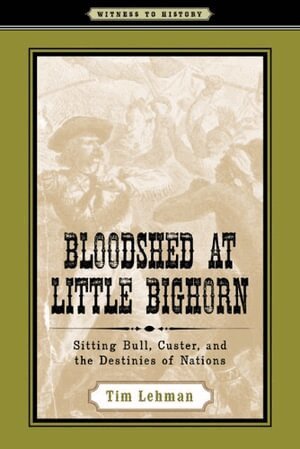
Bloodshed at Little Bighorn
Sitting Bull, Custer, and the Destinies of Nations
Inbunden, Engelska, 2010
356 kr
Tillfälligt slut
Commonly known as Custer's Last Stand, the Battle of Little Bighorn is the best recognized violent conflict between the indigenous peoples of North America and the government of the United States. Incorporating the voices of Native Americans, soldiers, scouts, and women, Tim Lehman's concise, compelling narrative will forever change the way we think about this familiar event in American history. On June 25, 1876, General George Armstrong Custer led the United States Army's Seventh Cavalry in an attack on a massive encampment of Sioux and Cheyenne Indians on the bank of the Little Bighorn River. What was supposed to be a large-scale military operation to force U.S. sovereignty over the tribes instead turned into a quick, brutal rout of the attackers when Custer's troops fell upon the Indians ahead of the main infantry force. By the end of the fight, the Sioux and Cheyenne had killed Custer and 210 of his men. The victory fueled hopes of freedom and encouraged further resistance among the Native Americans. For the U.S. military, the lost battle was nearly unbearable and it prompted a series of vicious retaliatory strikes that ultimately forced the Sioux and Cheyenne into submission and the long nightmare of reservation life.This briskly paced, vivid account puts the battle's details and characters into a rich historical context. Grounded in the most recent research, attentive to Native American perspectives, and featuring a colorful cast of characters, "Bloodshed at Little Bighorn" elucidates the key lessons of the conflict and draws out the less visible ones. This may not be the last book you read on Little Bighorn, but it should be the first.
235 kr
Tillfälligt slut
Commonly known as Custer's Last Stand, the Battle of Little Bighorn may be the best recognized violent conflict between the indigenous peoples of North America and the government of the United States. Incorporating the voices of Native Americans, soldiers, scouts, and women, Tim Lehman's concise, compelling narrative will forever change the way we think about this familiar event in American history. On June 25, 1876, General George Armstrong Custer led the United States Army's Seventh Cavalry in an attack on a massive encampment of Sioux and Cheyenne Indians on the bank of the Little Bighorn River. What was supposed to be a large-scale military operation to force U.S. sovereignty over the tribes instead turned into a quick, brutal rout of the attackers when Custer's troops fell upon the Indians ahead of the main infantry force. By the end of the fight, the Sioux and Cheyenne had killed Custer and 210 of his men. The victory fueled hopes of freedom and encouraged further resistance among the Native Americans. For the U.S. military, the lost battle prompted a series of vicious retaliatory strikes that ultimately forced the Sioux and Cheyenne into submission and the long nightmare of reservation life.This briskly paced, vivid account puts the battle's details and characters into a rich historical context. Grounded in the most recent research, attentive to Native American perspectives, and featuring a colorful cast of characters, Bloodshed at Little Bighorn elucidates the key lessons of the conflict and draws out the less visible ones. This may not be the last book you read on Little Bighorn, but it should be the first.
546 kr
Skickas inom 10-15 vardagar
Tim Lehman examines the political battles over public policies to protect farmland from urban sprawl. His detailed account clarifies three larger themes: the ongoing struggle over land use planning in this country, the emerging environmental critique of modern agriculture, and the use of social science expertise in policymaking. Federal efforts to preserve private farmlands began during the New Deal with modest soil conservation and land use initiatives, but stalled with the agricultural surpluses of the postwar decades. Land conservation interests reemerged during the 1970s as productivity plateaus, population growth, and the energy crisis heightened concern about the loss of high-quality farmland. Bureaucrats and social scientists were divided on the seriousness of the land problem. According to Lehman, the debate pitted a conservation mentality against a production mentality, virtually guaranteeing that consensus would be impossible. Land preservation initiatives of the 1970s achieved a belated and partial success with the conservation measures of the 1985 farm bill, Lehman says, but the ecological constraints on agriculture remain significant. Originally published in 1995. A UNC Press Enduring Edition -- UNC Press Enduring Editions use the latest in digital technology to make available again books from our distinguished backlist that were previously out of print. These editions are published unaltered from the original, and are presented in affordable paperback formats, bringing readers both historical and cultural value.
604 kr
Tillfälligt slut
How did cattle drives come about—and why did the cowboy become an iconic American hero?Cattle drives were the largest, longest, and ultimately the last of the great forced animal migrations in human history. Spilling out of Texas, they spread longhorns, cowboys, and the culture that roped the two together throughout the American West. In cities like Abilene, Dodge City, and Wichita, buyers paid off ranchers, ranchers paid off wranglers, and railroad lines took the cattle east to the packing plants of St. Louis and Chicago. The cattle drives of our imagination are filled with colorful cowboys prodding and coaxing a line of bellowing animals along a dusty path through the wilderness. These sturdy cowhands always triumph over stampedes, swollen rivers, and bloodthirsty Indians to deliver their mighty-horned companions to market—but Tim Lehman’s Up the Trail reveals that the gritty reality was vastly different. Far from being rugged individualists, the actual cow herders were itinerant laborers—a proletariat on horseback who connected cattle from the remote prairies of Texas with the nation’s industrial slaughterhouses. Lehman demystifies the cowboy life by describing the origins of the cattle drive and the extensive planning, complicated logistics, great skill, and good luck essential to getting the cows to market. He reveals how drives figured into the larger story of postwar economic development and traces the complex effects the cattle business had on the environment. He also explores how the premodern cowboy became a national hero who personified the manly virtues of rugged individualism and personal independence. Grounded in primary sources, this absorbing book takes advantage of recent scholarship on labor, race, gender, and the environment. The lively narrative will appeal to students of Texas and western history as well as anyone interested in cowboy culture.
264 kr
Skickas inom 7-10 vardagar
How did cattle drives come about—and why did the cowboy become an iconic American hero?Cattle drives were the largest, longest, and ultimately the last of the great forced animal migrations in human history. Spilling out of Texas, they spread longhorns, cowboys, and the culture that roped the two together throughout the American West. In cities like Abilene, Dodge City, and Wichita, buyers paid off ranchers, ranchers paid off wranglers, and railroad lines took the cattle east to the packing plants of St. Louis and Chicago. The cattle drives of our imagination are filled with colorful cowboys prodding and coaxing a line of bellowing animals along a dusty path through the wilderness. These sturdy cowhands always triumph over stampedes, swollen rivers, and bloodthirsty Indians to deliver their mighty-horned companions to market—but Tim Lehman’s Up the Trail reveals that the gritty reality was vastly different. Far from being rugged individualists, the actual cow herders were itinerant laborers—a proletariat on horseback who connected cattle from the remote prairies of Texas with the nation’s industrial slaughterhouses. Lehman demystifies the cowboy life by describing the origins of the cattle drive and the extensive planning, complicated logistics, great skill, and good luck essential to getting the cows to market. He reveals how drives figured into the larger story of postwar economic development and traces the complex effects the cattle business had on the environment. He also explores how the premodern cowboy became a national hero who personified the manly virtues of rugged individualism and personal independence. Grounded in primary sources, this absorbing book takes advantage of recent scholarship on labor, race, gender, and the environment. The lively narrative will appeal to students of Texas and western history as well as anyone interested in cowboy culture.
390 kr
Skickas inom 5-8 vardagar
611 kr
Skickas inom 5-8 vardagar