Tim Themi - Böcker
Visar alla böcker från författaren Tim Themi. Handla med fri frakt och snabb leverans.
4 produkter
4 produkter
1 057 kr
Tillfälligt slut
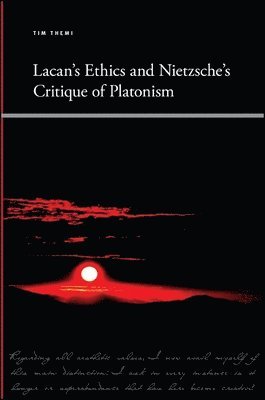
Brings Lacan and Nietzsche together as part of a common effort to rethink the tradition of Western ethics.Bringing together Jacques Lacan and Friedrich Nietzsche, Tim Themi focuses on their conceptions of ethics and on their accounts of the history of ethical thinking in the Western tradition. Nietzsche blames Plato for setting in motion a degenerative process that turned ethics away from nature, the body, and its senses, and thus eventually against our capacities for reason, science, and a creative, flourishing life. Dismissing Plato's Supreme Good as a "mirage," Lacan is very much in sympathy with Nietzsche's reading. Following this premise, Themi shows how Lacan's ethics might build on Nietzsche's work, thus contributing to our understanding of Nietzsche, and also how Nietzsche's critique can strengthen our understanding of Lacan.
382 kr
Tillfälligt slut
Brings Lacan and Nietzsche together as part of a common effort to rethink the tradition of Western ethics.Bringing together Jacques Lacan and Friedrich Nietzsche, Tim Themi focuses on their conceptions of ethics and on their accounts of the history of ethical thinking in the Western tradition. Nietzsche blames Plato for setting in motion a degenerative process that turned ethics away from nature, the body, and its senses, and thus eventually against our capacities for reason, science, and a creative, flourishing life. Dismissing Plato's Supreme Good as a "mirage," Lacan is very much in sympathy with Nietzsche's reading. Following this premise, Themi shows how Lacan's ethics might build on Nietzsche's work, thus contributing to our understanding of Nietzsche, and also how Nietzsche's critique can strengthen our understanding of Lacan.
1 391 kr
Skickas inom 10-15 vardagar
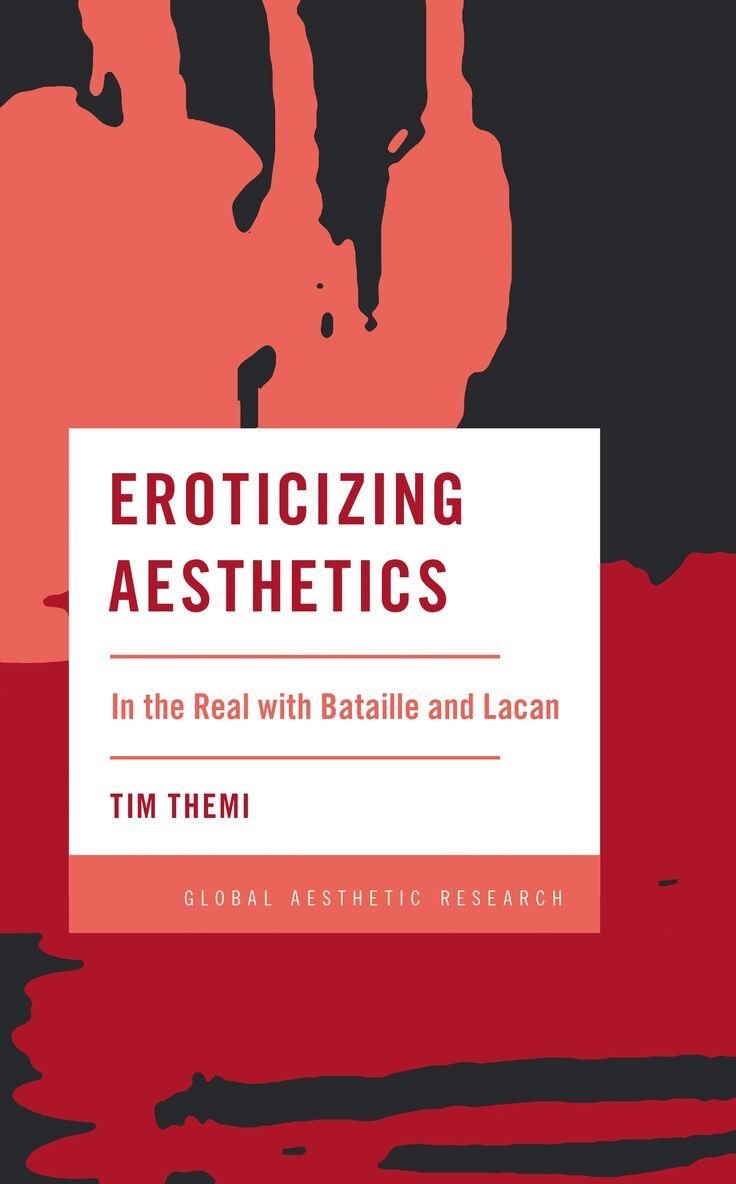
Bringing together Bataille with Lacan and Nietzsche, Tim Themi examines the role of aesthetics implicit in each and how this invokes an erotic process celebrating the real of what is usually excluded from articulation. Bataille came to deem eroticism as the standpoint from which to grasp humanity as a whole, based on his understanding of our transition to humanity being founded on a series of taboos placed on inner animality. An erotic outlet for the latter was historically the aesthetic dimensions of our religions, but Bataille’s view of how this was gradually diminished has much in keeping with Nietzsche’s critique of Christian-Platonic dualism and Lacan’s of the desexualised Good of Western metaphysics. Building from these often surprising proximities, Themi closely examines Bataille’s many interventions into the history of aesthetics — from his confrontations with Breton’s surrealism to his own novels and encounter with the animal cave paintings of Lascaux — radically re-illuminating the corollary phenomena of Dionysos in Nietzsche’s philosophy and the “jouissance [enjoyment] of transgression” in the psychoanalysis of Lacan. A new ethical criterion for aesthetic works and creations on this basis becomes possible.
499 kr
Skickas inom 10-15 vardagar
Bringing together Bataille with Lacan and Nietzsche, Tim Themi examines the role of aesthetics implicit in each and how this invokes an erotic process celebrating the real of what is usually excluded from articulation. Bataille came to deem eroticism as the standpoint from which to grasp humanity as a whole, based on his understanding of our transition to humanity being founded on a series of taboos placed on inner animality. An erotic outlet for the latter was historically the aesthetic dimensions of our religions, but Bataille’s view of how this was gradually diminished has much in keeping with Nietzsche’s critique of Christian-Platonic dualism and Lacan’s of the desexualised Good of Western metaphysics. Building from these often surprising proximities, Themi closely examines Bataille’s many interventions into the history of aesthetics — from his confrontations with Breton’s surrealism to his own novels and encounter with the animal cave paintings of Lascaux — radically re-illuminating the corollary phenomena of Dionysos in Nietzsche’s philosophy and the “jouissance [enjoyment] of transgression” in the psychoanalysis of Lacan. A new ethical criterion for aesthetic works and creations on this basis becomes possible.