Tim White - Böcker
Visar alla böcker från författaren Tim White. Handla med fri frakt och snabb leverans.
8 produkter
8 produkter
1 827 kr
Skickas inom 10-15 vardagar
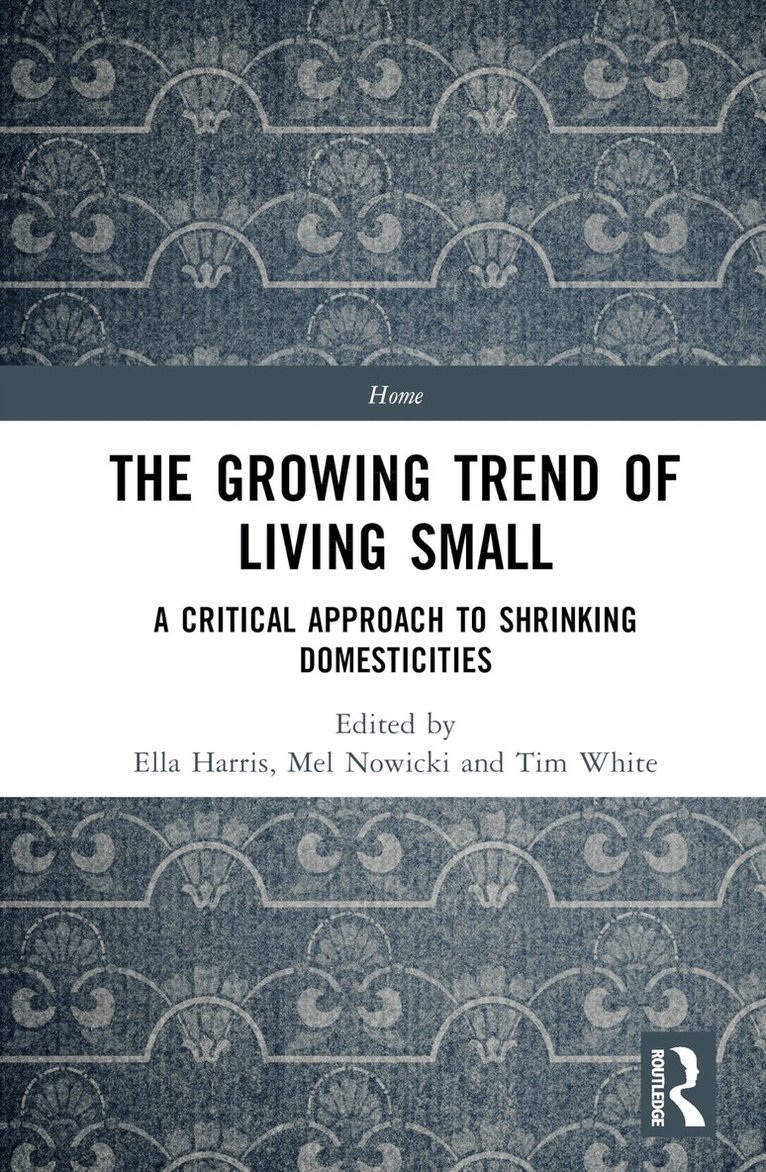
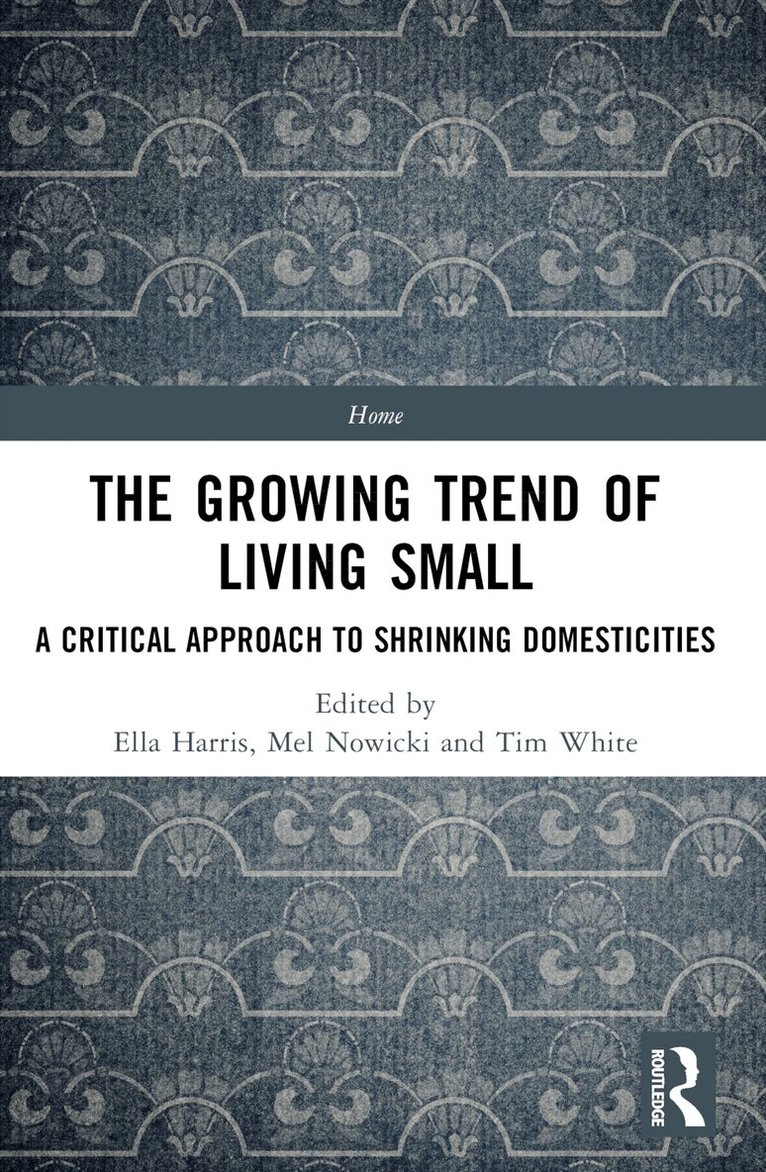
This book examines the growing trend for housing models that shrink private living space and seeks to understand the implications of these shrinking domestic worlds. Small spaces have become big business. Reducing the size of our homes, and the amount of stuff within them, is increasingly sold as a catch-all solution to the stresses of modern life and the need to reduce our carbon footprint. Shrinking living space is being repackaged in a neoliberal capitalist context as a lifestyle choice rather than the consequence of diminishing choice in the face of what has become a long-term housing ‘crisis’. What does this mean for how we live in the long term, and is there a dark side to the promise of a simpler, more sustainable home life? Shrinking Domesticities brings together research from across the social sciences, planning and architecture to explore these issues. From co-living developments to the Tiny House Movement, self-storage units to practices of ‘de-stuffification’, and drawing on examples from across Europe, North America and Australasia, the authors of this volume seek to understand both what micro-living is bringing to our societies, and what it may be eroding
573 kr
Skickas inom 10-15 vardagar
This book examines the growing trend for housing models that shrink private living space and seeks to understand the implications of these shrinking domestic worlds. Small spaces have become big business. Reducing the size of our homes, and the amount of stuff within them, is increasingly sold as a catch-all solution to the stresses of modern life and the need to reduce our carbon footprint. Shrinking living space is being repackaged in a neoliberal capitalist context as a lifestyle choice rather than the consequence of diminishing choice in the face of what has become a long-term housing ‘crisis’. What does this mean for how we live in the long term, and is there a dark side to the promise of a simpler, more sustainable home life? Shrinking Domesticities brings together research from across the social sciences, planning and architecture to explore these issues. From co-living developments to the Tiny House Movement, self-storage units to practices of ‘de-stuffification’, and drawing on examples from across Europe, North America and Australasia, the authors of this volume seek to understand both what micro-living is bringing to our societies, and what it may be eroding
120 kr
Skickas inom 5-8 vardagar
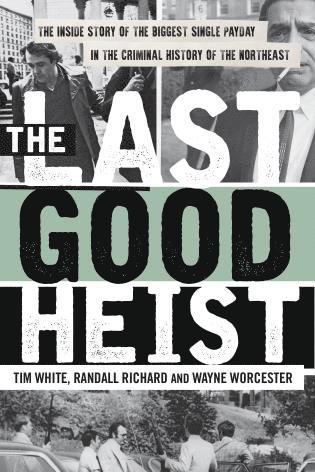
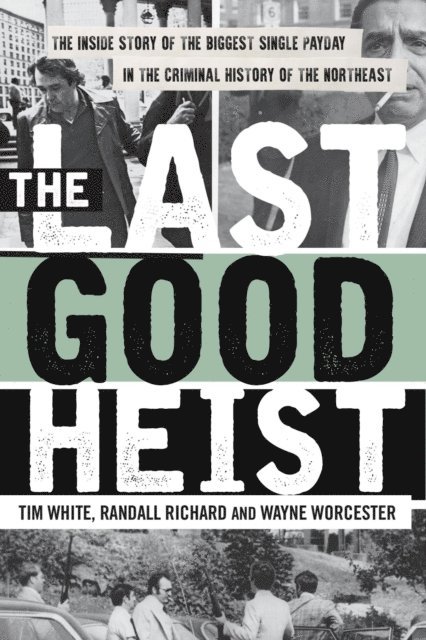
Last Good Heist
The Inside Story of The Biggest Single Payday in the Criminal History of the Northeast
Häftad, Engelska, 2016
262 kr
Skickas inom 5-8 vardagar
On Aug. 14, 1975, eight daring thieves ransacked 148 massive safe-deposit boxes at a secret bank used by organized crime, La Cosa Nostra, and its associates in Providence, R.I. The crooks fled with duffle bags crammed full of cash, gold, silver, stamps, coins, jewels and high-end jewelry. The true value of the loot has always been kept secret, partly because it was ill-gotten to begin with, and partly because there was plenty of incentive to keep its true worth out of the limelight. It's one thing for authorities to admit they didn't find a trace of goods worth from $3 million to $4 million, and entirely another when what was at stake was more accurately valued at about $30 million, the equivalent of $120 million today. It was the biggest single payday in the criminal history of the Northeast. Nobody came close, not the infamous James "Whitey" Bulger, not John "The Dapper Don" Gotti, not even the Brinks or Wells Fargo robbers. The heist was bold enough and big enough to rock the underworld to its core, and it left La Cosa Nostra in the region awash in turmoil that still reverberates more than forty years later. Last Good Heist is the inside story of the robbery and its aftermath.
Get Ready! Get Real! Get Financial Freedom!
A Simple Blueprint for Building and Sustaining Financial Freedom
Inbunden, Engelska, 2020
285 kr
Skickas inom 5-8 vardagar
495 kr
Skickas
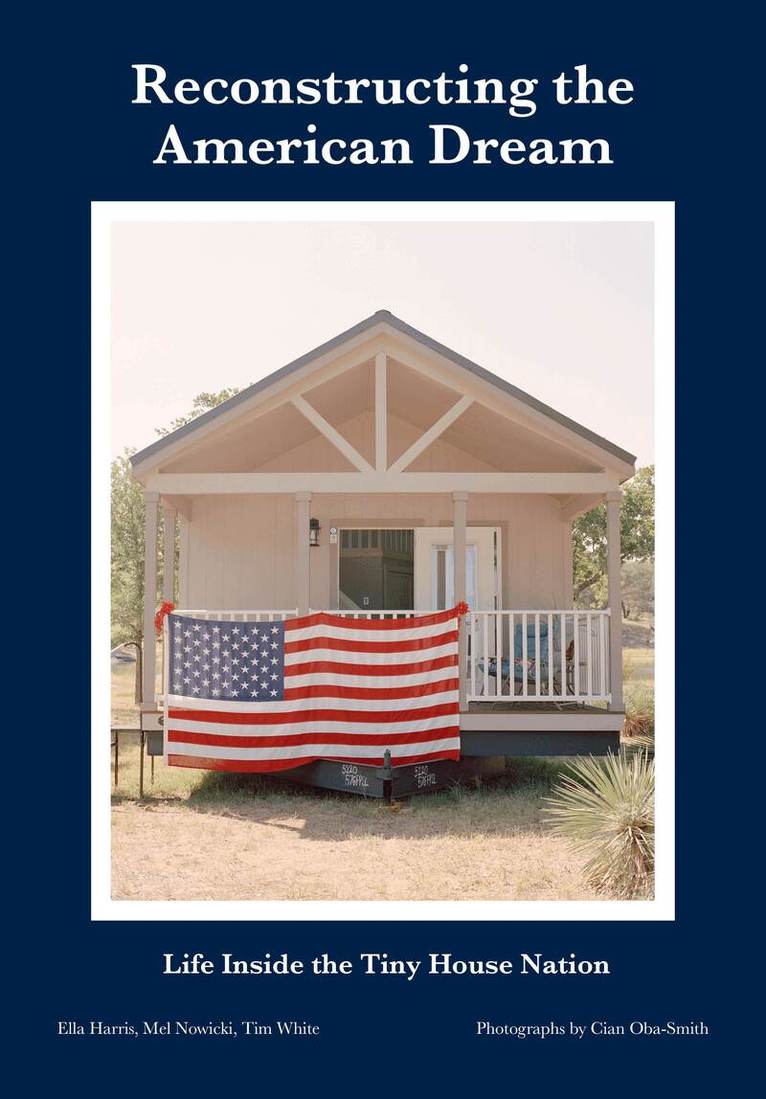
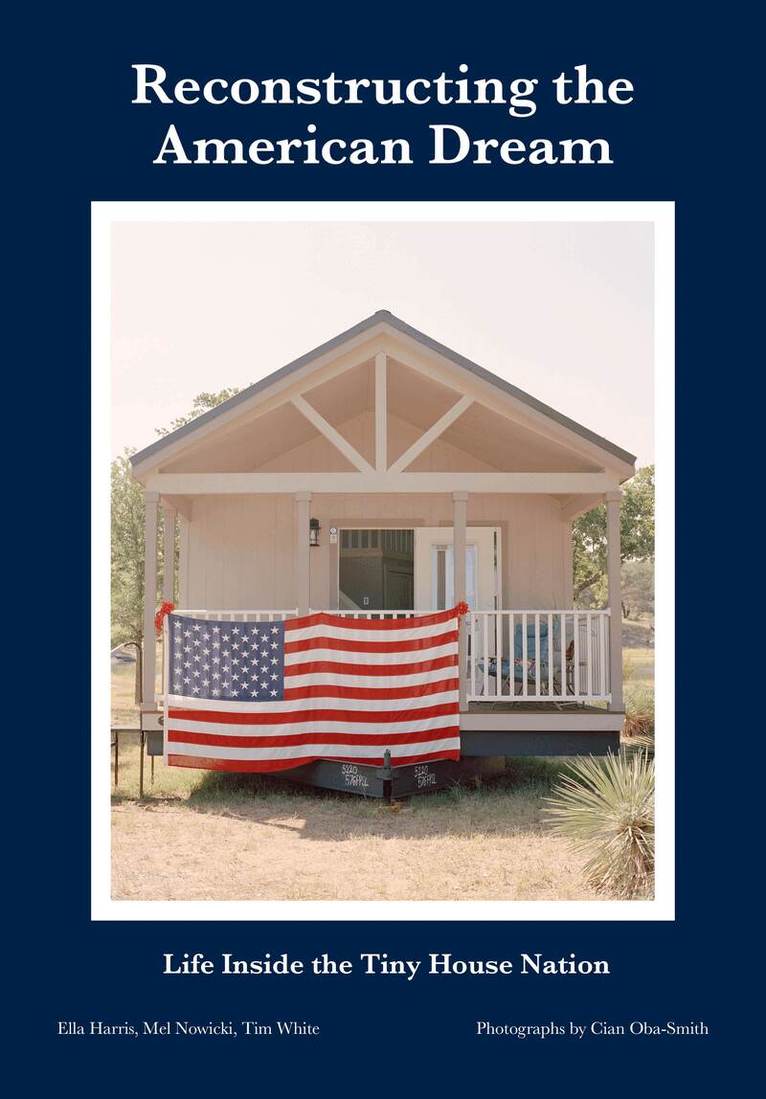
Over the past decade, Tiny Housing has become something of a viral sensation in the US. From Instagrammable enclaves for young professionals to vast municipality-supported schemes seeking to address homelessness, tiny house sites are proliferating across the country.This book takes a look at life inside the ‘Tiny House Nation’, shining an intimate light on a phenomenon widely celebrated in the mainstream media. The book presents textured narrative accounts from and striking images of Tiny Home residents, their homes and communities, while analysing the broader socio-economic structures shaping their lives. In so doing, it paints a compelling and complex picture of a trend at the crossroads of several key social, cultural and economic shifts, at a pivotal moment for America’s housing future.Fundamentally, this is a book about paradoxes. The paradox of tiny housing offering freedom from the constraints of capitalism, whilst at the same time remaining embedded within capitalist systems. The paradox of those who ‘go tiny’ both choosing an alternative lifestyle, and those who are pushed into tiny housing as a consequence of limited choice. The paradox of Austin, Texas, as both a countercultural enclave and hyper-capitalist tech haven. And the paradox of tiny house ethoses in Austin, as both centring community and shared assets, and individualist libertarianism. These paradoxes do not necessarily sit in opposition to one another, but are all bound up in the complexity of what tiny housing has to offer as an alternative way of living.Despite its unattainability for all but the most privileged, the American Dream - the home-owning society, the suburban bliss, the white picket fence - remains emblematic of the residential Good Life. But in the decades since the turn of the millennium the dream has been shrunk down, expectations of a decent home literally reduced. Whilst for some this has led to forms of freedom and fulfilment, it has also contributed to the normalisation of cities so outrageously expensive that all people can afford are miniature homes on the urban periphery. As this book shows, both impacts of tiny housing are equally true, and one does not cancel out the other. Tiny housing embodies an important societal crossroads. In some respects, it offers an alternative to the prevailing housing status quo. In others, it demonstrates what options have already been taken away from us.from the Introduction‘In the rest of this book, we’ll lead you through our exploration of tiny housing in Texas. We’ll start, in the next chapter, by introducing some of the places and people we encountered on our travels to set the scene. Then, the ‘pathways’ chapter examines the various conditions and journeys through which people end up living tiny. As you’ll see, our attempt to produce a diagram of pathways to tiny living escalated into the production of a fully blown board game. We describe this diagrammatic board game to show the complex and nuanced personal and structural circumstances that lead people into tiny housing. From there, we go into three empirical chapters, focusing on economies of tiny living, the materiality of tiny housing as domestic spaces, and community culture. We then draw the book to a close, and speculate about what tiny housing means for the future of domestic life, especially in relation to the American Dream. ‘Throughout the book our descriptions are accompanied by photographs taken by Cian Oba-Smith, who accompanied us on our first trip to Texas in 2022. The hype around tiny housing is undoubtedly driven, in large part, by the aesthetic cultures surrounding it. Tiny homes are the picturesque, boutique, upmarket cousin of mobile homes and trailers. They are distinguished from these other types of small housing, as we’ll argue in this book, specifically by their aesthetics. Anyone who ventures into the world of tiny housing for more than five minutes will see how thick this aesthetic culture is. From beautifully curated Instagram pages, to countless coffee table books, to Etsy shops dedicated to crafted tiny house merchandise, a key part of living tiny is enjoying and embracing its aesthetics. By working with Cian we were able to focus (literally) on these aesthetic dimensions of tiny housing. However, we were also able to capture some of what’s not presented in promotional tiny house materials; the constraints, the challenges and the complexities that come along with the joy and the freedom. We’re positioning this book as something of a disrupted coffee table book. On an initial flick through it might not look too different to the photography books that valorise tiny living, but you’ll already know, if you’ve read this far, that our approach is more nuanced. Our attempt has been to expose the ‘real’ Tiny House Nation. Not to attack it, not to deny its beneficial impacts for a huge number of people, but to inject some nuance into the debate so that we can take forward the positives of tiny living without normalising the negatives.’
1 390 kr
Skickas inom 5-8 vardagar
Over the past decade, Tiny Housing has become something of a viral sensation in the US. From Instagrammable enclaves for young professionals to vast municipality-supported schemes seeking to address homelessness, tiny house sites are proliferating across the country.This book takes a look at life inside the ‘Tiny House Nation’, shining an intimate light on a phenomenon widely celebrated in the mainstream media. The book presents textured narrative accounts from and striking images of Tiny Home residents, their homes and communities, while analysing the broader socio-economic structures shaping their lives. In so doing, it paints a compelling and complex picture of a trend at the crossroads of several key social, cultural and economic shifts, at a pivotal moment for America’s housing future.Fundamentally, this is a book about paradoxes. The paradox of tiny housing offering freedom from the constraints of capitalism, whilst at the same time remaining embedded within capitalist systems. The paradox of those who ‘go tiny’ both choosing an alternative lifestyle, and those who are pushed into tiny housing as a consequence of limited choice. The paradox of Austin, Texas, as both a countercultural enclave and hyper-capitalist tech haven. And the paradox of tiny house ethoses in Austin, as both centring community and shared assets, and individualist libertarianism. These paradoxes do not necessarily sit in opposition to one another, but are all bound up in the complexity of what tiny housing has to offer as an alternative way of living.Despite its unattainability for all but the most privileged, the American Dream - the home-owning society, the suburban bliss, the white picket fence - remains emblematic of the residential Good Life. But in the decades since the turn of the millennium the dream has been shrunk down, expectations of a decent home literally reduced. Whilst for some this has led to forms of freedom and fulfilment, it has also contributed to the normalisation of cities so outrageously expensive that all people can afford are miniature homes on the urban periphery. As this book shows, both impacts of tiny housing are equally true, and one does not cancel out the other. Tiny housing embodies an important societal crossroads. In some respects, it offers an alternative to the prevailing housing status quo. In others, it demonstrates what options have already been taken away from us.from the Introduction‘In the rest of this book, we’ll lead you through our exploration of tiny housing in Texas. We’ll start, in the next chapter, by introducing some of the places and people we encountered on our travels to set the scene. Then, the ‘pathways’ chapter examines the various conditions and journeys through which people end up living tiny. As you’ll see, our attempt to produce a diagram of pathways to tiny living escalated into the production of a fully blown board game. We describe this diagrammatic board game to show the complex and nuanced personal and structural circumstances that lead people into tiny housing. From there, we go into three empirical chapters, focusing on economies of tiny living, the materiality of tiny housing as domestic spaces, and community culture. We then draw the book to a close, and speculate about what tiny housing means for the future of domestic life, especially in relation to the American Dream. ‘Throughout the book our descriptions are accompanied by photographs taken by Cian Oba-Smith, who accompanied us on our first trip to Texas in 2022. The hype around tiny housing is undoubtedly driven, in large part, by the aesthetic cultures surrounding it. Tiny homes are the picturesque, boutique, upmarket cousin of mobile homes and trailers. They are distinguished from these other types of small housing, as we’ll argue in this book, specifically by their aesthetics. Anyone who ventures into the world of tiny housing for more than five minutes will see how thick this aesthetic culture is. From beautifully curated Instagram pages, to countless coffee table books, to Etsy shops dedicated to crafted tiny house merchandise, a key part of living tiny is enjoying and embracing its aesthetics. By working with Cian we were able to focus (literally) on these aesthetic dimensions of tiny housing. However, we were also able to capture some of what’s not presented in promotional tiny house materials; the constraints, the challenges and the complexities that come along with the joy and the freedom. We’re positioning this book as something of a disrupted coffee table book. On an initial flick through it might not look too different to the photography books that valorise tiny living, but you’ll already know, if you’ve read this far, that our approach is more nuanced. Our attempt has been to expose the ‘real’ Tiny House Nation. Not to attack it, not to deny its beneficial impacts for a huge number of people, but to inject some nuance into the debate so that we can take forward the positives of tiny living without normalising the negatives.’
320 kr
Skickas inom 5-8 vardagar