Timo Airaksinen - Böcker
Visar alla böcker från författaren Timo Airaksinen. Handla med fri frakt och snabb leverans.
7 produkter
7 produkter
787 kr
Skickas inom 10-15 vardagar
The Marquis de Sade is famous for his forbidden novels like Justine, Juliette, and the 120 Days of Sodom. Yet, despite Sade's immense influence on philosophy and literature, his work remains relatively unknown. His novels are too long, repetitive, and violent. At last in The Philosophy of the Marquis de Sade, a distinguished philosopher provides a theoretical reading of Sade.Airaksinen examines Sade's claim that in order to be happy and free we must do evil things. He discusses the motivations of the typical Sadean hero, who leads a life filled with perverted and extreme pleasures, such as stealing, murder, rape, and blasphemy. Secondary sources on Sade, such as Hobbes, Erasmusm, and Brillat-Savarin are analyzed, and modern studies are evaluated. The Philosophy of the Marquis de Sade greatly enhances our understanding of Sade and his philosophy of pain and perversion.

644 kr
Skickas inom 7-10 vardagar
“The work would be of great value to philosophers engaged in the conceptual analysis of coercion, to political scientists studying the state or other coercive institutions, and to advanced readers interested in the field of peace research.”—Choice
617 kr
Skickas inom 10-15 vardagar
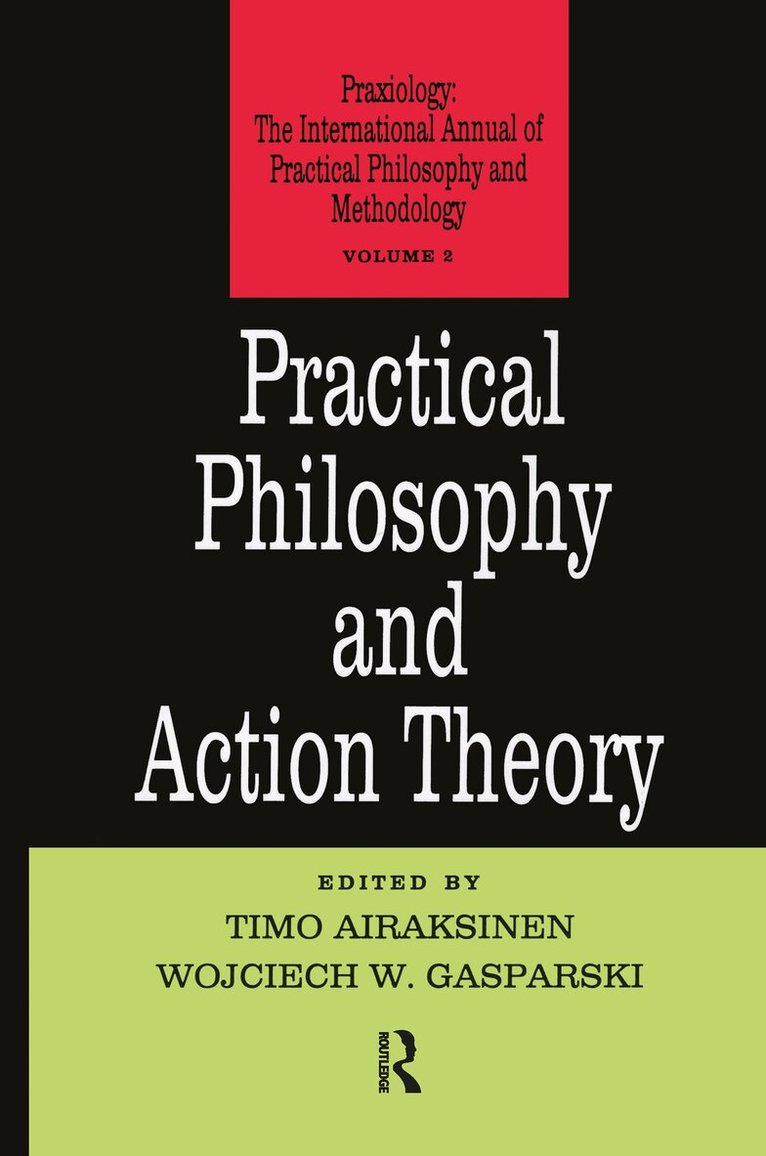
Action theory and practical philosophy have their well-grounded tradition both in Finland and in Poland. This text is a collection of PRACTICAL PHILOSOPHY AND ACTION THEORY Praxiology: The International Annual of Practical Philosophy and Methodology Volume 2. This volume is divided into three parts: the first one being, so to speak, a ‘business card’ of Finland’s contemporary practical philosophy, the second one being a ‘business card’ of the Poland’s present praxiology, and a collection of contributions from other philosophical environments related to the topics.
1 295 kr
Skickas inom 10-15 vardagar
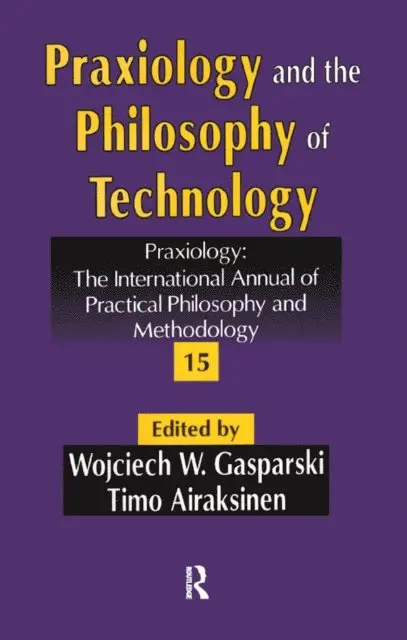
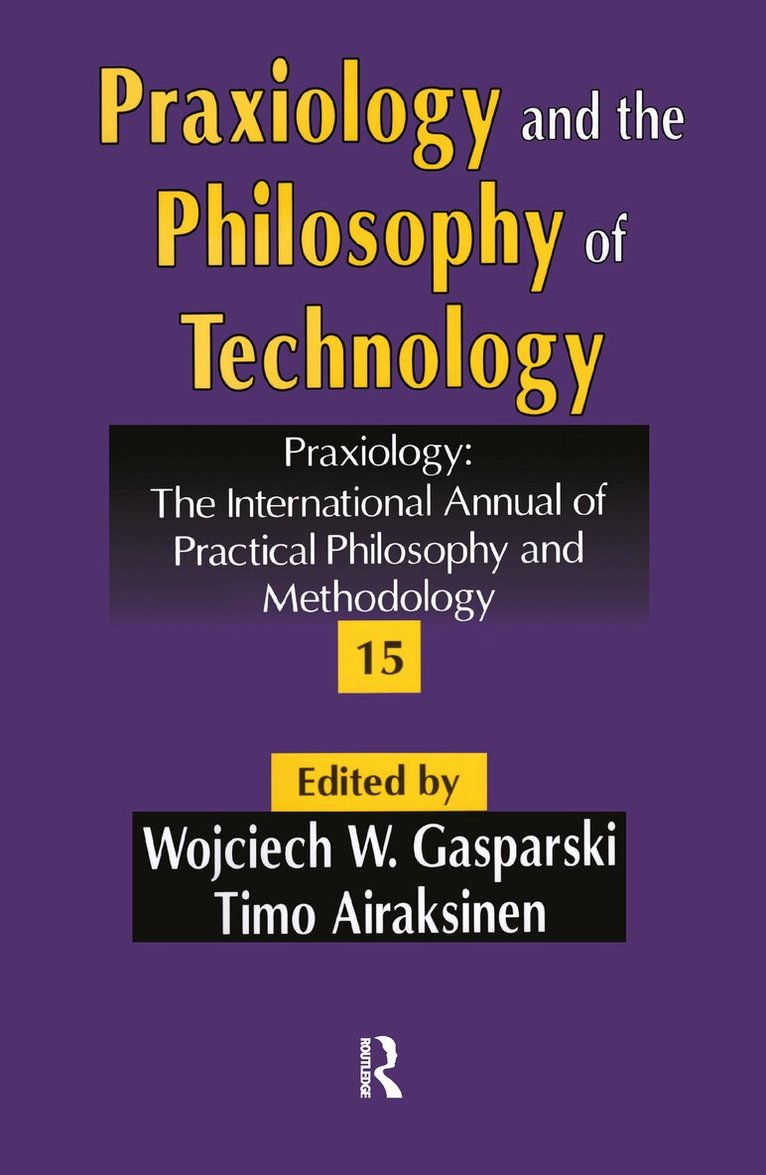
Technology is a crucial feature of the modern world, and human beings are necessarily technological creatures. Our goal must be to use technology effectively, efficiently, and ethically. We have hands that are adept at using tools, and intelligence that guides our actions. We also have desires and emotions that motivate us to achieve more and more, never allowing us to stop.From the viewpoint of praxiology, technology does not exist merely to satisfy the human need in an effective and efficient way. The problems of the modern world and the questions we must ask with respect to technology and how it is used are complicated and demanding. They may initially seem mysterious, perhaps even partly subconscious. In this fifteenth volume of a distinguished international series, contributors address essential questions about the philosophy and ethics of technology. Their intention is to point out the road not only to its better applications but also to its greater understanding.The first part of the book addresses general questions about the theory of technology. The second part of the volume focuses on special topics like information and communication technologies and work systems, as well as the foundations of problem solving and the history of innovation in the age of enlightenment. The third part of the book is on ethical judgments. It emphasizes the importance of ethics in the application of technology and, especially, when we commercialize it in order to meet the needs of the people in a free market society. This volume offers its reader a balanced picture of the state of the art of theoretical and applied issues in technology research--emphasizing the praxiological perspective that characterizes the entire series.
2 088 kr
Skickas inom 10-15 vardagar
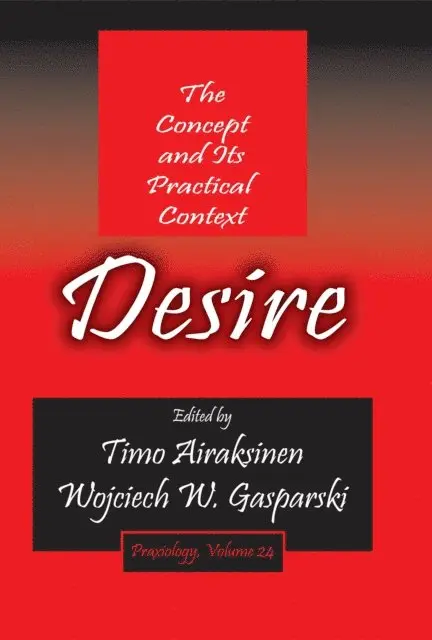
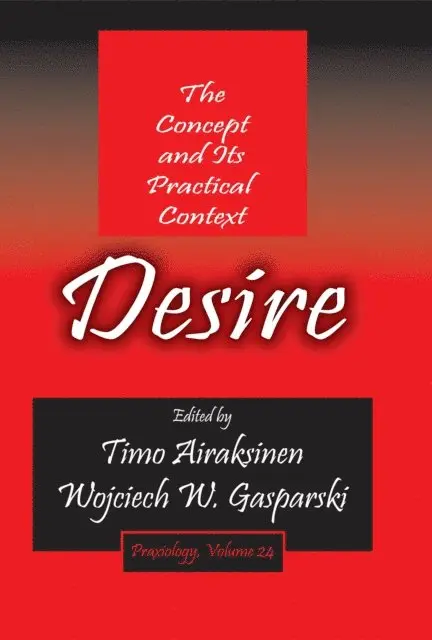
Desire is a rich term meaning wish and want, willingness and relish, appetite and lust. This volume is an effort to analyse the concept of desire and its different practical contexts from a morally philosophic point of view. By analysing multiple definitions and studying underlying motivations, the authors offer a variety of explanations and interpretations.The volume consists of three main parts. The first part, "Desire and Practice," examines desire as a mental state that seeks personal satisfaction. The second part of the volume, "Desire and Moral Life," explores social, cultural, and literary facets of desire. Finally, in the third part, "Business Ethics and Other Contexts," the authors apply PR axiological principles to the business world, examining the conflict between frugality and consumerist ideology, the role of intuition in decision-making, and the need for design education as the basis of effective planning.The contributors to this, the newest volume in Transaction's Praxeology series, seek to explore desire in PR axiological terms, with an eye toward the three E's of praxeology: ethics, effectiveness, and efficiency. In doing so, they demonstrate that desire is central for practical activity in general and work in particular.
1 115 kr
Tillfälligt slut
This is Volume 2 of Praxiology: The International Annual of Practical Philosophy and Methology, focusing on Philosophy and Action Theory. This volume is divided into three parts: the first one being, so to speak, a ‘business card’ of Finland’s contemporary practical philosophy, the second one being a ‘business card’ of the P oland’s present praxiology, and a collection of contributions from other philosophical environments related to the topics.
520 kr
Skickas inom 10-15 vardagar
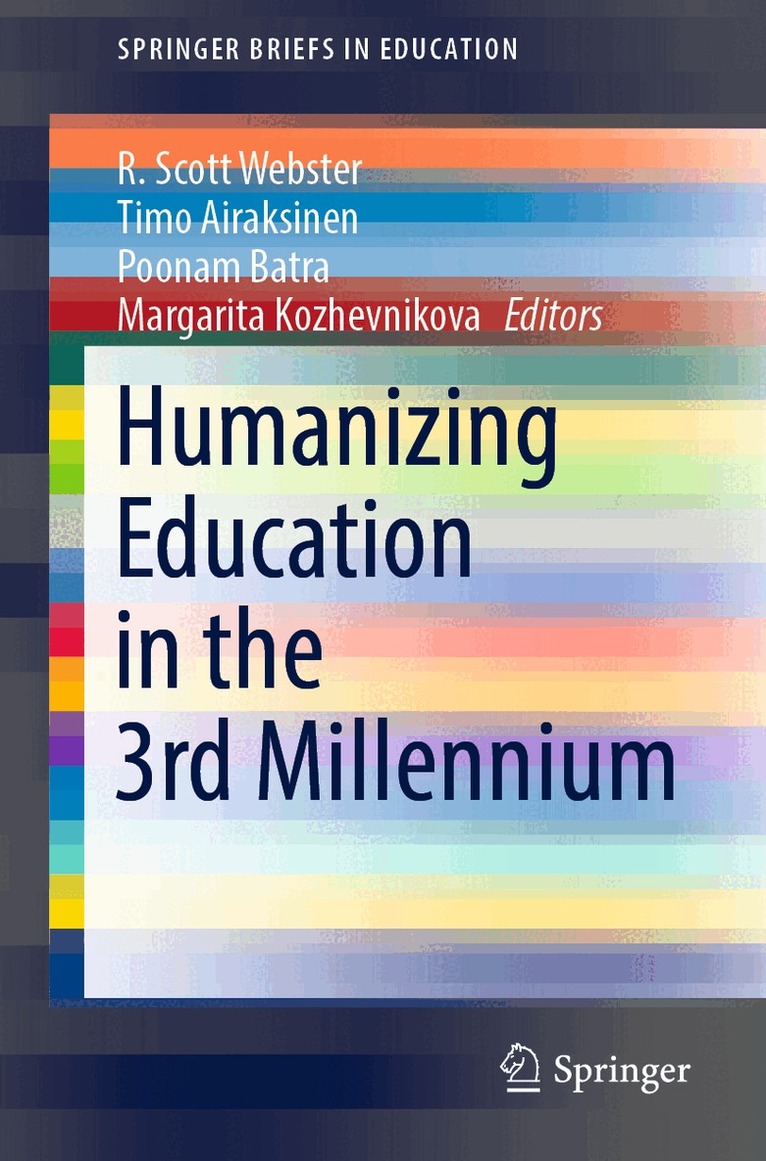
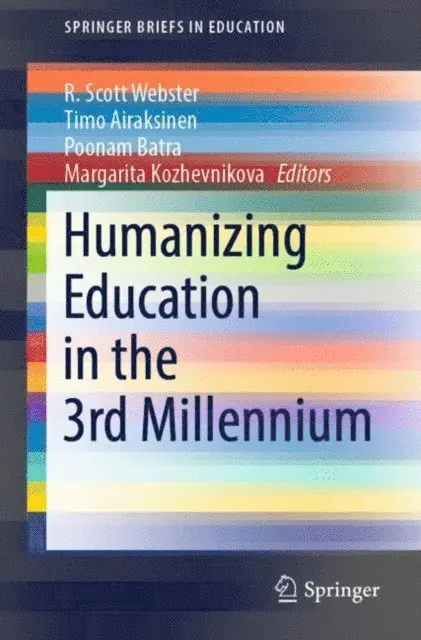
This book proposes some insights and ideas into how education might be humanized. The chapters inform, provoke, and guide further inquiries into imagining and actualizing human education. It presents the view that education should be primarily understood as human education, which offers universal good for the entire planet. It centres around the significant values that make life, in a holistic sense, meaningful, worthwhile, and socially just. It discusses the fundamental idea that human education is the key to peace, individual and social freedoms, social justice and harmony, fraternity and happiness all over the world, and how educational ideals and methods must be reconsidered to achieve this end.This book originates from an international conference and round-table, “Human Education in the 3rd Millennium,” in July 2019 in Dharamsala, India.