Timothy B. Spears - Böcker
Visar alla böcker från författaren Timothy B. Spears. Handla med fri frakt och snabb leverans.
5 produkter
5 produkter
732 kr
Tillfälligt slut
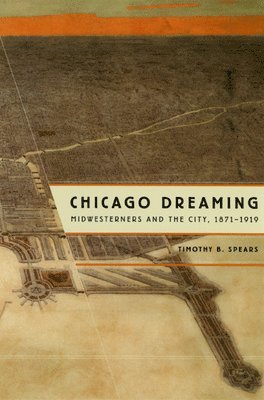
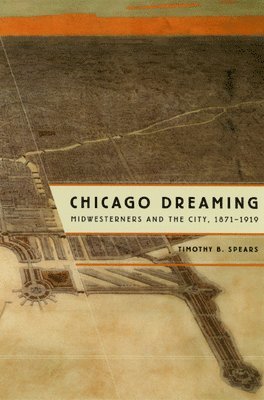
During the late nineteenth century, Chicago's population grew at an astonishing rate, with an estimated growth of 900,000 people between 1860 and 1890. Drawn to the opportunities generated by an expansive economy, hinterland migrants from the rural Midwest flocked to the city, their visions of prosperity creating a thriving modern urban culture. The hopes of these newcomers are the subject of Timothy B. Spears's book Chicago Dreaming - the story of Chicago's growth and the transplanted Midwesterners who so decisively shaped the young city's identity. Through innovative readings of Theodore Dreiser, Willa Cather, and Richard Wright, Spears argues that the migratory perspective was crucial to the rise of Chicago's emerging literary culture. In following the paths of several well-known migrants, including Jane Addams, cartoonist John T. McCutcheon, and businessman John Glessner, Spears also shows how the view from the hinterland permeated urban culture and informed the development of key Chicago institutions.Further exploring the notion of dreaming, he brings to light the internal desires that lured Midwestern migrants to the city as well as the nostalgia that led them to dream of the homes they left behind. With this fascinating new take on the rise of Chicago, Chicago Dreaming blurs the line between country and city to reveal the provincial character of modern urban culture.
290 kr
Skickas inom 7-10 vardagar
During the late nineteenth century, Chicago's population grew at an astonishing rate, with an estimated growth of 900,000 people between 1860 and 1890. Drawn to the opportunities generated by an expansive economy, hinterland migrants from the rural Midwest flocked to the city, their visions of prosperity creating a thriving modern urban culture. The hopes of these newcomers are the subject of Timothy B. Spears's book Chicago Dreaming - the story of Chicago's growth and the transplanted Midwesterners who so decisively shaped the young city's identity. Through innovative readings of Theodore Dreiser, Willa Cather, and Richard Wright, Spears argues that the migratory perspective was crucial to the rise of Chicago's emerging literary culture. In following the paths of several well-known migrants, including Jane Addams, cartoonist John T. McCutcheon, and businessman John Glessner, Spears also shows how the view from the hinterland permeated urban culture and informed the development of key Chicago institutions.Further exploring the notion of dreaming, he brings to light the internal desires that lured Midwestern migrants to the city as well as the nostalgia that led them to dream of the homes they left behind. With this fascinating new take on the rise of Chicago, Chicago Dreaming blurs the line between country and city to reveal the provincial character of modern urban culture.
503 kr
Skickas inom 5-8 vardagar
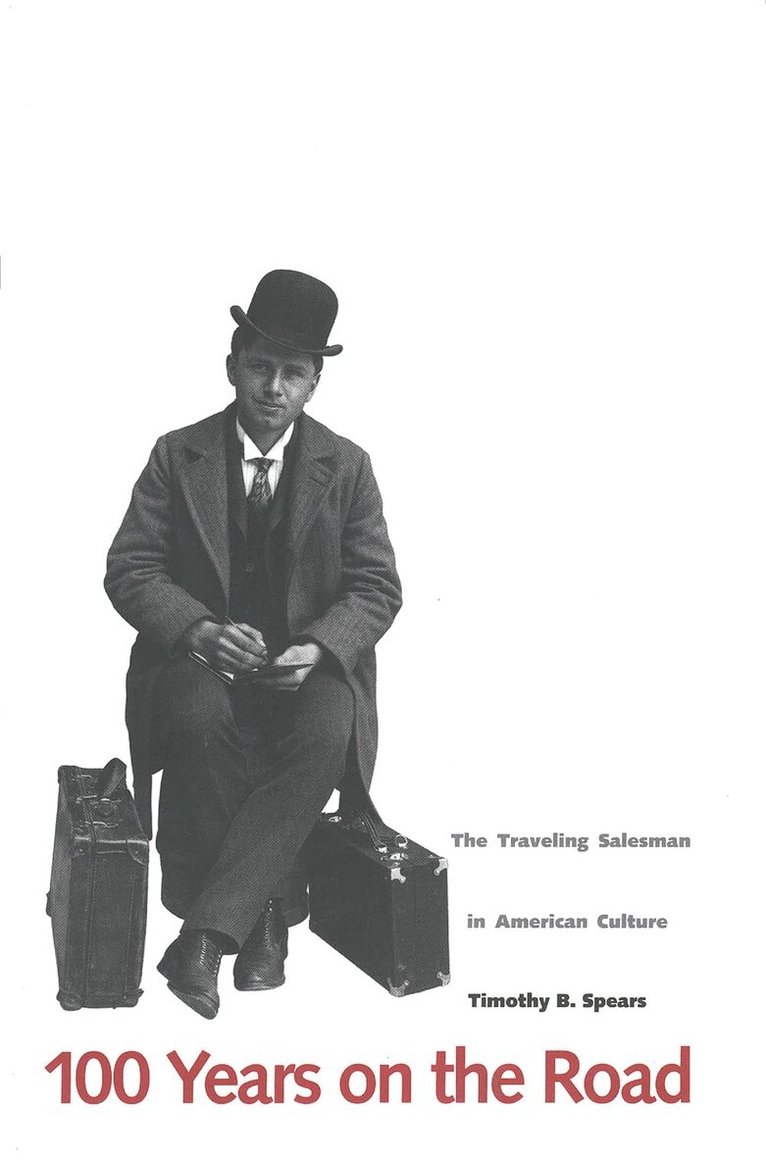
"Kiss the children and sister Minnie for me. And tell her whatever she does, never to marry a traveling man, they are the most unhappy men on earth."—E. Barton Martin to his wife, Julia, April 6, 1877"I have maid plenty of money since I've bin off the farm & don't have to work half so hard. . . . Come out and see the World."—William Hutton to his brother Lineus, October 11, 1884Even today, in Death of a Salesman and The Music Man, the traveling salesman is an intriguing, almost mythic figure. This lively and vividly illustrated account—the first in-depth study of the traveling salesman, or "drummer"—investigates his role in American culture during his heyday, between 1830 and 1920. Drawing on such sources as diaries, advice manuals, autobiographies, and trade journals, Timothy Spears shows how traveling salesmen shaped the customs of life on the road, established the foundations of "scientific salesmanship," and helped to develop modern consumer culture. Spears reconstructs the cultural history of face-to-face sales during this period, describing the nature of traveling life, the development of strategies for selling to the trade rather than door-to-door, and the problematic relationship of the salesman to society—first as the agent of an emergent, intrusive market and later as a target for critics of "vulgar" commercialism. Throughout, Spears offers original and persuasive readings of works by Arthur Miller, Stephen Crane, Theodore Dreiser, Sherwood Anderson, Sinclair Lewis, and Eudora Welty and illuminates other cultural representations of the traveling salesman.
385 kr
Skickas inom 7-10 vardagar
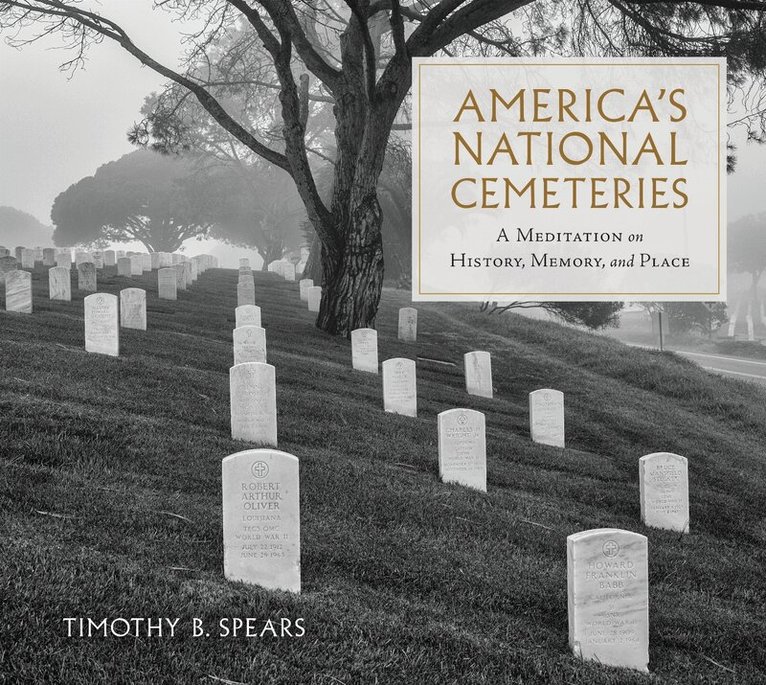
A poignant photographic tour of honor, sacrifice, and memory within America's national cemeteries. In America’s National Cemeteries, Timothy B. Spears takes the reader on a grand tour of these singular places of commemoration, the final resting place for more than four million American military personnel who died either in wartime, during their time of service, or after their honorable discharge. His absorbing account—part historical narrative and part travelogue—is enhanced by 180 of his remarkable photographs, which capture the spirit, beauty, and solemn remembrance to be found in each of the 156 national cemeteries across America. Spears details the history of the cemeteries since their establishment during the American Civil War and explores their ongoing evolution and importance to American society and the commitment America has made to honoring its military dead. With headstones neatly arrayed in rows and each soldier typically buried in an identical fashion, the cemeteries symbolize an enduring connection between human mortality and national identity. They also reflect the nation’s persistent challenges with inequalities and injustice, violence and racism, lingering questions about “good” versus “bad” wars, and the vexed legacies of America’s military forays. In this unique meditation on American history, memory, and place, Spears embraces the impact of the past on the present, offering an original perspective on the meaning of military service, mortality, and remembrance and how these national cemeteries have evolved into truly iconic and emblematic American spaces. The book also features a foreword by Roderick Gainer, Chief Curator of Arlington National Cemetery since 2013.
285 kr
Skickas inom 7-10 vardagar
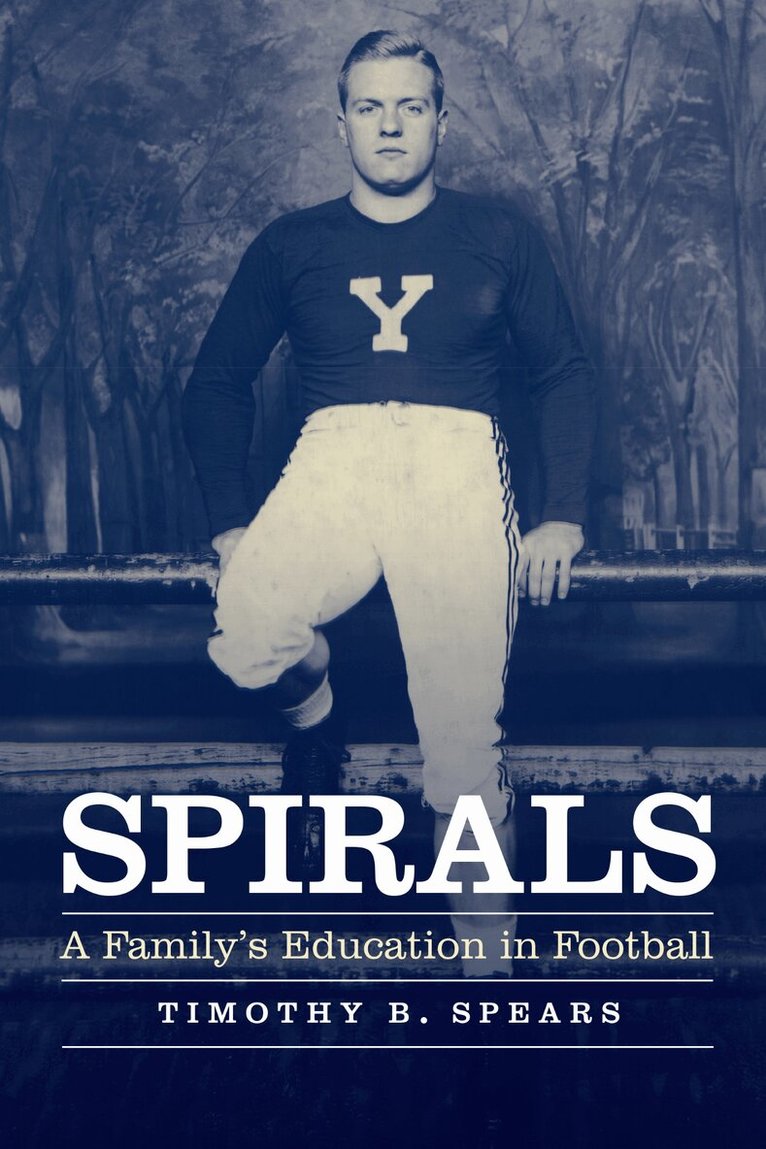
Ivy League football is a preoccupation in Timothy Spears’s family history. His grandfather Clarence “Doc” Spears was an All-American guard at Dartmouth in the early twentieth century, played on the Canton Bulldogs with Jim Thorpe, became a College Hall of Fame coach, and, as the legend goes, discovered Bronko Nagurski while driving through the backcountry of Minnesota. His father, Robert Spears, captained Yale’s 1951 team and was drafted by the Chicago Bears in 1952. By the time Timothy went to Yale in the mid‑1970s, it was more than talent or enthusiasm that prompted him to play football there.Spirals tracks the relationship between college football and higher education through the lens of one family’s involvement in the sport. Ranging over almost a century of football history, Spears describes the different ways in which his grandfather, father, and he played the game and engaged with its educational dimensions as the sport was passed from father to son. This intergenerational history attempts to uncover what the males in Spears’s family learned from playing football and how the game’s educational importance shifted over time within higher education. While Spears chose an academic life after college, he understood later, with the decline of his parents, how much football stayed with him and shaped his family’s history. With a voice that is part memoirist, part scholar, part athlete, as well as father and son, Spears discerns how football is embedded in our culture and came to be the fabric and common language of his family.