Timothy J. Sinclair - Böcker
Visar alla böcker från författaren Timothy J. Sinclair. Handla med fri frakt och snabb leverans.
8 produkter
8 produkter
14 926 kr
Tillfälligt slut
Global governance is a key concept in academic and policy discussions. For many, global governance refers to the network of interstate agencies and the rules which order their relations and increasingly shape their domestic institutions. For others, global governance is a more pervasive system of diffuse, often private, authority stemming from globalization, which organizes and disciplines the affairs of communities and nations in the industrial and developing worlds. As a concept, global governance is hotly contested. These volumes illustrate the debates between divergent interpretations, document its emergence and rise to prominence and provide examples of applications.
1 057 kr
Tillfälligt slut
Showcases diverse theoretical approaches in the emerging area of global governance.As the debate over global governance heats up, Approaches to Global Governance Theory offers a guide to this new terrain. The contributors advocate approaches to global governance that recognize fundamental political, economic, technological, and cultural dynamics, that engage social and political theory, and that go beyond conventional international relations theory. We are offered here a guide to this new terrain.Beginning with a chapter tracing the emergence of global governance analysis in the 1990s, Approaches to Global Governance Theory also responds to alternative theoretical conceptions. James N. Rosenau explores the ontology of global governance. In addition, Robert Latham develops a critique of Rosenau's thinking, while Michael G. Schechter examines the limits of the Commission for Global Governance's widely-publicized 1995 report and Ronen Palan asks critically, "Who is to be governed by global governance?"Other chapters develop analyses of global governance phenomena. Technological change is addressed by Karen T. Litfin, on environmental satellites, and Edward A. Comor, on broadcast satellites. M. Mark Amen examines developments in credit, and shifts in political identity are mapped by Yale H. Ferguson and Richard W. Mansbach. Also, developments in information and knowledge are considered by Tony Porter.In addition, chapters advocate new directions for global governance analysis. Timothy Sinclair suggests a focus on the level of the commonplace, Martin Hewson proposes long-term analysis of world order informationalism, and Ronnie D. Lipschutz makes a case for the importance of global civil society.
594 kr
Skickas inom 3-6 vardagar
Showcases diverse theoretical approaches in the emerging area of global governance.As the debate over global governance heats up, Approaches to Global Governance Theory offers a guide to this new terrain. The contributors advocate approaches to global governance that recognize fundamental political, economic, technological, and cultural dynamics, that engage social and political theory, and that go beyond conventional international relations theory. We are offered here a guide to this new terrain.Beginning with a chapter tracing the emergence of global governance analysis in the 1990s, Approaches to Global Governance Theory also responds to alternative theoretical conceptions. James N. Rosenau explores the ontology of global governance. In addition, Robert Latham develops a critique of Rosenau's thinking, while Michael G. Schechter examines the limits of the Commission for Global Governance's widely-publicized 1995 report and Ronen Palan asks critically, "Who is to be governed by global governance?"Other chapters develop analyses of global governance phenomena. Technological change is addressed by Karen T. Litfin, on environmental satellites, and Edward A. Comor, on broadcast satellites. M. Mark Amen examines developments in credit, and shifts in political identity are mapped by Yale H. Ferguson and Richard W. Mansbach. Also, developments in information and knowledge are considered by Tony Porter.In addition, chapters advocate new directions for global governance analysis. Timothy Sinclair suggests a focus on the level of the commonplace, Martin Hewson proposes long-term analysis of world order informationalism, and Ronnie D. Lipschutz makes a case for the importance of global civil society.
New Masters of Capital
American Bond Rating Agencies and the Politics of Creditworthiness
Inbunden, Engelska, 2005
693 kr
Skickas inom 10-15 vardagar
In The New Masters of Capital, Timothy J. Sinclair examines a key aspect of the global economy—the rating agencies. In the global economy, trust is formalized in the daily operations of such firms as Moody's and Standard & Poor's, which continuously monitor the financial health of bond-issuers ranging from private corporations to local and national governments. Their judgments affect unimaginably large sums, approximately $30 trillion in outstanding debt issues, according to a recent Moody's estimate. The difference between an AA and a BB rating may cost millions of dollars in interest payments or determine if a corporation or government can even issue bonds.Without bond rating agencies, there would be no standard means to compare risks in the global economy, and international investment would be problematic. Most observers assume that the agencies are neutral and scientific, and that they interpret their role in narrowly economic terms. But these agencies, by their nature, wield extraordinary power and exert massive influence over public policy. Sinclair offers a highly accessible account of these institutions, their origins, and the rating processes they use to judge creditworthiness. Illustrated with a wide range of cases, this book offers a fresh assessment of the role of an often-overlooked institution in the dynamics of modern global capitalism.
New Masters of Capital
American Bond Rating Agencies and the Politics of Creditworthiness
Häftad, Engelska, 2008
363 kr
Skickas inom 10-15 vardagar
In The New Masters of Capital, Timothy J. Sinclair examines a key aspect of the global economy—the rating agencies. In the global economy, trust is formalized in the daily operations of such firms as Moody's and Standard & Poor's, which continuously monitor the financial health of bond-issuers ranging from private corporations to local and national governments. Their judgments affect unimaginably large sums, approximately $30 trillion in outstanding debt issues, according to a recent Moody's estimate. The difference between an AA and a BB rating may cost millions of dollars in interest payments or determine if a corporation or government can even issue bonds.Without bond rating agencies, there would be no standard means to compare risks in the global economy, and international investment would be problematic. Most observers assume that the agencies are neutral and scientific, and that they interpret their role in narrowly economic terms. But these agencies, by their nature, wield extraordinary power and exert massive influence over public policy. Sinclair offers a highly accessible account of these institutions, their origins, and the rating processes they use to judge creditworthiness. Illustrated with a wide range of cases, this book offers a fresh assessment of the role of an often-overlooked institution in the dynamics of modern global capitalism.
446 kr
Skickas inom 10-15 vardagar
To the Brink of Destruction exposes how America's rating agencies helped generate the global financial crisis of 2007 and beyond, surviving and thriving in the aftermath. Despite widespread scrutiny, rating agencies continued to operate on the same business model and wield extraordinary power, exerting extensive influence over public policy. Timothy J. Sinclair brings the shadowy corners of this story to life by examining congressional testimony, showing how the wheels of accountability turned—and ultimately failed—during the crisis. He asks how and why the agencies risked their lucrative franchise by aligning so closely with a process of financial innovation that came undone during the crisis. What he finds is that key institutions, including the agencies, changed from being judges to being advocates years before the crisis, eliminating a vital safety valve meant to hinder financial excess. Sinclair's well-researched investigation offers a clear, accessible explanation of structured finance and how it works. To the Brink of Destruction avoids tired accusations, instead providing novel insight into the role rating agencies played in the worst crisis of modern global capitalism.
282 kr
Skickas inom 10-15 vardagar
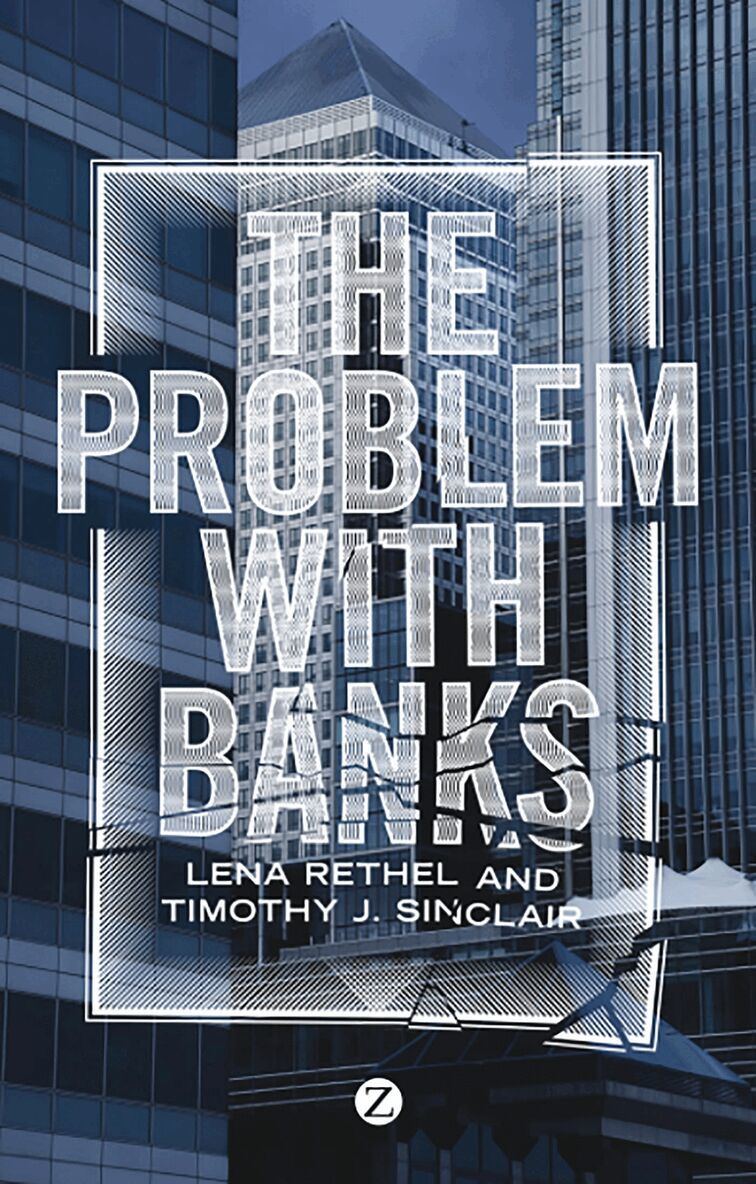
Banks of all sorts are troubled institutions. The cost of public bail-outs associated with the subprime crisis in the United States alone may be as high as US$5 trillion. What is the problem with banks? Why do they seem to be at the centre of economic and financial turmoil down through the ages? In this provocative and timely book, Rethel and Sinclair seek answers to these questions, arguing that banks suffer from perennial problems, and that developments in the financial markets and government in recent decades have simply exacerbated these issues.The book examines banking activity in America, Asia and Europe, and how specific historical circumstances have transformed banks' behaviour and attitude to risk. While many see government as a constraint on banks, Sinclair and Rethel argue that what governments do in terms of regulation shapes banks and their motivations, as can be seen in the shortcomings of current reform proposals. Instead, more far-reaching, alternative ways of regulating and shaping banks are needed.A concise, essential overview of a pressing global issue.
1 245 kr
Skickas inom 10-15 vardagar
Banks of all sorts are troubled institutions. The cost of public bail-outs associated with the subprime crisis in the United States alone may be as high as US$5 trillion. What is the problem with banks? Why do they seem to be at the centre of economic and financial turmoil down through the ages? In this provocative and timely book, Rethel and Sinclair seek answers to these questions, arguing that banks suffer from perennial problems, and that developments in the financial markets and government in recent decades have simply exacerbated these issues.The book examines banking activity in America, Asia and Europe, and how specific historical circumstances have transformed banks' behaviour and attitude to risk. While many see government as a constraint on banks, Sinclair and Rethel argue that what governments do in terms of regulation shapes banks and their motivations, as can be seen in the shortcomings of current reform proposals. Instead, more far-reaching, alternative ways of regulating and shaping banks are needed.A concise, essential overview of a pressing global issue.