Timothy P. R. Weaver - Böcker
Visar alla böcker från författaren Timothy P. R. Weaver. Handla med fri frakt och snabb leverans.
4 produkter
4 produkter
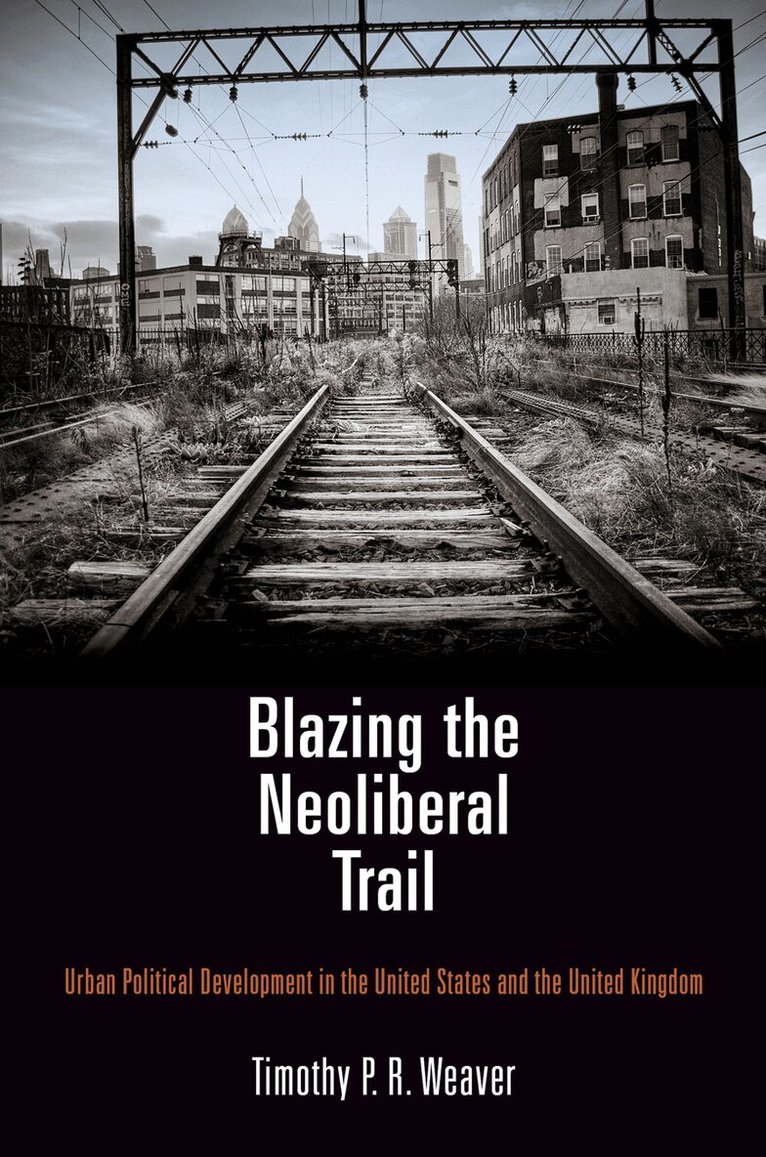
Blazing the Neoliberal Trail
Urban Political Development in the United States and the United Kingdom
Inbunden, Engelska, 2016
952 kr
Skickas inom 7-10 vardagar
In Blazing the Neoliberal Trail, Timothy Weaver asks how and why urban policy and politics have become dominated, over the past three decades, by promarket thinking. He argues that politicians such as Ronald Reagan and Margaret Thatcher targeted urban areas as part of their far broader effort to remake the relationship between markets, states, and citizens. But while neoliberal policies were enacted in both the United States and the United Kingdom, Weaver shows that there was significant variation in the ways in which neoliberal ideas were brought to bear on institutional frameworks and organized interests. Moreover, these developments were not limited to a 1980s right-wing effort but were also advanced by Bill Clinton and Tony Blair, whose own agendas ultimately reinforced neoliberal ideas and practices, though often by default rather than design. The enduring impact of these shifts is evidenced today by the reintroduction of enterprise zones in the United Kingdom by Chancellor of the Exchequer George Osborne and by President Obama's announcement of Promise Zones, which, despite appearances, are cast in the neoliberal mold.By highlighting the bipartisan nature of the neoliberal turn, Weaver challenges the dominant narrative that the revival of promarket policies was primarily driven by the American GOP and the United Kingdom's Conservative Party. Drawing on extensive archival research and interviews with key political actors, Weaver examines national-level policies, such as enterprise zones-place-based articulations of neoliberal ideas-in case studies of Philadelphia and London. Through an investigation of national urban policy and local city politics, Blazing the Neoliberal Trail shows how elites became persuaded by neoliberal ideas and remade political institutions in their image.
872 kr
Skickas inom 7-10 vardagar
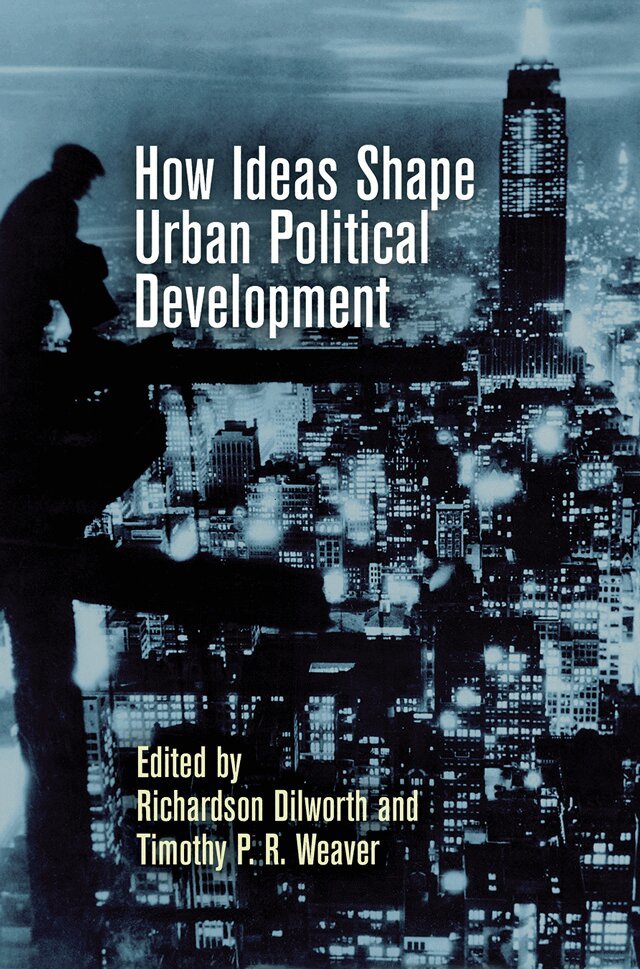
A collection of international case studies that demonstrate the importance of ideas to urban political developmentIdeas, interests, and institutions are the "holy trinity" of the study of politics. Of the three, ideas are arguably the hardest with which to grapple and, despite a generally broad agreement concerning their fundamental importance, the most often neglected. Nowhere is this more evident than in the study of urban politics and urban political development.The essays in How Ideas Shape Urban Political Development argue that ideas have been the real drivers behind urban political development and offer as evidence national and international examples-some unique to specific cities, regions, and countries, and some of global impact. Within the United States, contributors examine the idea of "blight" and how it became a powerful metaphor in city planning; the identification of racially-defined spaces, especially black cities and city neighborhoods, as specific targets of neoliberal disciplinary practices; the paradox of members of Congress who were active supporters of civil rights legislation in the 1950s and 1960s but enjoyed the support of big-city political machines that were hardly liberal when it came to questions of race in their home districts; and the intersection of national education policy, local school politics, and the politics of immigration. Essays compare the ways in which national urban policies have taken different shapes in countries similar to the United States, namely, Canada and the United Kingdom. The volume also presents case studies of city-based political development in Chile, China, India, and Africa-areas of the world that have experienced a more recent form of urbanization that feature deep and intimate ties and similarities to urban political development in the Global North, but which have occurred on a broader scale.Contributors: Daniel BÉland, Debjani Bhattacharyya, Robert Henry Cox, Richardson Dilworth, Jason Hackworth, Marcus Anthony Hunter, William Hurst, Sally Ford Lawton, Thomas Ogorzalek, Eleonora Pasotti, Joel Rast, Douglas S. Reed, Mara Sidney, Lester K. Spence, Vanessa Watson, Timothy P. R. Weaver, Amy Widestrom.
656 kr
Skickas inom 7-10 vardagar
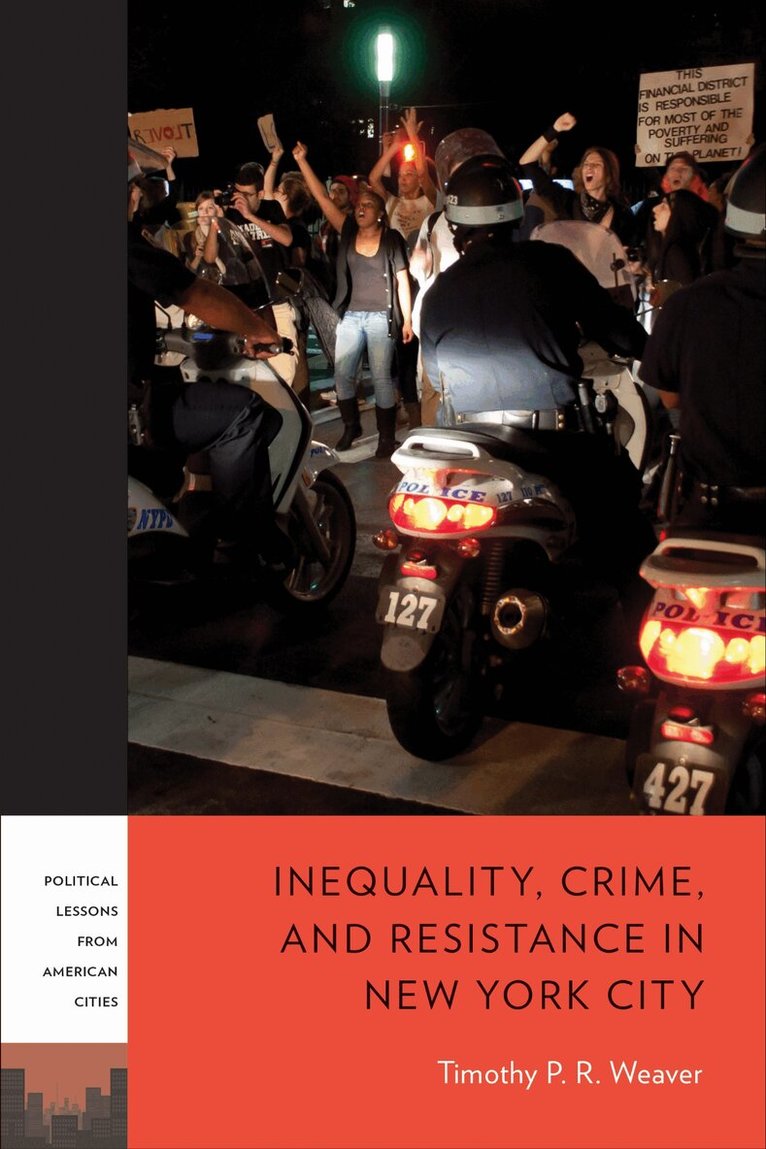
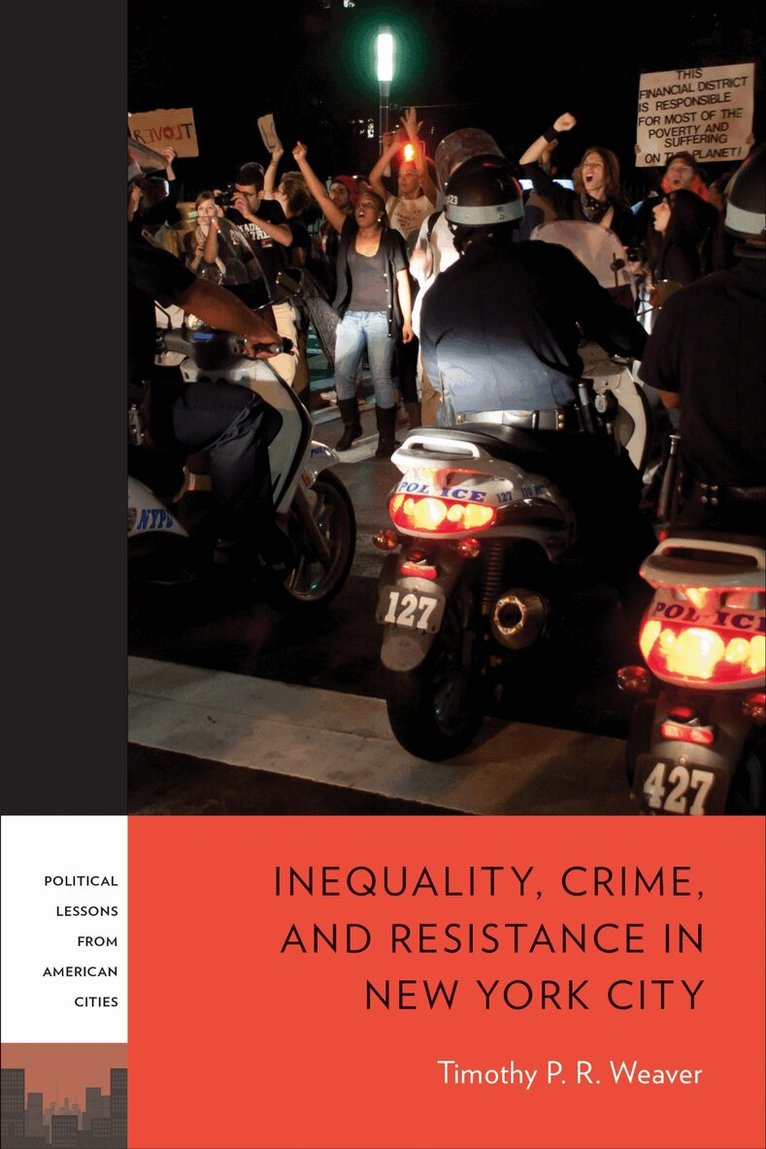
Looking closely at New York City’s political development since the 1970s, three “political orders”-conservativism, neoliberalism, and egalitarianism-emerged. In Inequality, Crime, and Resistance in New York City, Timothy Weaver argues that the intercurrent impact of these orders has created a constant battle for power.Weaver brings these clashes to the fore by showing how New York City politics has been shaped by these conflicting orders. He examines the transformation of the city’s political economy in the aftermath of the 1975 fiscal crisis through neoliberal real estate development and privatization, the conservative rise of law-and-order politics in the 1970s to 1990s, and the efforts of the city’s egalitarians to respond to each of these shifts through social movements such as Occupy and Black Lives Matter.Inequality, Crime, and Resistance in New York City belies glib assumptions about the city’s liberal character. Weaver reveals the metropolis not as a homogenous political whole, but as a site in which the victories and defeats of rival political forces change the terms of local citizenship for the millions of residents who call the city home.In the series Political Lessons from American Cities
210 kr
Skickas inom 7-10 vardagar
Looking closely at New York City’s political development since the 1970s, three “political orders”-conservativism, neoliberalism, and egalitarianism-emerged. In Inequality, Crime, and Resistance in New York City, Timothy Weaver argues that the intercurrent impact of these orders has created a constant battle for power.Weaver brings these clashes to the fore by showing how New York City politics has been shaped by these conflicting orders. He examines the transformation of the city’s political economy in the aftermath of the 1975 fiscal crisis through neoliberal real estate development and privatization, the conservative rise of law-and-order politics in the 1970s to 1990s, and the efforts of the city’s egalitarians to respond to each of these shifts through social movements such as Occupy and Black Lives Matter.Inequality, Crime, and Resistance in New York City belies glib assumptions about the city’s liberal character. Weaver reveals the metropolis not as a homogenous political whole, but as a site in which the victories and defeats of rival political forces change the terms of local citizenship for the millions of residents who call the city home.In the series Political Lessons from American Cities