Tobias Boes - Böcker
Visar alla böcker från författaren Tobias Boes. Handla med fri frakt och snabb leverans.
7 produkter
7 produkter
2 368 kr
Skickas inom 5-8 vardagar
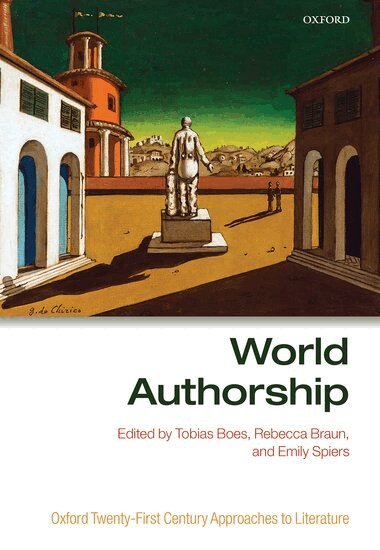
The original essays in Oxford Twenty-First Century Approaches to Literature mean to provoke rather than reassure, to challenge rather than codify. Instead of summarizing existing knowledge, scholars working in the field aim at opening fresh discussion; instead of emphasizing settled consensus they direct their readers to areas of enlivened and unresolved debate.Booksellers, authors, and academics have been talking about world literature since Goethe made the term fashionable in the early nineteenth century. Yet amidst all the talk of books that 'circulate' and literature as a kind of universal property that can function as a 'window on the world', how do we account for the people who live in real places, and who write, translate, market, and read the texts that travel on these global journeys? World Authorship breaks new ground by showing how to bring together the real-world contexts of authorship with the literary worlds of fiction.Written by world-leading academics and creative professionals including authors, translators, publishers, editors, prize jurors, and literary festival organizers, World Authorship updates Michael Foucault's 'author function' by significantly expanding the network of people and practices involved in literature. It covers keyword aspects of world authorship, grounding them in the study of actual literary texts to illuminate how literature is shared and made in different parts of the world and at different times in history. At the heart of all contributions, however, is one key question: where is the human element in world literature? By covering everything from 'Beginnings' to 'Voice', World Authorship provides the answer.
1 542 kr
Skickas inom 10-15 vardagar
The Bildungsroman, or "novel of formation," has long led a paradoxical life within literary studies, having been construed both as a peculiarly German genre, a marker of that country's cultural difference from Western Europe, and as a universal expression of modernity. In Formative Fictions, Tobias Boes argues that the dual status of the Bildungsroman renders this novelistic form an elegant way to negotiate the diverging critical discourses surrounding national and world literature. Since the late eighteenth century, authors have employed the story of a protagonist's journey into maturity as a powerful tool with which to facilitate the creation of national communities among their readers. Such attempts always stumble over what Boes calls "cosmopolitan remainders," identity claims that resist nationalism's aim for closure in the normative regime of the nation-state. These cosmopolitan remainders are responsible for the curiously hesitant endings of so many novels of formation. In Formative Fictions, Boes presents readings of a number of novels—Goethe's Wilhelm Meister's Apprenticeship, Karl Leberecht Immermann's The Epigones, Gustav Freytag's Debit and Credit, Alfred Döblin's Berlin Alexanderplatz, and Thomas Mann's Doctor Faustus among them—that have always been felt to be particularly "German" and compares them with novels by such authors as George Eliot and James Joyce to show that what seem to be markers of national particularity can productively be read as topics of world literature.
376 kr
Skickas inom 10-15 vardagar
The Bildungsroman, or "novel of formation," has long led a paradoxical life within literary studies, having been construed both as a peculiarly German genre, a marker of that country's cultural difference from Western Europe, and as a universal expression of modernity. In Formative Fictions, Tobias Boes argues that the dual status of the Bildungsroman renders this novelistic form an elegant way to negotiate the diverging critical discourses surrounding national and world literature. Since the late eighteenth century, authors have employed the story of a protagonist's journey into maturity as a powerful tool with which to facilitate the creation of national communities among their readers. Such attempts always stumble over what Boes calls "cosmopolitan remainders," identity claims that resist nationalism's aim for closure in the normative regime of the nation-state. These cosmopolitan remainders are responsible for the curiously hesitant endings of so many novels of formation. In Formative Fictions, Boes presents readings of a number of novels—Goethe's Wilhelm Meister's Apprenticeship, Karl Leberecht Immermann's The Epigones, Gustav Freytag's Debit and Credit, Alfred Döblin's Berlin Alexanderplatz, and Thomas Mann's Doctor Faustus among them—that have always been felt to be particularly "German" and compares them with novels by such authors as George Eliot and James Joyce to show that what seem to be markers of national particularity can productively be read as topics of world literature.
400 kr
Skickas inom 3-6 vardagar
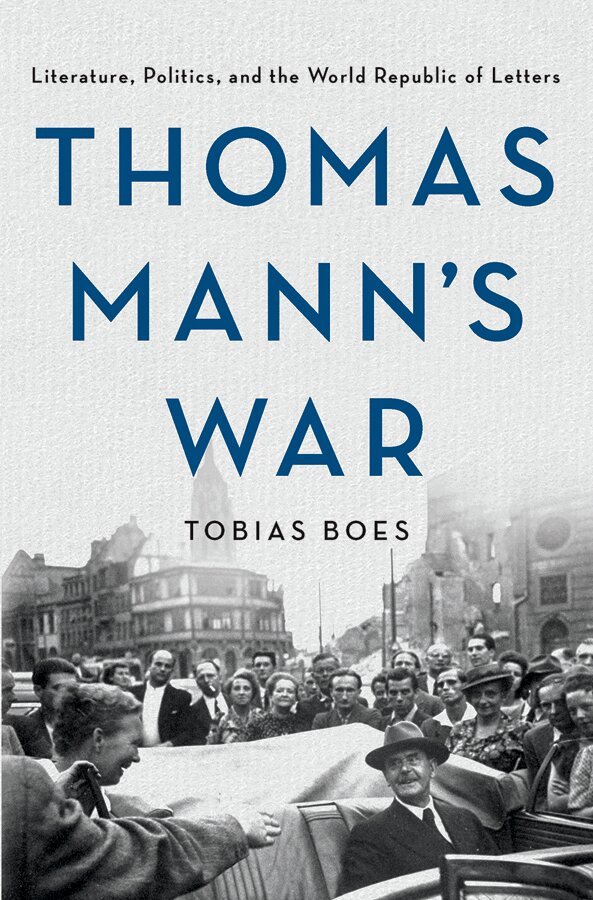
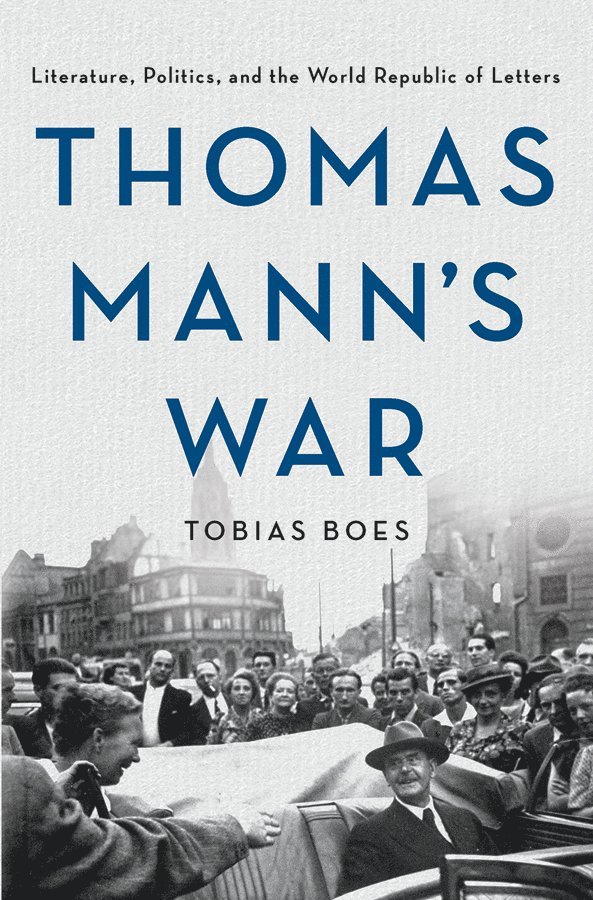
In Thomas Mann's War, Tobias Boes traces how the acclaimed and bestselling author became one of America's most prominent anti-fascists and the spokesperson for a German cultural ideal that Nazism had perverted.Thomas Mann, winner of the 1929 Nobel Prize in literature and author of such world-renowned novels as Buddenbrooks and The Magic Mountain, began his self-imposed exile in the United States in 1938, having fled his native Germany in the wake of Nazi persecution and public burnings of his books. Mann embraced his role as a public intellectual, deftly using his literary reputation and his connections in an increasingly global publishing industry to refute Nazi propaganda. As Boes shows, Mann undertook successful lecture tours of the country and penned widely-read articles that alerted US audiences and readers to the dangers of complacency in the face of Nazism's existential threat. Spanning four decades, from the eve of World War I, when Mann was first translated into English, to 1952, the year in which he left an America increasingly disfigured by McCarthyism, Boes establishes Mann as a significant figure in the wartime global republic of letters. Open access edition funded by the National Endowment for the Humanities.
248 kr
Skickas inom 10-15 vardagar
In Thomas Mann's War, Tobias Boes traces how the acclaimed and bestselling author became one of America's most prominent anti-fascists and the spokesperson for a German cultural ideal that Nazism had perverted.Thomas Mann, winner of the 1929 Nobel Prize in literature and author of such world-renowned novels as Buddenbrooks and The Magic Mountain, began his self-imposed exile in the United States in 1938, having fled his native Germany in the wake of Nazi persecution and public burnings of his books. Mann embraced his role as a public intellectual, deftly using his literary reputation and his connections in an increasingly global publishing industry to refute Nazi propaganda. As Boes shows, Mann undertook successful lecture tours of the country and penned widely-read articles that alerted US audiences and readers to the dangers of complacency in the face of Nazism's existential threat. Spanning four decades, from the eve of World War I, when Mann was first translated into English, to 1952, the year in which he left an America increasingly disfigured by McCarthyism, Boes establishes Mann as a significant figure in the wartime global republic of letters. Open access edition funded by the National Endowment for the Humanities.
Del 254 - Studies in German Literature Linguistics and Culture
A Reader's Guide to Thomas Mann's Doctor Faustus
Inbunden, Engelska, 2025
1 194 kr
Skickas inom 7-10 vardagar
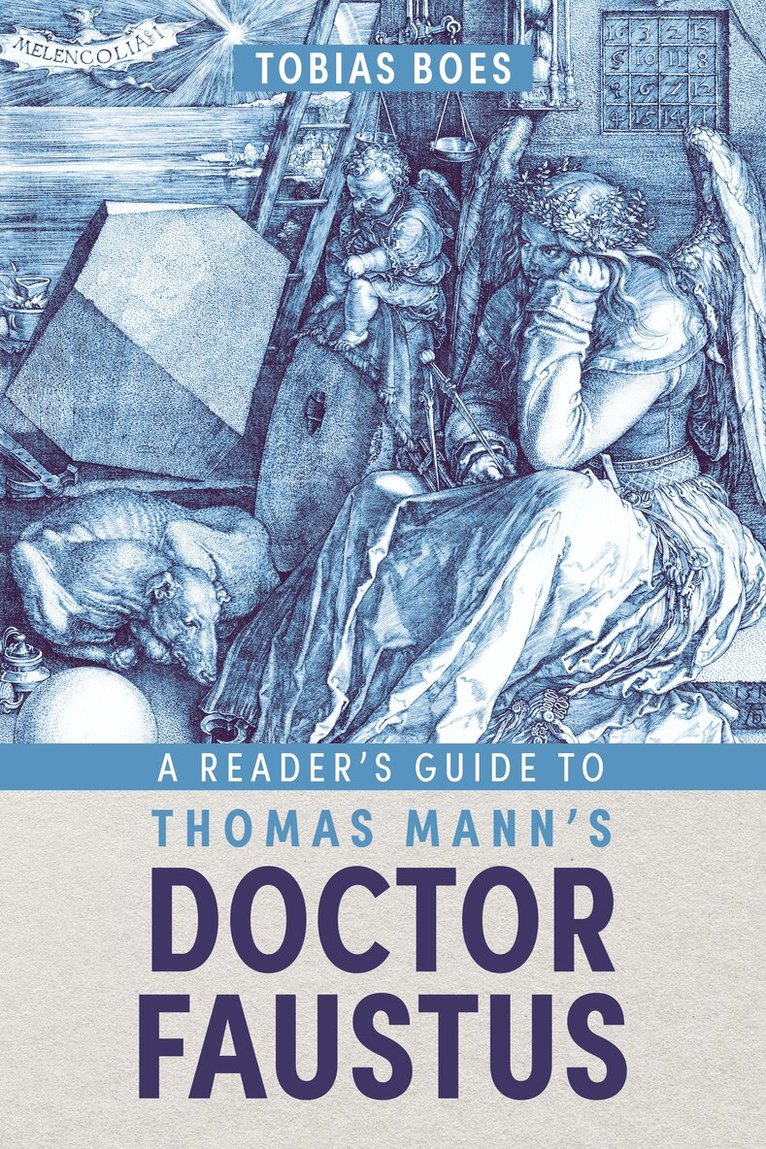
Provides the English-speaking reader with the tools needed to appreciate Thomas Mann's most ambitious novel, one of the greatest literary works of the twentieth century, now timely once again.In 1938, the great German author and Nobel Prize winner Thomas Mann emigrated to the United States. There, he became a figurehead for the intellectual opposition to Nazism, giving more than 150 public lectures and recording more than fifty anti-Nazi radio addresses that the BBC broadcast into Germany. His political activities also left a profound mark on his fiction, most importantly on the 1947 novel Doctor Faustus: The Life of the German Composer Adrian Leverkühn as Told by a Friend. Ostensibly the biography of a fictional modern composer, Doctor Faustus also serves as a post-mortem of Nazism and a reckoning with five centuries of cultural history that led to dazzling heights but failed to prevent Germany's ultimate fall.Doctor Faustus is an astonishingly complex novel, both because of the range of its intellectual references and because of its stylistic inventiveness, which has provoked comparisons with Joyce. And yet, at a time when democracy around the world once again seems in retreat and the forces of irrationalism are in advance, it is also an extremely timely book. This guide will equip English-speaking readers with all the tools necessary to appreciate one of the greatest literary works of the twentieth century.On publication this book is available as an Open Access ebook under the Creative Commons license CC BY-NC-ND.
Del 254 - Studies in German Literature Linguistics and Culture
A Reader's Guide to Thomas Mann's Doctor Faustus
Häftad, Engelska, 2025
245 kr
Skickas inom 7-10 vardagar
Provides the English-speaking reader with the tools needed to appreciate Thomas Mann's most ambitious novel, one of the greatest literary works of the twentieth century, now timely once again.In 1938, the great German author and Nobel Prize winner Thomas Mann emigrated to the United States. There, he became a figurehead for the intellectual opposition to Nazism, giving more than 150 public lectures and recording more than fifty anti-Nazi radio addresses that the BBC broadcast into Germany. His political activities also left a profound mark on his fiction, most importantly on the 1947 novel Doctor Faustus: The Life of the German Composer Adrian Leverkühn as Told by a Friend. Ostensibly the biography of a fictional modern composer, Doctor Faustus also serves as a post-mortem of Nazism and a reckoning with five centuries of cultural history that led to dazzling heights but failed to prevent Germany's ultimate fall.Doctor Faustus is an astonishingly complex novel, both because of the range of its intellectual references and because of its stylistic inventiveness, which has provoked comparisons with Joyce. And yet, at a time when democracy around the world once again seems in retreat and the forces of irrationalism are in advance, it is also an extremely timely book. This guide will equip English-speaking readers with all the tools necessary to appreciate one of the greatest literary works of the twentieth century.On publication this book is available as an Open Access ebook under the Creative Commons license CC BY-NC-ND.