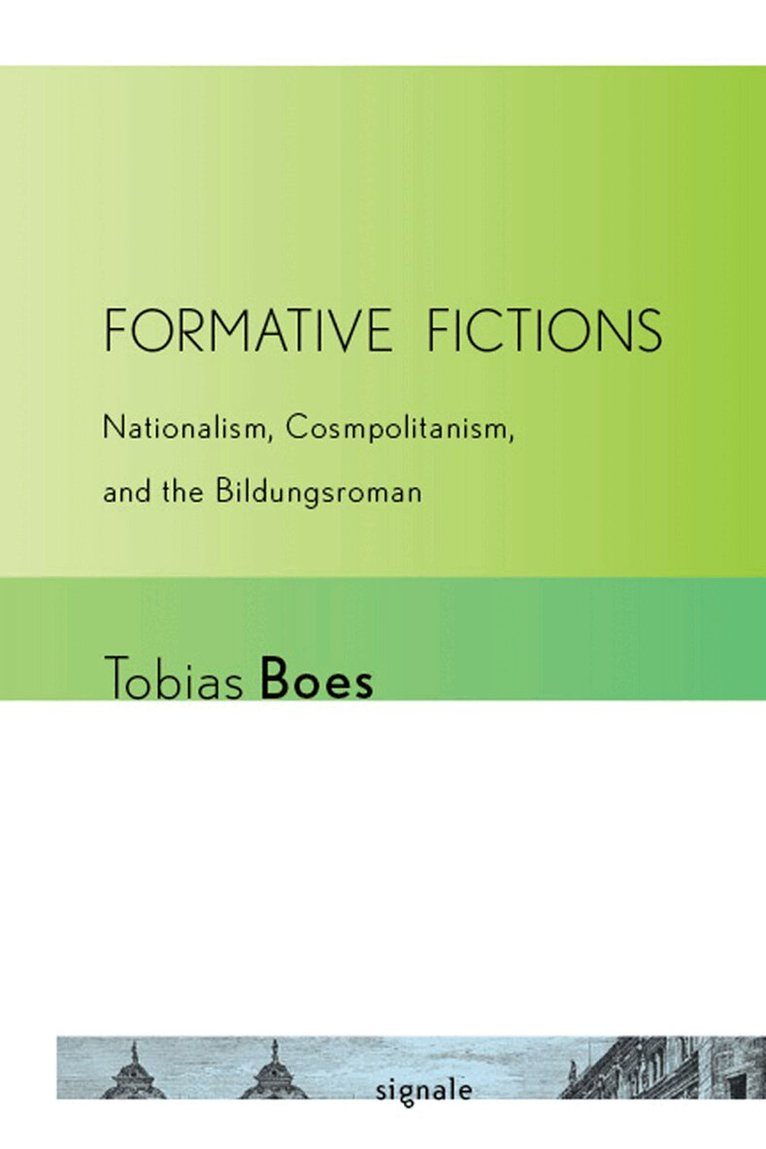
Häftad, Engelska, 2012
Formative Fictions
Nationalism, Cosmopolitanism, and the Bildungsroman
Av Tobias Boes
Del i serien Signale: Modern German Letters, Cultures, and Thought
396 kr
Beställningsvara. Skickas inom 10-15 vardagar. Fri frakt över 249 kr.
Beskrivning
Produktinformation
- Utgivningsdatum: 2012-11-15
- Mått: 152 x 229 x 16 mm
- Vikt: 454 g
- Format: Häftad
- Språk: Engelska
- Serie: Signale: Modern German Letters, Cultures, and Thought
- Antal sidor: 214
- Förlag: Cornell University Press
- ISBN: 9780801478031
Utforska kategorier
Mer om författaren
Tobias Boes is Associate Professor of German at the University of Notre Dame. He is author of Formative Fictions. Follow him on X @tobiasboes.
Recensioner i media
By reinserting less well-studied German examples into a history of the genre, Boes resists turning plots into theoretical self-descriptions. His approach allows the genre the freedom of its individual solutions.... Boes remains true to the incipient insight that he has unearthed in Morgenstern.- Nicholas Dames (Modern Language Quarterly) ...Boes handles many and difficult relevant bodies of thought, both historical and theoretical... with exemplary clarity, writing in fluent and precise academic prose free of unnecessary jargon. What is more, he situates his work as a whole lucidly and creatively between the disciplines of German Studies and comparative literature, thereby enriching both of them and striking a blow for the ability of literary study to refresh itself at a time when the humanities are in sore need of the kind of inventiveness and confidence in them that Boes displays.- Michael Minden (Modern Language Review)
Betyg & recensioner
0 recensioner
Inga recensioner tillgängliga.