Toby Thompson - Böcker
Visar alla böcker från författaren Toby Thompson. Handla med fri frakt och snabb leverans.
7 produkter
7 produkter
189 kr
Skickas
True tales told in wonderful ways A new adventure each time in this interactive non-fiction gift book. You’re in charge! Twirl the spinner on the cover to land on one of four categories: EXPLORE, WONDER, LAUGH and OOH! Pick a true tale within that category. Read and enjoy. Then spin again to choose your next adventure.Land on green and choose from one of the EXPLORE tales, which includes red crab migration on Christmas Island and the best place to holiday in space!Spin to yellow for WONDER – be amazed by polar lights, coral reefs, and more!Twirl to orange for LAUGH – have a giggle over the dinosaur riddle, discover how to tell a funny joke, find out about weird uses of wee, and other fun things.And turn to blue for OOH! – with surprising tales about slime, robots, talking plants, rocks that play music, the reasons why kids are better than grown-ups …AND MORE!
613 kr
Skickas inom 10-15 vardagar
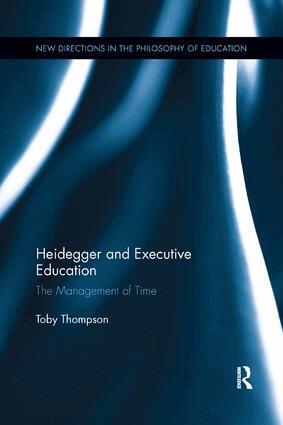
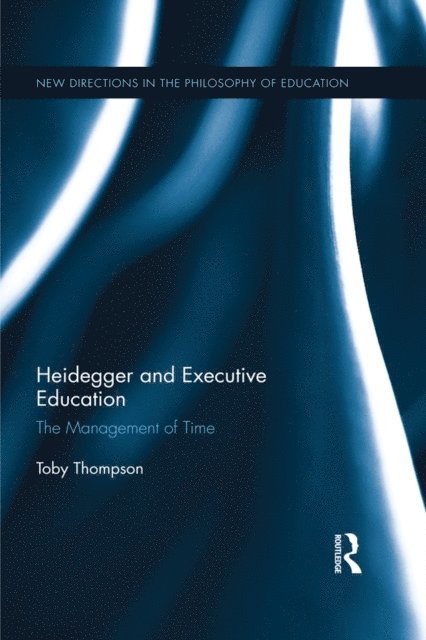
Global corporations and the senior executives who oversee them have been subject to great criticism in recent times: not only do such corporations hold extreme concentrations of wealth, but they continue to sanction staggering pay inequalities between the haves and the have-nots. At the same time, university-based business schools are conducting programmes of executive education seemingly customised to sanction these same inequalities. Heidegger and Executive Education is a piece of critical philosophy that has been written from within the business school in order to examine how this sheltered process of educating in-role corporate executives operates. Thompson claims that executive education is based on a very simple premise: that an executive executes an order, and that executive education is an amelioration of that process. Thompson argues that the easiest way to conceive of executive education is to treat order and execution as cognates, as a single conceptual entity. Thus, he asks, if educating executives in line with the order-execution cognate involves swapping the boardroom for the classroom, and in keeping with the ‘critical’ tag, shouldn’t executive education be about questioning not only the execution, but also the dominant order? The author uses ‘time’ as the philosophical method by which one can undo the order-execution cognate, question the sanctity of the cognate and thereby halt the seemingly inexorable temporal sequence from order through to those orders becoming executed. This book uses Martin Heidegger’s exotic philosophy of time in order to mount a philosophical challenge to the temporal sequentiality of executive education. It will therefore be of great interest to academics, researchers and postgraduates who are interested in Heidegger, the philosophy of education and executive education. It should also be essential reading for those involved in training, developing, and educating corporate executives.
172 kr
Skickas inom 10-15 vardagar
“That boy . . . this fellow, Toby . . . has got some lessons to learn.” -Bob Dylan, Rolling Stone, November 29, 1969"Toby Thompson was there first." -Greil Marcus“A first-rate novelistic account of Thompson’s own psyche as he uncovers the Dylan few people know . . . A new look at young Dylan done with kindness, enthusiasm and superb language.” -William Kennedy, Look Magazine “Essential reading. Thompson, unprecedentedly, managed to interview not only Echo Helstrom, almost certainly the ‘Girl of the North Country,’ but Dylan’s mother and brother, his uncle, his friends.” -Michael Gray, Bob Dylan Encyclopedia“Dylan fans will not want to miss this book.” -Sioux City Journal“Enough to satisfy any Dylan fan with all the gossip he’ll ever need.” -Huntsville Times“Well worth the attention of anyone who has fallen under the spell of the boy from the North Country.” -Los Angeles Times“It’s a must.” -Ft. Worth Press"Thompson tracked down anybody who knew 'Die-lan' (as the Hibbingites called him), including the guy at the local music store, the guy at the motorcycle shop, his English and music teachers, his uncles, his brother David and even his reluctant but ultimately charmingly chatty mother. Of course, Thompson traveled into a few dead ends. But the stuff with Dylan's mom and his high school girlfriend, Echo Helstrom, is priceless. Positively Main Street is a free-wheelin', fun and quick read that is surprisingly informative." -Minneapolis Star Tribune"Hundreds of books have been written about Minnesota's most famous songwriter; Bob Dylan's life and music has been analyzed by fans, scholars, and even himself. So, why do we need Toby Thompson's Positively Main Street: Bob Dylan's Minnesota? Because it's a forgotten milestone. Published in 1971, it was the first biography on Dylan. Although it's been out of print since 1977, the book is, with the exception of Dylan's autobiography, perhaps the most readable and necessary volume on the folk icon." -City Pages"The new Positively Main Street is a lovely little book, even better than the original, a cherished addition to the Dylan bookshelf. Thompson and the University of Minnesota Press have enhanced what was already a classic and made it available to a whole new audience. Dylan fans owe them a debt of gratitude." -The Dylan Daily"[Thompson] ends up not only interviewing 'the Girl from the North Country,' Echo Haelstrom, and 'Bob’s' mother and brother and teachers etc., but also filling in for Dylan among his old friends and acquaintances, playing Dylan’s songs on the guitar and harmonica and singing them, in a way that may have seemed stratingly revolutionary at the time for a journalist to do, he actually recreates a bit of Dylan’s existence as his own." -Michael Lally, Lally's Alley
359 kr
Skickas inom 3-6 vardagar
333 kr
Skickas inom 3-6 vardagar
333 kr
Skickas inom 3-6 vardagar
2 104 kr
Skickas inom 10-15 vardagar
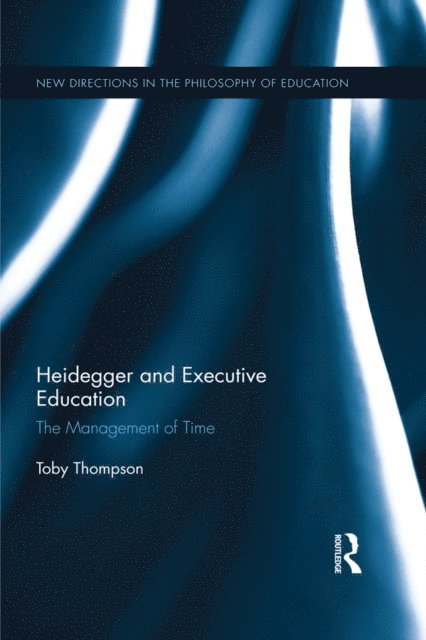
Global corporations and the senior executives who oversee them have been subject to great criticism in recent times: not only do such corporations hold extreme concentrations of wealth, but they continue to sanction staggering pay inequalities between the haves and the have-nots. At the same time, university-based business schools are conducting programmes of executive education seemingly customised to sanction these same inequalities. Heidegger and Executive Education is a piece of critical philosophy that has been written from within the business school in order to examine how this sheltered process of educating in-role corporate executives operates. Thompson claims that executive education is based on a very simple premise: that an executive executes an order, and that executive education is an amelioration of that process. Thompson argues that the easiest way to conceive of executive education is to treat order and execution as cognates, as a single conceptual entity. Thus, he asks, if educating executives in line with the order-execution cognate involves swapping the boardroom for the classroom, and in keeping with the ‘critical’ tag, shouldn’t executive education be about questioning not only the execution, but also the dominant order? The author uses ‘time’ as the philosophical method by which one can undo the order-execution cognate, question the sanctity of the cognate and thereby halt the seemingly inexorable temporal sequence from order through to those orders becoming executed. This book uses Martin Heidegger’s exotic philosophy of time in order to mount a philosophical challenge to the temporal sequentiality of executive education. It will therefore be of great interest to academics, researchers and postgraduates who are interested in Heidegger, the philosophy of education and executive education. It should also be essential reading for those involved in training, developing, and educating corporate executives.