Todd Cronan - Böcker
Visar alla böcker från författaren Todd Cronan. Handla med fri frakt och snabb leverans.
6 produkter
6 produkter
290 kr
Skickas inom 7-10 vardagar
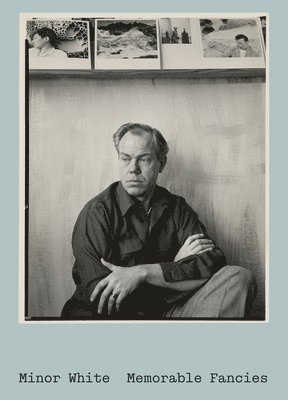
The personal journals of one of postwar America’s most influential photographers, published for the first timeOne of the most significant unpublished texts in the history of photography, Memorable Fancies is the daybooks of Minor White, an artist who played a leading role in shaping the practice of photography in postwar America. Begun in the early 1930s and taking its name from a series of dialogues in William Blake’s The Marriage of Heaven and Hell, these writings are part diary, part photography manual, and part aesthetic treatise. Minor White, Memorable Fancies presents this work in its entirety for the first time, offering an intimate look at the ideas and interior life of one of the most important photographers of the twentieth century.In this beautifully illustrated volume, art historian Todd Cronan sheds light on White’s guiding concerns and the connections between White’s writings and his public practice as a photographer and influential publisher and teacher. White’s journal is accompanied by an array of photographs by White as well as annotations that provide background and context, illuminating White’s life and career while capturing a vibrant and inventive moment in the history of modern photography.Challenging our assumptions about photographic agency and the interplay between art and life, Minor White, Memorable Fancies engages deeply with the creative potential of photographic work, the nature and effect of artworks on viewers, and the formative role that chance plays in the production of photographs.Distributed for the Princeton University Art Museum
308 kr
Skickas inom 7-10 vardagar
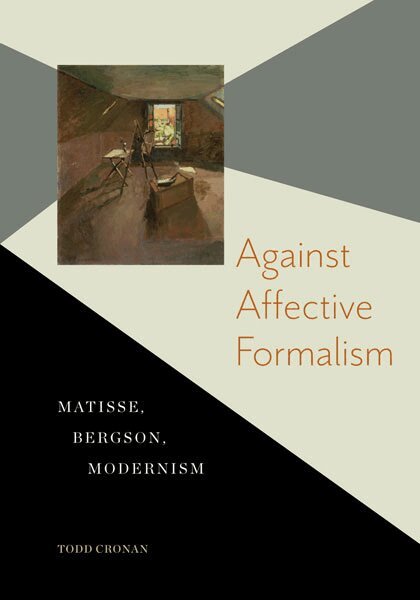
For nearly fifty years the humanities have been confined by a series of critiques: of the subject, of representation, of the visual, of modernism, of autonomy, of intention, of art itself. In their place various “materialities” have appeared: signs, identities, bodies, history, and works. Against Affective Formalism challenges these orthodoxies.“What I am after, above all, is expression,” Henri Matisse declared. Matisse believed that through the careful arrangement of line and color he could transmit his feelings directly to the minds and bodies of his viewers. Yet Matisse continually struggled with the reality that his feelings were misunderstood-or simply ignored-by viewers of his art. Matisse oscillates between a desire for expressive command over the viewer and a sense of the impossibility of making himself known. Against Affective Formalism confronts modernism’s dissatisfactions with representation. As Todd Cronan explains, a central tenet of modernist thought turns on the effort to overcome representation in the name of something more explicit in its capacity to generate bodily or affective experience. Henri Bergson was one of the most influential advocates of the antirepresentational impulse; his novel theories of memory and freedom gripped a generation of writers, philosophers, psychologists, and artists. Matisse and Bergson worked within and against the context of form and expression that remains in force today.Writing in opposition to prevailing theories and assumptions about the relation of intention and form-most of which accept the “death of the author” as a basic fact of interpretation-Cronan argues that the beholder’s response to art, outside a framework of intentionality, is irrelevant to a work’s meaning. Intentions are not a matter of method at all: no letter, biography, document, archive, or key will recover an intention. What matters is that intentions make works of art different from objects in the world.
1 731 kr
Skickas inom 7-10 vardagar
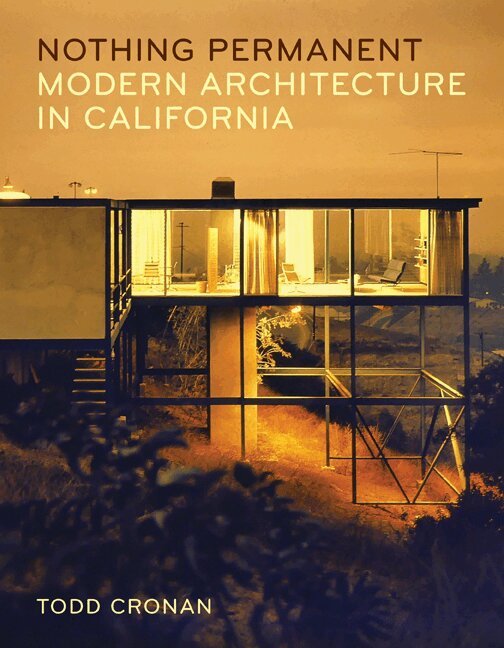
A critical look at the competing motivations behind one of modern architecture’s most widely known and misunderstood movements Although “mid-century modern” has evolved into a highly popular and ubiquitous architectural style, this term obscures the varied perspectives and approaches of its original practitioners. In Nothing Permanent, Todd Cronan displaces generalizations with a nuanced intellectual history of architectural innovation in California between 1920 and 1970, uncovering the conflicting intentions that would go on to reshape the future of American domestic life.Focusing on four primary figures-R. M. Schindler, Richard Neutra, and Charles and Ray Eames-Nothing Permanent demonstrates how this prolific era of modern architecture in California, rather than constituting a homogenous movement, was propelled by disparate approaches and aims. Exemplified by the twin pillars of Schindler and Neutra and their respective ideological factions, these two groups of architects represent opposing poles of architectural intentionality, embodying divergent views about the dynamic between interior and exterior, the idea of permanence, and the extent to which architects could exercise control over the inhabitants of their structures.Looking past California modernism’s surface-level idealization in present-day style guides, home decor publications, films, and television shows, Nothing Permanent details the intellectual, aesthetic, and practical debates that lie at the roots of this complex architectural moment. Extracting this period from its diffusion into visual culture, Cronan argues that mid-century architecture in California raised questions about the meaning of architecture and design that remain urgent today.
425 kr
Skickas inom 7-10 vardagar
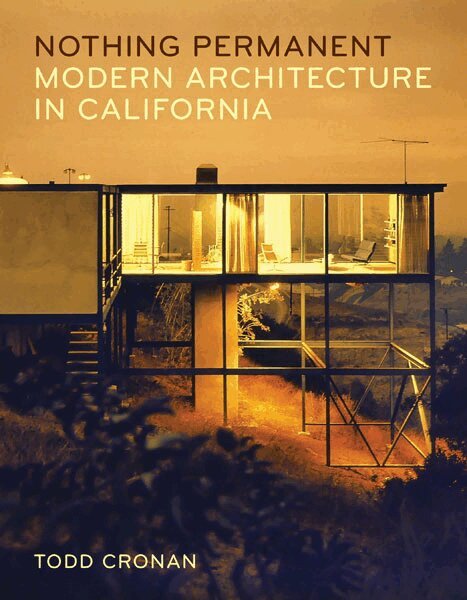
A critical look at the competing motivations behind one of modern architecture’s most widely known and misunderstood movements Although “mid-century modern” has evolved into a highly popular and ubiquitous architectural style, this term obscures the varied perspectives and approaches of its original practitioners. In Nothing Permanent, Todd Cronan displaces generalizations with a nuanced intellectual history of architectural innovation in California between 1920 and 1970, uncovering the conflicting intentions that would go on to reshape the future of American domestic life.Focusing on four primary figures-R. M. Schindler, Richard Neutra, and Charles and Ray Eames-Nothing Permanent demonstrates how this prolific era of modern architecture in California, rather than constituting a homogenous movement, was propelled by disparate approaches and aims. Exemplified by the twin pillars of Schindler and Neutra and their respective ideological factions, these two groups of architects represent opposing poles of architectural intentionality, embodying divergent views about the dynamic between interior and exterior, the idea of permanence, and the extent to which architects could exercise control over the inhabitants of their structures.Looking past California modernism’s surface-level idealization in present-day style guides, home decor publications, films, and television shows, Nothing Permanent details the intellectual, aesthetic, and practical debates that lie at the roots of this complex architectural moment. Extracting this period from its diffusion into visual culture, Cronan argues that mid-century architecture in California raised questions about the meaning of architecture and design that remain urgent today.
1 108 kr
Skickas inom 10-15 vardagar
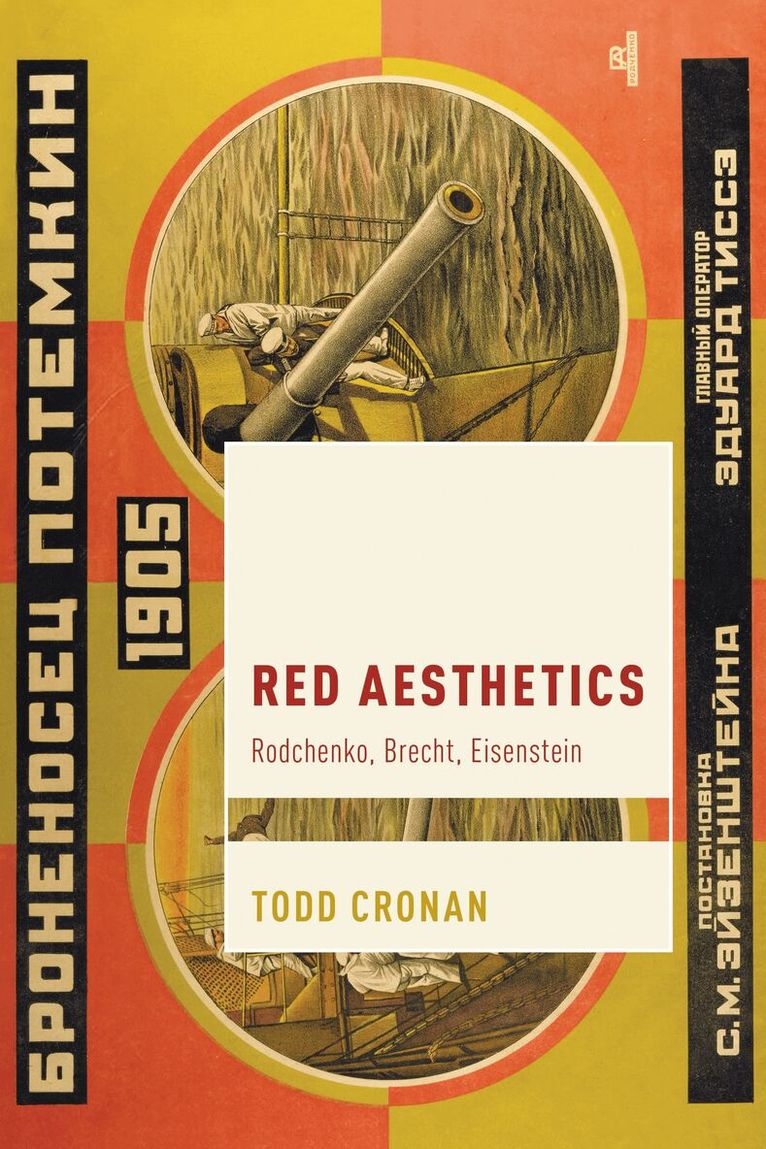
Red Aesthetics offers a new way to think about art and politics, focusing on the revolutionary work of Aleksandr Rodchenko, Bertolt Brecht, and Sergei Eisenstein between the wars. Todd Cronan shows how these three artists’ photographs, dramas, films, and writings—centered on class conflict—differ from current left orthodoxies rooted in empathy. Writing against liberal pieties, Cronan contends, following Brecht, that empathy is not the solution to our problems, but more like the source of them.
447 kr
Skickas inom 10-15 vardagar
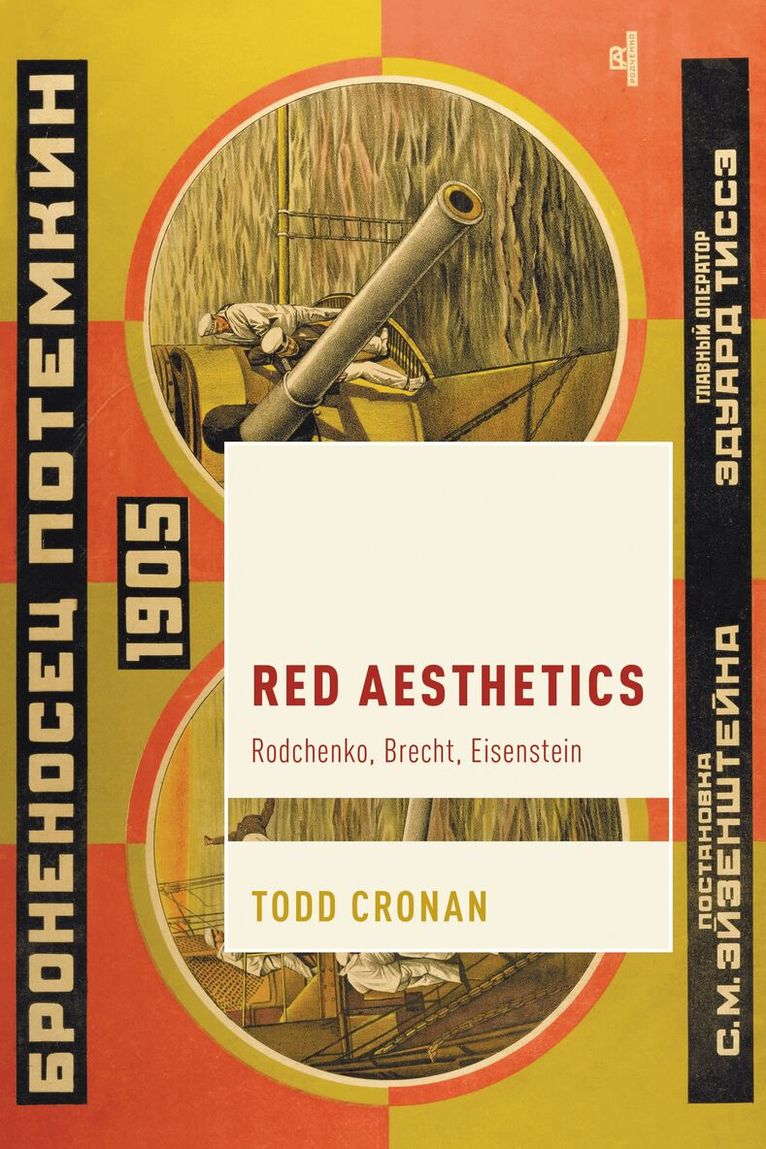
Red Aesthetics offers a new way to think about art and politics, focusing on the revolutionary work of Aleksandr Rodchenko, Bertolt Brecht, and Sergei Eisenstein between the wars. Todd Cronan shows how these three artists’ photographs, dramas, films, and writings—centered on class conflict—differ from current left orthodoxies rooted in empathy. Writing against liberal pieties, Cronan contends, following Brecht, that empathy is not the solution to our problems, but more like the source of them.