Todd R. Callaway - Böcker
Visar alla böcker från författaren Todd R. Callaway. Handla med fri frakt och snabb leverans.
3 produkter
3 produkter
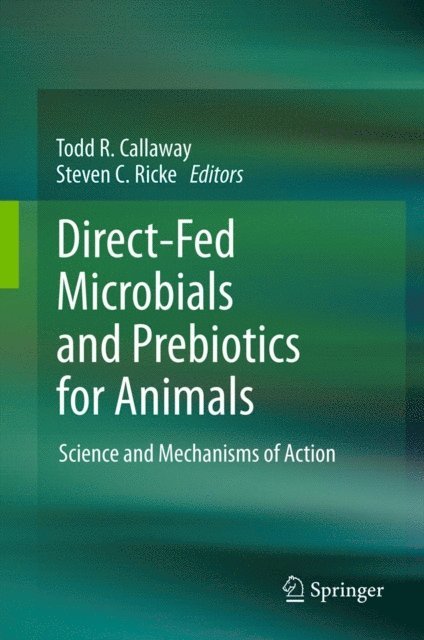
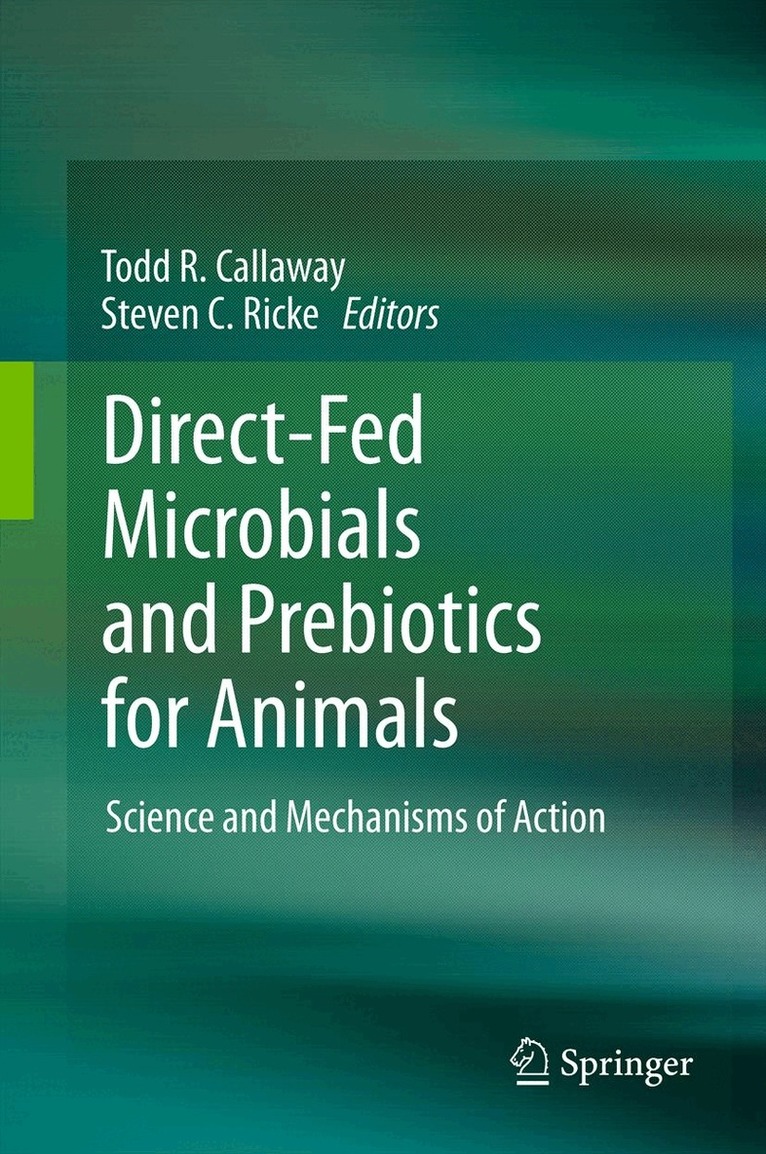
Direct-Fed Microbials and Prebiotics for Animals
Science and Mechanisms of Action
Häftad, Engelska, 2014
1 302 kr
Skickas inom 10-15 vardagar
The practice of supplementing direct fed microbial and prebiotic additives to domestic animals during growth is becoming more widespread in food animal production. Beneficial effects particularly in cattle, pigs and poultry, including improved general health, foodborne pathogen reduction, more efficient food utilization, faster growth rate and increased milk and egg production are common results. The success associated with direct fed microbial and prebiotic applications in multiple species ensures their continued commercialization and the widespread use of such additives. However, several fundamental questions remain about how and why probiotic products work, and which kind of probiotic products are best for specific production scenarios.It appears that early establishment and retention of an ecological balance in the gastrointestinal tract is an important first step for an external biological additive to be effective in young animals. Therefore, it is possible that the effectiveness of direct fed microbials and prebiotics in some animal species may only be an indirect consequence of speeding up the establishment and succession of the dominant microflora characteristic of the adult gastrointestinal tract. Consequently, an understanding of the key processes during establishment of microflora in the gastrointestinal system that lead to the subsequent fermentation characteristics and ecological balance exhibited by the highly protective microflora is needed. Several additional areas of future research directions are also suggested for further development and implementation of these biological approaches as new molecular and drug delivery technologies become available. Continued research on direct fed microbials and prebiotics in general should markedly expand their commercial applications.
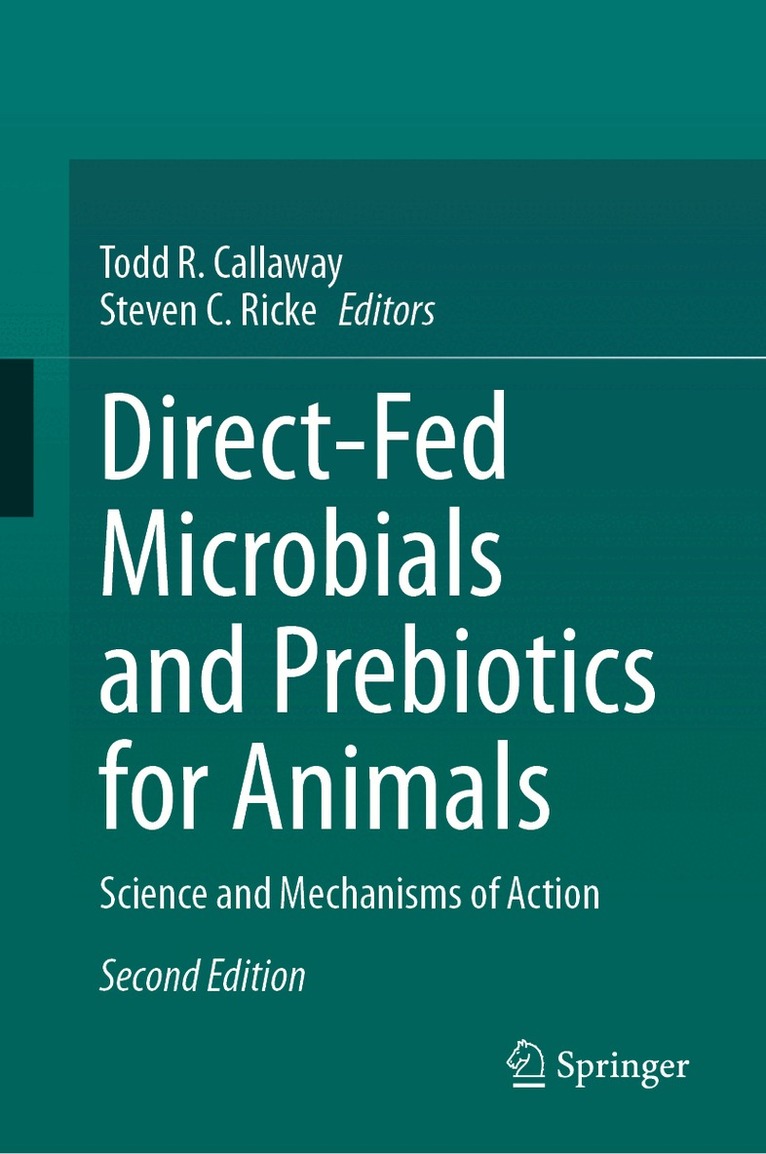
Direct-Fed Microbials and Prebiotics for Animals
Science and Mechanisms of Action
Inbunden, Engelska, 2023
2 181 kr
Skickas inom 10-15 vardagar
In this exciting update, readers will learn how feeding direct-fed microbials (including eubiotics, postbiotics, prebiotics, and synbiotics) is becoming increasingly widespread during food animal production. Animal production must improve efficiency of growth, and the use of direct-fed microbial and prebiotic additives to domestic animals has become widely accepted and utilized. The benefits of probiotic-type approaches in cattle, pigs, fish, and poultry, include improved general animal health, reduced foodborne pathogen populations, increased growth rate and feed efficiency, improved milk and egg production, and have been reported world-wide. Successes from probiotic approaches in multiple species have ensured their adoption; however, several fundamental questions remain. Early establishment and retention of an ecological balance in the gastrointestinal tract is an important first step for an external biological additive to be effective in young animals, suggesting that some of the benefits of direct-fed microbials may be due to an early establishment of a “normal” native gut microbial population. Research has indicated that the establishment of a normal population can enhance gut epithelial integrity, preventing inflammation and improving animal health. Thus, it is important that we understand the key processes that occur during the establishment of the gut microbial population that can impact gastrointestinal fermentation and provide protection against pathogens of the animals and of human consumers. Knowing how these processes work and how they impact animal energy and protein expenditures can guide further improvements of available and future commercial products. Exciting research opportunities are discussed in this book, examining different characteristics of DFMs that are fed to animals to meet different production demands in different production scenarios (e.g., beef versus dairy versus swine versusfin fish). The advent of molecular and next-generation sequencing offers methods of developing tailored DFMs, and of early detection of successful DFM establishment in the gut. These techniques will further deepen our insight into understanding the microbial population of the gut and how these populations impact animal health, food safety, and sustainability of animal-derived protein production.
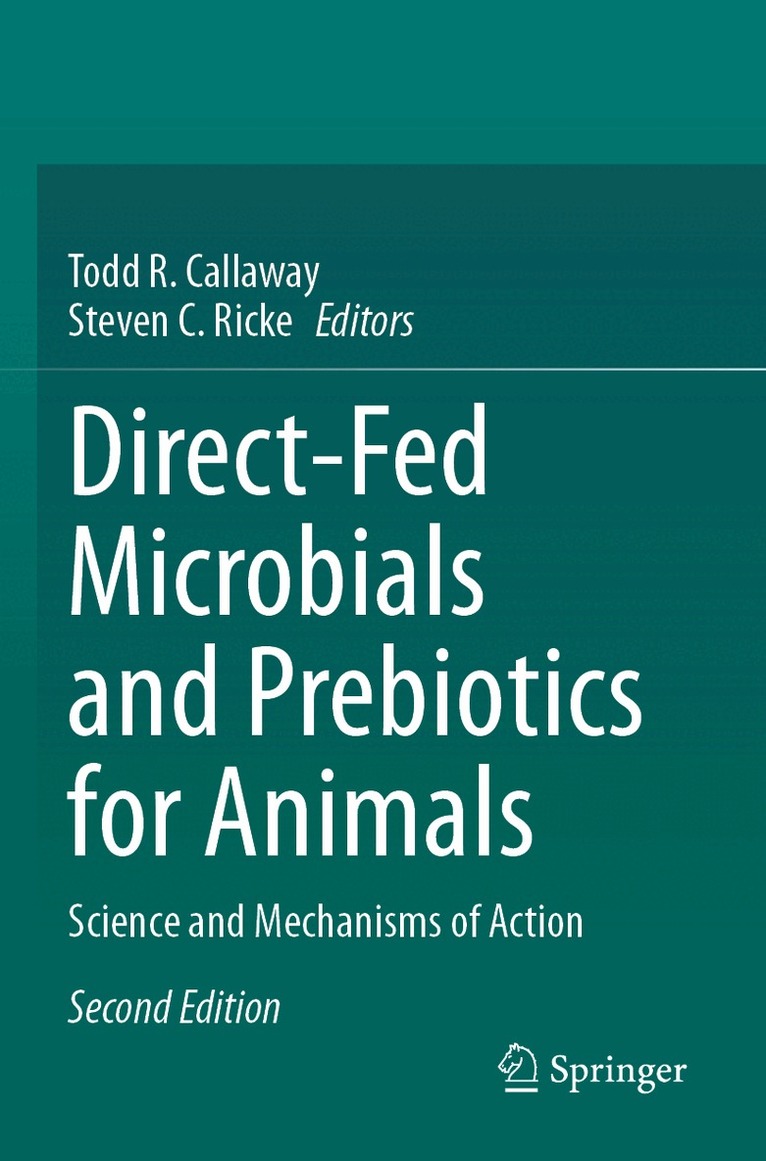
Direct-Fed Microbials and Prebiotics for Animals
Science and Mechanisms of Action
Häftad, Engelska, 2024
1 529 kr
Skickas inom 10-15 vardagar
In this exciting update, readers will learn how feeding direct-fed microbials (including eubiotics, postbiotics, prebiotics, and synbiotics) is becoming increasingly widespread during food animal production. Animal production must improve efficiency of growth, and the use of direct-fed microbial and prebiotic additives to domestic animals has become widely accepted and utilized. The benefits of probiotic-type approaches in cattle, pigs, fish, and poultry, include improved general animal health, reduced foodborne pathogen populations, increased growth rate and feed efficiency, improved milk and egg production, and have been reported world-wide. Successes from probiotic approaches in multiple species have ensured their adoption; however, several fundamental questions remain. Early establishment and retention of an ecological balance in the gastrointestinal tract is an important first step for an external biological additive to be effective in young animals, suggesting that some of the benefits of direct-fed microbials may be due to an early establishment of a “normal” native gut microbial population. Research has indicated that the establishment of a normal population can enhance gut epithelial integrity, preventing inflammation and improving animal health. Thus, it is important that we understand the key processes that occur during the establishment of the gut microbial population that can impact gastrointestinal fermentation and provide protection against pathogens of the animals and of human consumers. Knowing how these processes work and how they impact animal energy and protein expenditures can guide further improvements of available and future commercial products. Exciting research opportunities are discussed in this book, examining different characteristics of DFMs that are fed to animals to meet different production demands in different production scenarios (e.g., beef versus dairy versus swine versusfin fish). The advent of molecular and next-generation sequencing offers methods of developing tailored DFMs, and of early detection of successful DFM establishment in the gut. These techniques will further deepen our insight into understanding the microbial population of the gut and how these populations impact animal health, food safety, and sustainability of animal-derived protein production.