Tom Cheetham - Böcker
Visar alla böcker från författaren Tom Cheetham. Handla med fri frakt och snabb leverans.
8 produkter
8 produkter
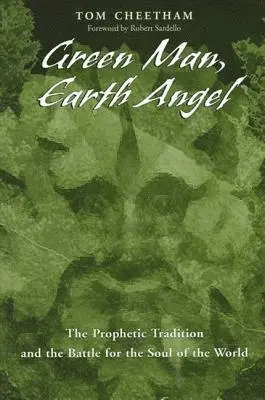
Green Man, Earth Angel
The Prophetic Tradition and the Battle for the Soul of the World
Inbunden, Engelska, 2004
1 359 kr
Tillfälligt slut
Argues for a renewed vision of the cosmos based on the centrality of the human encounter with the sacred.Green Man, Earth Angel explores the central role of imagination for understanding the place of humans in the cosmos. Tom Cheetham suggests that lives can only be completely whole if human beings come to recognize that the human and natural worlds are part of a vast living network and that the material and spiritual worlds are deeply interconnected. Central to this reimagining is an examination of the place of language in human life and art and in the worldview that the prophetic religions-Judaism, Christianity, and Islam-presuppose. If human language is experienced only as a subset of a vastly more-than-human whole, then it is not only humans who speak, but also God and the world with all its creatures. If humans' internal poetry and creative imaginations are part of a greater conversation, then language can have the vital power to transform the human soul, and the soul of the world itself.
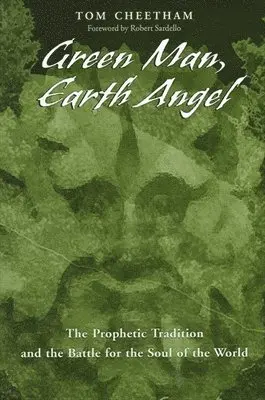
Green Man, Earth Angel
The Prophetic Tradition and the Battle for the Soul of the World
Häftad, Engelska, 2004
376 kr
Tillfälligt slut
Argues for a renewed vision of the cosmos based on the centrality of the human encounter with the sacred.Green Man, Earth Angel explores the central role of imagination for understanding the place of humans in the cosmos. Tom Cheetham suggests that lives can only be completely whole if human beings come to recognize that the human and natural worlds are part of a vast living network and that the material and spiritual worlds are deeply interconnected. Central to this reimagining is an examination of the place of language in human life and art and in the worldview that the prophetic religions-Judaism, Christianity, and Islam-presuppose. If human language is experienced only as a subset of a vastly more-than-human whole, then it is not only humans who speak, but also God and the world with all its creatures. If humans' internal poetry and creative imaginations are part of a greater conversation, then language can have the vital power to transform the human soul, and the soul of the world itself.
260 kr
Tillfälligt slut
226 kr
Skickas inom 5-8 vardagar
219 kr
Skickas inom 5-8 vardagar
226 kr
Skickas inom 5-8 vardagar
970 kr
Skickas inom 10-15 vardagar
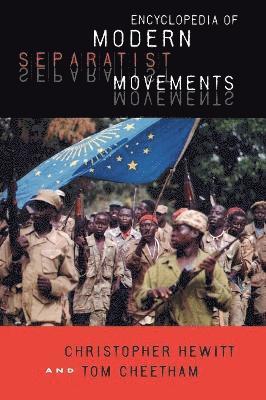
These informative entries examine the full range of modern separatist movements and insurgencies in the world today, including coverage of related organizations, parties, campaigns, political events, and leaders.Acquaint yourself with the world's main ethnic separatist and unification crusades, organizations, parties, campaigns, political events, and leaders in this comprehensive reference work. Individual entries examine the full range of movements and insurgencies including Kosovo, Northern Ireland, Baluchis, South Moluccans, Berbers, New Caledonia, and more. An introductory essay defines and explains ethnic separatist and unification movements, including causes and outcomes, and a chronology places events in historical perspective.An introductory essay defines and explains ethnic separatist and unification movements, including causes and outcomesA chronology places events in historical perspectiveCoverage is enhanced by illustrations and original maps
205 kr
Skickas inom 7-10 vardagar
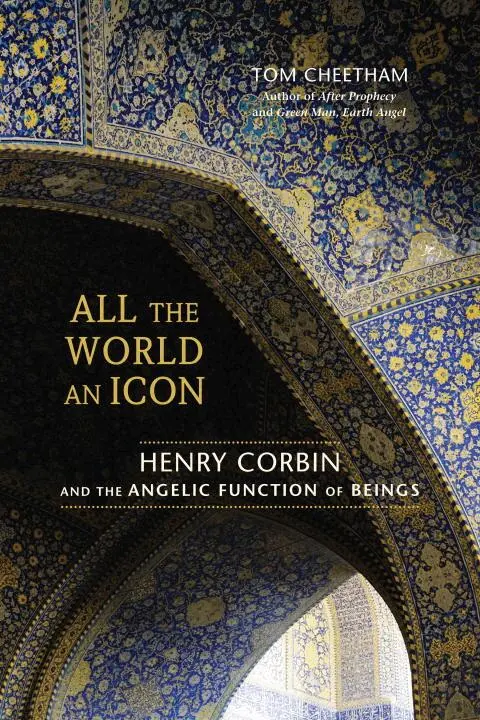
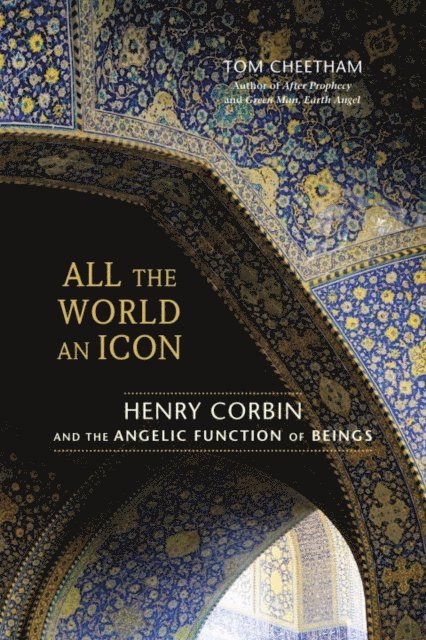
All the World an Icon is the fourth book in an informal "quartet" of works by Tom Cheetham on the spirituality of Henry Corbin, a major twentieth-century scholar of Sufism and colleague of C. G. Jung, whose influence on contemporary religion and the humanities is beginning to become clear. Cheetham's books have helped spark a renewed interest in the work of this important, creative religious thinker. Henry Corbin (1903-1978) was professor of Islamic religion at the Sorbonne in Paris and director of the department of Iranic studies at the Institut Franco-Iranien in Teheran. His wide-ranging work includes the first translations of Heidegger into French, studies in Swedenborg and Boehme, writings on the Grail and angelology, and definitive translations of Persian Islamic and Sufi texts. He introduced such seminal terms as "the imaginal realm" and "theophany" into Western thought, and his use of the Shi'ite idea of ta'wil or "spiritual interpretation" influenced psychologist James Hillman and the literary critic Harold Bloom. His books were read by a broad range of poets including Charles Olson and Robert Duncan, and his impact on American poetry, says Cheetham, has yet to be fully appreciated. His published titles in English include Creative Imagination in the Sufism of Ibn Arabi, Avicenna and the Visionary Recital, and The Man of Light in Iranian Sufism. As the religions of the Book place the divine Word at the center of creation, the importance of hermaneutics, the theory and practice of interpretation, cannot be overstated. In the theology and spirituality of Henry Corbin, the mystical heart of this tradition is to be found in the creative, active imagination; the alchemy of spiritual development is best understood as a story of the soul's search for the Lost Speech. Cheetham eloquently demonstrates Corbin's view that the living interpretation of texts, whether divine or human—or, indeed, of the world itself seen as the Text of Creation—is the primary task of spiritual life. In his first three books on Corbin, Cheetham explores different aspects of Corbin's work, but has saved for this book his final analysis of what Corbin meant by the Arabic term ta'wil—perhaps the most important concept in his entire oeuvre. "Any consideration of how Corbin's ideas were adapted by others has to begin with a clear idea of what Corbin himself intended," writes Cheetham; "his own intellectual and spiritual cosmos is already highly complex and eclectic and a knowledge of his particular philosophical project is crucial for understanding the range and implications of his work." Cheetham lays out the implications of ta'wil as well as the use of language as integral part of any artistic or spiritual practice, with the view that the creative imagination is a fundamentally linguistic phenomenon for the Abrahamic religions, and, as Corbin tells us, prayer is the supreme form of creative imagination.