Tom Digby - Böcker
Visar alla böcker från författaren Tom Digby. Handla med fri frakt och snabb leverans.
5 produkter
5 produkter
1 835 kr
Skickas inom 3-6 vardagar
Ideas of masculinity and femininity become sharply defined in war-reliant societies, resulting in a presumed enmity between men and women. This so-called "battle of the sexes" is intensified by the use of misogyny to encourage men and boys to conform to the demands of masculinity. These are among Tom Digby's fascinating insights shared in Love and War, which describes the making and manipulation of gender in militaristic societies and the sweeping consequences for men and women in their personal, romantic, sexual, and professional lives. Drawing on cross-cultural comparisons and examples from popular media, including sports culture, the rise of "gonzo" and "bangbus" pornography, and "internet trolls," Digby describes how the hatred of women and the suppression of empathy are used to define masculinity, thereby undermining relations between women and men-sometimes even to the extent of violence.Employing diverse philosophical methodologies, he identifies the cultural elements that contribute to heterosexual antagonism, such as an enduring faith in male force to solve problems, the glorification of violent men who suppress caring emotions, the devaluation of men's physical and emotional lives, an imaginary gender binary, male privilege premised on the subordination of women, and the use of misogyny to encourage masculine behavior. Digby tracks the "collateral damage" of this disabling misogyny in the lives of both men and women, but ends on a hopeful note. He ultimately finds the link between war and gender to be dissolving in many societies: war is becoming slowly de-gendered, and gender is becoming slowly de-militarized.
243 kr
Skickas inom 7-10 vardagar
Ideas of masculinity and femininity become sharply defined in war-reliant societies, resulting in a presumed enmity between men and women. This so-called "battle of the sexes" is intensified by the use of misogyny to encourage men and boys to conform to the demands of masculinity. These are among Tom Digby's fascinating insights shared in Love and War, which describes the making and manipulation of gender in militaristic societies and the sweeping consequences for men and women in their personal, romantic, sexual, and professional lives. Drawing on cross-cultural comparisons and examples from popular media, including sports culture, the rise of "gonzo" and "bangbus" pornography, and "internet trolls," Digby describes how the hatred of women and the suppression of empathy are used to define masculinity, thereby undermining relations between women and men-sometimes even to the extent of violence.Employing diverse philosophical methodologies, he identifies the cultural elements that contribute to heterosexual antagonism, such as an enduring faith in male force to solve problems, the glorification of violent men who suppress caring emotions, the devaluation of men's physical and emotional lives, an imaginary gender binary, male privilege premised on the subordination of women, and the use of misogyny to encourage masculine behavior. Digby tracks the "collateral damage" of this disabling misogyny in the lives of both men and women, but ends on a hopeful note. He ultimately finds the link between war and gender to be dissolving in many societies: war is becoming slowly de-gendered, and gender is becoming slowly de-militarized.
2 357 kr
Skickas inom 10-15 vardagar
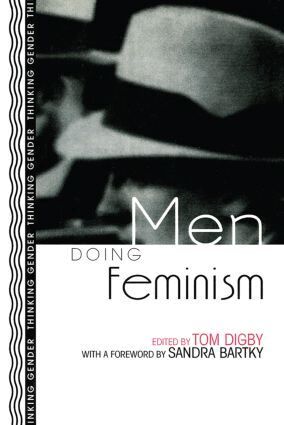
The relation between feminism and men is often presumed to be antagonistic, so that men are expected to resist feminism, and feminists are assumed to hate men. That pattern of opposition is disrupted, however, by the continually increasing numbers of men who are participating in feminist theory and practice, trying to integrate feminist perspectives into their scholarship, teaching, work, play, friendships, and romantic involvements. Responses to this male feminism have varied. Sometimes male feminists find some female feminists critical of men who oppose or decline to join feminist projects, but also rebuff the few men who do undertake feminist projects. On the other hand, some women feminists have unequivocally welcomed men as allies in political, business, religious, and academic contexts. The essays in Men Doing Feminism reveal that there is justification for both views, the skeptical and the enthusiastic, because feminist men are as diverse as feminist women.Many of the eighteen contributors to this book--women, men, blacks, whites, gays, straights, transsexuals--use personal narrative to show ways that men's lives can shape their approaches to doing feminism and to convey the opportunities and challenges involved in integrating feminism into a man's life. Some authors argue that men's experiences prepare them to make contributions that are of crucial importance to feminist theory. Others argue that men must radically reform, or even abandon manhood and masculinity if they are to be feminists.In Men Doing Feminism , feminist theory is used to illuminate men's lives, and men's lives serve as a basis for feminist theory.Contributors: Michael Awkward, Susan Bordo, Harry Brod, Tom Digby, Judith K. Gardiner, C. Jacob Hale, Sandra Harding, Patrick Hopkins, Joy James, David Kahane, Michael Kimmel, Gary Lemons, Larry May, Brian Pronger, Henry Rubin, Richard Schmitt, James P. Sterba, Laurence Mordekhai Thomas, and Thomas E. Wartenberg.
658 kr
Skickas inom 10-15 vardagar
The relation between feminism and men is often presumed to be antagonistic, so that men are expected to resist feminism, and feminists are assumed to hate men. That pattern of opposition is disrupted, however, by the continually increasing numbers of men who are participating in feminist theory and practice, trying to integrate feminist perspectives into their scholarship, teaching, work, play, friendships, and romantic involvements. Responses to this male feminism have varied. Sometimes male feminists find some female feminists critical of men who oppose or decline to join feminist projects, but also rebuff the few men who do undertake feminist projects. On the other hand, some women feminists have unequivocally welcomed men as allies in political, business, religious, and academic contexts. The essays in Men Doing Feminism reveal that there is justification for both views, the skeptical and the enthusiastic, because feminist men are as diverse as feminist women.Many of the eighteen contributors to this book--women, men, blacks, whites, gays, straights, transsexuals--use personal narrative to show ways that men's lives can shape their approaches to doing feminism and to convey the opportunities and challenges involved in integrating feminism into a man's life. Some authors argue that men's experiences prepare them to make contributions that are of crucial importance to feminist theory. Others argue that men must radically reform, or even abandon manhood and masculinity if they are to be feminists.In Men Doing Feminism , feminist theory is used to illuminate men's lives, and men's lives serve as a basis for feminist theory.Contributors: Michael Awkward, Susan Bordo, Harry Brod, Tom Digby, Judith K. Gardiner, C. Jacob Hale, Sandra Harding, Patrick Hopkins, Joy James, David Kahane, Michael Kimmel, Gary Lemons, Larry May, Brian Pronger, Henry Rubin, Richard Schmitt, James P. Sterba, Laurence Mordekhai Thomas, and Thomas E. Wartenberg.
120 kr
Skickas