Tom Koch - Böcker
Visar alla böcker från författaren Tom Koch. Handla med fri frakt och snabb leverans.
10 produkter
10 produkter
190 kr
Tillfälligt slut
512 kr
Skickas inom 5-8 vardagar
531 kr
Skickas inom 5-8 vardagar
809 kr
Skickas inom 10-15 vardagar
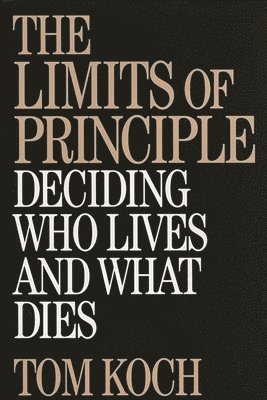
As a society, we are faced with a series of dilemmas—abortion, euthanasia, genetic engineering, organ transplant allocation, support or non-support of the elderly and fragile—that seem to offer no resolution. How do we choose between the needy and the ailing? Choices must be made in both the world of law and the realm of medical ethics. What we need is what we do not have—a perspective in the larger sense of the word—a view that makes apparent the sweep of the issues at hand. The failure of perspective in bioethics and medical decision making is absolute. It results from the limits of an 18th century philosophy and philosophical method. Simply, current methods of examining these issues can not resolve them because the method itself is limited.Answers are possible. They require, Koch argues, a new approach. In it, principle is the goal, not the mechanism of solution. Its parts must be defined and their application considered in context. This is demonstrated using two distinct contemporary problems. The first: Who gets available organ transplants? How do we decide between the equally needy when there are not enough organs for all? The second: The problem of Baby K, the care or non-care of brain stem, anencephalic babies. These problems are defined using multicriterion approach and resolved through a series of focus group discussions that involve medical and lay personnel. What results is a new, more inclusive view of medicine and a new, more complex understanding of what consensus may mean in an evolving, twenty-first century society. This is must reading for lay people, medical personal, and policymakers concerned with bioethics and medical philosophy issues.
1 039 kr
Skickas inom 10-15 vardagar
In 1841 the American sailing ship William Brown struck an iceberg. About half of the passengers and all of the crew were saved in two small, open boats. The next night, half of the passengers in the larger long-boat were thrown overboard because the boat was overfull. This was the first case of lifeboat ethics, of hard choices in the face of scarcity. Since then the question has been who should die so that others, equally needy, might live? Both the case of the William Brown and the ethics it spawned have been used in recent years to describe the problem of health care rationing generally, and organ transplantation specifically.Koch reexamines and reinterpretes the paradigm case of lifeboat ethics, the story of the William Brown, not as an unavoidable tragedy, but as an avoidable series of errors. Its relation to more general issues of distributive justice are then considered. The lessons learned from both the historical review and its application to distributive principles are then applied to the problem of graft organ distribution in the United States. Through the use of maps, the problem of organ distribution is considered at a range of scales, from the international to the urban. The contextual issues become more evident as one moves from international to hemispheric, fron national to regional, and then local systems. Finally, Koch reviews the lessons in light of other problems of distribution in the face of scarcity. The central lesson-that scarcity is exacerbated where it is not in fact created by our distributive programs-is explored thoroughly. The result is no good choices for anyone and the continuation of the scarcity that for most seems inevitable, but, from the evidence provided, is itself an outcome of inequalities of distribution at different scales of society. Of particular interest to students, scholars, and policymakers involved with issues of planning and health care economics, medical geography, and concepts of justice.
502 kr
Skickas inom 10-15 vardagar
In 1841 the American sailing ship William Brown struck an iceberg. About half of the passengers and all of the crew were saved in two small, open boats. The next night, half of the passengers in the larger long-boat were thrown overboard because the boat was overfull. This was the first case of lifeboat ethics, of hard choices in the face of scarcity. Since then the question has been who should die so that others, equally needy, might live? Both the case of the William Brown and the ethics it spawned have been used in recent years to describe the problem of health care rationing generally, and organ transplantation specifically.Koch reexamines and reinterpretes the paradigm case of lifeboat ethics, the story of the William Brown, not as an unavoidable tragedy, but as an avoidable series of errors. Its relation to more general issues of distributive justice are then considered. The lessons learned from both the historical review and its application to distributive principles are then applied to the problem of graft organ distribution in the United States. Through the use of maps, the problem of organ distribution is considered at a range of scales, from the international to the urban. The contextual issues become more evident as one moves from international to hemispheric, fron national to regional, and then local systems. Finally, Koch reviews the lessons in light of other problems of distribution in the face of scarcity. The central lesson-that scarcity is exacerbated where it is not in fact created by our distributive programs-is explored thoroughly. The result is no good choices for anyone and the continuation of the scarcity that for most seems inevitable, but, from the evidence provided, is itself an outcome of inequalities of distribution at different scales of society. Of particular interest to students, scholars, and policymakers involved with issues of planning and health care economics, medical geography, and concepts of justice.
263 kr
Skickas inom 5-8 vardagar
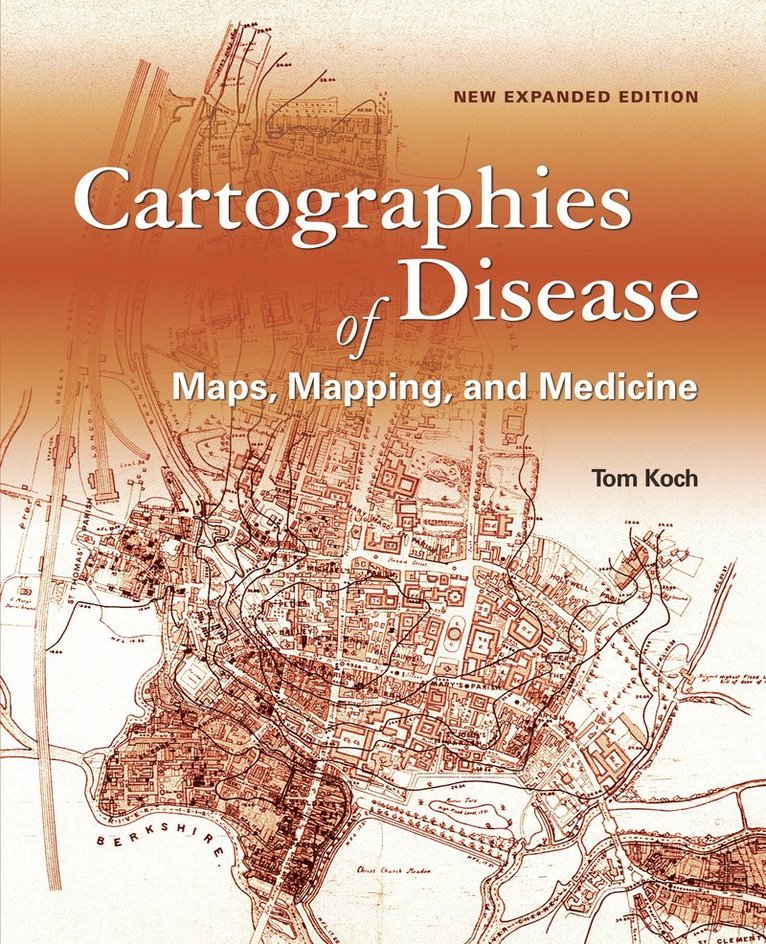
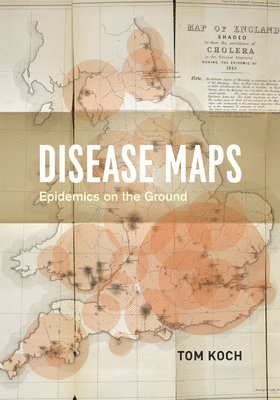
Cartographies of Disease: Maps, Mapping, and Medicine, new expanded edition, is a comprehensive survey of the technology of mapping and its relationship to the battle against disease. This look at medical mapping advances the argument that maps are not merely representations of spatial realities but a way of thinking about relationships between viral and bacterial communities, human hosts, and the environments in which diseases flourish. Cartographies of Disease traces the history of medical mapping from its growth in the 19th century during an era of trade and immigration to its renaissance in the 1990s during a new era of globalization. Referencing maps older than John Snow's famous cholera maps of London in the mid-19th century, this survey pulls from the plague maps of the 1600s, while addressing current issues concerning the ability of GIS technology to track diseases worldwide. The original chapters have some minor updating, and two new chapters have been added. Chapter 13 attempts to understand how the hundreds of maps of Ebola revealed not simply disease incidence but the way in which the epidemic itself was perceived. Chapter 14 is about the spatiality of the disease and the means by which different cartographic approaches may affect how infectious outbreaks like ebola can be confronted and contained.
Theatercontrolling
Trends, Herausforderungen und Perspektiven aus Theorie und Praxis
Häftad, Tyska, 2024
571 kr
Skickas inom 10-15 vardagar
Das Führen von Theatern und Orchestern ist heute möglicherweise so komplex wie nie zuvor. Die Auswirkungen von Corona-Krise, Inflation, Fachkräftemangel, Nachhaltigkeitsbestrebungen und viele weitere Faktoren stellen die Bühnenbetriebe vor enorme Herausforderungen. Das Controlling mit der zentralen Funktion der Zielsteuerung muss sich diesen Herausforderungen nicht nur reaktiv stellen, sondern neue, auch kreative und zukunftsweisende Lösungen finden. Es gilt, sich proaktiv auf die Herausforderungen der Zukunft einzustellen und strategisch zu positionieren. Anlässlich des zehnjährigen Bestehens des „Forum Theatercontrolling“ greifen Autor*innen aus Theorie und Praxis aktuelle Themen auf, anhand derer sie die Handlungsfelder und Potenziale für ein zukunftsorientiertes Theatercontrolling diskutieren. Dazu gehören neben an Bedeutung gewinnenden Aufgabenfeldern wie Nachhaltigkeits-, Risiko-, Personal- oder Marketingcontrolling auch methodische Fragen wie Agilität oder Digitalisierung im Controlling. Nicht zuletzt werden personelle Themen wie die strategische Rolle von Controller*innen, Generationenwechsel und Nachwuchskräfte oder lebenslanges Lernen behandelt.
1 068 kr
Skickas inom 5-8 vardagar
342 kr
Skickas inom 3-6 vardagar