Tom Lavers - Böcker
Visar alla böcker från författaren Tom Lavers. Handla med fri frakt och snabb leverans.
4 produkter
4 produkter
1 281 kr
Skickas inom 5-8 vardagar
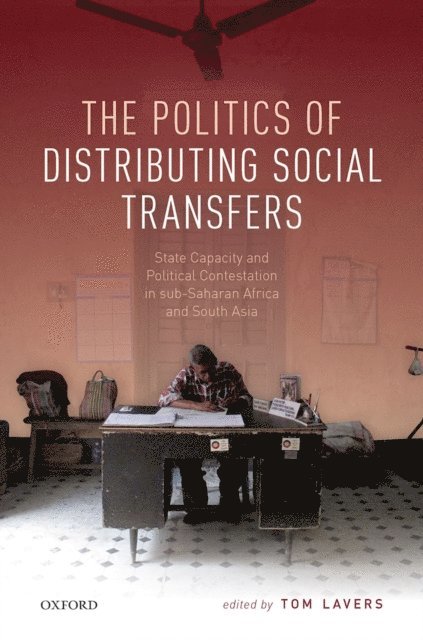
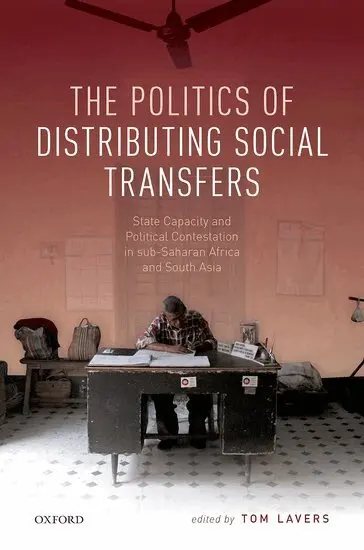
This is an open access title available under the terms of a CC BY-NC-ND 4.0 International licence. It is free to read at Oxford Scholarship Online and offered as a free PDF download from OUP and selected open access locations.The Politics of Distributing Social Transfers in Sub-Saharan Africa and South Asia provides a systematic analysis of the political processes shaping the distribution of social transfers in six countries in Sub-Saharan Africa and South Asia. In doing so, the book addresses a notable gap in recent research on social protection concerning the politics of implementation. While considerable attention has been devoted to debating the merits of different policy designs and the political factors shaping the adoption and diffusion of different policy models, ultimately the ability of any social transfer programme to deliver on its promises is dependent on the effective implementation and distribution of social transfers in line with intended objectives. The chapters in this book examine international and sub-national variation in programme implementation in Bangladesh, Ethiopia, Ghana, Kenya, Nepal, and Rwanda, drawing on a common analytical framework that highlights the importance of state capacity and reach, rooted in histories of state formation, and contemporary political competition in shaping the distribution of social transfers. Comparative analysis of the case studies supports the view that variation in the capacity and reach of the state within countries is a centrally important factor shaping the effectiveness and impartiality of distribution. Yet state capacity alone is insufficient. Rather political competition and power relations shape how this capacity is actually deployed in practice. As such, the book underscores the inherently political nature of implementation and questions common technocratic efforts to improve implementation by de-politicizing the social protection policy process.
1 349 kr
Skickas inom 5-8 vardagar
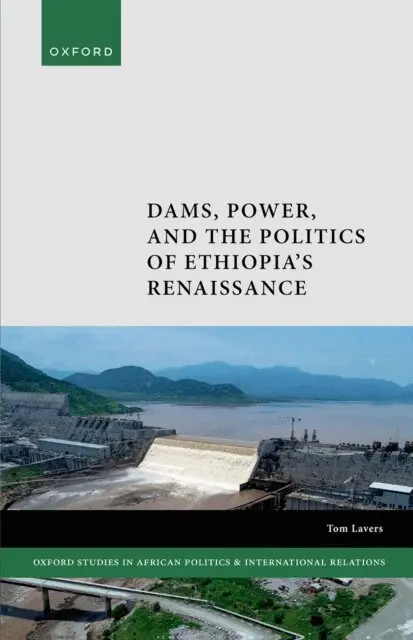
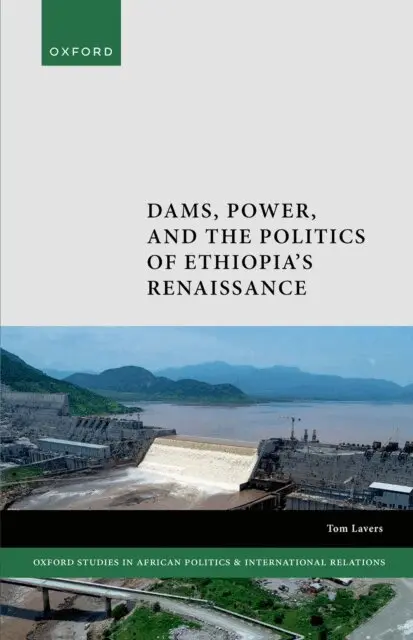
This is an open access title available under the terms of a CC BY-NC-ND 4.0 International licence. It is free to read on the Oxford Academic platform and offered as a free PDF download from OUP and selected open access locations.After more than a decade of construction, Ethiopia is filling the Grand Ethiopian Renaissance Dam (GERD), a controversial dam with the potential to transform the hydrology and politics of the Nile Basin. The GERD is the culmination of a dam building boom carried out over three decades and a key pillar of the Ethiopian Peoples' Revolutionary Democratic Front's (EPRDF) efforts to bring about an Ethiopian 'Renaissance'. Dams, Power, and the Politics of Ethiopia's Renaissance provides a detailed examination of the domestic and international political dynamics that shaped Ethiopia's dam building, drawing on extensive primary research including more than a hundred interviews with politicians, technocrats, consultants, and donors. The authors reflect on the implications of Ethiopia's dam building for broader debates about the role of the state in late development, the dynamics of twenty-first century dam building, and the political economy of renewable energy transitions. A central argument of the book is that Ethiopia's dam building is symbolic of the successes and failures of the EPRDF's 'developmental state'. On the one hand, this dams' boom enhanced electricity generation capacity, while constituting a key element of the state infrastructure investment that turned Ethiopia into one of the world's fastest growing economies. In contrast, a politically driven decision-making process undermined electricity planning, contributed to an unsustainable debt burden, and, ultimately, failed to provide reliable electricity access to key users. Following the EPRDF's collapse, the subsequent Prosperity Party government has taken steps away from the state-led development model of its predecessor, while labouring towards the final completion of the GERD.Oxford Studies in African Politics and International Relations is a series for scholars and students working on African politics and International Relations and related disciplines. Volumes concentrate on contemporary developments in African political science, political economy, and International Relations, such as electoral politics, democratization, decentralization, gender and political representation, the political impact of natural resources, the dynamics and consequences of conflict, comparative political thought, and the nature of the continent's engagement with the East and West. Comparative and mixed methods work is particularly encouraged. Case studies are welcomed but should demonstrate the broader theoretical and empirical implications of the study and its wider relevance to contemporary debates. The focus of the series is on sub-Saharan Africa, although proposals that explain how the region engages with North Africa and other parts of the world are of interest. Series Editors: Nic Cheeseman (University of Birmingham), Peace Medie (University of Bristol), and Ricardo Soares de Oliveira (University of Oxford)
1 182 kr
Skickas inom 5-8 vardagar
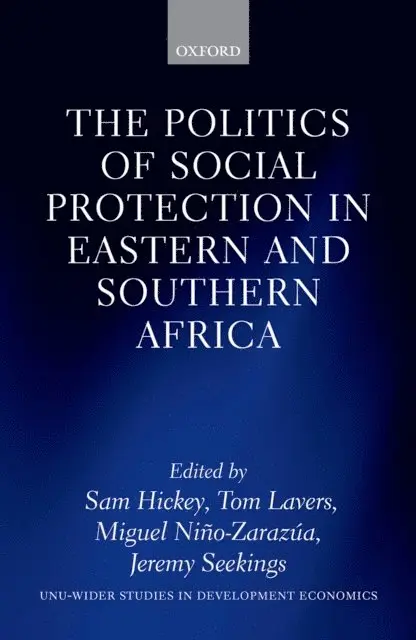
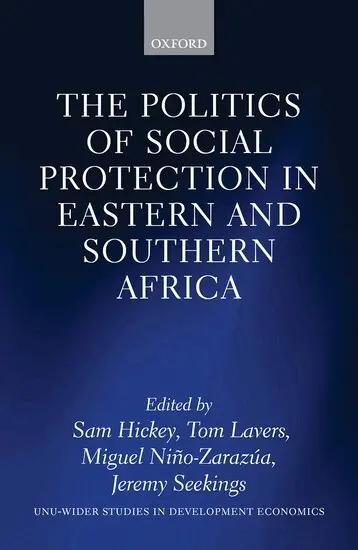
The notion that social protection should be a key strategy for reducing poverty in developing countries has now been mainstreamed within international development policy and practice. Promoted as an integral dimension of the post-Washington Consensus all major international development agencies and bilateral donors now include a strong focus on social protection in their advocacy and programmatic interventions and a commitment to providing social protection was recently enshrined within the Sustainable Development Goals. The rhetoric around social protection, particularly when delivered in the form of cash transfers, has sometimes reached hyperbolic proportions with advocates seeing it as a magic bullet that can tackle multi-dimensional problems of poverty, vulnerability, and inequality and a southern-led success story that challenges the unequal power relations inherent within international aid. The Politics of Social Protection in Eastern and Southern Africa challenges the common conception that this phenomenon has been entirely driven by international development agencies, instead focusing on the critical role of political dynamics within specific African countries. It details how the power and politics at multiple levels of governance shapes the extent to which political elites are committed to social protection, the form that this commitment takes, and the implications that this has for future welfare regimes and state-citizen relations in Africa. It reveals how international pressures only take hold when they become aligned with the incentives and ideas of ruling elites in particular contexts. It shows how elections, the politics of clientelism, political ideologies, and elite perceptions all play powerful roles in shaping when countries adopt social protection and at what levels, which groups receive benefits, and how programmes are delivered.
Del 168 - African Studies
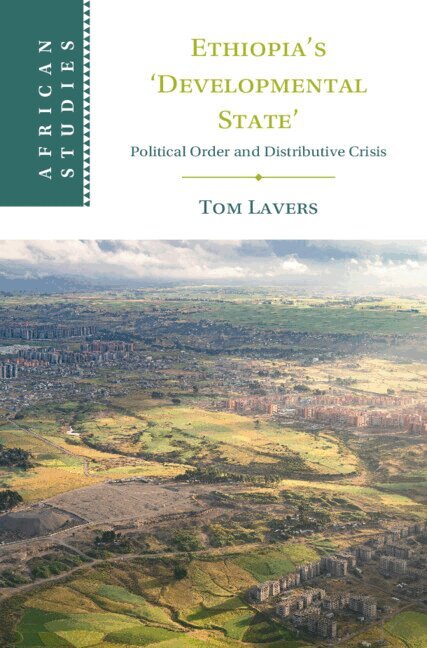
Ethiopia's 'Developmental State'
Political Order and Distributive Crisis
Inbunden, Engelska, 2023
1 363 kr
Skickas inom 7-10 vardagar
Ethiopia stands out as a leading example of state-led development in Africa. Tom Lavers offers in this book a comprehensive, multi-sector analysis of Ethiopia's development project, examining how regimes maintain power during the extended periods required to bring about economic transformation. Specifically, Lavers explores how the Ethiopian Peoples' Revolutionary Democratic Front (EPRDF, 1991-2019) sought to maintain political order through economic transformation, and why the party collapsed, leading to the outbreak of civil war in 2020. The book argues that the EPRDF sought to secure mass acquiescence through distribution of land and employment. However, rapid population growth and the limits of industrial policy in the contemporary global economy led to a distributive crisis that was a central factor in the regime's collapse. This Ethiopian experience raises important questions about the prospects for economic transformation elsewhere on the continent. This title is also available as Open Access on Cambridge Core at doi.org/9781009428316.