
Tom Lowenstein – författare
Visar alla böcker från författaren Tom Lowenstein. Handla med fri frakt och snabb leverans.
7 produkter
7 produkter
219 kr
Skickas inom 5-8 vardagar
Tom Lowenstein's work as poet and as ethnographer (specialising, above all, in the Inuit of Alaska) has always been interpenetrative, the poetic work deeply informed by the scholarly. This volume selects poetry from his whole career to date, concentrating on the faultline where his ethnographic concerns meet his poetic concerns. Poems have been selected from 'Filibustering in Samsara' and 'Ancient Land: Sacred Whale', as well as from more recent uncollected work. 'Ancestors and Species' makes it clear that Tom Lowenstein is one of Britain's most remarkable poetic voices, at the same time fascinating, and impossible to categorise.
946 kr
Tillfälligt slut

383 kr
Tillfälligt slut
188 kr
Skickas inom 5-8 vardagar
In contrast to the long, trans-cultural narratives of "Ancestors and Species", Tom Lowenstein's new poetry is pared down in this volume to the briefest of utterances. A long expensive journey. The landscape grown stranger. A space at the end where there's no more to interpret.
250 kr
Skickas inom 5-8 vardagar
In the voice of an eighteenth century poet who the previous afternoon had written 'Kubla Khan', this long prose meditation takes the reader through an English pastoral landscape to the Central Asian steppe, the palaces and gardens of the Khan who ruled north China in the 13th century, and then back to rural Somerset. While Coleridge is implied, the garrulous and solipsistic persona who talks through these journals, essays and fantasias is an a-historical figure who lives largely in, and for imagination.
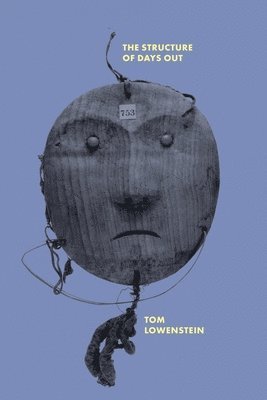
Structure of Days Out
With storytellers, hunters and their descendants in a Native Alaskan Community, 1973-1981
Häftad, Engelska, 2021
224 kr
Skickas inom 5-8 vardagar
Tom Lowenstein taught English in London and at Northwestern University between 1965 and 1974 . He first went to Tikigaq in 1973 and returned there to work with Asatchaq and other elders from 1975 to 1980. He studied Sanskrit at the University of Washington in the 1980s and now lives in London. He works part time online as an English tutor and continues to write poetry.This book, written over a number of years, offers an account of work in 20th century Tikigaq, focusing on issues of culture change and the lives of both old and young Native American people. It is the fourth in a series of books about this part of Alaska following The Things that were Said of Them (University of California Press 1992), Ancient Land: Sacred Whale (Bloomsbury 1993) and Ultimate Americans (University of Alaska Press 2008)."He knows I know his name is Tulugaq, but still I call this mighty individual Sharva, who visits me these late spring evenings. A specialist in kung-fu manoeuvres reproduced from Bruce Lee movies, small hours, visionary conversation, Sharva's passage through the village keeps the girls awake and some in terror as he guns his machine to the edge of my storm-shed and opens the throttle in a nal bellow. Then in the after-blast, he strides through the snow, my outer door groans and his glove smacks the lintel. The reasons for his visits I slowly start to fathom. Drunk on night's daylight, Sharva seeks shade, and my house is full of shade. And while his path through Tikigaq is ribald and sublime, what I offer is a margin of banality in which to convalesce from serial intensity. To mark this dull edge to his business, Sharva brings me curiosities because he knows I'll give him supper. His diet is eccentric. Abjuring the real meat - whale, seal, caribou, walrus, fish and wild fowl - that sustains the village, what he eats is tuna, corned beef, and sardines. So in return for these and crackers, he lifts hunks of Kobuk River jade and Anchorage whiskey from his snow-suit zipper. And while I cache these - against scholarly scrutiny rather than consumption - he gorges on crackers, swigs instant coffee, lights a Marlboro, exhales through his harmonica and crashes on my trestle."

219 kr
Skickas inom 5-8 vardagar
Uji is now a suburb to the south of Kyoto and its bridge over the river was first constructed in the 10th century. At one end sits a modern representation of Murasaki who introduced the bridge into the last chapters of her novel, translated by Arthur Waley as The Tale of Genji. I sat by the bridge for half a day some years back watching the water flow in one direction while foot passengers and traffic moved across at right angles. On return to London, the physicality of the bridge returned qua metaphor, both as expressed by that particular bridge passage and as suggested by all modes of transition - though these might shift. In the poems that follow that metaphorical gesture repeats and may be interpreted idiosyncratically by separate readers.