Tom Milne - Böcker
Visar alla böcker från författaren Tom Milne. Handla med fri frakt och snabb leverans.
5 produkter
5 produkter
199 kr
Skickas inom 7-10 vardagar
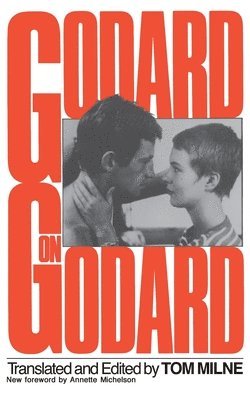
Jean-Luc Godard, like many of his European contemporaries, came to filmmaking through film criticism. This collection of essays and interviews, ranging from his early efforts for La Gazette du Cinéma to his later writings for Cahiers du Cinéma, reflects his dazzling intelligence, biting wit, maddening judgments, and complete unpredictability. In writing about Hitchcock, Welles, Bergman, Truffaut, Bresson, and Renoir, Godard is also writing about himself,his own experiments, obsessions, discoveries. This book offers evidence that he may be even more original as a thinker about film than as a director. Covering the period of 1950-1967, the years of Breathless, A Woman Is a Woman, My Life to Live, Alphaville, La Chinoise, and Weekend, this book of writings is an important document and a fascinating study of a vital stage in Godard's career. With commentary by Tom Milne and Richard Roud, and an extensive new foreword by Annette Michelson that reassesses Godard in light of his later films, here is an outrageous self-portrait by a director who, even now, continues to amaze and bedevil, and to chart new directions for cinema and for critical thought about its history.
538 kr
Skickas inom 10-15 vardagar
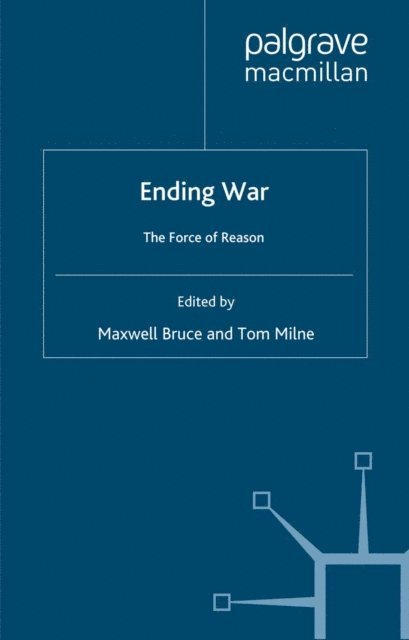
Political thinkers and scientists write on nuclear weapons and war in the 21st century including Mikhail Gorbachev, who first declared "A nuclear war cannot be won and must not be fought", Robert McNamara, US Defence Secretary at the time of the Cuban Missile Crisis and Vietnam War and Nobel Peace Laureate Joseph Rotblat, the only scientist to resign from the Manhattan Project, where the world's first nuclear weapons were produced.
538 kr
Skickas inom 10-15 vardagar
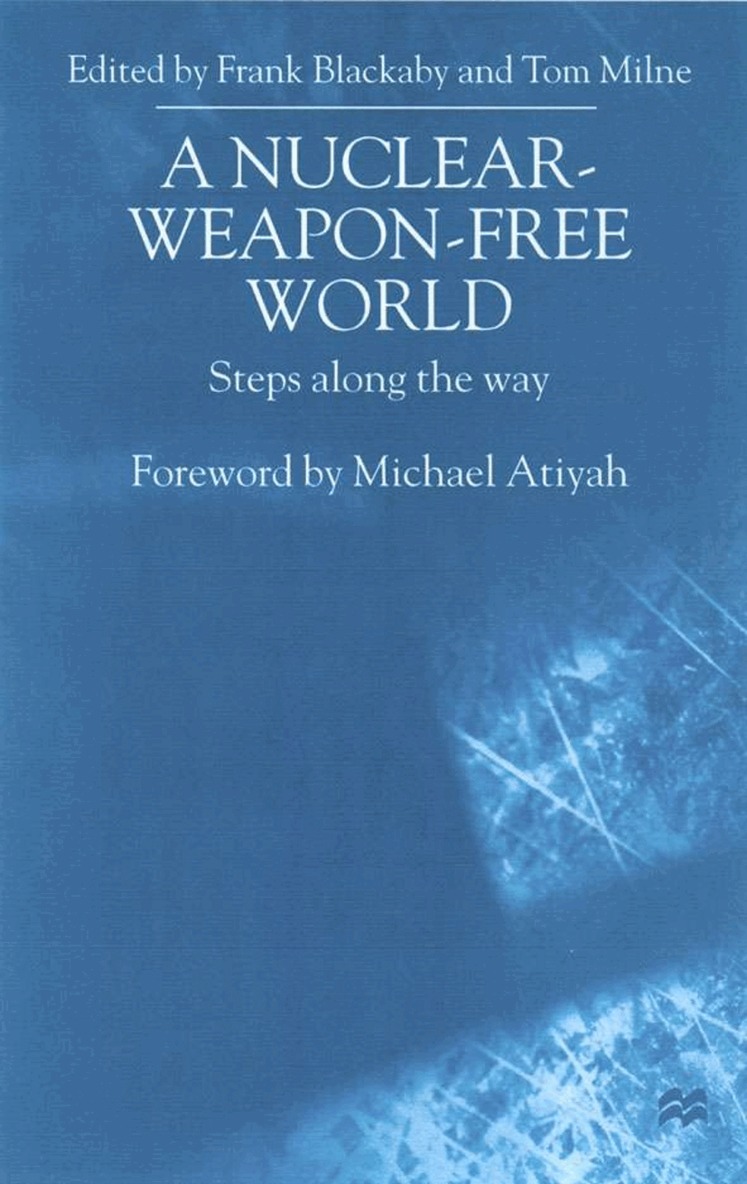
With international nuclear disarmament at a standstill, this study discusses steps that should be taken to restart the disarmament process, such as de-alerting nuclear weapons, ending production of fissile material and introducing policies of "no first use". It includes a history of attempts to eliminate nuclear weapons, together with a summary of the arguments for and against, an analysis of whether nuclear weapons prevented a war in Europe between 1945 and 1991, and a worldwide survey of public opinion on nuclear weapons.
461 kr
Skickas inom 10-15 vardagar
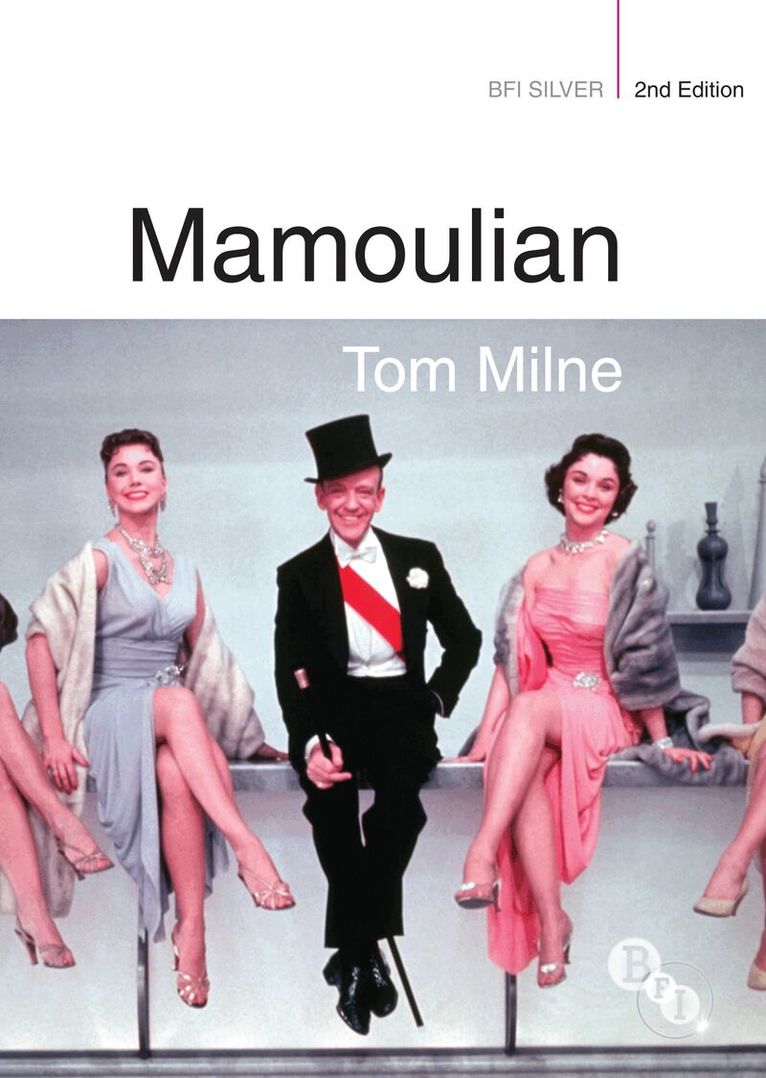
The great Armenian-American director Rouben Mamoulian (1897-1987) remains a favourite among film-makers, his films combining great technical originality with a uniquely poetic visual style. Mamoulian's technical innovations are evident from his first film, Applause (1923), in which he incorporated two separate soundtracks into one printing, thus overcoming the difficulty of sound levels which had frustrated the pioneer directors of 'talkies', and in Dr Jekyll and Mr Hyde (1931), in which he used synthetic sound painted directly onto the soundtrack. Such inventive solutions to film-making challenges were linked to Mamoulian's abiding sense of the magic of the cinema. Heused colour as a dramatic ingredient in the first three-strip Technicolour film, Becky Sharp (1935), and his musicals Summer Holiday (1948) and Silk Stockings (1957) were remarkable in their time for the way in which the dance was used to enhance the drama and to illuminate character. And for Garbo, in Queen Christina (1933) he created the framework for her greatest role. Tom Milne's classic study, first published in 1969, provides a film-by-film analysis of Mamoulian's career and challenges widespread critical assumptions about the director's oeuvre. In his foreword to this new edition, Geoff Andrew recognises Milne's careful and insightful analysis of Mamoulian's expressive and imaginative style and asks whether this unique director ought to be considered as an auteur. Andrew also pays tribute to Milne's elegant, witty and eclectic critical style and hails him as one the most important and influential British writers on film.TOM MILNE (1926-2005) was a leading British film critic, contributing to Sight & Sound, the Monthly Film Bulletin, The Observer, The Financial Times and The Times during his career. During the 1960s he worked at the British Film Institute as Associate Editor of Sight & Sound and Editor of The Monthly Film Bulletin. His other publications include a monograph on Joseph Losey (1967), a short study on the Danish director Carl Theodor Dreyer (1971) and an anthology of interviews and writings on Jean-Luc Godard (1972) that he edited and translated.Foreword by GEOFF ANDREW, Head of Film Programme at BFI Southbank, UK, and the author of several books including Nicholas Ray: Poet of Nightfall (BFI, 2004) and, in the BFI Film Classics series, volumes on Kieslowski's Three Colours Trilogy and Kiarostami's 10.
1 340 kr
Skickas inom 7-10 vardagar
The great Armenian-American director Rouben Mamoulian (1897-1987) remains a favourite among film-makers, his films combining great technical originality with a uniquely poetic visual style. Mamoulian's technical innovations are evident from his first film, Applause (1923), in which he incorporated two separate soundtracks into one printing, thus overcoming the difficulty of sound levels which had frustrated the pioneer directors of 'talkies', and in Dr Jekyll and Mr Hyde (1931), in which he used synthetic sound painted directly onto the soundtrack. Such inventive solutions to film-making challenges were linked to Mamoulian's abiding sense of the magic of the cinema. Heused colour as a dramatic ingredient in the first three-strip Technicolour film, Becky Sharp (1935), and his musicals Summer Holiday (1948) and Silk Stockings (1957) were remarkable in their time for the way in which the dance was used to enhance the drama and to illuminate character. And for Garbo, in Queen Christina (1933) he created the framework for her greatest role. Tom Milne's classic study, first published in 1969, provides a film-by-film analysis of Mamoulian's career and challenges widespread critical assumptions about the director's oeuvre. In his foreword to this new edition, Geoff Andrew recognises Milne's careful and insightful analysis of Mamoulian's expressive and imaginative style and asks whether this unique director ought to be considered as an auteur. Andrew also pays tribute to Milne's elegant, witty and eclectic critical style and hails him as one the most important and influential British writers on film.TOM MILNE (1926-2005) was a leading British film critic, contributing to Sight & Sound, the Monthly Film Bulletin, The Observer, The Financial Times and The Times during his career. During the 1960s he worked at the British Film Institute as Associate Editor of Sight & Sound and Editor of The Monthly Film Bulletin. His other publications include a monograph on Joseph Losey (1967), a short study on the Danish director Carl Theodor Dreyer (1971) and an anthology of interviews and writings on Jean-Luc Godard (1972) that he edited and translated.Foreword by GEOFF ANDREW, Head of Film Programme at BFI Southbank, UK, and the author of several books including Nicholas Ray: Poet of Nightfall (BFI, 2004) and, in the BFI Film Classics series, volumes on Kieslowski's Three Colours Trilogy and Kiarostami's 10.