Tomas O Carragain – författare
Visar alla böcker från författaren Tomas O Carragain. Handla med fri frakt och snabb leverans.
2 produkter
2 produkter
680 kr
Skickas
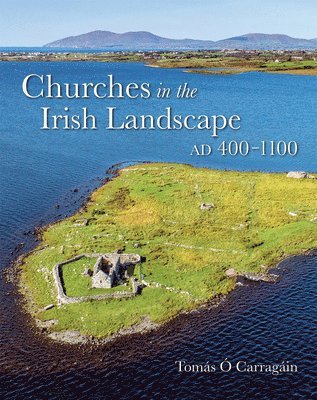
Between the fifth century and the ninth, several thousand churches were founded in Ireland, a greater density than most other regions of Europe. This period saw fundamental changes in settlement patterns, agriculture, social organisation, rituals and beliefs, and churches are an important part of that story. The premise of this book is that landscape archaeology is one of the most fruitful ways to study them. By looking at where they were placed in relation to pagan ritual and royal sites, burial grounds, and settlements, and how they fared over the centuries, we can map the shifting strategies of kings, clerics and ordinary people. The result is a fascinating new perspective on this formative period, with wider implications for the study of social power and religious change elsewhere in Europe. The earliest churches, founded at a time of religious diversity (400-550), were often within royal landscapes, showing that some sections of the elite chose to make space for the new religion. These often lost out to new monasteries positioned at a remove from core royal land, making it possible to grant them the great estates on which their wealth was based (550-800). Now, however, founding churches was no longer a prerogative of kings for we see numerous lesser churches outside these estates. In this way middle-ranking people helped transform the landscape and shape religious cultures in which rituals and beliefs of local origin co-existed alongside Christianity. Finally, in the Viking Age (800-1100), some lesser churches were abandoned while community churches began to exert more of a gravitational pull, foreshadowing the later medieval parish system.
456 kr
Skickas
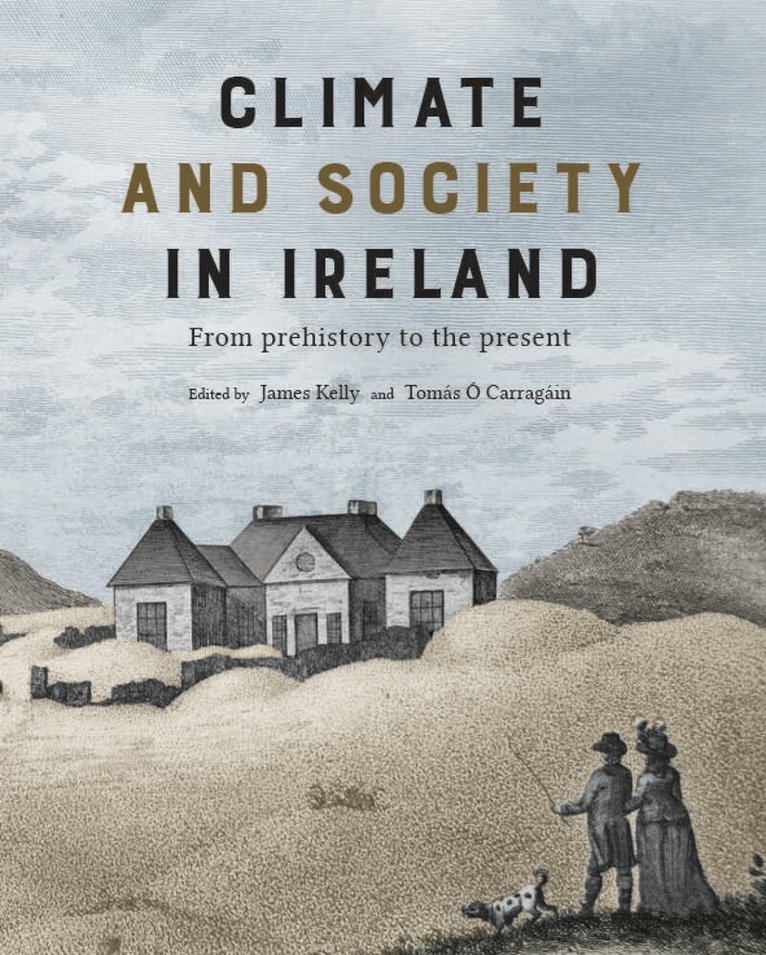
Can a long-term perspective on human adaptations to climate change inform Ireland’s response to the crisis we face today?Climate and Society in Ireland is a collection of essays, commissioned by the Royal Irish Academy, that provides a multi-period, interdisciplinary perspective on one of the most important challenges currently facing humanity. Combining syntheses of existing knowledge with new insights and approaches, contributors explore the varied environmental, climatic and social changes that occurred in Ireland from early prehistory to the early 21st century. The essays in the volume engage with a diversity of pertinent themes, including the impact of climate change on the earliest human settlement of Ireland; weather-related food scarcities during medieval times that led to violence and plague outbreaks; changing representations of weather in poetry written in Ireland between 1600 and 1820; and how Ireland is now on the threshold of taking the radical steps necessary to shed its ‘climate laggard’ status and embark on the road to a post-carbon society.With contributions by Máire Ní Annracháin, Katharina Becker, David M. Brown, Lucy Collins, Lisa Coyle McClung, Bruce M.S. Campbell, Rosie Everett, Benjamin Gearey, Raymond Gillespie, Seren Griffiths, James Kelly, Francis Ludlow, Meriel McClatchie, Conor Murphy, Simon Noone, Aaron Potito, Gill Plunkett, Phil Stastney, Graeme T. Swindles, John Sweeney, Graeme Warren.