Tomas Ybarra-Frausto - Böcker
Visar alla böcker från författaren Tomas Ybarra-Frausto. Handla med fri frakt och snabb leverans.
4 produkter
4 produkter
419 kr
Skickas inom 7-10 vardagar
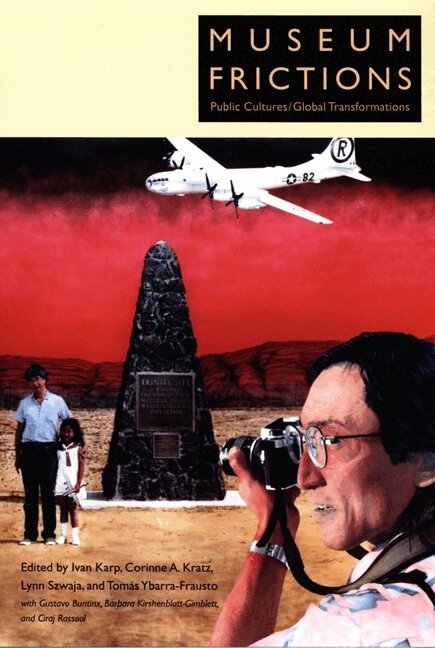
Museum Frictions is the third volume in a bestselling series on culture, society, and museums. The first two volumes in the series, Exhibiting Cultures and Museums and Communities, have become defining books for those interested in the politics of museum display and heritage sites. Another classic in the making, Museum Frictions is a lavishly illustrated examination of the significant and varied effects of the increasingly globalized world on contemporary museum, heritage, and exhibition practice. The contributors-scholars, artists, and curators-present case studies drawn from Africa, Australia, North and South America, Europe, and Asia. Together they offer a multifaceted analysis of the complex roles that national and community museums, museums of art and history, monuments, heritage sites, and theme parks play in creating public cultures. Whether contrasting the transformation of Africa’s oldest museum, the South Africa Museum, with one of its newest, the Lwandle Migrant Labor Museum; offering an interpretation of the audio guide at the Guggenheim Bilbao; reflecting on the relative paucity of art museums in Peru and Cambodia; considering representations of slavery in the United States and Ghana; or meditating on the ramifications of an exhibition of Australian aboriginal art at the Asia Society in New York City, the contributors highlight the frictions, contradictions, and collaborations emerging in museums and heritage sites around the world. The volume opens with an extensive introductory essay by Ivan Karp and Corinne A. Kratz, leading scholars in museum and heritage studies.Contributors. Tony Bennett, David Bunn, Gustavo Buntinx, CuauhtÉmoc Camarena, Andrea Fraser, Martin Hall, Ivan Karp, Barbara Kirshenblatt-Gimblett, Corinne A. Kratz, Christine Mullen Kreamer, Joseph Masco, Teresa Morales, Howard Morphy, Ingrid Muan, Fred Myers, Ciraj Rassool, Vicente Razo, Fath Davis Ruffins, Lynn Szwaja, Krista A. Thompson, Leslie Witz, TomÁs Ybarra-Frausto
654 kr
Skickas inom 7-10 vardagar
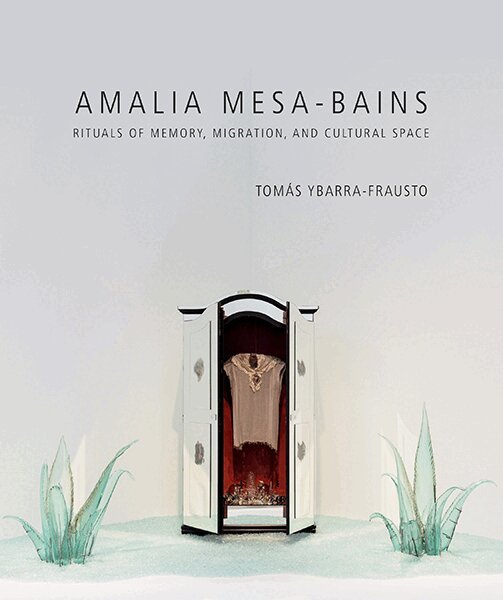
The life and work of a celebrated multimedia artist, cultural and feminist theorist, and community organizerAmalia Mesa-Bains has garnered international recognition for multimedia installations that evoke the Chicana experience. This lively book recounts pivotal moments from her life, career, and collaborations, examining the intertwined worlds of Latinx culture, social movements, and contemporary art. Esteemed cultural historian TomÁs Ybarra-Frausto relates Mesa-Bains’s life to contemporary events and her artistic and intellectual production to her concept of domesticana (a feminist interpretation of rasquachismo) and her mestiza identity. He demonstrates how the Chicano Movement attuned the artist to her Mexican heritage, sparking her interest in the traditional home altars that became the aesthetic and cultural inspiration for her installation art. Employing detailed descriptions and analyses of key works, this book is an “art historical biography-memoire,” offering a uniquely personal understanding of Mesa-Bains’s prolific artistic practice and situating her life and art in the cultural and political milieu of the United States since the 1960s. Distributed for UCLA Chicano Studies Research Center Press.
317 kr
Skickas inom 7-10 vardagar
The life and work of a celebrated multimedia artist, cultural and feminist theorist, and community organizerAmalia Mesa-Bains has garnered international recognition for multimedia installations that evoke the Chicana experience. This lively book recounts pivotal moments from her life, career, and collaborations, examining the intertwined worlds of Latinx culture, social movements, and contemporary art. Esteemed cultural historian TomÁs Ybarra-Frausto relates Mesa-Bains’s life to contemporary events and her artistic and intellectual production to her concept of domesticana (a feminist interpretation of rasquachismo) and her mestiza identity. He demonstrates how the Chicano Movement attuned the artist to her Mexican heritage, sparking her interest in the traditional home altars that became the aesthetic and cultural inspiration for her installation art. Employing detailed descriptions and analyses of key works, this book is an “art historical biography-memoire,” offering a uniquely personal understanding of Mesa-Bains’s prolific artistic practice and situating her life and art in the cultural and political milieu of the United States since the 1960s. Distributed for UCLA Chicano Studies Research Center Press.
511 kr
Skickas inom 5-8 vardagar
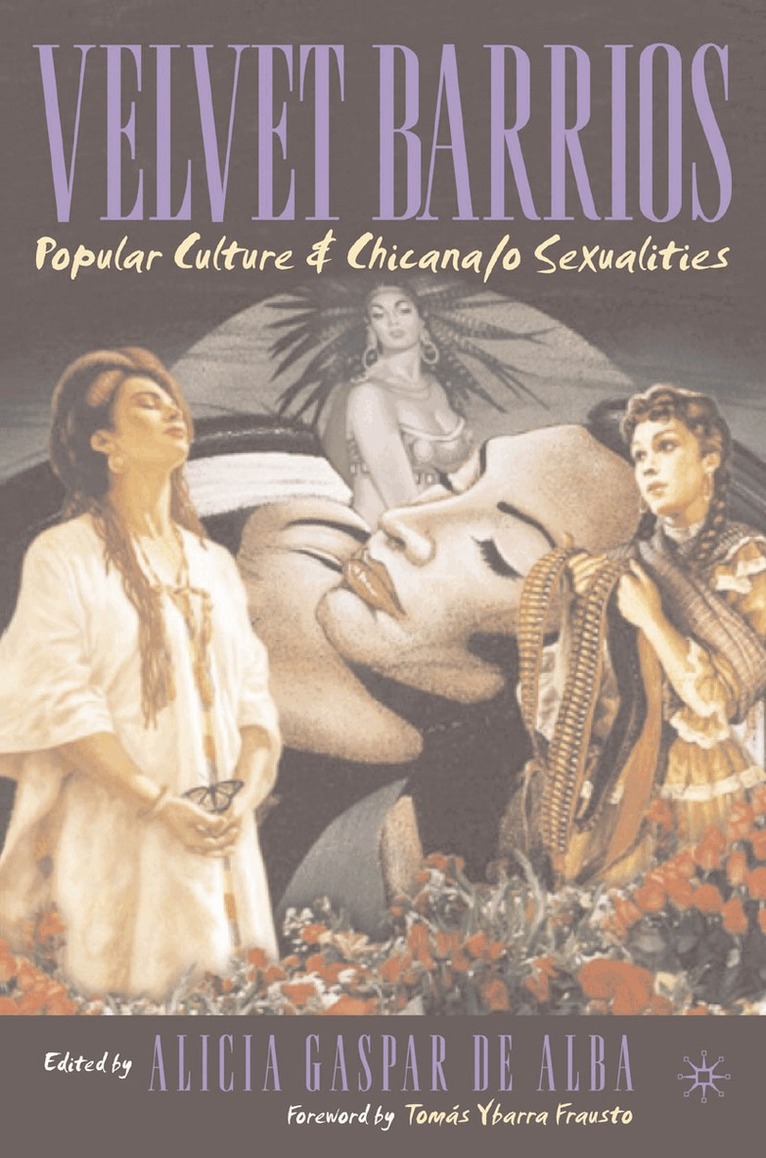
The essays in "Velvet Barrios" collectively intervene in the field of popular culture studies to examine the various ways in which the ideologies of sex maleness and femaleness as well as the ideologies of gender femininity and masculinity are produced and consumed, approved and accepted, resisted and reinvented in the popular arts, rituals, icons, myths, and beliefs of the 'alter Native community' of Mexican descent in the United States. Gaspar de Alba argues that Chicana/o culture is not a subculture but an alter Native culture 'an Other American culture indigenous to the landbase now known as the West and the Southwest of the U.S'. The collection is called "Velvet Barrios" because the editor believes that nothing signifies the working class, highly layered, textured, and metaphoric sensibility known as the rasquache aesthetic (that characterizes so much of Chicana/o popular culture) more than black velvet art. In her words, 'What is more evocative of sexed and gendered barrio representations than those images of voluptuous maidens, feathered warriors, airbrushed Chevys, tattooed cholos, and sacred virgins?'From the hagiography of 'locas santas', to the sexual politics of early Chicana activists in the Chicano youth movement, from the representation of Latina bodies in popular magazines to the ritual performance of Mexican femaleness, as enacted by the quinceanera from the iconic fetishization of el Pachuco, la Malinche, and la Llorona in film and literature or the stereotypical renderings of recipe books and calendar art be it baseball, nortena music, or nationalist rhetoric through which Mexican masculinity is measured by fraternity initiations, lowriding, hip hop, detective fiction, or border crossings all of these pieces dialectically engage methods of popular culture studies with discourses of gender, sexuality, identity politics, representation, and cultural production. "Velvet Barrios: Popular Culture & Chicana/o Sexualities" represents the first book to focus fully on the more closeted issues of barrio popular culture. There is no monolithic singular 'barrio', or community, which can contain all of these interventions.Instead, this collection helps us to construct a plurality of 'barrios', a diversity of neighbourhoods in which to be/become/signify Chicano and Chicana bodies of the 21st century.