Tomasz Burzykowski - Böcker
Visar alla böcker från författaren Tomasz Burzykowski. Handla med fri frakt och snabb leverans.
8 produkter
8 produkter
1 887 kr
Skickas inom 10-15 vardagar
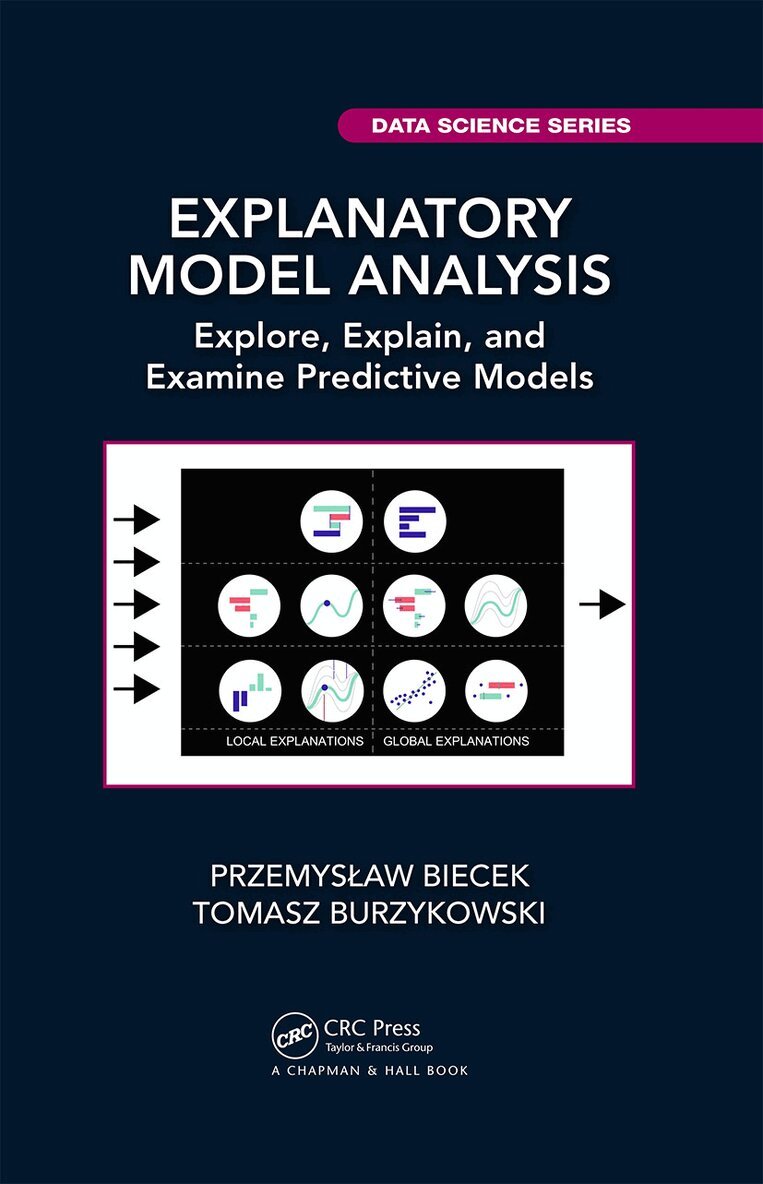
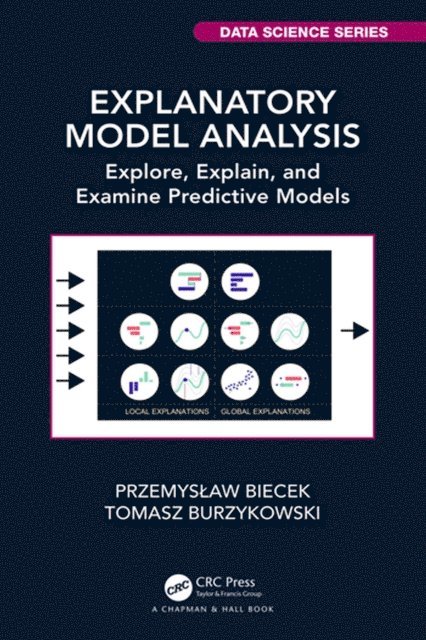
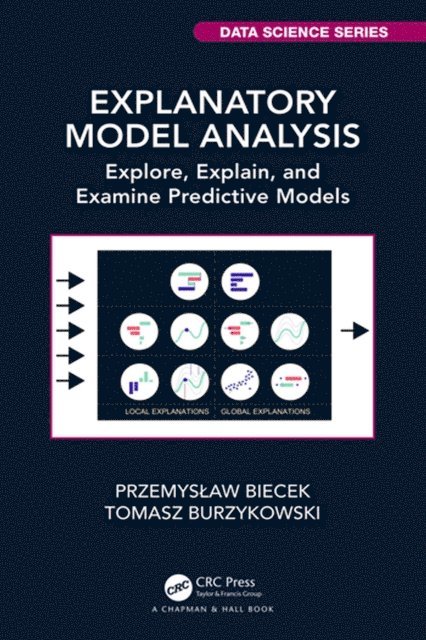
Explanatory Model Analysis Explore, Explain and Examine Predictive Models is a set of methods and tools designed to build better predictive models and to monitor their behaviour in a changing environment. Today, the true bottleneck in predictive modelling is neither the lack of data, nor the lack of computational power, nor inadequate algorithms, nor the lack of flexible models. It is the lack of tools for model exploration (extraction of relationships learned by the model), model explanation (understanding the key factors influencing model decisions) and model examination (identification of model weaknesses and evaluation of model's performance). This book presents a collection of model agnostic methods that may be used for any black-box model together with real-world applications to classification and regression problems.
712 kr
Skickas inom 10-15 vardagar
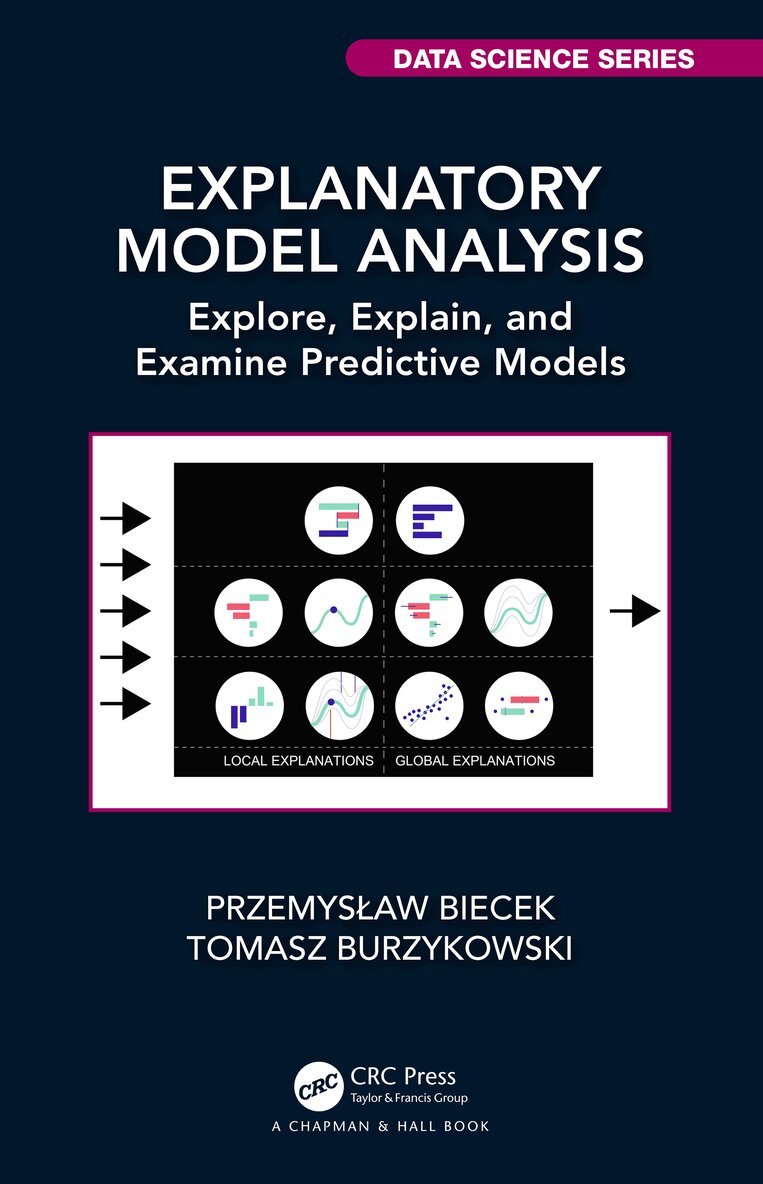
Explanatory Model Analysis Explore, Explain and Examine Predictive Models is a set of methods and tools designed to build better predictive models and to monitor their behaviour in a changing environment. Today, the true bottleneck in predictive modelling is neither the lack of data, nor the lack of computational power, nor inadequate algorithms, nor the lack of flexible models. It is the lack of tools for model exploration (extraction of relationships learned by the model), model explanation (understanding the key factors influencing model decisions) and model examination (identification of model weaknesses and evaluation of model's performance). This book presents a collection of model agnostic methods that may be used for any black-box model together with real-world applications to classification and regression problems.
719 kr
Skickas inom 10-15 vardagar
An important factor that affects the duration, complexity and cost of a clinical trial is the endpoint used to study the treatment’s efficacy. When a true endpoint is difficult to use because of such factors as long follow-up times or prohibitive cost, it is sometimes possible to use a surrogate endpoint that can be measured in a more convenient or cost-effective way. This book focuses on the use of surrogate endpoint evaluation methods in practice, using SAS and R.
1 682 kr
Skickas inom 10-15 vardagar
Both humanitarian and commercial considerations have spurred intensive search for methods to reduce the time and cost required to develop new therapies. The identification and use of surrogate endpoints, i.e., measures that can replace or supplement other endpoints in evaluations of experimental treatments or other interventions, is a general strategy that has stimulated both enthusiasm and skepticism. Surrogate endpoints are useful when they can be measured earlier, more conveniently, or more frequently than the "true" endpoints of primary interest. Regulatory agencies around the globe, particularly in the United States, Europe, and Japan, are introducing provisions and policies relating to the use of surrogate endpoints in registration studies. But how can one establish the adequacy of a surrogate? What kind of evidence is needed, and what statistical methods portray that evidence most appropriately? This book offers a balanced account on this controversial topic. The text presents major developments of the last couple of decades, together with a unified, meta-analytic framework within which surrogates can be evaluated from several angles.Methodological development is coupled with perspectives on various therapeutic areas. Academic views are juxtaposed with standpoints of scientists working in the biopharmaceutical industry as well as of colleagues from the regulatory authorities.Tomasz Burzykowski is Assistant Professor of Biostatistics at the Limburgs Universitair Centrum in Belgium. Dr. Burzykowski has published methodological work on the analysis of survey data, meta-analyses of clinical trials, and validation of surrogate endpoints. He is a co-author of numerous papers applying statistical methods to clinical data in different disease areas (cancer, cardiovascular diseases, dermatology, orthodontics).Geert Molenberghs is Professor of Biostatistics at the Limburgs Universitair Centrum in Belgium. Dr. Molenberghs published methodological work on surrogate markers in clinical trials, categorical data, longitudinal data analysis, and on the analysis of non-response in clinical and epidemiological studies. He serves as Joint Editor for Applied Statistics (2001-2004) and is President of the International Biometric Society (2004-2005).He was elected Fellow of the American Statistical Association and received the Guy Medal in Bronze from the Royal Statistical Society. Marc Buyse founded the International Drug Development Institute in 1991. He is Past President of the International Society for Clinical Biostatistics, Past President of the Quetelet Society, and Past Board Member of the Society for Clinical Trials. He is currently the Executive Director of IDDI (International Drug Development Institute) and Associate Professor of biostatistics at the Limburgs Universitair Centrum, Center for Statistics, Diepenbeek, Belgium. He has published extensively in the fields of biostatistics and oncology. His research interests include meta-analysis, surrogate endpoints, statistical detection of fraud, and the design and statistical analysis of clinical trials.
1 228 kr
Skickas inom 10-15 vardagar
Both humanitarian and commercial considerations have spurred intensive search for methods to reduce the time and cost required to develop new therapies. The identification and use of surrogate endpoints, i.e., measures that can replace or supplement other endpoints in evaluations of experimental treatments or other interventions, is a general strategy that has stimulated both enthusiasm and skepticism. Surrogate endpoints are useful when they can be measured earlier, more conveniently, or more frequently than the "true" endpoints of primary interest. Regulatory agencies around the globe, particularly in the United States, Europe, and Japan, are introducing provisions and policies relating to the use of surrogate endpoints in registration studies. But how can one establish the adequacy of a surrogate? What kind of evidence is needed, and what statistical methods portray that evidence most appropriately? This book offers a balanced account on this controversial topic. The text presents major developments of the last couple of decades, together with a unified, meta-analytic framework within which surrogates can be evaluated from several angles. Methodological development is coupled with perspectives on various therapeutic areas. Academic views are juxtaposed with standpoints of scientists working in the biopharmaceutical industry as well as of colleagues from the regulatory authorities.Tomasz Burzykowski is Assistant Professor of Biostatistics at the Limburgs Universitair Centrum in Belgium. Dr. Burzykowski has published methodological work on the analysis of survey data, meta-analyses of clinical trials, and validation of surrogate endpoints. He is a co-author of numerous papers applying statistical methods to clinical data in different disease areas (cancer, cardiovascular diseases, dermatology, orthodontics).Geert Molenberghs is Professor of Biostatistics at the Limburgs Universitair Centrum in Belgium. Dr. Molenberghs published methodological work on surrogate markers in clinical trials, categorical data, longitudinal data analysis, and on the analysis of non-response in clinical and epidemiological studies. He serves as Joint Editor for Applied Statistics (2001-2004) and is President of the International Biometric Society (2004-2005). He was elected Fellow of the American Statistical Association and received the Guy Medal in Bronze from the Royal Statistical Society. Marc Buyse founded the International Drug Development Institute in 1991. He is Past President of the International Society for Clinical Biostatistics, Past President of the Quetelet Society, and Past Board Member of the Society for Clinical Trials. He is currently the Executive Director of IDDI (International Drug Development Institute) and Associate Professor of biostatistics at the Limburgs Universitair Centrum, Center for Statistics, Diepenbeek, Belgium. He has published extensively in the fields of biostatistics and oncology. His research interests include meta-analysis, surrogate endpoints, statistical detection of fraud, and the design and statistical analysis of clinical trials.From the reviews:"A strength of this book is its comprehensive and up-to-date presentation of issues pertinent to the evaluation of surrgoate endpoints...This book makes an important contribution to the clinical trials literature..." Journal of Biopharmaceutical Statistics, 2006"Many of the chapters deal with real-life data examples and studies involving surrogate outcomes, many written by authors who were directly involved in these studies...The editors have written nice background sections...until a more concise manuscript on this topic is written, this book will remain the most important resource for biostatisticians and researchers in this area." Debajyoti Sinha for the Journal of the American Statistical Association, December 2006"This book is a reflection of the ongoing debate on the definition and use of surrogate markers...I see the book as an invitation to join the debate. There is much work to be done and reading the book might inspire many to participate. It will be useful for researchers in this and related fields, such as joint modeling of longitudinal and survival data and multivariate meta-analysis. The book is well organized, is a pleasure to read, and is very well documented with up-to-date references." Hans C. Van Houwelingen for Bioometrics, September 2006
1 584 kr
Skickas inom 10-15 vardagar
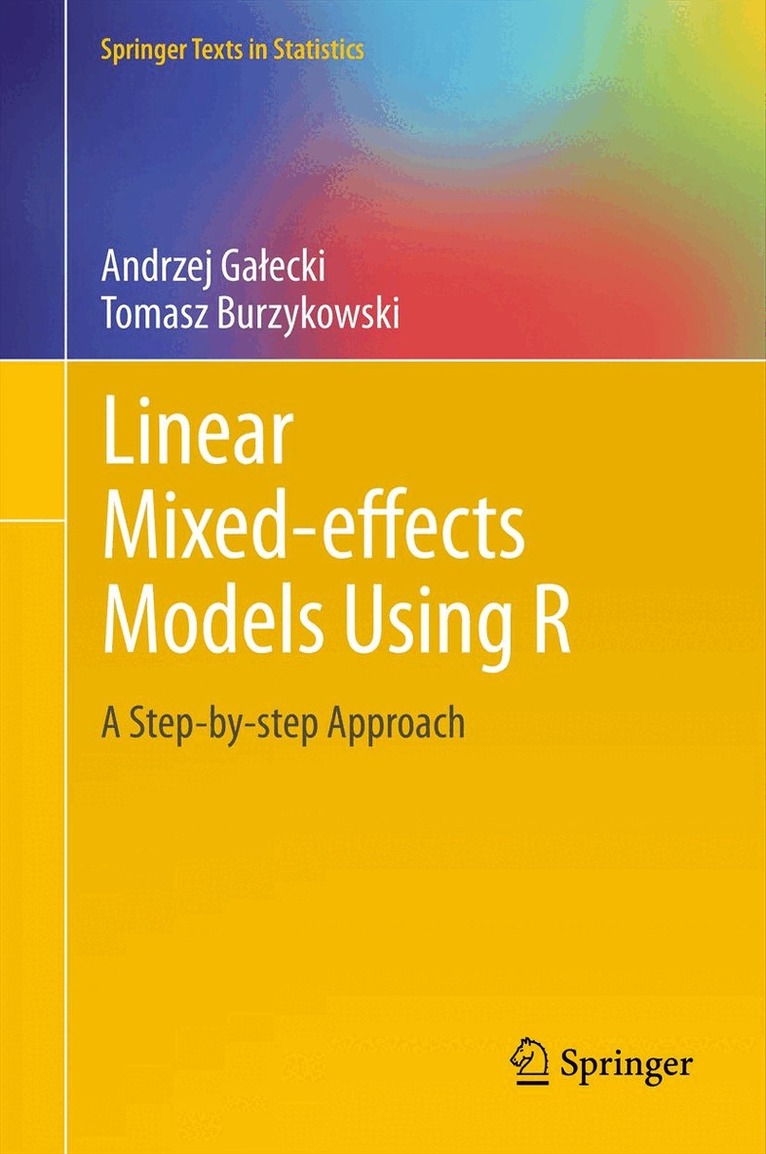
Linear mixed-effects models (LMMs) are an important class of statistical models that can be used to analyze correlated data. Such data are encountered in a variety of fields including biostatistics, public health, psychometrics, educational measurement, and sociology. This book aims to support a wide range of uses for the models by applied researchers in those and other fields by providing state-of-the-art descriptions of the implementation of LMMs in R. To help readers to get familiar with the features of the models and the details of carrying them out in R, the book includes a review of the most important theoretical concepts of the models. The presentation connects theory, software and applications. It is built up incrementally, starting with a summary of the concepts underlying simpler classes of linear models like the classical regression model, and carrying them forward to LMMs. A similar step-by-step approach is used to describe the R tools for LMMs. All the classes of linearmodels presented in the book are illustrated using real-life data. The book also introduces several novel R tools for LMMs, including new class of variance-covariance structure for random-effects, methods for influence diagnostics and for power calculations. They are included into an R package that should assist the readers in applying these and other methods presented in this text.
1 110 kr
Skickas inom 7-10 vardagar
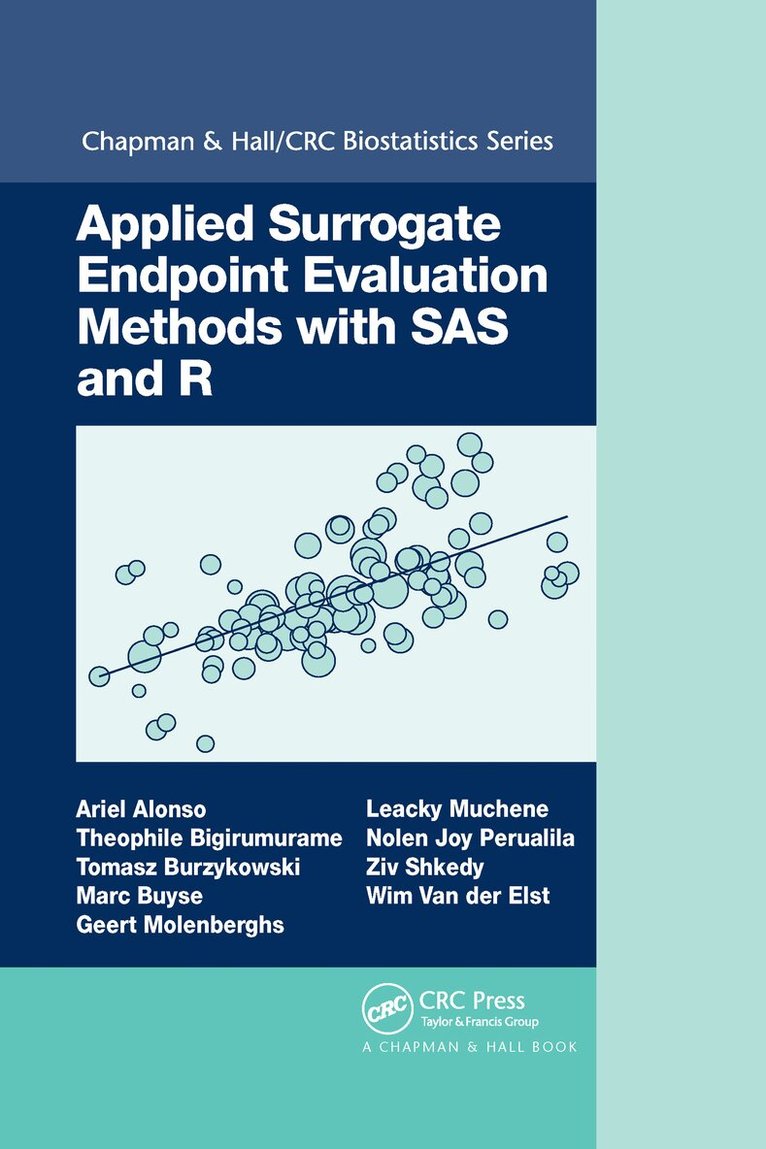
An important factor that affects the duration, complexity and cost of a clinical trial is the endpoint used to study the treatment’s efficacy. When a true endpoint is difficult to use because of such factors as long follow-up times or prohibitive cost, it is sometimes possible to use a surrogate endpoint that can be measured in a more convenient or cost-effective way. This book focuses on the use of surrogate endpoint evaluation methods in practice, using SAS and R.
1 175 kr
Skickas inom 10-15 vardagar
Linear mixed-effects models (LMMs) are an important class of statistical models that can be used to analyze correlated data. Such data are encountered in a variety of fields including biostatistics, public health, psychometrics, educational measurement, and sociology. This book aims to support a wide range of uses for the models by applied researchers in those and other fields by providing state-of-the-art descriptions of the implementation of LMMs in R. To help readers to get familiar with the features of the models and the details of carrying them out in R, the book includes a review of the most important theoretical concepts of the models. The presentation connects theory, software and applications. It is built up incrementally, starting with a summary of the concepts underlying simpler classes of linear models like the classical regression model, and carrying them forward to LMMs. A similar step-by-step approach is used to describe the R tools for LMMs. All the classes of linearmodels presented in the book are illustrated using real-life data. The book also introduces several novel R tools for LMMs, including new class of variance-covariance structure for random-effects, methods for influence diagnostics and for power calculations. They are included into an R package that should assist the readers in applying these and other methods presented in this text.