Tommaso Agasisti - Böcker
Visar alla böcker från författaren Tommaso Agasisti. Handla med fri frakt och snabb leverans.
3 produkter
3 produkter
1 913 kr
Skickas inom 10-15 vardagar
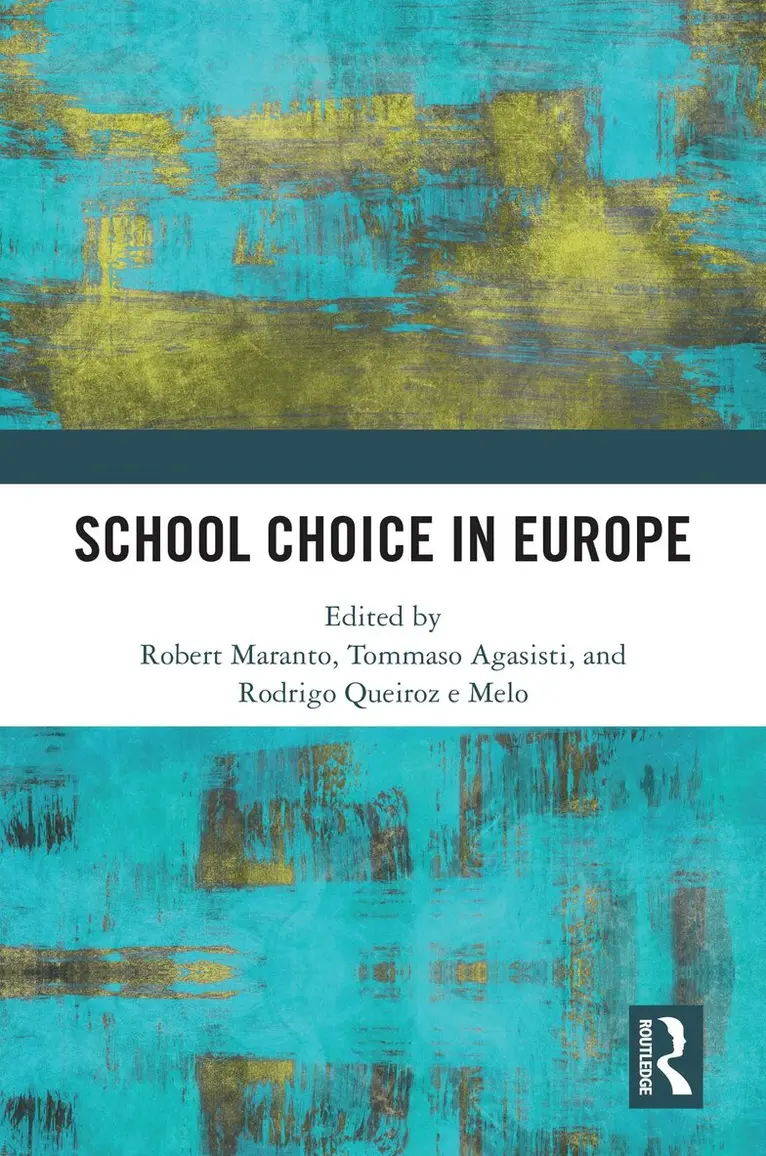
In this book, leading experts present rigorous, readable studies of education policies and school markets in 11 European countries from Ireland to Ukraine, offering lessons for researchers, policymakers and educators. No other book fills this niche. Americans debating whether parents’ choosing their children’s schools will improve education would be wise to learn from a century of experience in Europe, where most governments have long subsidized private schools, including religious schools. Likewise, Europeans debating this issue may learn that there is a varied landscape of state/private school arrangements around Europe and that the one specific to their country may be enriched by these experiences. This volume brings together leading European researchers who present rigorous, readable studies exploring how education markets work in 11 European countries from Ireland to Ukraine. The chapters cover a range of topics including empirical examinations of the reasons Irish parents choose single sex education, how a Ukrainian school improvised to serve students and parents in a war zone, how school choice defused culture wars in countries as varied as the Netherlands and Estonia, how the German left and right embraced increased parental agency for different reasons, the effectiveness of central regulations of autonomous British schools, how changing subsidy levels affect demand for private schooling in Italy and Portugal, the motivations of Hungarian parents choosing schools, and the impacts of social class on schooling choices and policies in Sweden, Germany, and Spain.This volume will be a key resource for academics, researchers, and advanced students of education, education policy and leadership, educational research, economics, and sociology. The chapters included in this book were originally published in the Journal of School Choice
642 kr
Kommande
In this book, leading experts present rigorous, readable studies of education policies and school markets in 11 European countries from Ireland to Ukraine, offering lessons for researchers, policymakers and educators. No other book fills this niche. Americans debating whether parents’ choosing their children’s schools will improve education would be wise to learn from a century of experience in Europe, where most governments have long subsidized private schools, including religious schools. Likewise, Europeans debating this issue may learn that there is a varied landscape of state/private school arrangements around Europe and that the one specific to their country may be enriched by these experiences. This volume brings together leading European researchers who present rigorous, readable studies exploring how education markets work in 11 European countries from Ireland to Ukraine. The chapters cover a range of topics including empirical examinations of the reasons Irish parents choose single sex education, how a Ukrainian school improvised to serve students and parents in a war zone, how school choice defused culture wars in countries as varied as the Netherlands and Estonia, how the German left and right embraced increased parental agency for different reasons, the effectiveness of central regulations of autonomous British schools, how changing subsidy levels affect demand for private schooling in Italy and Portugal, the motivations of Hungarian parents choosing schools, and the impacts of social class on schooling choices and policies in Sweden, Germany, and Spain.This volume will be a key resource for academics, researchers, and advanced students of education, education policy and leadership, educational research, economics, and sociology. The chapters included in this book were originally published in the Journal of School Choice
3 397 kr
Skickas inom 7-10 vardagar
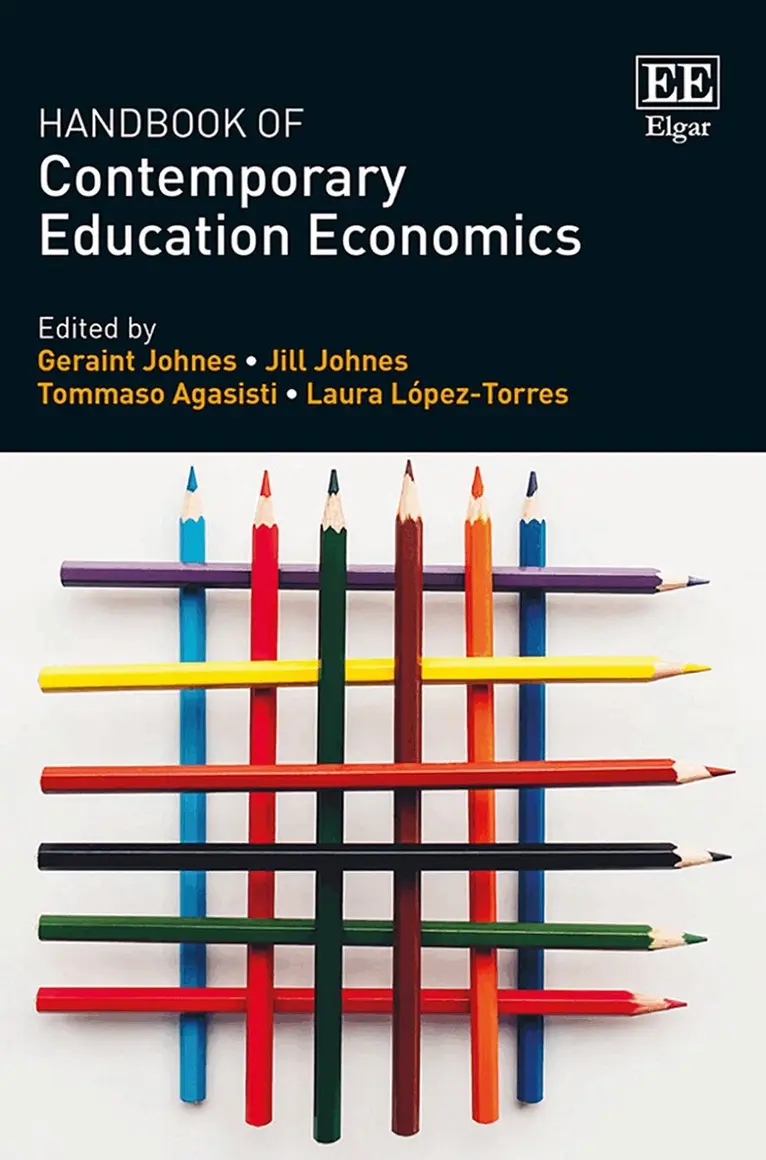
This Handbook provides a comprehensive overview of the modern economics of education literature, bringing together a series of original contributions by globally renowned experts in their fields. Covering a wide variety of topics, each chapter assesses the most recent research with an emphasis on skills, evaluation and data analytics. Beginning with an analysis of the economic returns to education, the Handbook proceeds to examine educational production functions, various funding models, and the labour market for educators. The Handbook goes beyond these traditional concerns of the economics of education, by revealing how the methods of economics can be applied in the context of education to open up the 'black box' of production in this sector. Detailed analysis and evaluation of educational production offers practical solutions and reveals considerable new insight about the specific interventions that can be made to enhance the value of schooling. Significant new lines of research are also suggested. This Handbook should be read by economists, policy-makers and practitioners in the field of education. Academics in the areas of the economics of education, labour economics and educational policy will also find this Handbook invaluable for current and further research.Contributors include: T. Agasisti, R. Bachan, N. Barr, C.R. Belfield, A.J. Bowers, M. Bray, J. Britton, S.J. Cabus, I. Cornelisz, K. De Witte, A. Di Liberto, L. Fengliang, J. Ghysels, C. Haelermans, P. Iatarola, G. Johnes, J. Johnes, H.M. Levin, J. Liu, L. López-Torres, S. McIntosh, A. McKnight, B. Reilly, F. Saltiel, D. Santin, M. Sarzosa, G. Sicilia, L. Stiefel, F. Tomini, S. Urzua, A. Vignoles, S. Vincent-Lancrin