Ton van Kalmthout - Böcker
Visar alla böcker från författaren Ton van Kalmthout. Handla med fri frakt och snabb leverans.
6 produkter
6 produkter
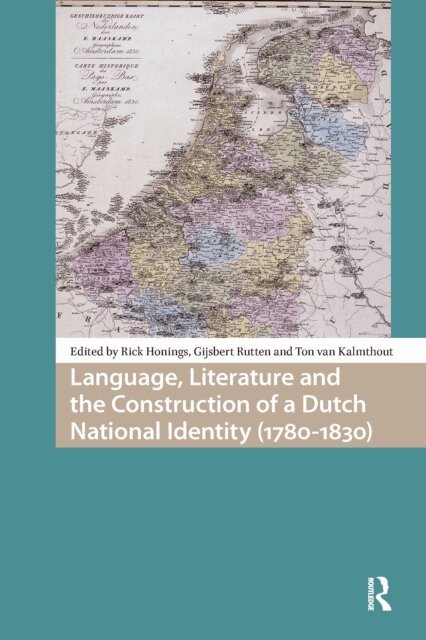
Language, Literature and the Construction of a Dutch National Identity (1780-1830)
Häftad, Engelska, 2025
652 kr
Skickas inom 10-15 vardagar
In exploring the birth of a Dutch identity between 1780 and 1830, this book integrates nationalism studies with literary and linguistic history by highlighting scholarly study of the Dutch language as a factor in the creation of the national identity. These early scholars promoted the Dutch language during a time of political upheaval, when citizens needed something to feel proud of. This book examines the impact individual agents had on a crucial stage in the Dutch nation-building process.
652 kr
Skickas inom 10-15 vardagar
The Netherlands have a long and important tradition in scholarly philology. For instance in the early days of Leiden University 'philology', or the critical examination of classical texts, was regarded as a 'cutting-edge science'. This field of scholarship had far reaching implications on disciplines such as theology, chronology, astronomy, history, law and other demarcated bodies of knowledge identified as a separate science. Regardless of the exact field of inquiry, philologists as protectors and teachers of the written heritage always played a pivotal role in the formation of the cultural repertoire of the educated public. As men of learning and high esteem, philologists also exerted influence outside the cultural sphere, especially in politics and religion. The ever-changing composition of the philological frame of reference made no difference in this respect., But in the nineteenth century, the practice of philology was passing a crucial phase of change. In both its object of study and in its methods, several fundamental modifications occurred. Texts in the vernacular and national philologies attracted more and more attention of the public, and 'neo-philology' succeeded in taking over the central position traditionally occupied by classical philology. Subfields such as 'linguistics', 'edition technique' and 'history' grew into new, more-or-less independent (sub-)disciplines, whereas scientific methods such as stemmatology and comparative approaches were introduced in the humanities. This redesigned the landscape of philology radically. New boundaries became apparent and existing ones were questioned or drawn sharper. At the time, philology underwent an accelerated process of differentiation and professionalization. Philology demarcated its own more or less independent sphere, with a specific authority. The establishment of a branch of 'national philology' can be regarded as an example of discipline formation in the humanities. This fascinating process of change and the search for new boundaries in Dutch philology is highlighted in this book The Practice of Philology in the Netherlands in the Nineteenth Century, the first book on this topic in the English language.
1 813 kr
Skickas inom 10-15 vardagar
This volume illuminates how philology and its focus on the critical examination of classical texts began an accelerated process of specialization in Dutch scholarship of the 1800s.
Del 5 - Languages and Culture in History
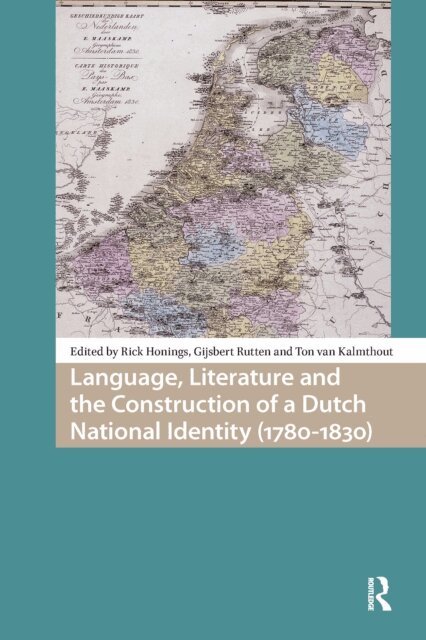
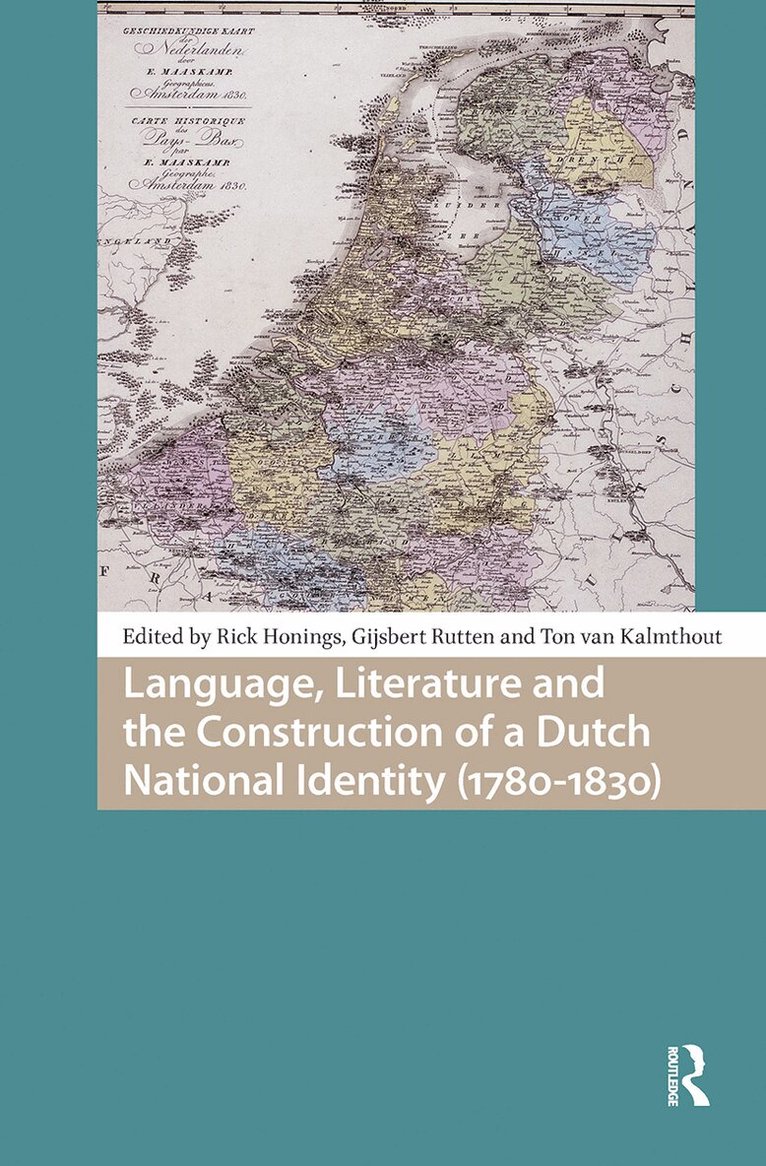
Language, Literature and the Construction of a Dutch National Identity (1780-1830)
Inbunden, Engelska, 2018
2 021 kr
Skickas inom 10-15 vardagar
This book integrates nationalism studies with iterary and linguistic history by highlighting scholarly study of the Dutch language as a factor in the creation of the national identity.
Doing Double Dutch
The International Circulation of Literature from the Low Countries
Inbunden, Engelska, 2017
898 kr
Skickas inom 5-8 vardagar
The importance of a minor language in the field of world literature. Dutch literature is increasingly understood as a network of texts and poetics connected to other languages and literatures through translations and adaptations. In this book, a team of international researchers explores how Dutch literary texts cross linguistic, historical, geophysical, political, religious, and disciplinary borders, and reflects on a wide range of methods for studying these myriad border crossings. As a result, this volume provides insight into the international dissemination of Dutch literature and the position of a smaller, less-translated language within the field of world literature. The title Doing Double Dutch evokes a popular rope-skipping game in which two people turn two long jump ropes in opposite directions while a third person jumps them. A fitting metaphor for how literature circulates internationally: two dynamic spheres, the source culture and the target culture, engage one another in a complex pattern of movement resulting in a new literary work, translation, or adaptation formed somewhere in the middle. This publication is GPRC-labeled (Guaranteed Peer-Reviewed Content). Contributors: Chiara Beltrami Gottmer (American International School of Rotterdam), Peter Boot (Huygens ING), Pieter Boulogne (KU Leuven), Elke Brems (KU Leuven), Michel De Dobbeleer (University of Ghent), Caroline de Westenholz (Louis Couperus Museum), Gillis Dorleijn (University of Groningen), Wilken Engelbrecht (Palacký University Olomouc), Veerle Fraeters (University of Antwerp), Maud Gonne (KU Leuven), Christine Hermann (University of Vienna), Peter Kegel (Huygens ING), Tessa Lobbes (Utrecht University), Marijke Meijer Drees (University of Groningen), Reine Meylaerts (KU Leuven), Marco Prandoni (University of Bologna), Marion Prinse (Utrecht University), Orsolya Réthelyi (Eötvös Loránd University Budapest, Huygens ING), Diana Sanz Roig (Universitat Pompeu Fabra), Rita Schlusemann (Utrecht University), Matthieu Sergier (Université Saint Louis Brussels), Natalia Stachura (Adam Mickiewicz University in Poznan), Janek Urbaniak (University of Wroclaw), Stéphanie Vanasten (UCL Louvain-la-Neuve), Ton van Kalmthout (Huygens ING), Suzanne van Putten-Brons, Herbert Van Uffelen (University of Vienna), Marc van Zoggel (Huygens ING), Nico Wilterdink (University of Amsterdam).
Socialist Transnationality in Translation
Dutch-Language Literature in East Central Europe and the Balkans, 1945–1990
Inbunden, Engelska, 2026
1 324 kr
Skickas inom 10-15 vardagar
The first study examining the translation and reception of Dutch literature in Eastern and Central Europe during the restrictive era of socialist and totalitarian political systems.In nearly all Central Eastern European and Balkan countries in the years between 1945-1990, there was a considerable increase in the number of titles translated from Dutch into the respective native languages. Socialist Transnationality in Translation explores how translators and publishers in Central East Europe and Yugoslavia were able to present a rather representative picture of Dutch and Flemish literature to readers notwithstanding restrictions caused by the official political doctrine of Socialist Realism as well as censorship and economic difficulties posed by a lack of foreign currency to pay translation rights.Beginning with a brief overview of the history of the region from 1945-1990, this volume examines the development of Dutch literature, then turns to the literary norms of the time as partly dictated by ideology during this period. The volume then looks at the development of translations from Dutch in connection with the development of Dutch as an academic subject – in many cases, the increase in Dutch translations was joined with the foundation of lectureships or chairs of Dutch Studies – and discusses the actors involved in the transfer of foreign literature in the region and the influence of censorship on that transfer. The work concludes with a discussion of what was published and why, based on the interaction between ideology on the one hand and the genuine literary interest of publishers and translators on the other.