Tony Addison - Böcker
Visar alla böcker från författaren Tony Addison. Handla med fri frakt och snabb leverans.
5 produkter
5 produkter
1 180 kr
Skickas inom 5-8 vardagar
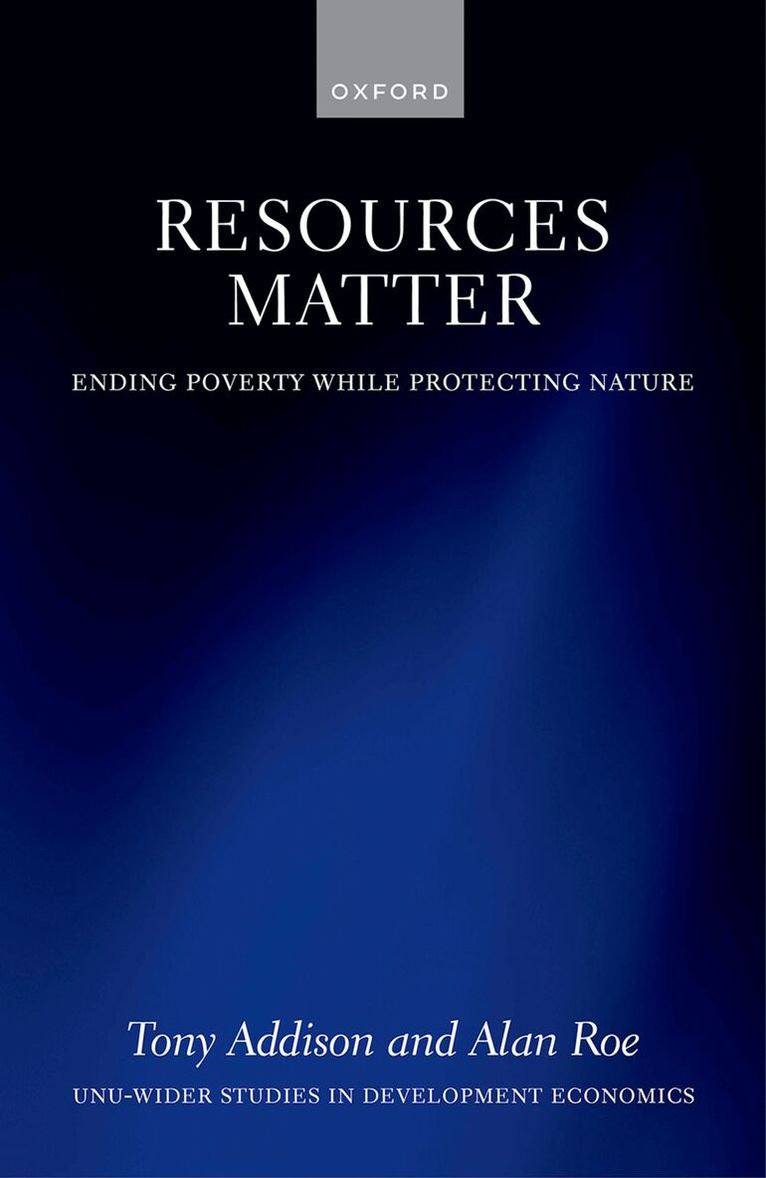
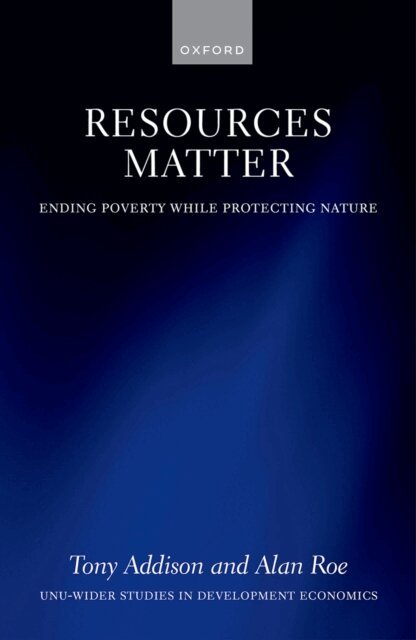
This is an open access title available under the terms of a CC BY-NC-SA 3.0 IGO licence. It is free to read at Oxford Academic and is offered as a free PDF download from OUP and selected open access locations.The extraction and use of natural resources underpins a global economy that provides high living standards for many as well as the prospect of ending poverty in the developing world. Mining as well as the oil and gas industry - which constitute the 'extractive industries' - are vitally important sectors in many developing countries. They provide substantial public revenues as well as much-needed foreign exchange, and livelihoods for many. Yet, the extractives industries are highly controversial. The continued extraction and burning of fossil fuels in energy generation and transport, together with the emissions associated with mining and metals refining, has taken the world to levels of emissions that increasingly imperil humanity. In addition, the extractive industries have a poor record of damaging nature both through pollution as well as via the destruction of biodiversity (thereby endangering the livelihoods that depend on such renewable natural capital). This book explores a central issue of our time: our materials world is simultaneously both part of the problem (especially fossil fuels) as well as part of its solution (the materials necessary for the technologies required for 'net zero'). Resources Matter discusses how the extractive industries can be leveraged to generate larger and more beneficial impacts in poorer economies and improve livelihoods at local and national levels. A central argument is that the so-called 'resource curse' - the potentially negative effect of resource booms on economies and societies - is not inevitable, as it is often said to be. Rather, much can be done through policy, coordinated government action in partnership with the private sector, and judicious investments to improve the prospects for resource wealth to make a positive contribution to escaping underdevelopment and poverty. Companies in the extractives industry have a key role in working with governments to achieve these goals.
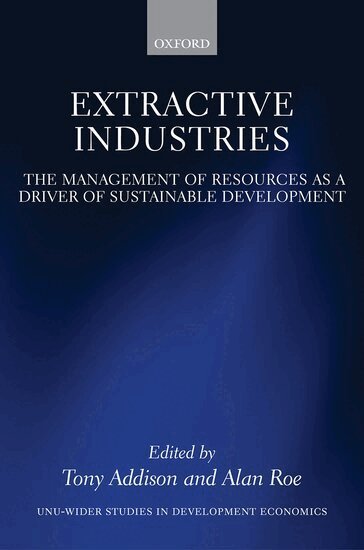
Extractive Industries
The Management of Resources as a Driver of Sustainable Development
Inbunden, Engelska, 2018
1 433 kr
Skickas inom 5-8 vardagar
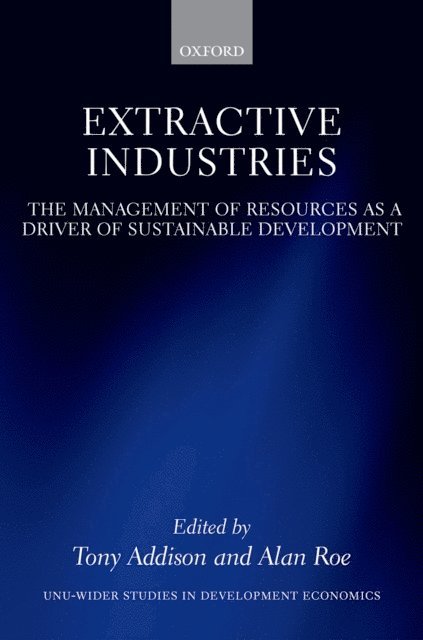
This is an open access title available under the terms of a CC BY-NC-SA 3.0 IGO licence. It is free to read at Oxford Scholarship Online and offered as a free PDF download from OUP and selected open access locations. New initiatives recognize that resource wealth can provide a means, when properly used, for poorer nations to decisively break with poverty by diversifying economies and funding development spending. Extractive Industries: The Management of Resources as a Driver of Sustainable Development explores the challenges and opportunities facing developing countries in using oil, gas, and mining to achieve inclusive change. While resource wealth can yield prosperity it can also, when mismanaged, cause acute social inequality, deep poverty, environmental damage, and political instability. There is a new determination to improve the benefits of extractive industries to their host countries, and to strengthen the sector's governance. Extractive Industries provides a comprehensive contribution to what must be done in this sector to deliver development, protect often fragile environments from damage, enhance the rights of affected communities, and support climate change action. It brings together international experts to offer ideas and recommendations in the main policy areas. With a breadth of collective insight and experience, it argues that more attention must be given to the development role of extractive industries, and looks to the future to explain how action on climate change will profoundly shape the sector's prospects.
2 324 kr
Skickas inom 5-8 vardagar
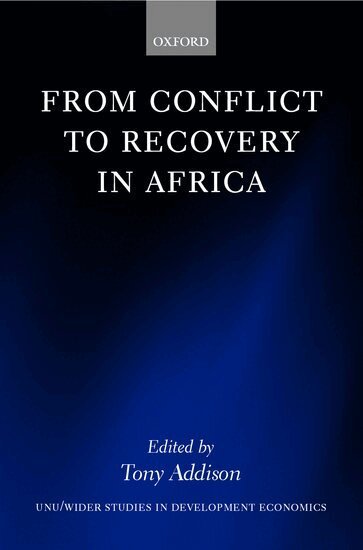
Establishing peace and reconstructing Africa's war-damaged economies are urgent challenges. For Africa to recover, communities must reconstruct, private sectors must revitalize, and states must transform themselves. Thus, unless communities rebuild and strengthen their livelihoods, neither reconstruction nor growth can be poverty-reducing. But communities cannot prosper unless private investment recreates markets and generates more employment. And neither communities nor entrepreneurs can realise their potential without a development state-one that is democratically accountable and dedicated to poverty-reducing development. The international community can do much to assist-through more aid, debt relief, and peacekeeping-but ultimately the future lies in the hands of Africans themselves.This book examines these themes in a selection of African countries that have gone through intense and prolonged conflict, and its policy conclusions are important for understanding the prospects for peace and recovery not only in Africa, but also in other 'post-conflict' societies across the world. It also discusses the cross-cutting issues of how economic and political reform interact with conflict resolution and 'post-conflict' reconstruction. This interaction is often neglected by both governments and donors. However, reform and reconstruction cannot be kept separate if conflict is to be halted and poverty reduced.The book is one of the first to undertake a thorough examination of the economic dimensions of recovery from war. It places particular emphasis on designing a recovery in which the poor participate, so that the benefits of reconstruction from war do not just flow to a narrow élite. In highlighting the tensions and opportunities that exist in achieving recovery from war, it contributes not only to the debate on economic policy making in Africa, but also to the design of better reconstruction and reform programmes.
2 149 kr
Skickas inom 5-8 vardagar
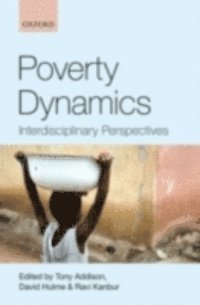
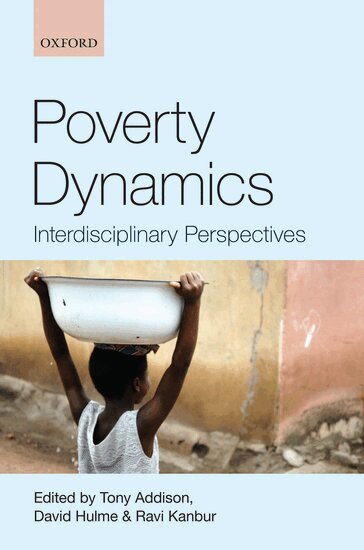
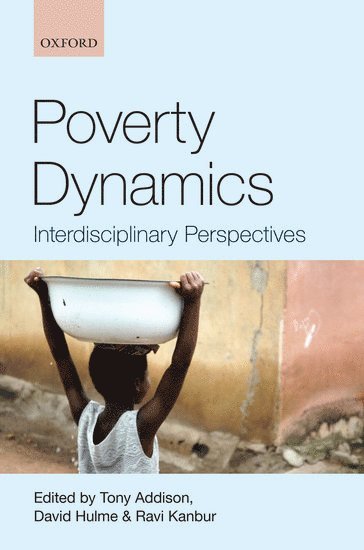
This collection of essays provides a state-of-the-art examination of the concepts and methods that can be used to understand poverty dynamics. It does this from an interdisciplinary perspective and includes the work of anthropologists, economists, sociologists, and political scientists. The contributions included highlight the need to conceptualise poverty from a multidimensional perspective and promote Q-Squared research approaches, or those that combine quantitative and qualitative research.The first part of the book provides a review of the research on poverty dynamics in developing countries. Part two focuses on poverty measurement and assessment, and discusses the most recent work of world-leading poverty analysts. The third part focuses on frameworks for understanding poverty analysis that avoid measurement and instead utilise approaches based on social relations and structural analysis.There is widespread consensus that poverty analysis should focus on poverty dynamics and this book shows how this idea can practically be taken forward.
703 kr
Skickas inom 5-8 vardagar
This collection of essays provides a state-of-the-art examination of the concepts and methods that can be used to understand poverty dynamics. It does this from an interdisciplinary perspective and includes the work of anthropologists, economists, sociologists, and political scientists. The contributions included highlight the need to conceptualise poverty from a multidimensional perspective and promote Q-Squared research approaches, or those that combine quantitative and qualitative research.The first part of the book provides a review of the research on poverty dynamics in developing countries. Part two focuses on poverty measurement and assessment, and discusses the most recent work of world-leading poverty analysts. The third part focuses on frameworks for understanding poverty analysis that avoid measurement and instead utilise approaches based on social relations and structural analysis.There is widespread consensus that poverty analysis should focus on poverty dynamics and this book shows how this idea can practically be taken forward.