Alan Roe - Böcker
Visar alla böcker från författaren Alan Roe. Handla med fri frakt och snabb leverans.
4 produkter
4 produkter
1 180 kr
Skickas inom 5-8 vardagar
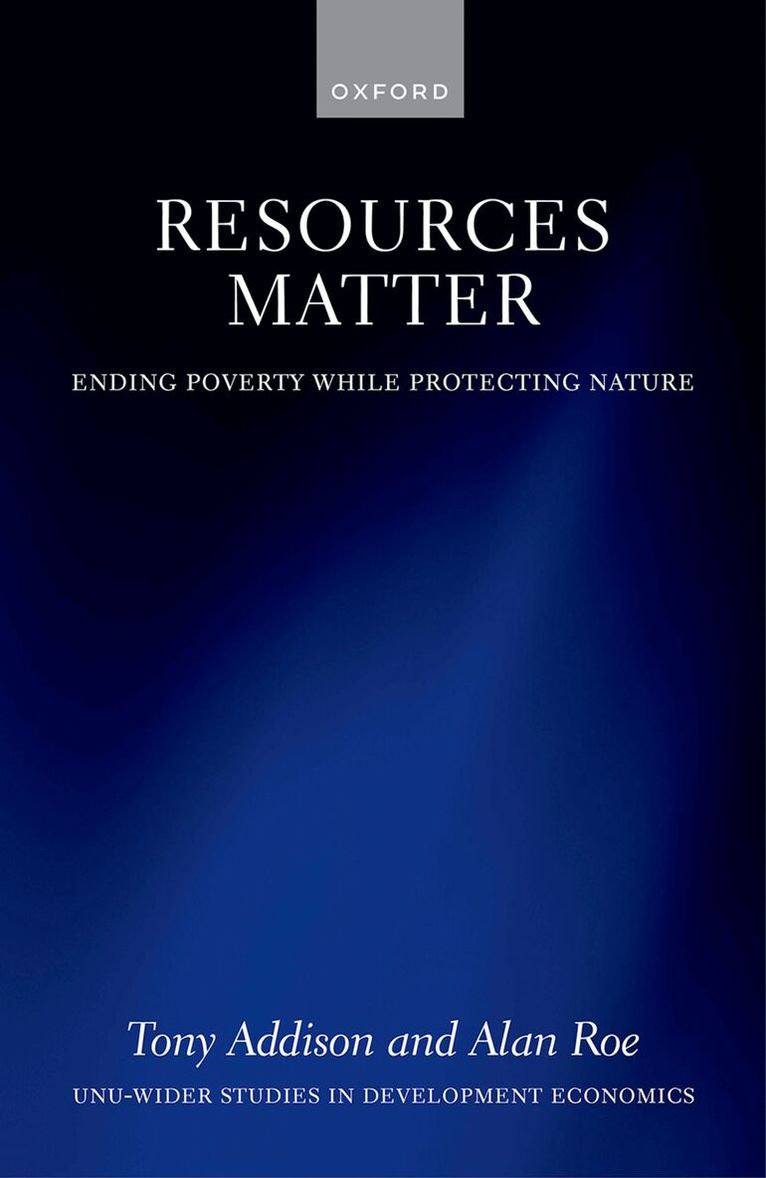
This is an open access title available under the terms of a CC BY-NC-SA 3.0 IGO licence. It is free to read at Oxford Academic and is offered as a free PDF download from OUP and selected open access locations.The extraction and use of natural resources underpins a global economy that provides high living standards for many as well as the prospect of ending poverty in the developing world. Mining as well as the oil and gas industry - which constitute the 'extractive industries' - are vitally important sectors in many developing countries. They provide substantial public revenues as well as much-needed foreign exchange, and livelihoods for many. Yet, the extractives industries are highly controversial. The continued extraction and burning of fossil fuels in energy generation and transport, together with the emissions associated with mining and metals refining, has taken the world to levels of emissions that increasingly imperil humanity. In addition, the extractive industries have a poor record of damaging nature both through pollution as well as via the destruction of biodiversity (thereby endangering the livelihoods that depend on such renewable natural capital). This book explores a central issue of our time: our materials world is simultaneously both part of the problem (especially fossil fuels) as well as part of its solution (the materials necessary for the technologies required for 'net zero'). Resources Matter discusses how the extractive industries can be leveraged to generate larger and more beneficial impacts in poorer economies and improve livelihoods at local and national levels. A central argument is that the so-called 'resource curse' - the potentially negative effect of resource booms on economies and societies - is not inevitable, as it is often said to be. Rather, much can be done through policy, coordinated government action in partnership with the private sector, and judicious investments to improve the prospects for resource wealth to make a positive contribution to escaping underdevelopment and poverty. Companies in the extractives industry have a key role in working with governments to achieve these goals.
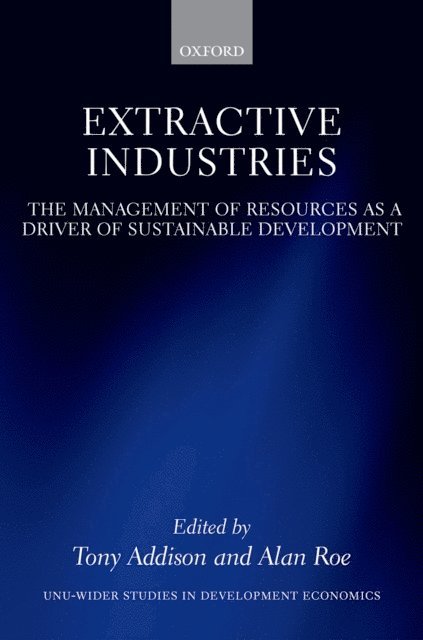
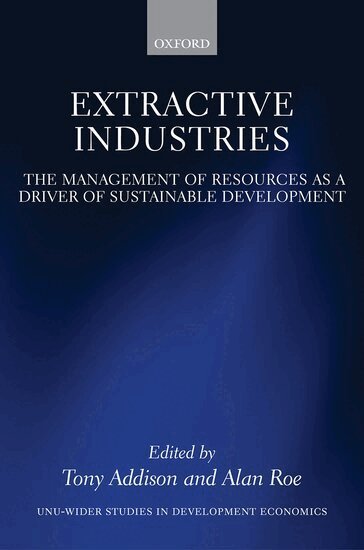
Extractive Industries
The Management of Resources as a Driver of Sustainable Development
Inbunden, Engelska, 2018
1 433 kr
Skickas inom 5-8 vardagar
This is an open access title available under the terms of a CC BY-NC-SA 3.0 IGO licence. It is free to read at Oxford Scholarship Online and offered as a free PDF download from OUP and selected open access locations. New initiatives recognize that resource wealth can provide a means, when properly used, for poorer nations to decisively break with poverty by diversifying economies and funding development spending. Extractive Industries: The Management of Resources as a Driver of Sustainable Development explores the challenges and opportunities facing developing countries in using oil, gas, and mining to achieve inclusive change. While resource wealth can yield prosperity it can also, when mismanaged, cause acute social inequality, deep poverty, environmental damage, and political instability. There is a new determination to improve the benefits of extractive industries to their host countries, and to strengthen the sector's governance. Extractive Industries provides a comprehensive contribution to what must be done in this sector to deliver development, protect often fragile environments from damage, enhance the rights of affected communities, and support climate change action. It brings together international experts to offer ideas and recommendations in the main policy areas. With a breadth of collective insight and experience, it argues that more attention must be given to the development role of extractive industries, and looks to the future to explain how action on climate change will profoundly shape the sector's prospects.
2 166 kr
Skickas inom 10-15 vardagar
Global Environmental History introduces this rapidly developing field through a broad and thought-provoking range of expert contributions. Environmental history is a subject especially suited to global and transnational approaches and, over the course of the present generation, an increasing number of scholars have taken up the challenge that it presents. The collection begins with a series of chapters offering truly global visions; they range from reflections on the role of animals in environmental history to an overview of environmental change over the past ten millennia. Part Two switches to a sharper focus, featuring essays that characterize the distinctiveness of certain key regions such as China, Russia, West Africa, South Asia, Europe, and Latin America. The final part of the book examines different forms of modern environmentalism, ranging from the U.S. and its fascination with wilderness, to Japanese concern with human health, and on to Peru and India, where the environmental debate centres on access to resources. Global Environmental History will be an essential resource for students of Environmental History and Global History.
829 kr
Skickas inom 10-15 vardagar
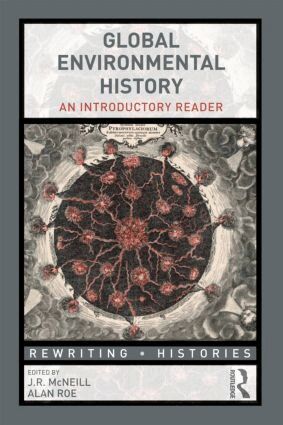
Global Environmental History introduces this rapidly developing field through a broad and thought-provoking range of expert contributions. Environmental history is a subject especially suited to global and transnational approaches and, over the course of the present generation, an increasing number of scholars have taken up the challenge that it presents. The collection begins with a series of chapters offering truly global visions; they range from reflections on the role of animals in environmental history to an overview of environmental change over the past ten millennia. Part Two switches to a sharper focus, featuring essays that characterize the distinctiveness of certain key regions such as China, Russia, West Africa, South Asia, Europe, and Latin America. The final part of the book examines different forms of modern environmentalism, ranging from the U.S. and its fascination with wilderness, to Japanese concern with human health, and on to Peru and India, where the environmental debate centres on access to resources. Global Environmental History will be an essential resource for students of Environmental History and Global History.