Tony Shaw - Böcker
Visar alla böcker från författaren Tony Shaw. Handla med fri frakt och snabb leverans.
13 produkter
13 produkter
1 142 kr
Skickas inom 7-10 vardagar
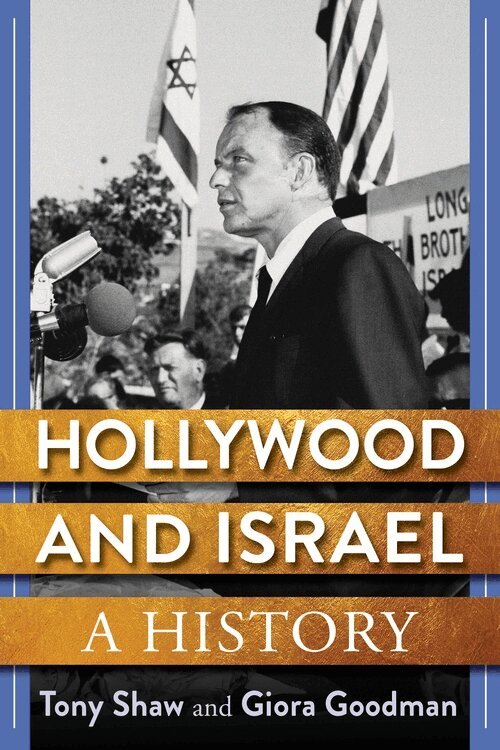
Winner, 2023 Shapiro Best Book Award, Association for Israel StudiesFrom Frank Sinatra’s early pro-Zionist rallying to Steven Spielberg’s present-day peacemaking, Hollywood has long enjoyed a “special relationship” with Israel. This book offers a groundbreaking account of this relationship, both on and off the screen. Tony Shaw and Giora Goodman investigate the many ways in which Hollywood’s moguls, directors, and actors have supported or challenged Israel for more than seven decades. They explore the complex story of Israel’s relationship with American Jewry and illuminate how media and soft power have shaped the Arab-Israeli conflict.Shaw and Goodman draw on a vast range of archival sources to demonstrate how show business has played a pivotal role in crafting the U.S.-Israel alliance. They probe the influence of Israeli diplomacy on Hollywood’s output and lobbying activities, but also highlight the limits of ideological devotion in high-risk entertainment industries. The book details the political involvement with Israel—and Palestine—of household names such as Eddie Cantor, Kirk Douglas, Elizabeth Taylor, Barbra Streisand, Vanessa Redgrave, Arnold Schwarzenegger, Robert De Niro, and Natalie Portman. It also spotlights the role of key behind-the-scenes players like Dore Schary, Arthur Krim, Arnon Milchan, and Haim Saban.Bringing the story up to the moment, Shaw and Goodman contend that the Hollywood-Israel relationship might now be at a turning point. Shedding new light on the political power that images and celebrity can wield, Hollywood and Israel shows the world’s entertainment capital to be an important player in international affairs.
291 kr
Skickas inom 7-10 vardagar
Winner, 2023 Shapiro Best Book Award, Association for Israel StudiesFrom Frank Sinatra’s early pro-Zionist rallying to Steven Spielberg’s present-day peacemaking, Hollywood has long enjoyed a “special relationship” with Israel. This book offers a groundbreaking account of this relationship, both on and off the screen. Tony Shaw and Giora Goodman investigate the many ways in which Hollywood’s moguls, directors, and actors have supported or challenged Israel for more than seven decades. They explore the complex story of Israel’s relationship with American Jewry and illuminate how media and soft power have shaped the Arab-Israeli conflict.Shaw and Goodman draw on a vast range of archival sources to demonstrate how show business has played a pivotal role in crafting the U.S.-Israel alliance. They probe the influence of Israeli diplomacy on Hollywood’s output and lobbying activities, but also highlight the limits of ideological devotion in high-risk entertainment industries. The book details the political involvement with Israel—and Palestine—of household names such as Eddie Cantor, Kirk Douglas, Elizabeth Taylor, Barbra Streisand, Vanessa Redgrave, Arnold Schwarzenegger, Robert De Niro, and Natalie Portman. It also spotlights the role of key behind-the-scenes players like Dore Schary, Arthur Krim, Arnon Milchan, and Haim Saban.Bringing the story up to the moment, Shaw and Goodman contend that the Hollywood-Israel relationship might now be at a turning point. Shedding new light on the political power that images and celebrity can wield, Hollywood and Israel shows the world’s entertainment capital to be an important player in international affairs.
378 kr
Skickas inom 10-15 vardagar
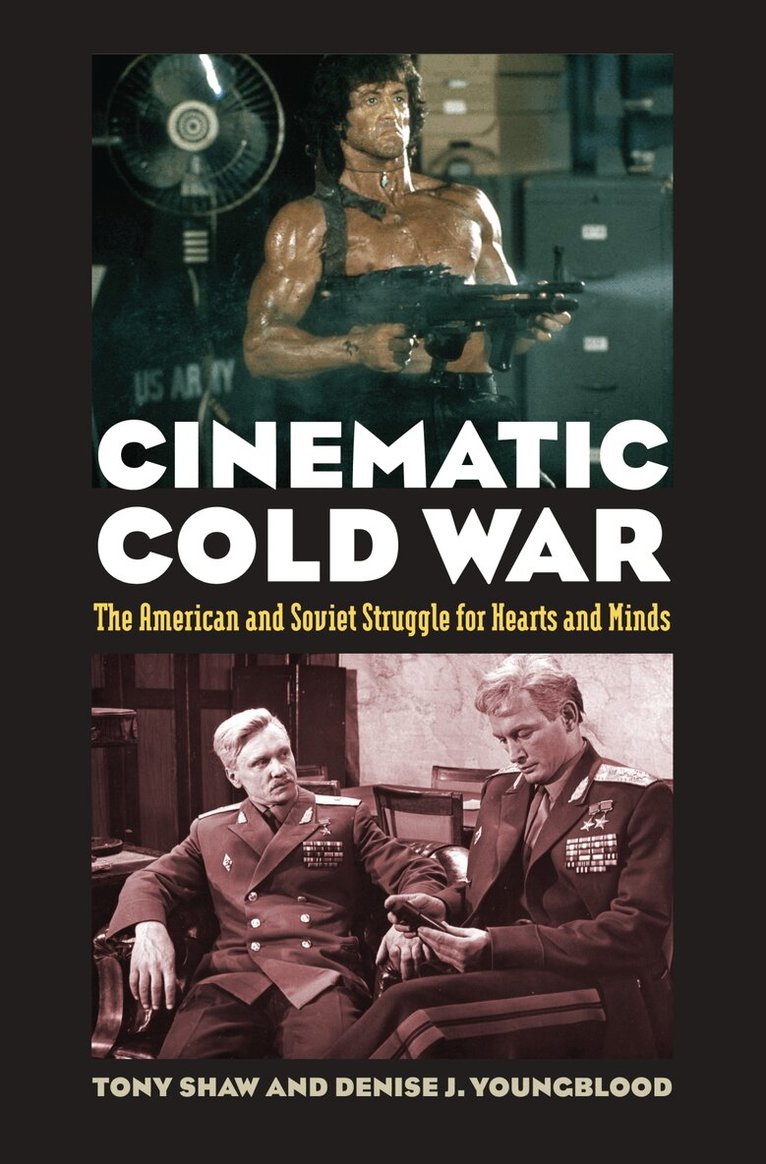
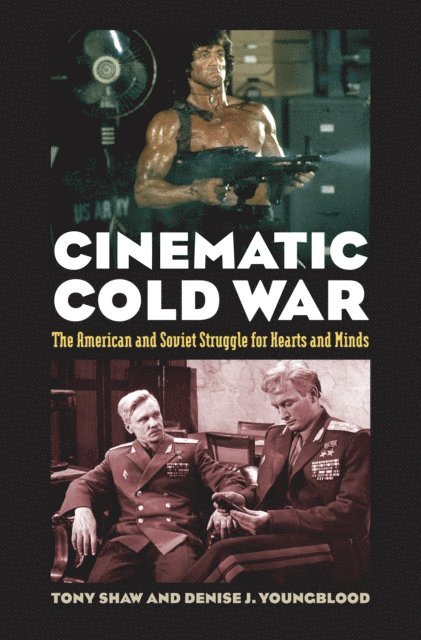
The Cold War was as much a battle of ideas as a series of military and diplomatic confrontations, and movies were a prime battleground for this cultural combat. As Tony Shaw and Denise Youngblood show, Hollywood sought to export American ideals in movies like Rambo, and the Soviet film industry fought back by showcasing Communist ideals in a positive light, primarily for their own citizens. The two camps traded cinematic blows for more than four decades. The first book-length comparative survey of cinema's vital role in disseminating Cold War ideologies, Shaw and Youngblood's study focuses on ten films-five American and five Soviet-that in both obvious and subtle ways provided a crucial outlet for the global ""debate"" between democratic and communist ideologies. For each nation, the authors outline industry leaders, structure, audiences, politics, and international reach and explore the varied relationships linking each film industry to its respective government. They then present five comparative case studies, each pairing an American with a Soviet film: Man on a Tightrope with The Meeting on the Elbe; Roman Holiday with Spring on Zarechnaya Street; Fail-Safe with Nine Days in One Year; Bananas with Officers; Rambo: First Blood Part II with Incident at Map Grid 36-80. Shaw breathes new life into familiar American films by Elia Kazan and Woody Allen, while Youngblood helps readers comprehend Soviet films most have never seen. Collectively, their commentaries track the Cold War in its entirety-from its formative phase through periods of thaw and self-doubt to the resurgence of mutual animosity during the Reagan years-and enable readers to identify competing core propaganda themes such as decadence versus morality, technology versus humanity, and freedom versus authority. As the authors show, such themes blurred notions regarding ""propaganda"" and ""entertainment,"" terms that were often interchangeable and mutually reinforcing during the Cold War. Featuring engaging commentary and evocative images from the films discussed, Cinematic Cold War offers a shrewd analysis of how the silver screen functioned on both sides of the Iron Curtain. As such it should have great appeal for anyone interested in the Cold War or the cinematic arts.
1 611 kr
Skickas inom 7-10 vardagar
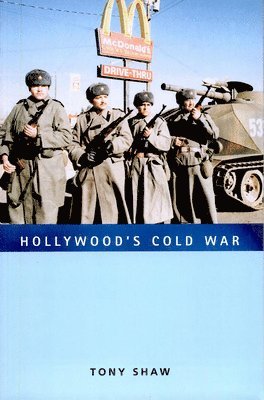
Published at a point when American filmmakers are deeply involved in the War on Terror, this authoritative and timely book offers the first comprehensive account of Hollywood’s propaganda role during the defining ideological conflict of the twentieth century: the Cold War. In an analysis of films dating from America’s first Red Scare in the wake of the 1917 Bolshevik Revolution to the collapse of the Berlin Wall in 1989, Tony Shaw examines the complex relationship between filmmakers, censors, politicians and government propagandists.Movies were at the centre of the Cold War’s battle for hearts and minds. Hollywood’s comedies, love stories, musicals, thrillers, documentaries and science fiction shockers – to list a few genres – played a critical dual role: on the one hand teaching millions of Americans why communism represented the greatest threat their country had ever faced, and on the other selling America’s liberal-capitalist ideals across the globe.Drawing on declassified government documents, studio archives and filmmakers’ private papers, Shaw reveals the different ways in which cinematic propaganda was produced, disseminated, and received by audiences during the Cold War. In the process, he blends subjects as diverse as women’s fashions, McCarthyism, drug smuggling, Christianity, and American cultural diplomacy in India. His conclusions about Hollywood’s versatility and power have a contemporary resonance which will interest anyone wishing to understand wartime propaganda today.Key features:* The first comprehensive account of Hollywood’s role during the Cold War.*A new interrogation of the collaboration between filmmakers and government in the production of propaganda.*The use of primary documentation and new archival research make this book unique.
462 kr
Skickas inom 7-10 vardagar
Published at a point when American filmmakers are deeply involved in the War on Terror, this authoritative and timely book offers the first comprehensive account of Hollywood’s propaganda role during the defining ideological conflict of the twentieth century: the Cold War. In an analysis of films dating from America’s first Red Scare in the wake of the 1917 Bolshevik Revolution to the collapse of the Berlin Wall in 1989, Tony Shaw examines the complex relationship between filmmakers, censors, politicians and government propagandists.Movies were at the centre of the Cold War’s battle for hearts and minds. Hollywood’s comedies, love stories, musicals, thrillers, documentaries and science fiction shockers – to list a few genres – played a critical dual role: on the one hand teaching millions of Americans why communism represented the greatest threat their country had ever faced, and on the other selling America’s liberal-capitalist ideals across the globe.Drawing on declassified government documents, studio archives and filmmakers’ private papers, Shaw reveals the different ways in which cinematic propaganda was produced, disseminated, and received by audiences during the Cold War. In the process, he blends subjects as diverse as women’s fashions, McCarthyism, drug smuggling, Christianity, and American cultural diplomacy in India. His conclusions about Hollywood’s versatility and power have a contemporary resonance which will interest anyone wishing to understand wartime propaganda today.Key features:* The first comprehensive account of Hollywood’s role during the Cold War.*A new interrogation of the collaboration between filmmakers and government in the production of propaganda.*The use of primary documentation and new archival research make this book unique.
227 kr
Kommande
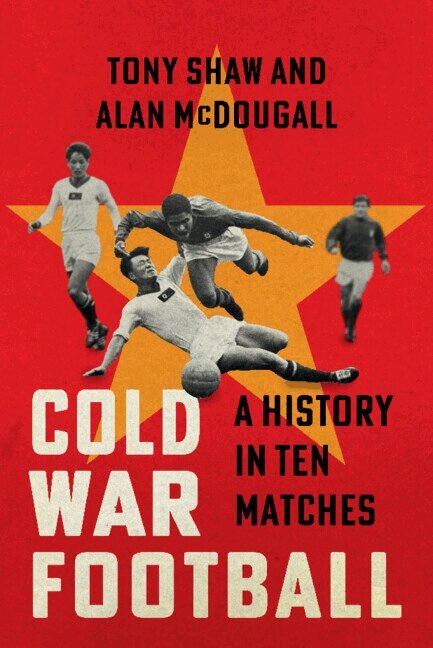
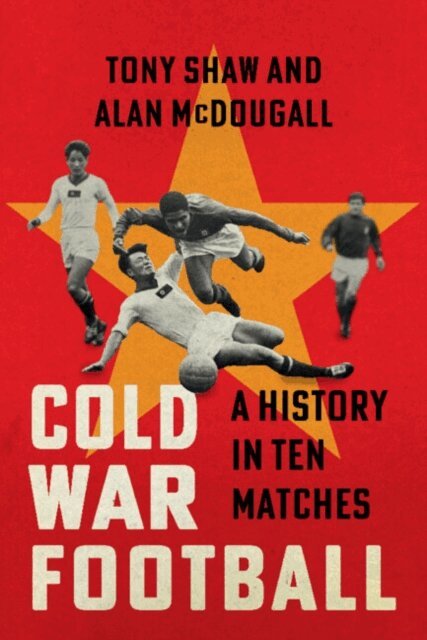
A gargantuan battle for hearts and minds, the Cold War is the supreme example of a 'people's war'. But what did the 'people's game' have to do with it? From Dynamo Moscow's stormy tour of Britain in 1945 to the inaugural Women's World Cup in 1991, Tony Shaw and Alan McDougall chart the clash between capitalism and communism in ten iconic football matches. They take us across Europe, Asia, South America and Africa to uncover football's part in bolstering democracies and dictatorships and in the struggle for influence in the developing world. They show how these matches offered a rare opportunity to see what life was like on 'the other side' of the Curtain, making friends of enemies but also fuelling revolution. Featuring legendary players, goals and on and off-field controversies, this is a fascinating history of how the Cold War shaped football and how football shaped the Cold War.
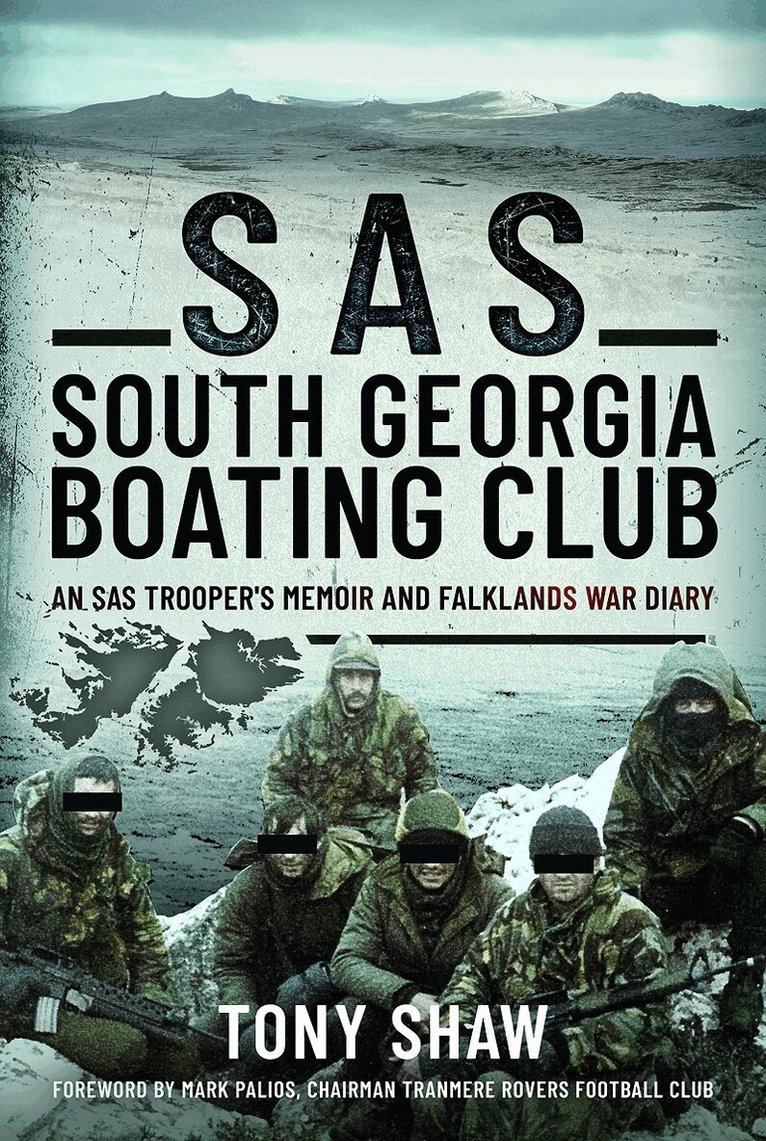
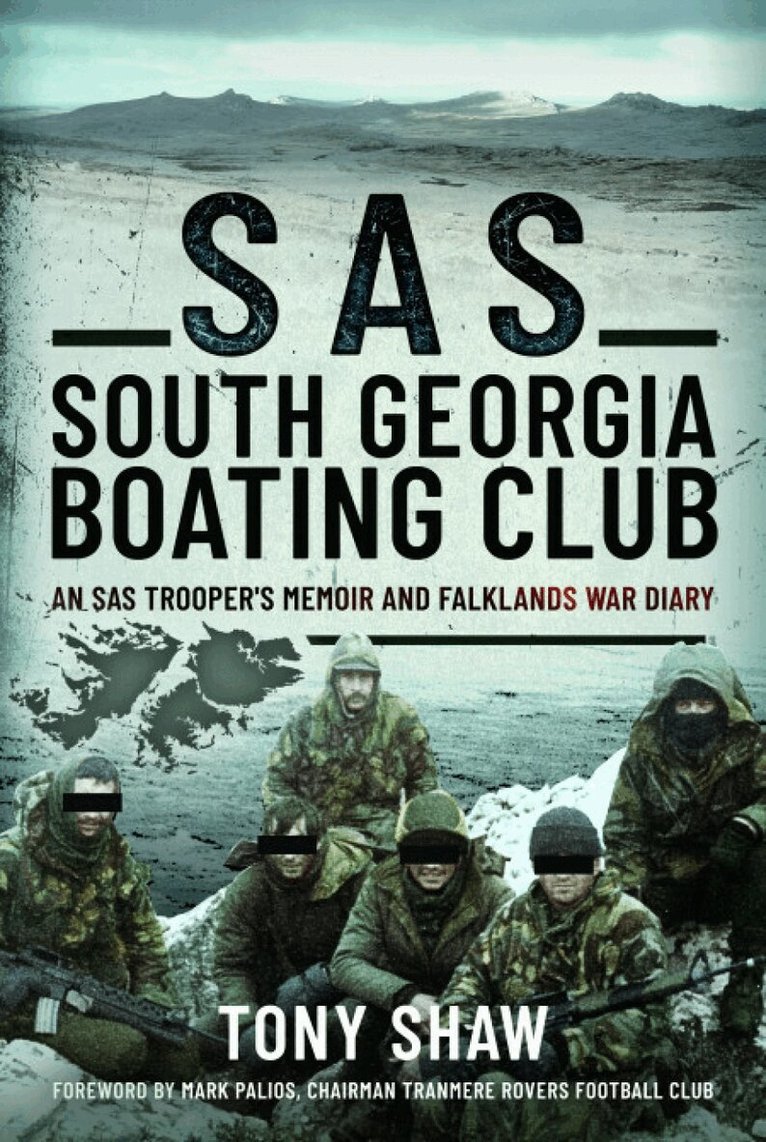
SAS South Georgia Boating Club
An SAS Trooper's Memoir and Falklands War Diary
Inbunden, Engelska, 2022
274 kr
Skickas
Many aspire to serve with the Special Air Service, arguably the world's most prestigious regiment, but few achieve their aim. In this inspiring memoir the author describes how he left school without any qualifications and embarked on a 30 year career much of it spent in Hereford, including four years in The Regiment'. Against the odds he rose through the ranks before being commissioned and eventually retiring as a Major.Initially attached to 22 SAS as a signaller, he volunteered for and passed Selection', the most gruelling and demanding of tests. He was posted to D Squadron Boat Troop with whom he saw active service in the Falklands War, Northern Ireland and the UK counter-terrorist team. Thanks to the diary he kept during the Falklands War, the reader is treated to a gripping first-hand account of the intense action that he and his colleagues experienced, including recces, diversionary attacks, raids and ambushes both on South Georgia and the Falklands Islands.Later he commanded the Royal Signals troop supporting D Squadron, 22 SAS before commissioning and later on pursuing a second career as a security consultant in various Middle Eastern hotspots.It is a privilege to read this commendably modest account of one man's unique career which provides a fascinating insight into elite special forces soldiering.
334 kr
Kommande
Many aspire to serve with the Special Air Service, arguably the world’s most prestigious regiment, but few achieve their aim. In this inspiring memoir the author describes how he left school without any qualifications and embarked on a 30 year career much of it spent in Hereford, including four years in ‘The Regiment’. Against the odds he rose through the ranks before being commissioned and eventually retiring as a Major.Initially attached to 22 SAS as a signaller, he volunteered for and passed ‘Selection’, the most gruelling and demanding of tests. He was posted to D Squadron Boat Troop with whom he saw active service in the Falklands War, Northern Ireland and the UK counter-terrorist team. Thanks to the diary he kept during the Falklands War, the reader is treated to a gripping first-hand account of the intense action that he and his colleagues experienced, including recces, diversionary attacks, raids and ambushes both on South Georgia and the Falklands Islands.Later he commanded the Royal Signals troop supporting D Squadron, 22 SAS before commissioning and later on pursuing a second career as a security consultant in various Middle Eastern hotspots.It is a privilege to read this commendably modest account of one man’s unique career which provides a fascinating insight into elite special forces soldiering.
1 964 kr
Skickas inom 10-15 vardagar
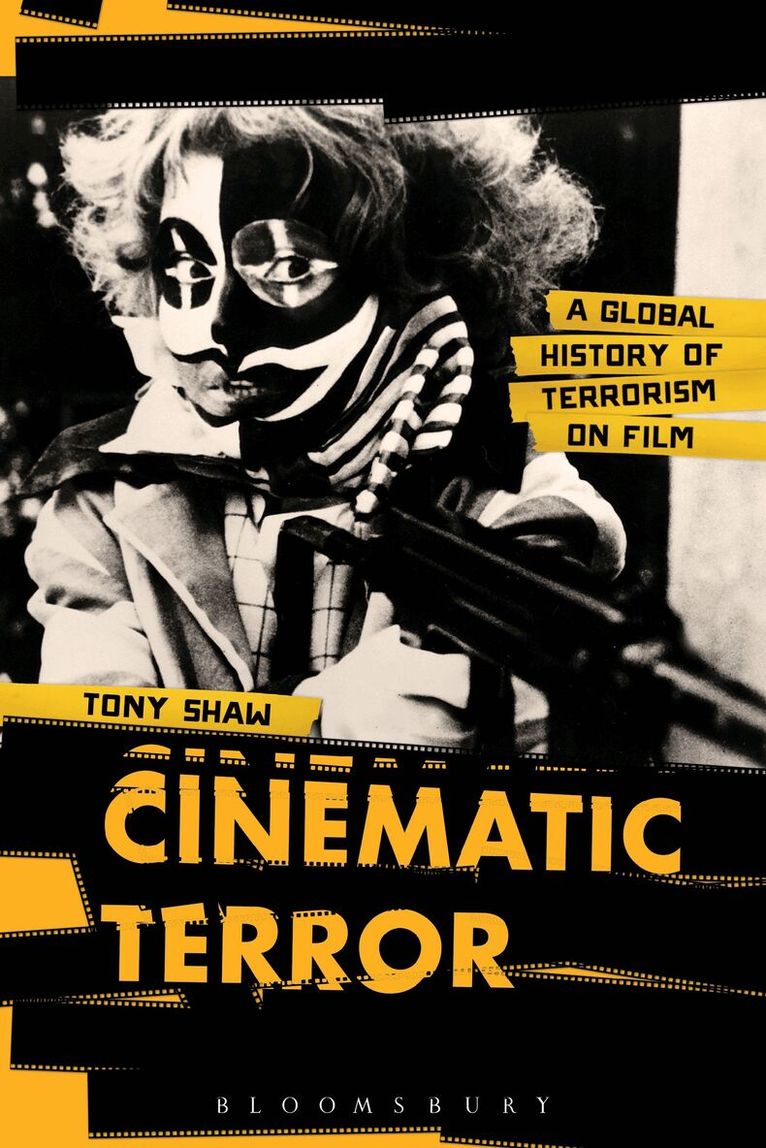
Cinematic Terror takes a uniquely long view of filmmakers' depiction of terrorism, examining how cinema has been a site of intense conflict between paramilitaries, state authorities and censors for well over a century. In the process, it takes us on a journey from the first Age of Terror that helped trigger World War One to the Global War on Terror that divides countries and families today. Tony Shaw looks beyond Hollywood to pinpoint important trends in the ways that film industries across Europe, North and South America, Asia, Africa and the Middle East have defined terrorism down the decades. Drawing on a vast array of studio archives, government documentation, personal interviews and box office records, Shaw examines the mechanics of cinematic terrorism and challenges assumptions about the links between political violence and propaganda.
408 kr
Skickas inom 10-15 vardagar
Cinematic Terror takes a uniquely long view of filmmakers' depiction of terrorism, examining how cinema has been a site of intense conflict between paramilitaries, state authorities and censors for well over a century. In the process, it takes us on a journey from the first Age of Terror that helped trigger World War One to the Global War on Terror that divides countries and families today. Tony Shaw looks beyond Hollywood to pinpoint important trends in the ways that film industries across Europe, North and South America, Asia, Africa and the Middle East have defined terrorism down the decades. Drawing on a vast array of studio archives, government documentation, personal interviews and box office records, Shaw examines the mechanics of cinematic terrorism and challenges assumptions about the links between political violence and propaganda.
659 kr
Skickas inom 3-6 vardagar
359 kr
Skickas inom 7-10 vardagar
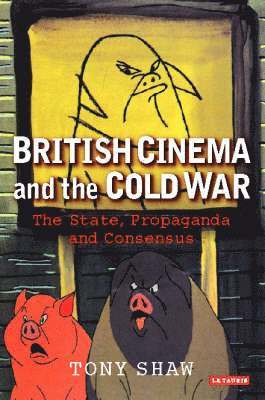
Cinema was one of the Cold War's most powerful instruments of propaganda. Movies blended with literary, theatrical, musical and broadcast representations of the conflict to produce a richly textured Cold War culture. Now in paperback, this timely book fills a significant gap in the international story by uncovering British cinema's contribution to Cold War propaganda and to the development of a popular consensus on Cold War issues. Tony Shaw focuses on an age in which the 'first Cold War' dictated international (and to some extent domestic) politics. This era also marked the last phase of cinema's dominance as a mass entertainment form in Britain. Shaw explores the relationship between film-makers, censors and Whitehall, within the context of the film industry's economic imperatives and the British government's anti-Soviet and anti-Communist propaganda strategies. Drawing upon rich documentation, he demonstrates the degree of control exerted by the state over film output.Shaw analyses key films of the period, including High Treason, which put a British McCarthyism on celluloid; the fascinatingly ambiguous science fiction thriller The Quatermass Experiment; the dystopic The Damned, made by one of Hollywood's blacklisted directors, Joseph Losey; and the CIA-funded, animated version of George Orwell's novel "Animal Farm". The result is a deeply probing study of how Cold War issues were refracted through British films, compared with their imported American and East European counterparts, and how the British public received this 'war propaganda'.
379 kr
Skickas inom 10-15 vardagar
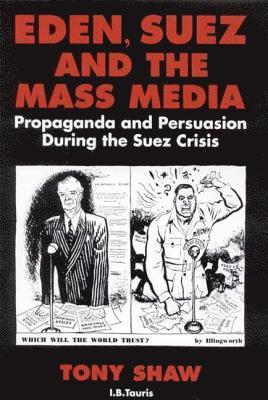
For Britain, the Suez crisis of 1956 was - along with the 1938 Munich crisis - the most divisive and controversial episode of the twentieth century. Centred on a narrow man-made canal linking the Mediterranean with the Red Sea, the Suez crisis caused fighting on London's streets, split families and friendships and destroyed a prime minister. It tested the government's propaganda skills to the full and pushed the mass media's independence to breaking point. For many, 'Suez' symbolises the end of the British Empire and its spectre has haunted British governments for two generations. "Eden, Suez and the Mass Media" examines the battle for hearts and minds waged through the mass media during the Suez crisis. It explains why the British government assigned such a critical role to propaganda and charts how Prime Minister Anthony Eden sought to use the press and broadcasting as instruments to destroy Egypt's leader, Gamal Abdel Nasser. The book dispels the myth that Fleet Street and the BBC were mere ciphers for public opinion and reveals how Eden's strategy disastrously backfired, trapping him into the notorious pact of collusion with the French and Israelis.This new edition of the definitive history of the media's role in the Suez crisis also draws interesting parallels with the contemporary Iraq War, which Shaw argues bears an uncanny resemblance to the earlier conflict.