
Torbjorn Knutsen – författare
Visar alla böcker från författaren Torbjorn Knutsen. Handla med fri frakt och snabb leverans.
2 produkter
2 produkter
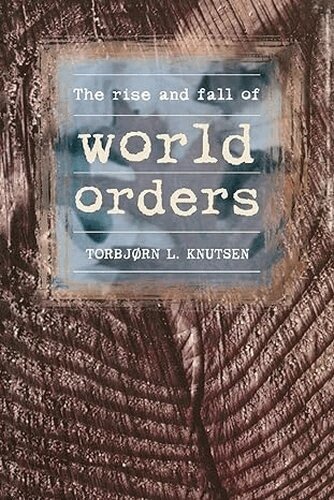
Häftad, Engelska, 1999
349 kr
Skickas inom 5-8 vardagar
Drawing in lessons from 400 years of Great-Power politics, this volume challenges both the "declinist" arguments and the overstretched hypothesis of Paul Kennedy to develop an alternative approach to the debate on the rise and fall of the Great Powers. The first half of the book compares the Spanish, Dutch and the First and Second British world orders. It identifies their common features in order to find the most salient causes for their rise as world powers, and the most probable reasons for their decline. The second half of the book addresses the American world order in the 20th century, from Pax Americana to the End of US Hegemony. The author sees the dissolution of the Soviet Union and the resurgence of the US as evidence of the role played by normative dimensions, commonly underestimated in International Relations analysis. Theoretically challenging, Knutsen's volume provides a fresh approach to debates in international relations aimed at both students and scholars.
Häftad, Engelska, 1997
317 kr
Skickas inom 7-10 vardagar
Torbjørn L. Knutsen introduces ideas on international relations expressed by thinkers from High Middle Ages to the present day and traces the development of four ever-present themes: war, peace, wealth and power. The book counters the view that international relations has no theoretical tradition and shows that scholars, soldiers and statesmen have been speculating about the subject for the last 700 years. Beginning with the roots of the state and the concept of sovereignty in the Middle Ages, the author draws upon the insights of outstanding political thinkers – from Machiavelli and Hobbes to Hegel, Rousseau, and Marx and contemporary thinkers such as Woodrow Wilson, Lenin, Morgenthau and Walt – who profoundly influenced the emergence of a discrete discipline of international relations in the twentieth century. Fully revised and updated, the final section embraces more recent approaches to the study of international relations, most notably postmodernism and ecologism.