Travis G. Parno - Böcker
Visar alla böcker från författaren Travis G. Parno. Handla med fri frakt och snabb leverans.
3 produkter
3 produkter
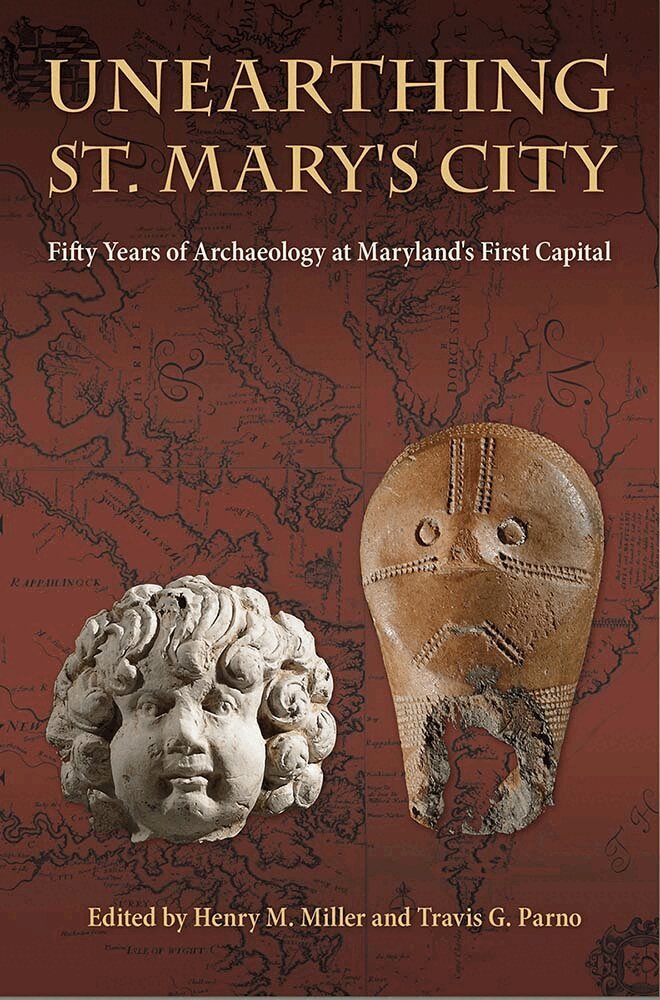
Unearthing St. Mary's City
Fifty Years of Archaeology at Maryland's First Capital
Inbunden, Engelska, 2021
996 kr
Skickas inom 10-15 vardagar
This volume summarizes the remarkably diverse archaeological discoveries made during the past half century of investigations at the site of St. Mary's City, the first capital of Maryland and one of the earliest European settlements in America. Founded in 1634, the city had disappeared by 1750, yet the archaeology documented in Unearthing St. Mary's City reveals its untold history.Contributors to this volume review new research approaches and methods developed recently at Historic St. Mary's City. They study the archaeology, architecture, and people of the lively seventeenth-century colonial hub. They also explore the landscapes of agriculture, enslavement, and remembrance that developed at the site in the centuries after the capital's relocation to Annapolis. In their chapters, contributors delve into subjects such as soil analysis, ceramics, diet, forts, burials, plantations, state houses, tenants, tobacco pipes, gaming, and the education of women.The lands along the Chesapeake Bay have witnessed a vast range of human experiences, and this book highlights the lives of peoples of European, Native American, and African origins who lived on this site over a span of four centuries. Their stories illuminate the multilayered nature of this important place and the broader Chesapeake region and serve as a testament to the potential and power of historical archaeology.
1 517 kr
Skickas inom 10-15 vardagar
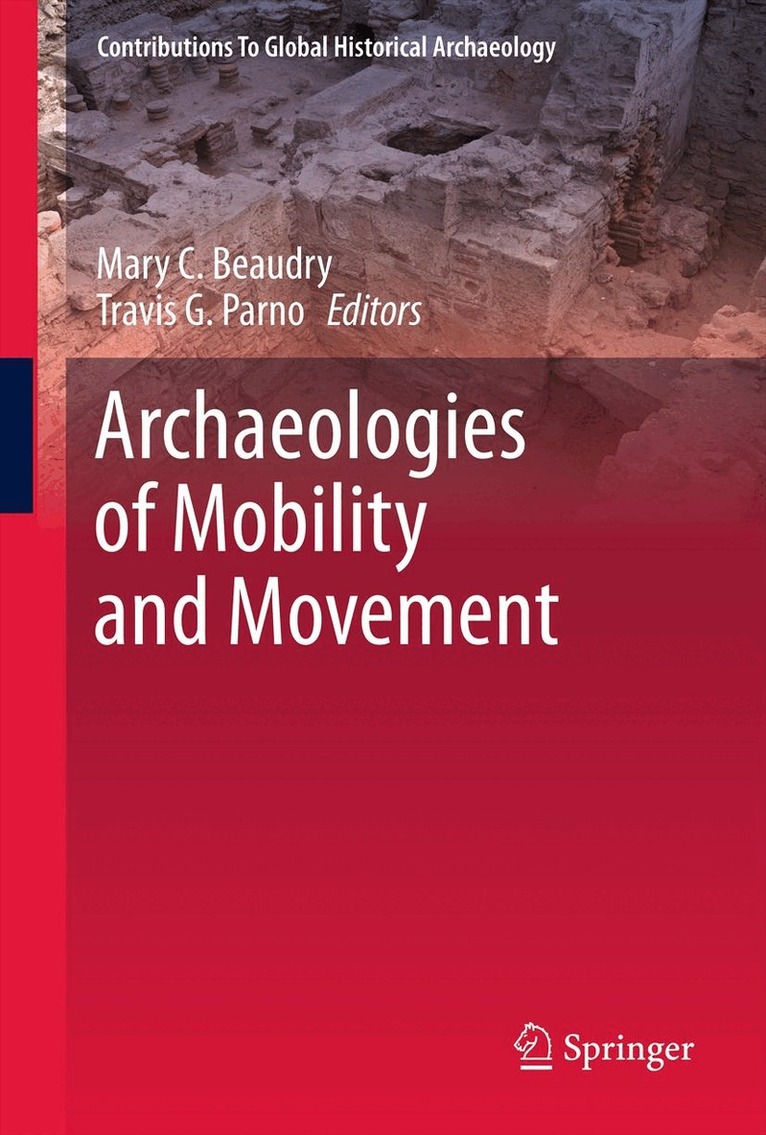
This collection of essays in Archaeologies of Mobility and Movement draws inspiration from current archaeological interest in the movement of individuals, things, and ideas in the recent past. Movement is fundamentally concerned with the relationship(s) among time, object, person, and space. The volume argues that understanding movement in the past requires a shift away from traditional, fieldwork-based archaeological ontologies towards fluid, trajectory-based studies. Archaeology, by its very nature, locates objects frozen in space (literally in their three-dimensional matrices) at sites that are often stripped of people. An archaeology of movement must break away from this stasis and cut new pathways that trace the boundary-crossing contextuality inherent in object/person mobility. Essays in this volume build on these new approaches, confronting issues of movement from a variety of perspectives. They are divided into four sections, based on how the act of moving is framed. The groups into which these chapters are placed are not meant to be unyielding or definitive. The first section, "Objects in Motion," includes case studies that follow the paths of material culture and its interactions with groups of people. The second section of this volume, "People in Motion," features chapters that explore the shifting material traces of human mobility. Chapters in the third section of this book, "Movement through Spaces," illustrate the effects that particular spaces have on the people and objects who pass through them. Finally, there is an afterward that cohesively addresses the issue of studying movement in the recent past. At the heart of Archaeologies of Mobility and Movement is a concern with the hybridity of people and things, affordances of objects and spaces, contemporary heritage issues, and the effects of movement onarchaeological subjects in the recent and contemporary past.
1 517 kr
Skickas inom 10-15 vardagar
This collection of essays in Archaeologies of Mobility and Movement draws inspiration from current archaeological interest in the movement of individuals, things, and ideas in the recent past. Movement is fundamentally concerned with the relationship(s) among time, object, person, and space. The volume argues that understanding movement in the past requires a shift away from traditional, fieldwork-based archaeological ontologies towards fluid, trajectory-based studies. Archaeology, by its very nature, locates objects frozen in space (literally in their three-dimensional matrices) at sites that are often stripped of people. An archaeology of movement must break away from this stasis and cut new pathways that trace the boundary-crossing contextuality inherent in object/person mobility. Essays in this volume build on these new approaches, confronting issues of movement from a variety of perspectives. They are divided into four sections, based on how the act of moving is framed. The groups into which these chapters are placed are not meant to be unyielding or definitive. The first section, "Objects in Motion," includes case studies that follow the paths of material culture and its interactions with groups of people. The second section of this volume, "People in Motion," features chapters that explore the shifting material traces of human mobility. Chapters in the third section of this book, "Movement through Spaces," illustrate the effects that particular spaces have on the people and objects who pass through them. Finally, there is an afterward that cohesively addresses the issue of studying movement in the recent past. At the heart of Archaeologies of Mobility and Movement is a concern with the hybridity of people and things, affordances of objects and spaces, contemporary heritage issues, and the effects of movement onarchaeological subjects in the recent and contemporary past.