Trevor Rowley - Böcker
Visar alla böcker från författaren Trevor Rowley. Handla med fri frakt och snabb leverans.
17 produkter
17 produkter
1 666 kr
Skickas inom 10-15 vardagar
Originally published in 1981, The Origins of Open Field Agriculture looks at the problems connected with open field agriculture – the origins of strip cultivation, the three-field system, the adaptation of ‘Celtic’ fields, and the development of ploughing techniques. The book looks at the challenges to traditional ideas on the origins of settlement and their associated economy, and casts new light on understandings of village development. The book suggests that conventional views of the nucleated village, in the midst of open field strips as a product of the Anglo-Saxon migration, is no longer tenable. The book brings together the work of distinguished archaeologists, historians, and historical geographers and opens up a new perspective on the early development of medieval agriculture.
496 kr
Skickas inom 10-15 vardagar
Originally published in 1981, The Origins of Open Field Agriculture looks at the problems connected with open field agriculture – the origins of strip cultivation, the three-field system, the adaptation of ‘Celtic’ fields, and the development of ploughing techniques. The book looks at the challenges to traditional ideas on the origins of settlement and their associated economy, and casts new light on understandings of village development. The book suggests that conventional views of the nucleated village, in the midst of open field strips as a product of the Anglo-Saxon migration, is no longer tenable. The book brings together the work of distinguished archaeologists, historians, and historical geographers and opens up a new perspective on the early development of medieval agriculture.
1 666 kr
Skickas inom 10-15 vardagar
Originally published in 1986, The High Middle Ages begins in the late twelfth century and ends, not with the arrival of the Tudor monarchs in 1485, but with the destruction of the wealth and power of the Church in the 1530s. The book looks at how the passing of the monasteries marked the transition from an economic and social system based on a balance – however shifting and uneasy – between the church and state, to a supreme reign of the church. The book discusses how the later middle ages were a period not of decay but of rapid change. It examines how social and economic convulsion emerged in a society marked by restless energy and creativity. The three centuries covered in the book mark a key period of extensive change to the landscape and environment of England between 1200 to 1550.
496 kr
Skickas inom 10-15 vardagar
Originally published in 1986, The High Middle Ages begins in the late twelfth century and ends, not with the arrival of the Tudor monarchs in 1485, but with the destruction of the wealth and power of the Church in the 1530s. The book looks at how the passing of the monasteries marked the transition from an economic and social system based on a balance – however shifting and uneasy – between the church and state, to a supreme reign of the church. The book discusses how the later middle ages were a period not of decay but of rapid change. It examines how social and economic convulsion emerged in a society marked by restless energy and creativity. The three centuries covered in the book mark a key period of extensive change to the landscape and environment of England between 1200 to 1550.
1 666 kr
Skickas inom 10-15 vardagar
Originally published in 1983, The Norman Heritage looks at the Norman Conquest as a turning point in English history. The book argues that not only was this the last time that England was successfully invaded, but it followed a complete change in the ruling dynasty, the introduction of military feudalism, the reform of the church and the rapid spread of monasticism. The book suggests that such social and political changes were accompanied by dramatic architectural and topographical developments. Frenzied building activity resulted in the construction of cathedrals, churches, monasteries and castles and stone was used on a scale unknown since the end of the Roman Empire. The Norman desire to exercise regional political control and to simulate trade resulted in a rash of newly planned towns across the country. In many more subtle ways, Anglo-Saxon landscape was altered and modified by Norman coercion and influence. Through their energy and administrative ability, the Normans transformed the face of town and country alike, and this book traces the impact of the Norman Conquest upon the British scene, through both a historical narrative, surviving structural remains of buildings and the patterns of settlements, communications and land use that developed during this period.
496 kr
Skickas inom 10-15 vardagar
Originally published in 1983, The Norman Heritage looks at the Norman Conquest as a turning point in English history. The book argues that not only was this the last time that England was successfully invaded, but it followed a complete change in the ruling dynasty, the introduction of military feudalism, the reform of the church and the rapid spread of monasticism. The book suggests that such social and political changes were accompanied by dramatic architectural and topographical developments. Frenzied building activity resulted in the construction of cathedrals, churches, monasteries and castles and stone was used on a scale unknown since the end of the Roman Empire. The Norman desire to exercise regional political control and to simulate trade resulted in a rash of newly planned towns across the country. In many more subtle ways, Anglo-Saxon landscape was altered and modified by Norman coercion and influence. Through their energy and administrative ability, the Normans transformed the face of town and country alike, and this book traces the impact of the Norman Conquest upon the British scene, through both a historical narrative, surviving structural remains of buildings and the patterns of settlements, communications and land use that developed during this period.
108 kr
Skickas inom 10-15 vardagar
Villages have been abandoned throughout history, and in every part of the British Isles. Some of them are former towns; others were only ever small hamlets. Many still await discovery. This book explains how villages have become deserted – often the result of disease and shrinking populations – and describes how the archaeologist recovers and interprets the evidence and shows how everyone can become involved in discovering and recording sites. Some good examples of sites worth visiting are included.
108 kr
Skickas inom 10-15 vardagar
1066 is perhaps the most important date in English history. The Norman invasion, headed by William the Conqueror, meant revolutionary change throughout English life. Soon there was a new ruling class, new language, new styles of dress, behaviour and architecture, as well as a new capital and new forms of landholding. The elite Normans themselves brought England much closer to Continental Europe, lived in their new castles and brought in novel styles of military training, founded monasteries and set up schools. This volume explores their lifestyle and the ways in which they interacted with the Anglo-Saxon English as they changed the face of the country forever.
130 kr
Skickas
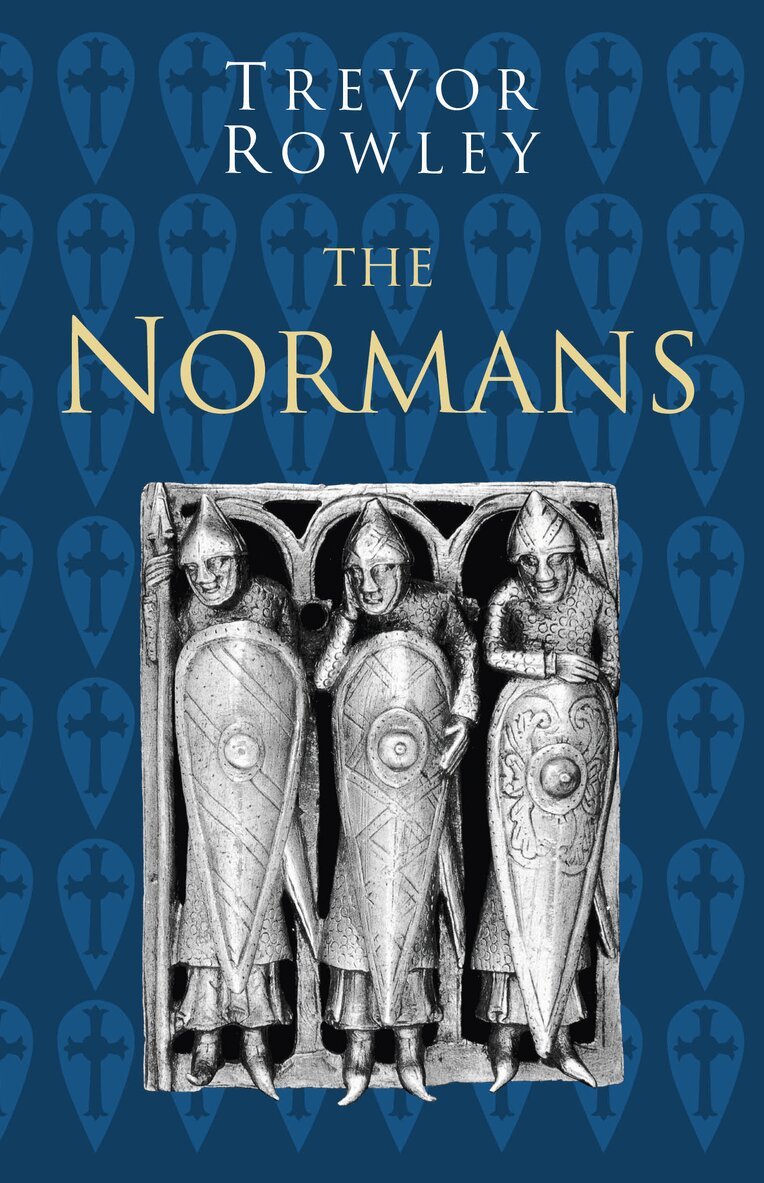
The Normans were a relatively short-lived cultural and political phenomenon. The emerged early in the tenth century and had disappeared off the map by the mid-thirteenth century. Yet in that time they had conquered England, southern Italy and Sicily, and had established outposts in North Africa and in Levant.Having traced the formation of the Duchy of Normandy, Trevor Rowley draws on the latest archaeological and historical evidence to examine how the Normans were able to conquer and dominate significant parts of Europe. In particular he looks at their achievements in England and Italy and their claim to a permanent legacy, as witnessed in feudalism, in castles, churches and settlement and in place-names. But equally from the political stage. The reality is that, even within this short time-span, the Normans changed as time and place dictated from Norse invaders to Frankish crusaders to Byzantine monarchs to Feudal overlords. In the end their contribution to medieval culture was largely as a catalyst for other, older traditions.
175 kr
Tillfälligt slut
Lowland Iron Age Communities in Europe
Papers presented to a conference of the Department for External Studies held at Oxford, October 1977
Häftad, Engelska, 1978
805 kr
Skickas inom 5-8 vardagar
Anglo-Saxon Settlement and Landscape
Papers presented to a Symposium, Oxford 1973
Häftad, Engelska, 1974
574 kr
Skickas inom 5-8 vardagar
765 kr
Skickas inom 5-8 vardagar
1 243 kr
Skickas inom 5-8 vardagar
266 kr
Skickas
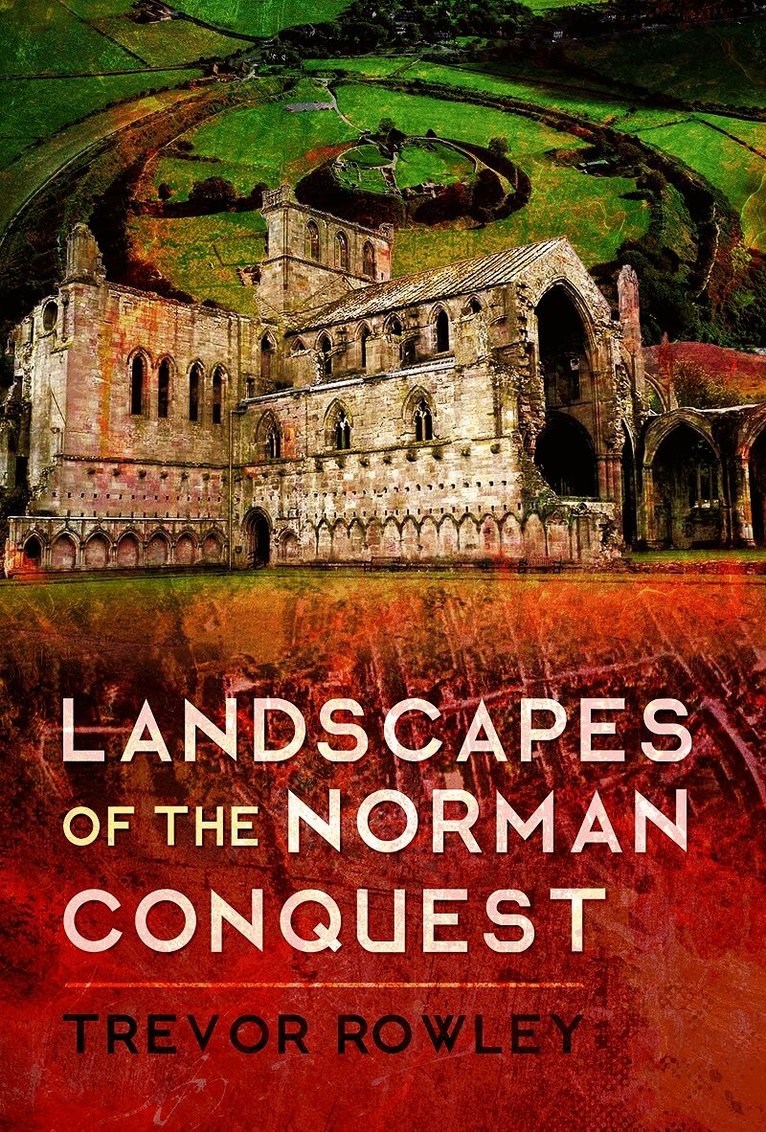
For a long time, the Norman Conquest has been viewed as a turning point in English history; an event which transformed English identity, sovereignty, kingship, and culture. The years between 1066 and 1086 saw the largest transfer of property ever seen in English History, comparable in scale, if not greater, than the revolutions in France in 1789 and Russia in 1917. This transfer and the means to achieve it had a profound effect upon the English and Welsh landscape, an impact that is clearly visible almost 1,000 years afterwards.Although there have been numerous books examining different aspects of the British landscape, this is the first to look specifically at the way in which the Normans shaped our towns and countryside. The castles, abbeys, churches and cathedrals built in the new Norman Romanesque style after 1066 represent the most obvious legacy of what was effectively a colonial take-over of England. Such phenomena furnished a broader landscape that was fashioned to intimidate and demonstrate the Norman dominance of towns and villages.The devastation that followed the Conquest, characterised by the Harrying of the North', had a long-term impact in the form of new planned settlements and agriculture. The imposition of Forest Laws, restricting hunting to the Norman king and the establishment of a military landscape in areas such as the Welsh Marches, had a similar impact on the countryside.
Archaeological Study of the Bayeux Tapestry
The Landscapes, Buildings and Places
Häftad, Engelska, 2022
204 kr
Skickas
An Archaeological Study of the Bayeux Tapestry provides a unique re-examination of this famous piece of work through the historical geography and archaeology of the tapestry. Trevor Rowley is the first author to have analysed the tapestry through the landscapes, buildings and structures shown, such as towns and castles, while comparing them to the landscapes, buildings, ruins and earthworks which can be seen today. By comparing illustrated extracts from the tapestry to historical and contemporary illustrations, maps and reconstructions Rowley is able to provide the reader with a unique visual setting against which they are able to place the events on the tapestry.This approach allows Rowley to challenge a number of generally accepted assumptions regarding the location of several scenes in the tapestry, most controversially suggesting that William may never have gone to Hastings at all. Finally, Rowley tackles the missing end of the tapestry, suggesting the places and events which would have been depicted on this portion of Williams journey to Westminster.
432 kr
Tillfälligt slut