Triantafyllos Gkouvas – författare
Visar alla böcker från författaren Triantafyllos Gkouvas. Handla med fri frakt och snabb leverans.
7 produkter
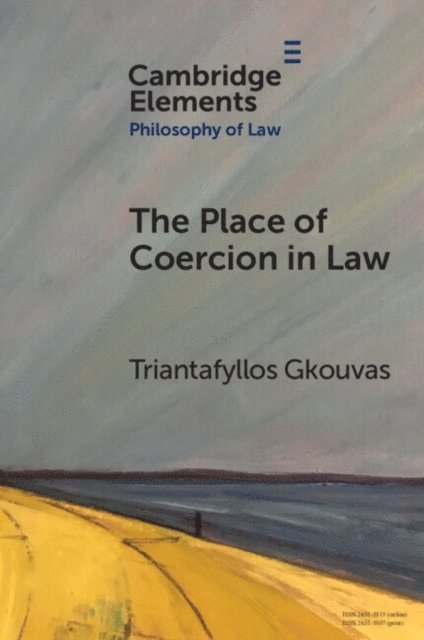
Place of Coercion in Law
E-bok, 2023
287 kr
Lägg i varukorg
The question of whether coercion is a necessary or contingent feature of governance by law is a historically complex aspect of a venerable ''modalist'' trend in jurisprudential thinking. The nature of the relation between law and coercion has been elaborated by means of a variety of modally …
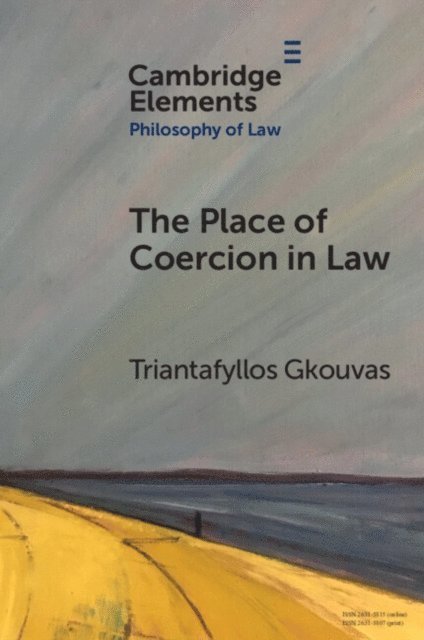
Place of Coercion in Law
E-bok, 2023
284 kr
Lägg i varukorg
The question of whether coercion is a necessary or contingent feature of governance by law is a historically complex aspect of a venerable ''modalist'' trend in jurisprudential thinking. The nature of the relation between law and coercion has been elaborated by means of a variety of modally …
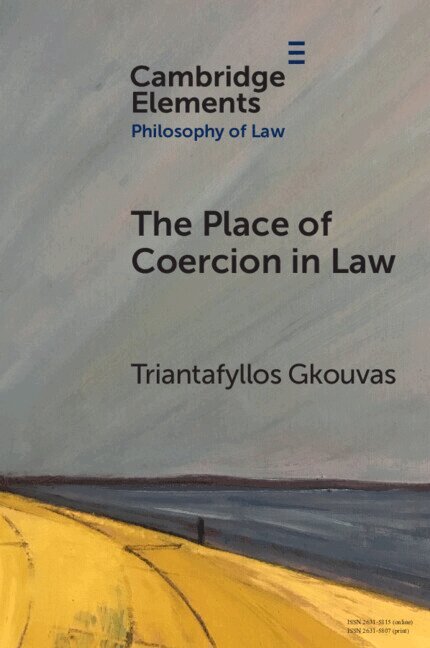
The Place of Coercion in Law
Häftad, 2023
406 kr
Lägg i varukorg
The question of whether coercion is a necessary or contingent feature of governance by law is a historically complex aspect of a venerable 'modalist' trend in jurisprudential thinking. The nature of the relation between law and coercion has been elaborated by means of a variety of modally qualified …
Law's Humility
Enlarging the Scope of Jurisprudential Disagreement
Av Triantafyllos Gkouvas, George Pavlakos
Inbunden, 2021
1050 kr
Lägg i varukorg
This book invites newcomers to analytical legal philosophy to reconsider the terms in which they are accustomed to describing and defending their jurisprudential allegiances. It argues that familiar taxonomic labels such as legal positivism, natural law theory and legal interpretivism are poor …
Law's Humility
Enlarging the Scope of Jurisprudential Disagreement
E-bok, 2021
473 kr
Lägg i varukorg
This book invites newcomers to analytical legal philosophy to reconsider the terms in which they are accustomed to describing and defending their jurisprudential allegiances. It argues that familiar taxonomic labels such as legal positivism, natural law theory and legal interpretivism are poor …
Law's Humility
Enlarging the Scope of Jurisprudential Disagreement
E-bok, 2021
458 kr
Lägg i varukorg
This book invites newcomers to analytical legal philosophy to reconsider the terms in which they are accustomed to describing and defending their jurisprudential allegiances. It argues that familiar taxonomic labels such as legal positivism, natural law theory and legal interpretivism are poor …
Law's Humility
Enlarging the Scope of Jurisprudential Disagreement
Av Triantafyllos Gkouvas, George Pavlakos
Häftad, 2022
437 kr
Lägg i varukorg
This book invites newcomers to analytical legal philosophy to reconsider the terms in which they are accustomed to describing and defending their jurisprudential allegiances. It argues that familiar taxonomic labels such as legal positivism, natural law theory and legal interpretivism are poor …