Ty Kieser – författare
Visar alla böcker från författaren Ty Kieser. Handla med fri frakt och snabb leverans.
8 produkter
8 produkter
E-bok
Engelska, 2024439 kr
Läs direkt efter köp
Describing Jesus as an “agent” of divine actions, or as one who possesses human “agency,” is commonplace in christological discussions. Yet these discussions often wade in a shallow understanding of the terms'' meanings and the theological implications of such claims. For example, while many theologians who are committed to the definition of Chalcedon consider Jesus one agent, we might ask if this implies that the triune God comprises “three agents?” Or, if Christ possesses “singular agency,” how are his divinity and humanity operative in his actions?In response, this work draws from the theology of John Owen and advancements in philosophy of action in order to offer an account of divine and human agency in christological action from within the Reformed tradition. It provides clarity to the christological and trinitarian uses of the language of “agent/agency” in Christ and attends to the theological (esp. trinitarian) entailments therein. While at first glance there may appear to be internal inconsistencies with accounts that subscribe to classical trinitarianism and Reformed Christological agency, this book argues that Owen helps us recover an understanding of christological agency that is internally coherent and theologically prudent. As such the Reformed tradition can articulate Christological “agency” in a way that is coherent with the testimony of Scripture, the ecumenical councils, and classical trinitarianism while contributing to contemporary theological discussions. The case not only provides terminological clarity and theological coherence, but also inclines Christians to appreciate the trinitarian love of God in Christ''s action and the human sympathy of Christ for his people.
Häftad, Engelska, 2025
410 kr
Skickas inom 10-15 vardagar
Describing Jesus as an “agent” of divine actions, or as one who possesses human “agency,” is commonplace in christological discussions. Yet these discussions often wade in a shallow understanding of the terms’ meanings and the theological implications of such claims. For example, while many theologians who are committed to the definition of Chalcedon consider Jesus one agent, we might ask if this implies that the triune God comprises “three agents?” Or, if Christ possesses “singular agency,” how are his divinity and humanity operative in his actions?In response, this work draws from the theology of John Owen and advancements in philosophy of action in order to offer an account of divine and human agency in christological action from within the Reformed tradition. It provides clarity to the christological and trinitarian uses of the language of “agent/agency” in Christ and attends to the theological (esp. trinitarian) entailments therein. While at first glance there may appear to be internal inconsistencies with accounts that subscribe to classical trinitarianism and Reformed Christological agency, this book argues that Owen helps us recover an understanding of christological agency that is internally coherent and theologically prudent. As such the Reformed tradition can articulate Christological “agency” in a way that is coherent with the testimony of Scripture, the ecumenical councils, and classical trinitarianism while contributing to contemporary theological discussions. The case not only provides terminological clarity and theological coherence, but also inclines Christians to appreciate the trinitarian love of God in Christ’s action and the human sympathy of Christ for his people.
Inbunden, Engelska, 2024
1 259 kr
Skickas inom 10-15 vardagar
Describing Jesus as an “agent” of divine actions, or as one who possesses human “agency,” is commonplace in christological discussions. Yet these discussions often wade in a shallow understanding of the terms’ meanings and the theological implications of such claims. For example, while many theologians who are committed to the definition of Chalcedon consider Jesus one agent, we might ask if this implies that the triune God comprises “three agents?” Or, if Christ possesses “singular agency,” how are his divinity and humanity operative in his actions?In response, this work draws from the theology of John Owen and advancements in philosophy of action in order to offer an account of divine and human agency in christological action from within the Reformed tradition. It provides clarity to the christological and trinitarian uses of the language of “agent/agency” in Christ and attends to the theological (esp. trinitarian) entailments therein. While at first glance there may appear to be internal inconsistencies with accounts that subscribe to classical trinitarianism and Reformed Christological agency, this book argues that Owen helps us recover an understanding of christological agency that is internally coherent and theologically prudent. As such the Reformed tradition can articulate Christological “agency” in a way that is coherent with the testimony of Scripture, the ecumenical councils, and classical trinitarianism while contributing to contemporary theological discussions. The case not only provides terminological clarity and theological coherence, but also inclines Christians to appreciate the trinitarian love of God in Christ’s action and the human sympathy of Christ for his people.
E-bok
PDF, Engelska, 2024439 kr
Läs direkt efter köp
Describing Jesus as an “agent” of divine actions, or as one who possesses human “agency,” is commonplace in christological discussions. Yet these discussions often wade in a shallow understanding of the terms'' meanings and the theological implications of such claims. For example, while many theologians who are committed to the definition of Chalcedon consider Jesus one agent, we might ask if this implies that the triune God comprises “three agents?” Or, if Christ possesses “singular agency,” how are his divinity and humanity operative in his actions?In response, this work draws from the theology of John Owen and advancements in philosophy of action in order to offer an account of divine and human agency in christological action from within the Reformed tradition. It provides clarity to the christological and trinitarian uses of the language of “agent/agency” in Christ and attends to the theological (esp. trinitarian) entailments therein. While at first glance there may appear to be internal inconsistencies with accounts that subscribe to classical trinitarianism and Reformed Christological agency, this book argues that Owen helps us recover an understanding of christological agency that is internally coherent and theologically prudent. As such the Reformed tradition can articulate Christological “agency” in a way that is coherent with the testimony of Scripture, the ecumenical councils, and classical trinitarianism while contributing to contemporary theological discussions. The case not only provides terminological clarity and theological coherence, but also inclines Christians to appreciate the trinitarian love of God in Christ''s action and the human sympathy of Christ for his people.
Häftad, Engelska, 2026
254 kr
Skickas inom 5-8 vardagar
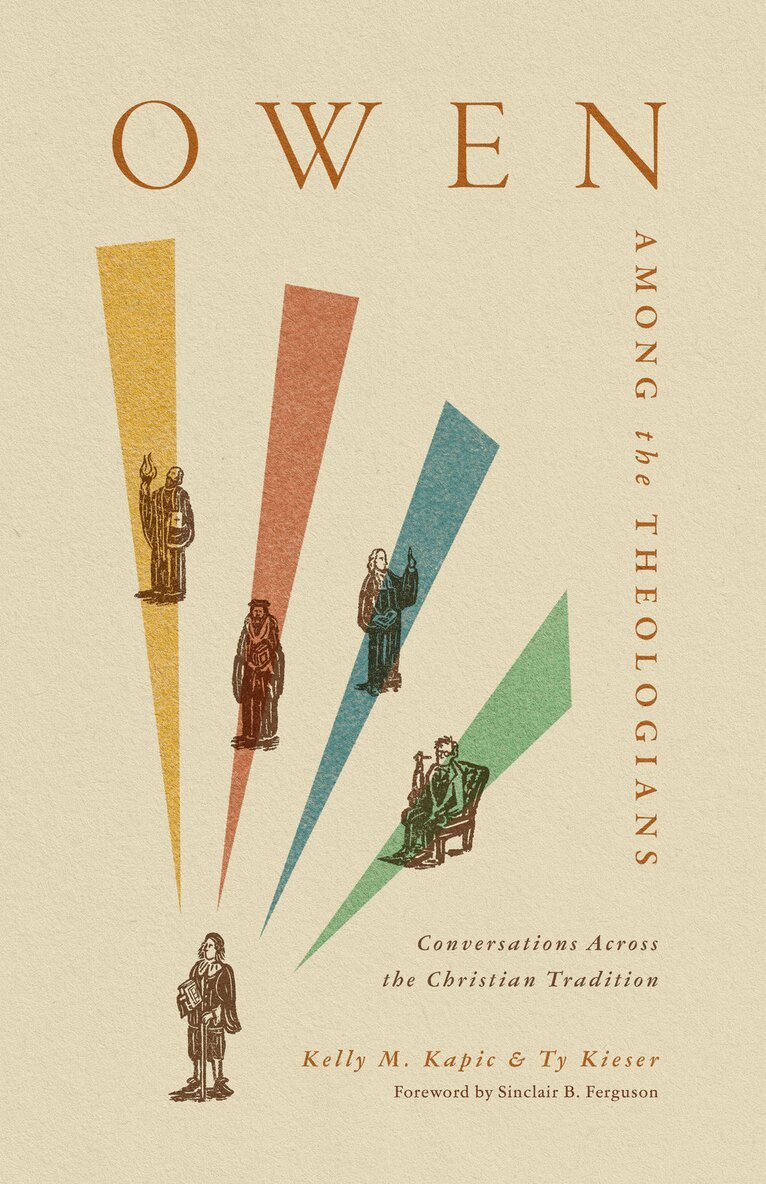
Unpacking John Owen Through the Voices of Church HistoryJohn Owen (1616–1683), a major figure in church history, has left an indelible impression on Christian theology. His depth of insight, devotional richness, and theological breadth have shaped the hearts and minds of laypeople, pastors, and scholars for generations. But what truly distinguishes Owen from his peers, and why does he continue to resonate through the centuries?Owen Among the Theologians invites readers to examine the writings of Owen alongside those of other Christian thinkers from various eras and traditions. By putting Owen in fresh conversation with significant theologians who lived before and after him, this unique study offers a thorough theological study of specific themes such as the glory of Christ, communion with God, justification by faith, the perseverance of the saints, and much more. This compelling work not only helps readers gain a deeper understanding of Owen’s theology but, ultimately, a greater love of the triune God. Deep Theological Insights: Articulates Owen’s thoughts on topics such as the glory of Christ, communion with God, justification by faith, and perseverance of the saints, not only describing Owen’s view but also retrieving his thought for the good of the church todayComparative Framework: Uses techniques including comparison, complement, consensus, consequence, and contrast to help readers gain a nuanced viewpointDiverse Perspectives: Includes thoughts from many well-known and influential thinkers from a wide range of eras and traditions, but also includes some lesser-known voices and unexpected topicsHistorical: Explores Owen’s theological and pastoral contributions and assesses their impact on the life and ministry of the church
Häftad, Engelska, 2020
263 kr
Skickas inom 5-8 vardagar
Inbunden, Engelska, 2020
443 kr
Skickas inom 5-8 vardagar
E-bok
Engelska, 2020421 kr
Läs direkt efter köp
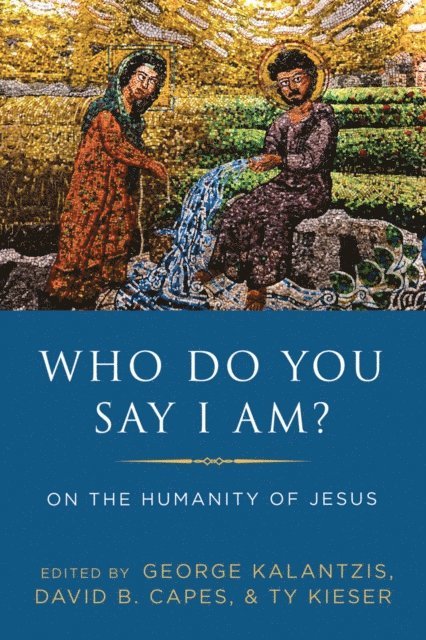
Human existence is a bodily existence. A first principle of historic Christianity has been that Jesus assumed our humanity and everything essential to it in order that God may redeem all of our existence. Christ is the revelation of God and the revelation of true humanity. As we seek to understand our embodied experiences of the world and one another we do so in light of the embodied life of Jesus Christ. Jesus's humanity shows us what it means to live an embodied human life rightly and how we, as embodied human beings, can relate to the world around us. In this book we invite readers to explore with us why the humanity of Jesus is central to the Christian understanding of community, society, salvation, and life with God. Over the span of these ten chapters this book draws from biblical, historic, and cultural discussions as it enters into the breadth of the significance of the humanity of Jesus and explores how the reality of the Incarnation challenges and redeems our broken social structures, racial and ethnic divisions, economic systems, and sexuality.