Ufuk Topkara – författare
Visar alla böcker från författaren Ufuk Topkara. Handla med fri frakt och snabb leverans.
8 produkter
Miskawayh's Tahdib al-ahlaq
Happiness, Justice and Friendship
Av Ufuk Topkara
E-bok, 2022
814 kr
Lägg i varukorg
This book engages with the work of Miskawayh, a formative Islamic Philosopher in the 11th century, who is acknowledged as the founder of Islamic Moral Philosophy. Miskawayh’s The Refinement of Character ( Tahá¸Ä«b al-AḫlÄq ) draws from both ancient Greek philosophical tradition and Islamic …
Miskawayh's Tahdib al-ahlaq
Happiness, Justice and Friendship
Av Ufuk Topkara
E-bok, 2022
814 kr
Lägg i varukorg
This book engages with the work of Miskawayh, a formative Islamic Philosopher in the 11th century, who is acknowledged as the founder of Islamic Moral Philosophy. Miskawayh’s The Refinement of Character ( Tahá¸Ä«b al-AḫlÄq ) draws from both ancient Greek philosophical tradition and Islamic …
Miskawayh's Tahḏīb al-aḫlāq
Happiness, Justice and Friendship
Av Ufuk Topkara
Häftad, 2024
689 kr
Lägg i varukorg
This book engages with the work of Miskawayh, a formative Islamic Philosopher in the 11th century, who is acknowledged as the founder of Islamic Moral Philosophy. Miskawayh’s The Refinement of Character (Tahḏīb al-Aḫlāq) draws from both ancient Greek philosophical tradition and Islamic thought, …
Miskawayh's Tahḏīb al-aḫlāq
Happiness, Justice and Friendship
Av Ufuk Topkara
Inbunden, 2022
2504 kr
Lägg i varukorg
This book engages with the work of Miskawayh, a formative Islamic Philosopher in the 11th century, who is acknowledged as the founder of Islamic Moral Philosophy. Miskawayh’s The Refinement of Character (Tahḏīb al-Aḫlāq) draws from both ancient Greek philosophical tradition and Islamic thought, …
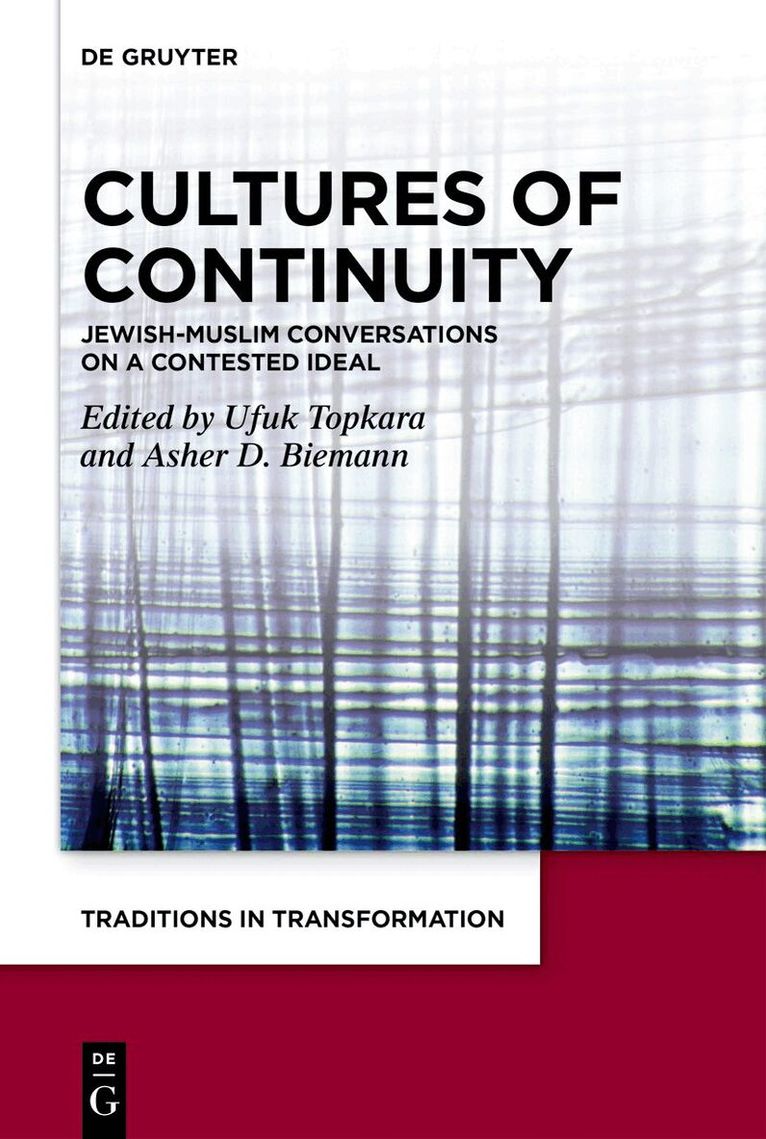
Cultures of Continuity
Jewish-Muslim Conversations on a Contested Ideal
Av Ufuk Topkara, Asher D. Biemann
Inbunden, 2026
1522 kr
Lägg i varukorg
“The thread of historical continuity,” Hannah Arendt once remarked, “was the first substitute for tradition." To the historian, the assumed continuity of historical events became an Ersatzreligion of sorts, a substitute religion that rejected not the ideas of tradition and transmission as such but, …
Zur Resonanz Von Gottesbild Und Lebensform
Christliche Und Islamische Perspektiven in Auseinandersetzung Mit Hartmut Rosa
Av Ufuk Topkara, Bernhard Nitsche
Inbunden, 2025
1393 kr
Lägg i varukorg
Hartmut Rosa’s theory of resonance has not yet received widespread attention in theological circles. In order to sound out the potential of the theory of resonance for both Christian and Islamic theology, this volume examines it interdisciplinarily in relation to God's image and ways of life, …
Umrisse einer zeitgemäßen philosophischen Theologie im Islam
Die Verfeinerung des Charakters
Av Ufuk Topkara
Häftad, 2018
668 kr
Lägg i varukorg
Ufuk Topkara bringt das erste große moraltheologische bzw. moralphilosophische System der islamischen Welt mit dem existenzphilosophischen Denken von Albert Camus zusammen. Gemeinsamer Bezugspunkt ist dabei die griechische, insbesondere aristotelische Philosophie, die in beiden Werken rezipiert …
Umrisse einer zeitgemäßen philosophischen Theologie im Islam
Die Verfeinerung des Charakters
Av Ufuk Topkara
E-bok, 2018
702 kr
Lägg i varukorg
Ufuk Topkara bringt das erste große moraltheologische bzw. moralphilosophische System der islamischen Welt mit dem existenzphilosophischen Denken von Albert Camus zusammen. Gemeinsamer Bezugspunkt ist dabei die griechische, insbesondere aristotelische Philosophie, die in beiden Werken rezipiert …