In Figures of Deportation, Ulla D. Berg reframes public and political discourses on deportation beyond the criminalized figure of the “illegal alien” to instead examine the efforts of South American migrants to make life through mobility under the global deportation regime. Berg bases her analysis on a decade of multi-sited ethnographic fieldwork with deported migrants and their families in Indigenous communities in southern Ecuador, urban districts in Peru, and in US detention centers, immigration courts, and urban communities. Across these sites, Berg recounts the profoundly disruptive effects of sudden separation of individuals from their families and communities but also reveals the mundanity deportation represents for Peruvian and Ecuadorian migrants, often leading to new mobilities. Berg makes the case that deportation studies should not solely center on state-driven and humanitarian logics but consider the social and material world-making activities of migrants and their communities. In doing so, she foregrounds Andean migrants as active and adaptive agents living with, but not defined by, deportation and its consequences.
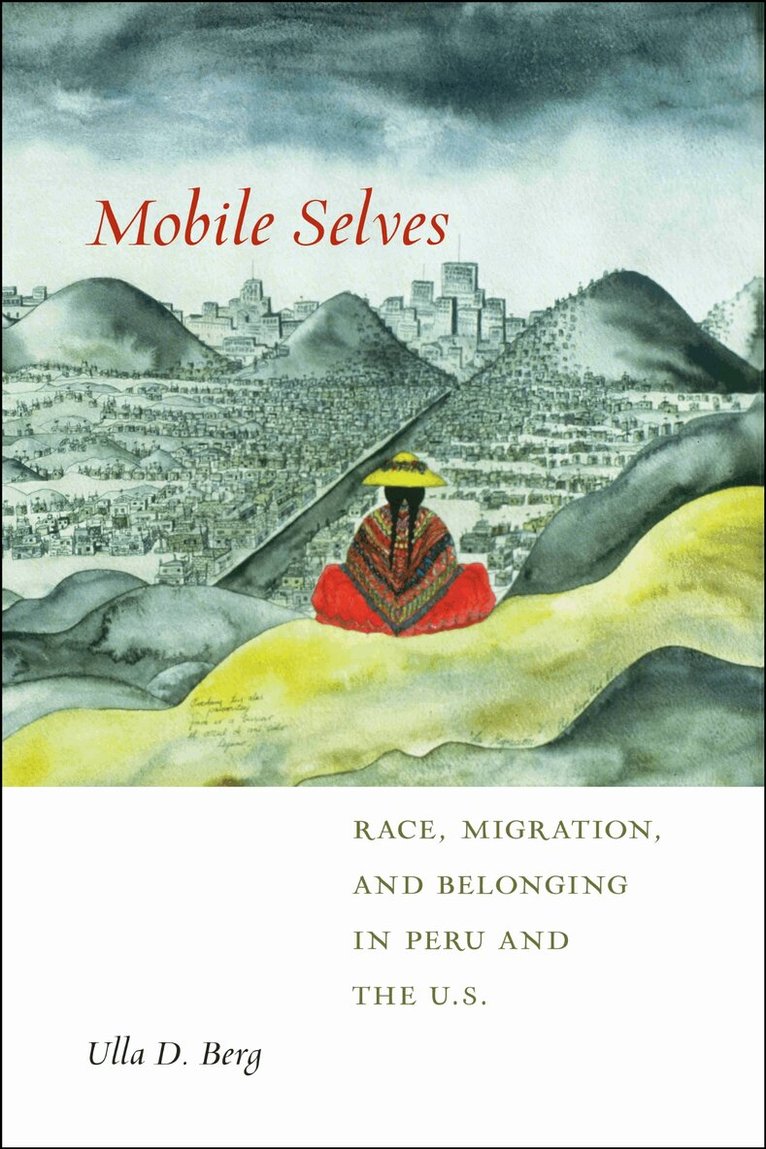
An explanation of how Peruvian migrants maintain meaningful social relations across borders.In this engaging volume, Ulla D. Berg examines the conditions under which Peruvians of rural and working-class origins leave the central highlands to migrate to the United States. Migrants often create new portrayals of themselves to overcome the class and racial biases that they had faced in their home country, as well as to control the images they share of themselves with others back home. Migrant videos, for example, which document migrants' lives for family back home, are often sanitized to avoid causing worry. By exploring the ways in which migration is mediated between the Peruvian Andes and the United States, this book makes a major contribution to understanding technology's role in fostering new forms of migrant sociality and subjectivity. It focuses on the forms of sociality and belonging that these mediations enable, adding to important anthropological debates about affect, subjectivity, and sociality in today's mobile world. It also makes significant contributions to studies of inequality in Latin America, showcasing the intersection of transnational mobility with structures and processes of exclusion in both national and global contexts. A key resource for understanding the experiences of racialized and indigenous migrant populations, Mobile Selves demonstrates the critical role that ethnography can play in transdisciplinary migration studies and exemplifies what comparative migration studies stand to gain from anthropological analysis and ethnographic methodologies.
Since the 1890s, New Jersey has attracted hundreds of thousands of Caribbean and Latin American migrants. The state’s rich economic history, high-income suburbs, and strong public sector have all contributed to attracting, retaining, and setting the stage for Latin American and Caribbean immigrants and secondary-step migrants from New York City. Since the 1980s, however, Latinos have developed a more complex presence in the state’s political landscape and institutions. The emergence of Latino-majority towns and cities and coalition politics facilitated the election of Latino mayors, council persons, and many social and community leaders, as well as the election of statewide officers. This collection brings together innovative and empirically grounded scholarship from different disciplines and interdisciplinary fields of study and addresses topics including the demographic history of Latinos in the state, Latino migration from gateway cities to suburban towns, Latino urban enclaves, Latino economic and social mobility, Latino students and education, the New Jersey Dream Act and in-state tuition act organizing, Latinos and criminal justice reform, Latino electoral politics and leadership, and undocumented communities. Contributors: Yamil Avivi; Jennifer Ayala; Ulla D. Berg; Giovani Burgos; Elsa Candelario; Laura Curran; Lilia FernÁndez; Ismael GarcÍa ColÓn; Olga JimÉnez de Wagenheim; Benjamin Lapidus; Aldo A. Lauria Santiago; Johana LondoÑo; Kathleen Lopez; Giancarlo Muschi; Melanie Z. Plasencia; Ana Y. Ramos-Zayas; Elena Sabogal; Raymond Sanchez Mayers; William SuÁrez GÓmez; Alex F. Trillo; Daniela Valdez; Anil Venkatesh; Lyna L. Wiggins
The United States detains and deports several hundred thousand migrants every year. Many spend significant amounts of time in immigration detention as they await adjudication of their immigration cases. The Elizabeth Detention Center in New Jersey is located in a converted warehouse, managed by a private, for-profit prison company. Over three decades, migrants and asylum seekers have been brought to EDC directly from Newark Airport or have been transferred to the site from elsewhere in the United States, including from the US-Mexico border region.Through a longitudinal, site-specific study unique in its kind, this volume unites the voices and perspectives of formerly detained migrants, scholars, journalists, lawyers, and social and faith movement leaders, who share their experiences of Elizabeth Detention Center and reconstruct its social history and its location in New Jersey's political economy and in the changing legal landscapes of immigration detention in the United States.