Ulla Mannering – författare
Visar alla böcker från författaren Ulla Mannering. Handla med fri frakt och snabb leverans.
7 produkter
7 produkter
E-bok
Engelska, 2021123 kr
Läs direkt efter köp
The NESAT symposium has grown from the first meeting in 1981 which was attended by 23 scholars, to over 100 at the tenth meeting that took place in Copenhagen in 2008, with virtually all areas of Europe represented. The 50 papers from the conference presented here show the vibrance of the study of archaeological textiles today. Examples studied come from the Bronze Age, Neolithic, the Iron Age, Roman, Viking, the Middle Ages and post-Medieval, and from a wide range of countries including Norway, Czech Republic, Poland, Greece, Germany, Lithuania, Estonia and the Netherlands. Modern techniques of analysis and examination are also discussed.
E-bok
Engelska, 2021123 kr
Läs direkt efter köp
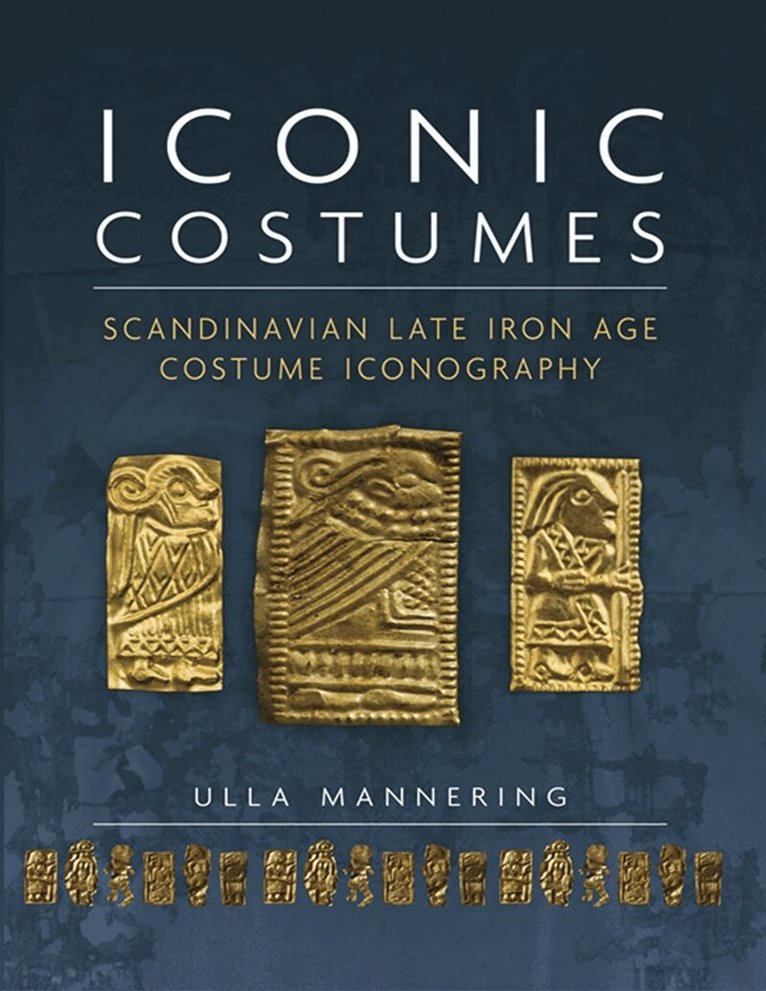
This richly illustrated book presents a selection of the rich and varied iconographic material from the Scandinavian Late Iron Age (AD 400-1050) depicting clothed human figures, from an archaeological textile and clothing perspective. The source material consists of five object categories: gold foils, gold bracteates, helmet plaques, jewelry, and textile tapestries and comprises over 1000 different images of male and female costumes which are then systematically examined in conjunction with our present knowledge of archaeological textiles. In particular, the study explores the question of whether the selected images complement the archaeological clothing sources, through a new analytical tool which enables us to compare and contrast the object categories in regard to material, function, chronology, context and interpretation. The tool is used to record and analyze the numerous details of the iconographic costumes, and to facilitate a clear and easy description. This deliberate use of explicit costume shapes enhances our interpretation and understanding of the Late Iron Age clothing tradition. Thus, the majority of the costumes depicted are identified in the Scandinavian archaeological textile record, demonstrating that the depictions are a reliable source of research for both iconographical costume and archaeological clothing. The book contributes with new information on social, regional and chronological differences in clothing traditions from ca. AD 400 to the Viking Age.
Inbunden, Engelska, 2026
2 075 kr
Skickas inom 5-8 vardagar
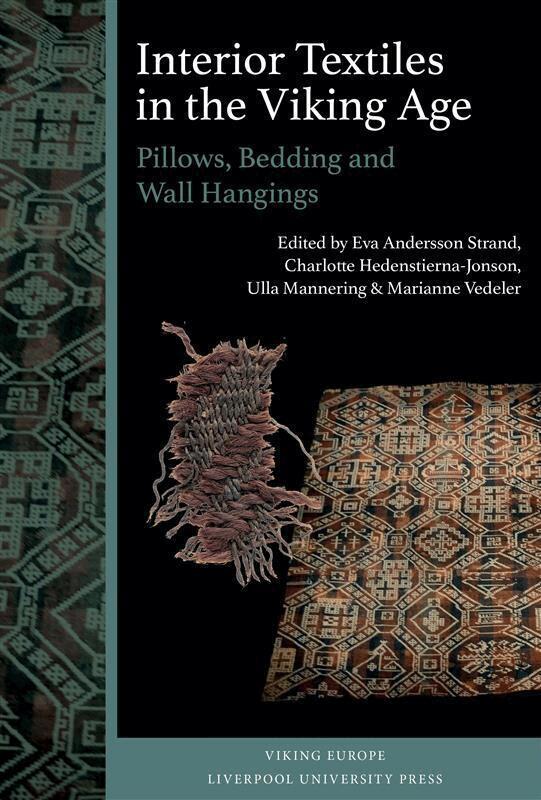
When Viking Age house interiors are reconstructed, the focus is usually on the fireplace and the placement of tables, benches and beds. These features help us understand how people lived. However, we often forget that textiles, such as blankets, sheets, tablecloths and wall hangings, were also important in everyday life. Textiles were used for comfort, cleaning and decoration, and they helped tell stories as well as signal a person’s or family’s social status. Most Viking Age textiles that have survived are found in graves. These include not only clothing but also bedding, pillows and fabrics used to wrap objects. A burial can be seen as a kind of room for the dead, filled with items that reflect how people lived and what they valued. Because of this, grave finds are important when discussing the interior textiles used in Viking Age houses. Wall hangings are mentioned as status symbols in the Icelandic sagas, and examples from the late Viking Age and early medieval period have been found and preserved in churches, giving us insight into their use and value. Old Norse texts also mention soft furnishings such as tablecloths and handcloths, and the use of interior textiles can be seen on the Bayeux embroidery. Other types of iconography, such as on rune stones and picture stones, help us understand how interior textiles may have been used. By combining information from textiles, written sources and iconography, and by applying different approaches, the chapters in this book offer various perspectives on how interior textiles were used in the Viking Age, why they were needed and how valuable they were.
354 kr
Läs direkt efter köp
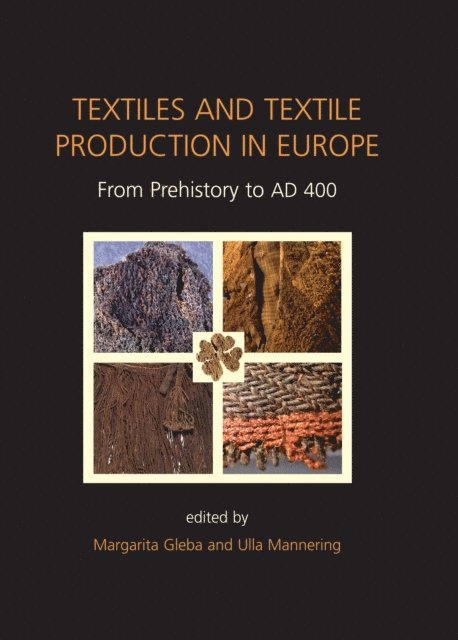
There is evidence that ever since early prehistory, textiles have always had more than simply a utilitarian function. Textiles express who we are - our gender, age, family affiliation, occupation, religion, ethnicity and social, political, economic and legal status. Besides expressing our identity, textiles protect us from the harsh conditions of the environment, whether as clothes or shelter. We use them at birth for swaddling, in illness as bandages and at death as shrouds. We use them to carry and contain people and things. We use them for subsistence to catch fish and animals and for transport as sails. In fact, textiles represent one of the earliest human craft technologies and they have always been a fundamental part of subsistence, economy and exchange. Textiles have an enormous potential in archaeological research to inform us of social, chronological and cultural aspects of ancient societies. In archaeology, the study of textiles is often relegated to the marginalised zone of specialist and specialised subject and lack of dialogue between textile researchers and scholars in other fields means that as a resource, textiles are not used to their full potential or integrated into the overall interpretation of a particular site or broader aspects of human activity. Textiles and Textile Production in Europe is a major new survey that aims to redress this. Twenty-three chapters collect and systematise essential information on textiles and textile production from sixteen European countries, resulting in an up-to-date and detailed sourcebook and an easily accessible overview of the development of European textile technology and economy from prehistory to AD 400. All chapters have an introduction, give the chronological and cultural background and an overview of the material in question organised chronologically and thematically. The sources of information used by the authors are primarily textiles and textile tools recovered from archaeological contexts. In addition, other evidence for the study of ancient textile production, ranging from iconography to written sources to palaeobotanical and archaeozoological remains are included. The introduction gives a summary on textile preservation, analytical techniques and production sequence that provides a background for the terminology and issues discussed in the various chapters. Extensively illustrated, with over 200 colour illustrations, maps, chronologies and index, this will be an essential sourcebook not just for textile researchers but also the wider archaeological community.
354 kr
Läs direkt efter köp
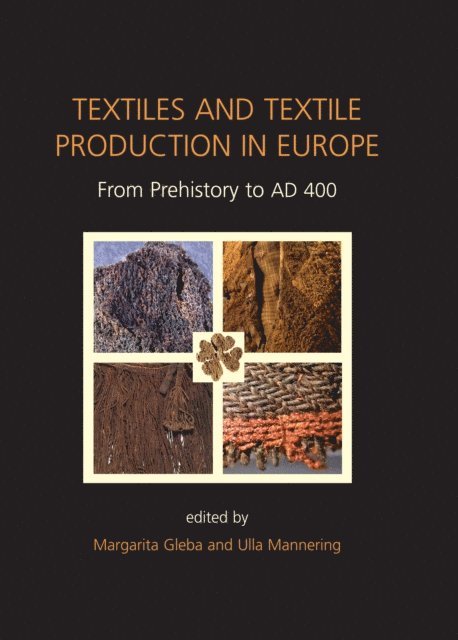
There is evidence that ever since early prehistory, textiles have always had more than simply a utilitarian function. Textiles express who we are - our gender, age, family affiliation, occupation, religion, ethnicity and social, political, economic and legal status. Besides expressing our identity, textiles protect us from the harsh conditions of the environment, whether as clothes or shelter. We use them at birth for swaddling, in illness as bandages and at death as shrouds. We use them to carry and contain people and things. We use them for subsistence to catch fish and animals and for transport as sails. In fact, textiles represent one of the earliest human craft technologies and they have always been a fundamental part of subsistence, economy and exchange. Textiles have an enormous potential in archaeological research to inform us of social, chronological and cultural aspects of ancient societies. In archaeology, the study of textiles is often relegated to the marginalised zone of specialist and specialised subject and lack of dialogue between textile researchers and scholars in other fields means that as a resource, textiles are not used to their full potential or integrated into the overall interpretation of a particular site or broader aspects of human activity. Textiles and Textile Production in Europe is a major new survey that aims to redress this. Twenty-three chapters collect and systematise essential information on textiles and textile production from sixteen European countries, resulting in an up-to-date and detailed sourcebook and an easily accessible overview of the development of European textile technology and economy from prehistory to AD 400. All chapters have an introduction, give the chronological and cultural background and an overview of the material in question organised chronologically and thematically. The sources of information used by the authors are primarily textiles and textile tools recovered from archaeological contexts. In addition, other evidence for the study of ancient textile production, ranging from iconography to written sources to palaeobotanical and archaeozoological remains are included. The introduction gives a summary on textile preservation, analytical techniques and production sequence that provides a background for the terminology and issues discussed in the various chapters. Extensively illustrated, with over 200 colour illustrations, maps, chronologies and index, this will be an essential sourcebook not just for textile researchers but also the wider archaeological community.
Del 103 - Jutland Archaeological Society Publications
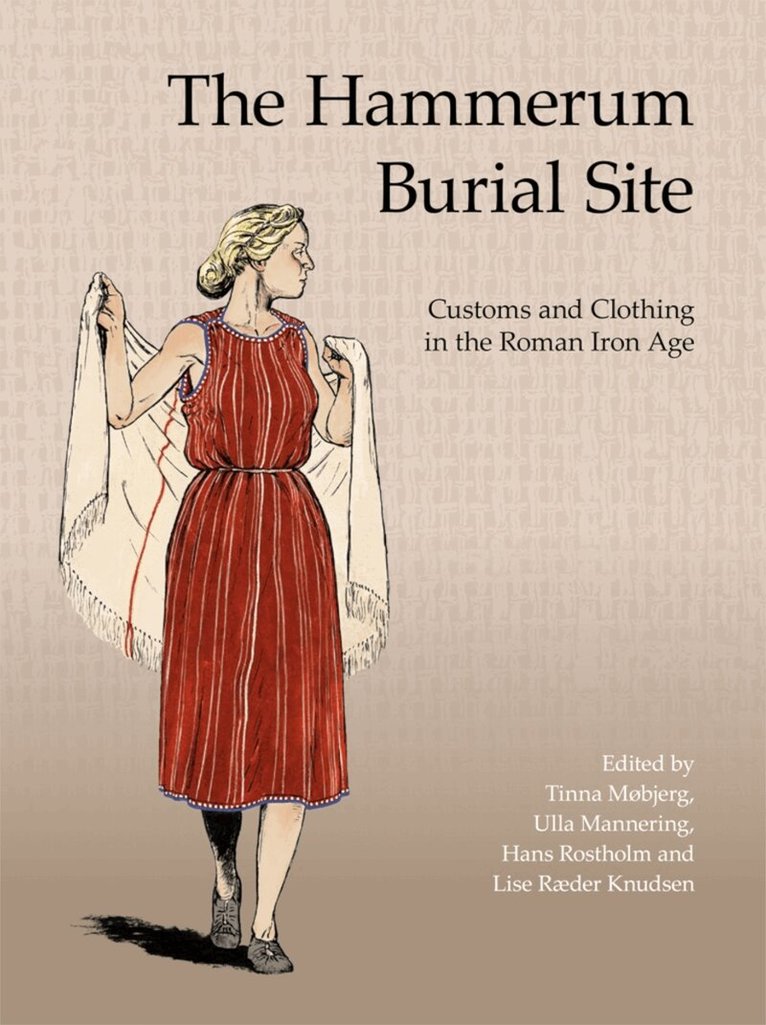
Hammerum Burial Site
Customs and Clothing in the Roman Iron Age
Inbunden, Engelska, 2019
413 kr
Skickas inom 5-8 vardagar
The book: The Hammerum Burial Site is the story of a burial site told by more than 20 academics; a fascinating combination of different archaeological and scientific studies analyzing individuals, objects and context from different angles. The site was named after the small modern-day town of Hammerum, 5 km east of Herning in the central part of Jutland, Denmark. As early as 1993 the museum investigated this burial site, where seven inhumation graves emerged within a small area, most of which turned out to be empty of finds. Three of the graves did turn out, however, to contain well preserved organic material, so they were removed as block samples in large wooden crates with a view to later excavation. Thanks to a grant in 2009 from the Danish Cultural Agency's special pool for the conservation of objects of unique national importance (the ENB pool) a collaboration between the museum, the Danish National Research Foundation Centre for Textile Research and the Conservation Centre in Vejle began. These analyses show that grave 83 – known as the Hammerum girls grave – was a sensation. All that remain of the deceased was her hair and her dress, but it was the best-preserved Danish Iron Age textile from an inhumation grave. Therefore, it offers an unique opportunity to analyse an object which in most cases has disappeared. The analysis tells us an extraordinarily nuanced archaeological story of daily life and of pan-European 'slow fashion': a dress used in everyday life, produced by carefully choosing fine fibres which, together with the coiffure refers to a style recognizable throughout Europe and worn by a mobile, well-groomed, well-connected Iron Age female. Moreover, the preserved organic material permits us a rare glimpse of the grief of the bereaved. We can see how they carefully wrapped the Hammerum Girl in skin and put blueberry twigs under her head before laying her to rest – an act of compassion and mourning.
Häftad, Engelska, 2015
515 kr
Tillfälligt slut
The NESAT symposium has grown from the first meeting in 1981 which was attended by 23 scholars, to over 100 at the tenth meeting that took place in Copenhagen in 2008, with virtually all areas of Europe represented. The 50 papers from the conference presented here show the vibrance of the study of archaeological textiles today. Examples studied come from the Bronze Age, Neolithic, the Iron Age, Roman, Viking, the Middle Ages and post-Medieval, and from a wide range of countries including Norway, Czech Republic, Poland, Greece, Germany, Lithuania, Estonia and the Netherlands. Modern techniques of analysis and examination are also discussed.