Umberto Grassi - Böcker
Visar alla böcker från författaren Umberto Grassi. Handla med fri frakt och snabb leverans.
3 produkter
3 produkter
Del 36 - I Tatti Studies in Italian Renaissance History
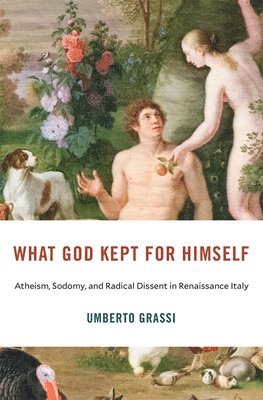
What God Kept for Himself
Atheism, Sodomy, and Radical Dissent in Renaissance Italy
Inbunden, Engelska, 2026
284 kr
Skickas inom 7-10 vardagar
A revelatory account of sexual nonconformity and radical religious dissent in Renaissance Italy, drawing on never-before-studied Inquisition trials.Between the sixteenth and eighteenth centuries, a series of highly controversial Inquisition trials took place throughout the Italian peninsula. The defendants were all accused of the same heresy: claiming that Adam and Eve’s original sin had been committing sodomy, a “celestial” pleasure reserved for God alone. Such claims were not merely subversive sexual innuendo. Rather, they were the most radical expressions of a much broader critique—one that not only targeted repressive sexual taboos but also denounced the corruption of the Church, questioned the authority of the pope, and suggested that organized religion itself was a hoax designed to maintain elite power.As Umberto Grassi shows, these dissenters’ beliefs about sexual freedom came to play a crucial role in the development of skeptical and atheistic positions. Many of the accused argued that, by violating God’s exclusive right to engage in sodomy, Adam and Eve dared to make themselves like gods. This view, which led to charges of atheism, radicalized a more widely held belief that the ruling classes banned sodomy to prevent the masses from enjoying it. In turn, such heresies fueled indictments of Christian morality as an all-too-human invention, whose purpose was to reinforce a social order in which the ruling classes controlled both sexuality and religious truth.Tracing a radical tradition of thought on trial, What God Kept for Himself establishes the firm relationship between sexual nonconformity and religious dissent in the early modern Mediterranean world.
2 113 kr
Skickas inom 10-15 vardagar
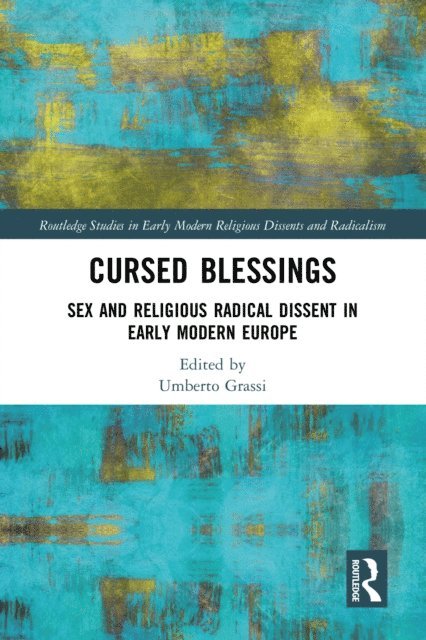
Cursed Blessings explores the relationship between sexual nonconformity and religious radical dissent in the early modern Western European world. While many studies have been devoted to the process of the "hereticalization" of nonnormative sexual practices and its use in anti-heretical propaganda, this book is entirely devoted to understanding the meaning of unconventional sexual behaviors from the perspective of the dissenters.Divided into three parts, the first focuses on the Italian peninsula and explores alternative views on sexuality inspired by Renaissance currents of anti-clericalism, ancient Christian heresies, traditions of apocrypha of the New Testament, and Rabbinic literature. It also examines how embodied and gendered experiences influenced the dissenting views of religious women. The second part explores how reflections on Original Sin led to the questioning of Christian assumptions regarding sex and gender, highlighting the relationship between the criticism of sexual morality and disputes on free will, spirituality, and redemption. The third part examines how most of these threads were entwined into a more coherent philosophical framework in the writings of seventeenth- and eighteenth-century erudite libertines.This book is designed for academic readers, including graduate and undergraduate students. Given its intersectional approach, it will be of interest to researchers, teachers, and students in a wide array of fields, including religious, gender, and sexuality studies, as well as literature. This book also tackles issues that are relevant to present-day debates, such as the problematic relations between sexuality and religion and the ongoing polemics surrounding the complicated interactions between religion and politics.
675 kr
Kommande
Cursed Blessings explores the relationship between sexual nonconformity and religious radical dissent in the early modern Western European world. While many studies have been devoted to the process of the "hereticalization" of nonnormative sexual practices and its use in anti-heretical propaganda, this book is entirely devoted to understanding the meaning of unconventional sexual behaviors from the perspective of the dissenters.Divided into three parts, the first focuses on the Italian peninsula and explores alternative views on sexuality inspired by Renaissance currents of anti-clericalism, ancient Christian heresies, traditions of apocrypha of the New Testament, and Rabbinic literature. It also examines how embodied and gendered experiences influenced the dissenting views of religious women. The second part explores how reflections on Original Sin led to the questioning of Christian assumptions regarding sex and gender, highlighting the relationship between the criticism of sexual morality and disputes on free will, spirituality, and redemption. The third part examines how most of these threads were entwined into a more coherent philosophical framework in the writings of seventeenth- and eighteenth-century erudite libertines.This book is designed for academic readers, including graduate and undergraduate students. Given its intersectional approach, it will be of interest to researchers, teachers, and students in a wide array of fields, including religious, gender, and sexuality studies, as well as literature. This book also tackles issues that are relevant to present-day debates, such as the problematic relations between sexuality and religion and the ongoing polemics surrounding the complicated interactions between religion and politics.