Umme Al-wazedi - Böcker
Visar alla böcker från författaren Umme Al-wazedi. Handla med fri frakt och snabb leverans.
4 produkter
4 produkter
815 kr
Skickas inom 10-15 vardagar
Extending current scholarship on South Asian Urban and Literary Studies, this volume examines the role of the discontents of the South Asian city. The collection investigates how South Asian literature and literature about South Asia attends to urban margins, regardless of whether the definition of margin is spatial, psychological, gendered, or sociopolitical. That cities are a site of profound paradoxes is nowhere clearer than in South Asia, where urban areas simultaneously represent both the frontiers of globalization as well as the deeply troubling social and political inequalities of the global south. Additionally, because South Asian cities are defined by the palimpsestic confluence of, among other things, colonial oppression, anticolonial nationalism, postcolonial governance, and twenty-first century transnational capital, they are sites where the many faces of empowerment and disempowerment are elaborated. The volume brings together essays that emphasize myriad critical approaches—geospatial, urban-theoretical, diasporic, subaltern, and others. United in their critical empathy for urban outcasts, the chapters respond to central questions such as: What is the relationship between the politico-economic narratives of globally emerging South Asian cities and the dispossessed? How do South Asian cities stand in relationship to the nation and, conversely, how might South Asians in diaspora construct these cities within larger narratives of development, globalization, or as sources of authentic ethnic identities? How is the very skeleton—the space, the territory—of South Asian cities marked with and by exclusionary politics? How do the aesthetic and formal choices undertaken by writers determine the potential for and limit to emancipation of urban outcasts from their oppressive circumstances? Considering fiction, nonfiction, comics, and genre fiction from India, Pakistan, Bangladesh, and Sri Lanka; literature from the twentieth and the twenty-first century; and w
465 kr
Skickas inom 7-10 vardagar
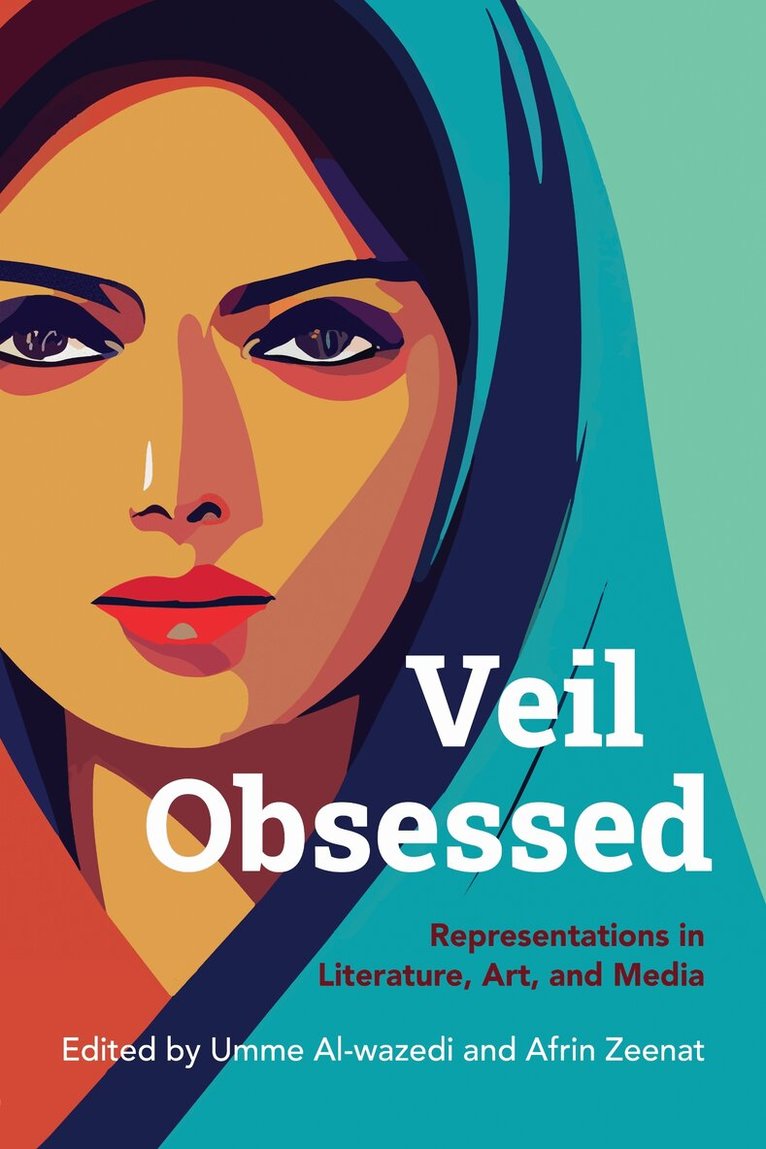
Discussions surrounding the veil often run along essentialist and ahistorical lines, associating Islam with oppression, shame, and honor. Contributing to these stereotypes, the media in both the East and the West obsessively condemn or valorize practices of veiling. In Veil Obsessed, Umme Al-wazedi and Afrin Zeenat complicate and challenge the dialogue around the veil, exploring its symbolic, religious, and cultural significance. Scholars from a variety of fields analyze and critique use of the veil in literature, film, television, and the fine arts.Considering the multiple perceptions of the veil, this volume shows that the meaning of hijab can be natural or constructed, real or metaphorical, and religious or political, when it is presented through the media, in the teachings of Islam, and in upholding it as a national symbol of a nation-state. There are inherent tensions among the ideas concerning the power of hijab. Does wearing it give agency to women or does it represent oppression, thereby creating and perpetuating stereotypes? How an individual sees their relationship with the self, family and community, and the nation-state dictates their choice of whether to wear the veil. In exploring the wide range of portrayals, the editors pose critical questions about perceptions of the veil and the dangers of ignoring its multiplicity.
910 kr
Skickas inom 10-15 vardagar
Discussions surrounding the veil often run along essentialist and ahistorical lines, associating Islam with oppression, shame, and honor. Contributing to these stereotypes, the media in both the East and the West obsessively condemn or valorize practices of veiling. In Veil Obsessed, Umme Al-wazedi and Afrin Zeenat complicate and challenge the dialogue around the veil, exploring its symbolic, religious, and cultural significance. Scholars from a variety of fields analyze and critique use of the veil in literature, film, television, and the fine arts.Considering the multiple perceptions of the veil, this volume shows that the meaning of hijab can be natural or constructed, real or metaphorical, and religious or political, when it is presented through the media, in the teachings of Islam, and in upholding it as a national symbol of a nation-state. There are inherent tensions among the ideas concerning the power of hijab. Does wearing it give agency to women or does it represent oppression, thereby creating and perpetuating stereotypes? How an individual sees their relationship with the self, family and community, and the nation-state dictates their choice of whether to wear the veil. In exploring the wide range of portrayals, the editors pose critical questions about perceptions of the veil and the dangers of ignoring its multiplicity.
2 725 kr
Skickas inom 10-15 vardagar
Extending current scholarship on South Asian Urban and Literary Studies, this volume examines the role of the discontents of the South Asian city. The collection investigates how South Asian literature and literature about South Asia attends to urban margins, regardless of whether the definition of margin is spatial, psychological, gendered, or sociopolitical. That cities are a site of profound paradoxes is nowhere clearer than in South Asia, where urban areas simultaneously represent both the frontiers of globalization as well as the deeply troubling social and political inequalities of the global south. Additionally, because South Asian cities are defined by the palimpsestic confluence of, among other things, colonial oppression, anticolonial nationalism, postcolonial governance, and twenty-first century transnational capital, they are sites where the many faces of empowerment and disempowerment are elaborated. The volume brings together essays that emphasize myriad critical approaches—geospatial, urban-theoretical, diasporic, subaltern, and others. United in their critical empathy for urban outcasts, the chapters respond to central questions such as: What is the relationship between the politico-economic narratives of globally emerging South Asian cities and the dispossessed? How do South Asian cities stand in relationship to the nation and, conversely, how might South Asians in diaspora construct these cities within larger narratives of development, globalization, or as sources of authentic ethnic identities? How is the very skeleton—the space, the territory—of South Asian cities marked with and by exclusionary politics? How do the aesthetic and formal choices undertaken by writers determine the potential for and limit to emancipation of urban outcasts from their oppressive circumstances? Considering fiction, nonfiction, comics, and genre fiction from India, Pakistan, Bangladesh, and Sri Lanka; literature from the twentieth and the twenty-first century; and works that are Anglophone and those that are in translation, this book will be valuable to a range of disciplines.