U.R. Christensen - Böcker
Visar alla böcker från författaren U.R. Christensen. Handla med fri frakt och snabb leverans.
6 produkter
6 produkter
2 100 kr
Skickas inom 10-15 vardagar
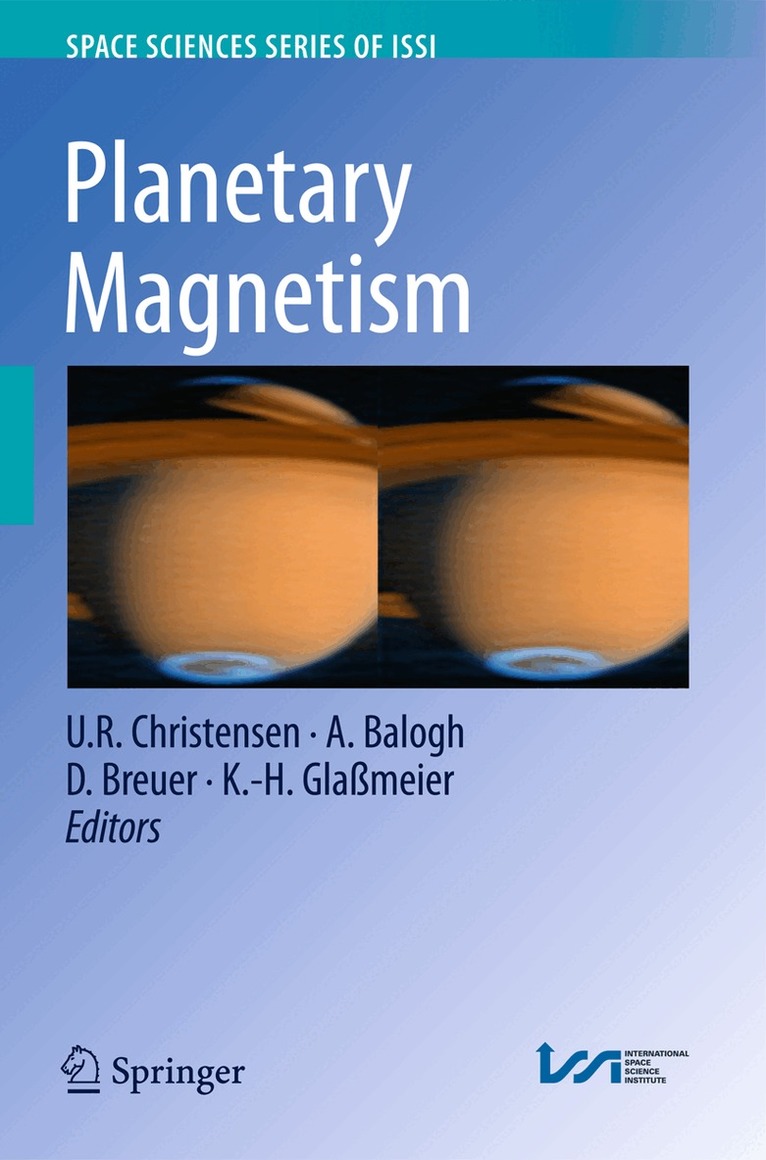
The articles in this volume cover, for the first time, all aspects of planetary magnetism, from the observations made by space missions to their interpretation in terms of the properties of all the planets in the solar system. Studies of dynamo-generated magnetic fields in Mercury, the Earth, the giant planets, as well as in Ganymede, one of Jupiter’s moons, are presented. Crustal magnetic field in Mars, the Mon and the Earth are described as well as magnetic fields induced in the solar system bodies. There are several articles dealing with dynamo theory and modelling and applications to the different planets.
1 577 kr
Skickas inom 10-15 vardagar
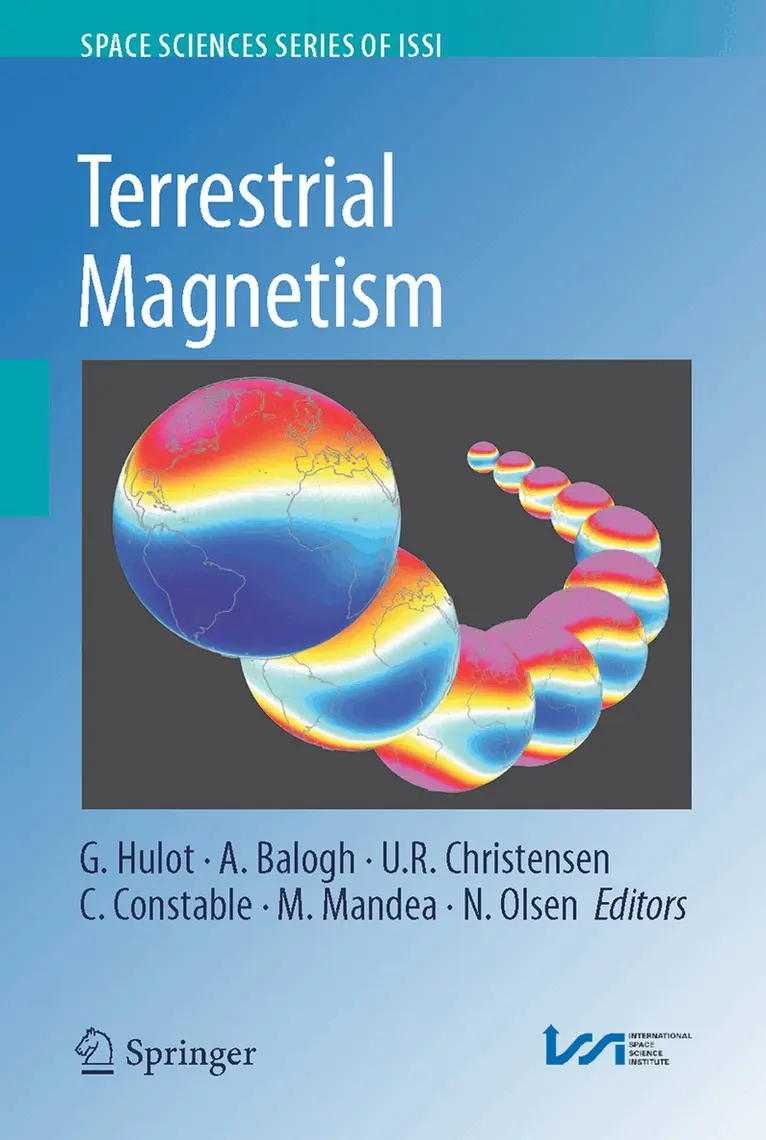
The articles in this volume provide a detailed review of all aspects of the main magnetic field of the Earth produced within the Earth’s core: its past history, its long and short term changes, the way it is generated. The book contains the combined knowledge of geomagnetism coming from paleomagnetic and archeomagnetic data, centuries of terrestrial observations and from the past few decades of intensive space observations. There is considerable emphasis on the phenomenology and the physical processes of the evolution of the geomagnetic field on different timescales. The book reports fully on our understanding of the present state of the magnetic field and its expected evolution in the future.
2 100 kr
Skickas inom 10-15 vardagar
The articles in this volume cover, for the first time, all aspects of planetary magnetism, from the observations made by space missions to their interpretation in terms of the properties of all the planets in the solar system. Studies of dynamo-generated magnetic fields in Mercury, the Earth, the giant planets, as well as in Ganymede, one of Jupiter’s moons, are presented. Crustal magnetic field in Mars, the Mon and the Earth are described as well as magnetic fields induced in the solar system bodies. There are several articles dealing with dynamo theory and modelling and applications to the different planets.
1 577 kr
Skickas inom 10-15 vardagar
The articles in this volume provide a detailed review of all aspects of the main magnetic field of the Earth produced within the Earth’s core: its past history, its long and short term changes, the way it is generated. The book contains the combined knowledge of geomagnetism coming from paleomagnetic and archeomagnetic data, centuries of terrestrial observations and from the past few decades of intensive space observations. There is considerable emphasis on the phenomenology and the physical processes of the evolution of the geomagnetic field on different timescales. The book reports fully on our understanding of the present state of the magnetic field and its expected evolution in the future.
2 100 kr
Skickas inom 10-15 vardagar
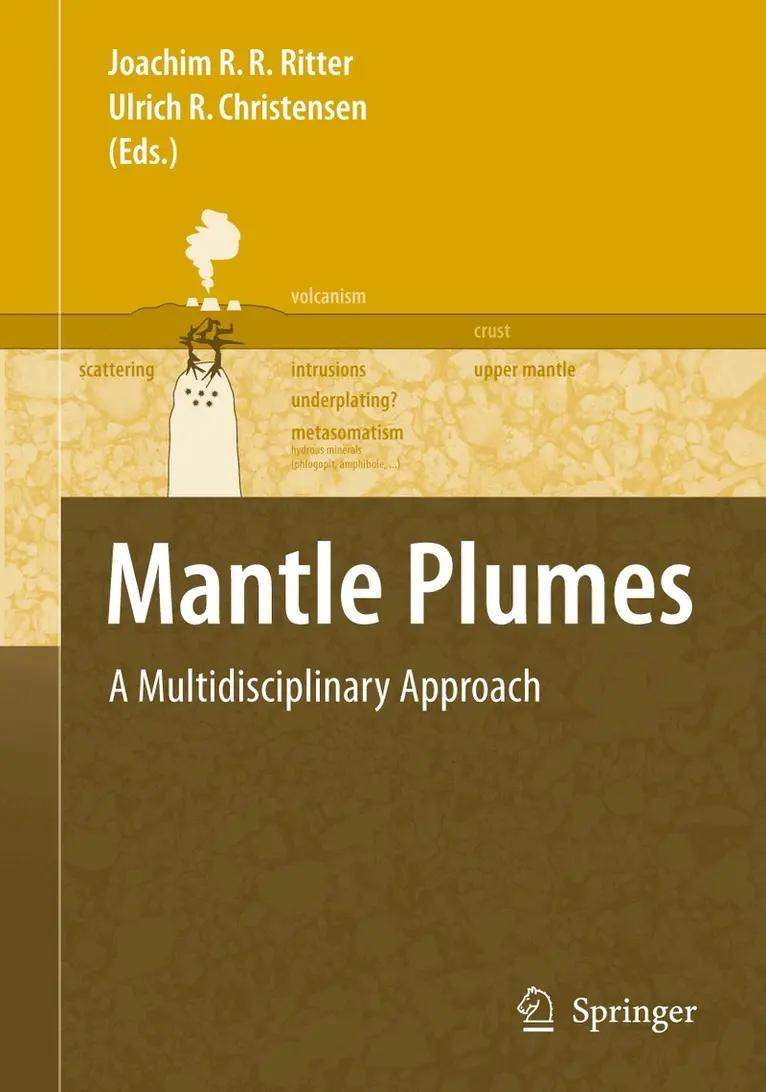
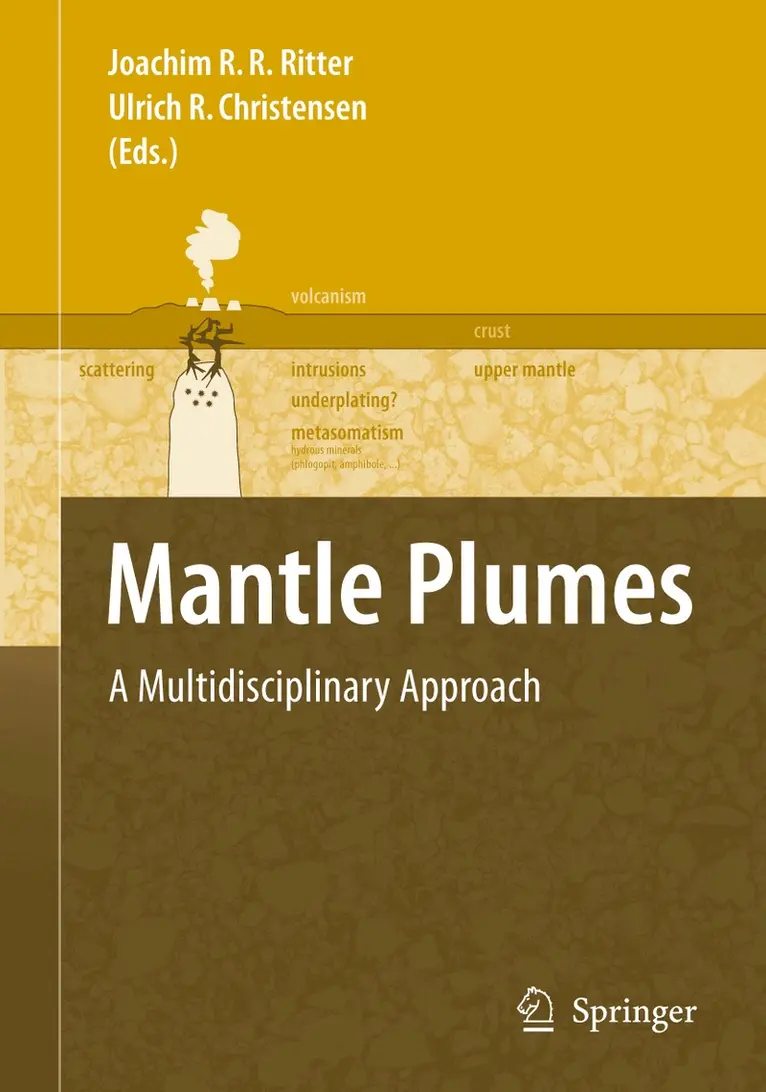
The concept of mantle plumes, originally suggested by Morgan (1971), is widely but not unequivocally accepted as the cause for hotspot volcanism. Plumes are thought of as deep-rooted, approximately cylindrical regions of hot rising mantle rock with a typical diameter of 100-200 km. Pressure-release melting near the b- tom of the lithosphere produces magmas that rise to the surface and lead, when the plate moves relative to the plume, to a chain of volcanic edifices whose age p- gresses with increasing distance from the plume. For a long time, the evidence for mantle plumes has been largely circumstantial. Laboratory and computer models of mantle convection show that under certain conditions plume-like structures can be found, and these simulations have been used to characterise their properties. Geodetic signals, such as topographic swells and associated geoid anomalies which surround the volcanic hotspots, support the plume hypothesis. They are best identified in an oceanic environment where the plume signal is usually less s- ceptible to be masked by effects of crustal or lithospheric heterogeneities. The i- topic and trace element composition of hotspot lavas differs from those of m- oceanic ridge basalts which is interpreted as indication for a source reservoir d- ferent from average upper mantle rock. The idea of mantle plumes has gained widespread popularity in various disciplines of Earth science and has been used, sometimes perhaps excessively, to explain volcanic and other phenomena.
2 100 kr
Skickas inom 10-15 vardagar
The concept of mantle plumes, originally suggested by Morgan (1971), is widely but not unequivocally accepted as the cause for hotspot volcanism. Plumes are thought of as deep-rooted, approximately cylindrical regions of hot rising mantle rock with a typical diameter of 100-200 km. Pressure-release melting near the b- tom of the lithosphere produces magmas that rise to the surface and lead, when the plate moves relative to the plume, to a chain of volcanic edifices whose age p- gresses with increasing distance from the plume. For a long time, the evidence for mantle plumes has been largely circumstantial. Laboratory and computer models of mantle convection show that under certain conditions plume-like structures can be found, and these simulations have been used to characterise their properties. Geodetic signals, such as topographic swells and associated geoid anomalies which surround the volcanic hotspots, support the plume hypothesis. They are best identified in an oceanic environment where the plume signal is usually less s- ceptible to be masked by effects of crustal or lithospheric heterogeneities. The i- topic and trace element composition of hotspot lavas differs from those of m- oceanic ridge basalts which is interpreted as indication for a source reservoir d- ferent from average upper mantle rock. The idea of mantle plumes has gained widespread popularity in various disciplines of Earth science and has been used, sometimes perhaps excessively, to explain volcanic and other phenomena.