Urmi Engineer Willoughby - Böcker
Visar alla böcker från författaren Urmi Engineer Willoughby. Handla med fri frakt och snabb leverans.
7 produkter
7 produkter
496 kr
Skickas inom 7-10 vardagar
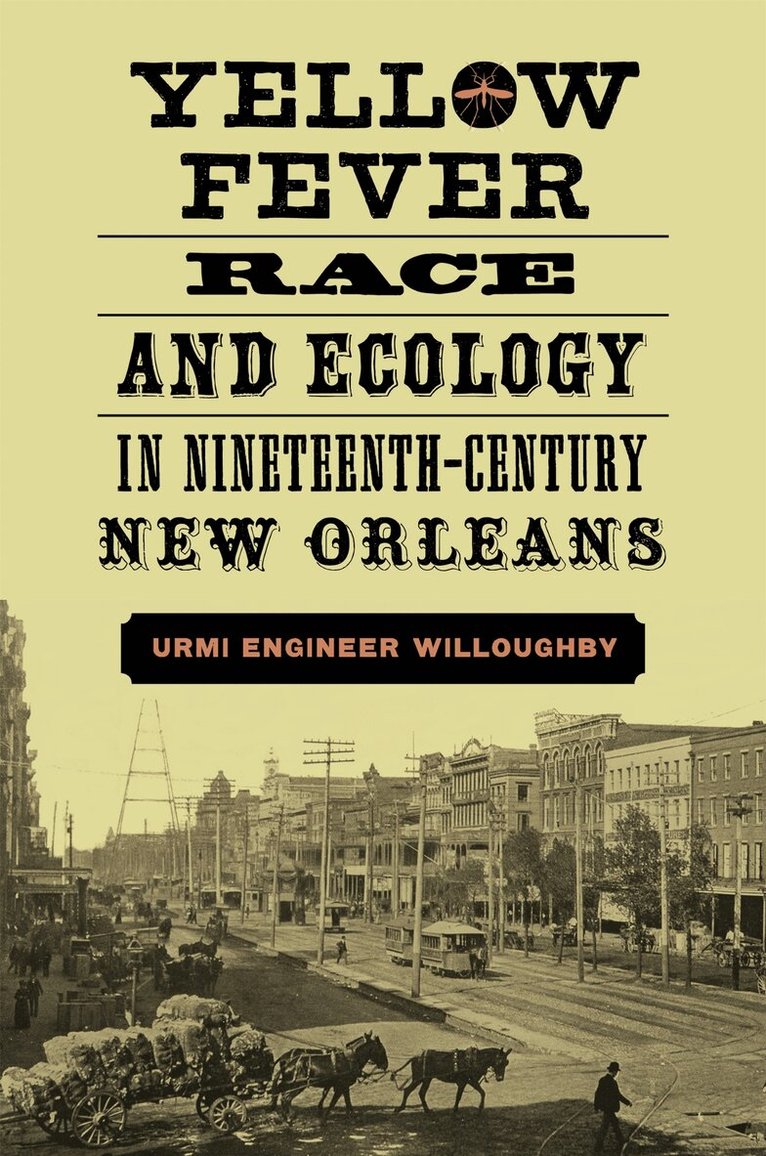
Through the innovative perspective of environment and culture, Urmi Engineer Willoughby examines yellow fever in New Orleans from 1796 to 1905. Linking local epidemics to the city's place in the Atlantic world, Yellow Fever, Race, and Ecology in Nineteenth-Century New Orleans analyses how incidences of and responses to the disease grew out of an environment shaped by sugar production, slavery, and urban development.Willoughby argues that transnational processes, including patterns of migration, industrialization, and imperialism, contributed to ecological changes that enabled yellow fever-carrying Aedes aegypti mosquitoes to thrive and transmit the disease in New Orleans, challenging presumptions that yellow fever was primarily transported to the Americas on slave ships. She then traces the origin and spread of medical and popular beliefs about yellow fever immunity, from the early nineteenth-century contention that natives of New Orleans were protected, to the gradual emphasis on race as a determinant of immunity, reflecting social tensions over the abolition of slavery around the world.As the nineteenth century unfolded, ideas of biological differences between the races calcified, even as public health infrastructure expanded, and race continued to play a central role in the diagnosis and prevention of the disease. State and federal governments began to create boards and organisations responsible for preventing new outbreaks and providing care during epidemics, though medical authorities ignored evidence of black victims of yellow fever. Willoughby argues that American imperialist ambitions also contributed to yellow fever eradication and the growth of the field of tropical medicine: U.S. commercial interests in the tropical zones that grew crops like sugar cane, bananas, and coffee engendered cooperation between medical professionals and American military forces in Latin America, which in turn enabled public health campaigns to research and eliminate yellow fever in New Orleans.A signal contribution to the field of disease ecology, Yellow Fever, Race, and Ecology in Nineteenth-Century New Orleans delineates events that shaped the Crescent City's epidemiological history, shedding light on the spread and eradication of yellow fever in the Atlantic World.
482 kr
Skickas inom 7-10 vardagar
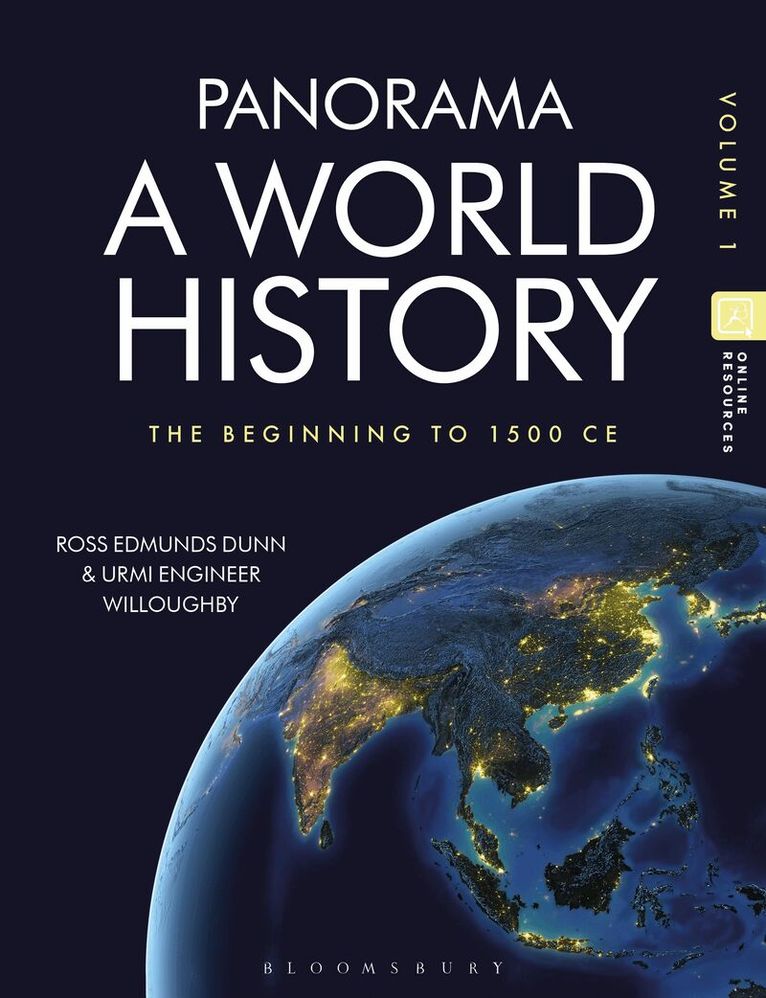
How did Teotihuacán in Mexico become one of the world’s largest cities? Why did Roman soldiers in Britain worship a Persian god? What important roles did women play in the Mongol empire?Panorama explores these questions by following the journey of humankind in a global context, weaving a world-scale narrative with a single chronological thread. It empowers you to connect the regional histories of particular states, empires, and cultural traditions to larger patterns of change on hemispheric and global scales—examining migratory movements, networks of trade, the spread of religions, pandemics, and environmental transformations. Richly illustrated with 120 images and over 50 maps, this new edition is organized into four chronological parts, each covering a defined era in world history. Volume 1 starts with the Paleolithic era and surveys up to the late fifteenth century CE. Each chapter includes dedicated learning features:· “Individuals Matter” presents biographical sketches of individuals, both notable historical figures and ordinary people, whose lives in some way illuminate the chapter’s main developments.· “Weighing the Evidence” asks you to analyse and interpret primary sources, either texts or visual artifacts.· “Thinking about the Past with Global and Comparative Themes” encourages you to examine the threads of change that cut across global space and time. · “Thinking History” questions help consolidate your knowledge, and “Reflecting on the Past” questions invite you to contemplate broader chapter themes. · In-margin definitions of words and phrases help you build key vocabulary.With its unique global narrative, chronological storytelling and exceptional features, Panorama provides a clear framework to analyse and engage with the changes, continuities, and anomalies in our world’s past—and their impact on the present.
1 520 kr
Skickas inom 10-15 vardagar
How did Teotihuacán in Mexico become one of the world’s largest cities? Why did Roman soldiers in Britain worship a Persian god? What important roles did women play in the Mongol empire?Panorama explores these questions by following the journey of humankind in a global context, weaving a world-scale narrative with a single chronological thread. It empowers you to connect the regional histories of particular states, empires, and cultural traditions to larger patterns of change on hemispheric and global scales—examining migratory movements, networks of trade, the spread of religions, pandemics, and environmental transformations. Richly illustrated with 120 images and over 50 maps, this new edition is organized into four chronological parts, each covering a defined era in world history. Volume 1 starts with the Paleolithic era and surveys up to the late fifteenth century CE. Each chapter includes dedicated learning features:· “Individuals Matter” presents biographical sketches of individuals, both notable historical figures and ordinary people, whose lives in some way illuminate the chapter’s main developments.· “Weighing the Evidence” asks you to analyse and interpret primary sources, either texts or visual artifacts.· “Thinking about the Past with Global and Comparative Themes” encourages you to examine the threads of change that cut across global space and time. · “Thinking History” questions help consolidate your knowledge, and “Reflecting on the Past” questions invite you to contemplate broader chapter themes. · In-margin definitions of words and phrases help you build key vocabulary.With its unique global narrative, chronological storytelling and exceptional features, Panorama provides a clear framework to analyse and engage with the changes, continuities, and anomalies in our world’s past—and their impact on the present.
482 kr
Skickas inom 7-10 vardagar
How did the Columbian Exchange transform diets around the world? Why did expanding global trade hurt textile workers in India? In what circumstances did the COVID-19 virus become a global pandemic?Panorama explores these questions by following the journey of humankind in a global context, weaving a world-scale narrative with a single chronological thread. It empowers you to connect the regional histories of particular states, empires, and cultural traditions to larger patterns of change on hemispheric and global scales—examining migratory movements, networks of trade, the spread of religions, pandemics, and environmental transformations. Richly illustrated with 120 images and 48 maps, this new edition is organized into three chronological parts, each covering a defined era in world history. Volume 2 starts in the mid-fifteenth century CE and surveys up to the present day.Each chapter includes dedicated learning features:· “Individuals Matter” presents biographical sketches of individuals, both notable historical figures and ordinary people, whose lives in some way illuminate the chapter’s main developments.· “Weighing the Evidence” asks you to analyse and interpret primary sources, either texts or visual artifacts.· “Thinking about the Past with Global and Comparative Themes” encourages you to examine the threads of change that cut across global space and time. · “Thinking History” questions help consolidate your knowledge, and “Reflecting on the Past” questions invite you to contemplate broader chapter themes. · In-margin definitions of words and phrases help you build key vocabulary.With its unique global narrative, chronological storytelling and exceptional features, Panorama provides a clear framework to analyse and engage with the changes, continuities, and anomalies in our world’s past—and their impact on the present.
1 520 kr
Skickas inom 10-15 vardagar
How did the Columbian Exchange transform diets around the world? Why did expanding global trade hurt textile workers in India? In what circumstances did the COVID-19 virus become a global pandemic?Panorama explores these questions by following the journey of humankind in a global context, weaving a world-scale narrative with a single chronological thread. It empowers you to connect the regional histories of particular states, empires, and cultural traditions to larger patterns of change on hemispheric and global scales—examining migratory movements, networks of trade, the spread of religions, pandemics, and environmental transformations. Richly illustrated with 120 images and 48 maps, this new edition is organized into three chronological parts, each covering a defined era in world history. Volume 2 starts in the mid-fifteenth century CE and surveys up to the present day.Each chapter includes dedicated learning features:· “Individuals Matter” presents biographical sketches of individuals, both notable historical figures and ordinary people, whose lives in some way illuminate the chapter’s main developments.· “Weighing the Evidence” asks you to analyse and interpret primary sources, either texts or visual artifacts.· “Thinking about the Past with Global and Comparative Themes” encourages you to examine the threads of change that cut across global space and time. · “Thinking History” questions help consolidate your knowledge, and “Reflecting on the Past” questions invite you to contemplate broader chapter themes. · In-margin definitions of words and phrases help you build key vocabulary.With its unique global narrative, chronological storytelling and exceptional features, Panorama provides a clear framework to analyse and engage with the changes, continuities, and anomalies in our world’s past—and their impact on the present.
Primer for Teaching Women, Gender, and Sexuality in World History
Ten Design Principles
Inbunden, Engelska, 2018
1 310 kr
Skickas inom 7-10 vardagar
A Primer for Teaching Women, Gender, and Sexuality in World History is a guide for college and high school teachers who are teaching women, gender, and sexuality in history for the first time, for experienced teachers who want to reinvigorate their courses, for those who are training future teachers to prepare their own syllabi, and for teachers who want to incorporate these issues into their world history classes. Merry E. Wiesner-Hanks and Urmi Engineer Willoughby present possible course topics, themes, concepts, and approaches while offering practical advice on materials and strategies helpful for teaching courses from a global perspective in today's teaching environment for today's students. In their discussions of pedagogy, syllabus organization, fostering students' historical empathy, and connecting students with their community, Wiesner-Hanks and Willoughby draw readers into the process of strategically designing courses that will enable students to analyze gender and sexuality in history, whether their students are new to this process or hold powerful and personal commitments to the issues it raises.
Primer for Teaching Women, Gender, and Sexuality in World History
Ten Design Principles
Häftad, Engelska, 2018
319 kr
Skickas inom 7-10 vardagar
A Primer for Teaching Women, Gender, and Sexuality in World History is a guide for college and high school teachers who are teaching women, gender, and sexuality in history for the first time, for experienced teachers who want to reinvigorate their courses, for those who are training future teachers to prepare their own syllabi, and for teachers who want to incorporate these issues into their world history classes. Merry E. Wiesner-Hanks and Urmi Engineer Willoughby present possible course topics, themes, concepts, and approaches while offering practical advice on materials and strategies helpful for teaching courses from a global perspective in today's teaching environment for today's students. In their discussions of pedagogy, syllabus organization, fostering students' historical empathy, and connecting students with their community, Wiesner-Hanks and Willoughby draw readers into the process of strategically designing courses that will enable students to analyze gender and sexuality in history, whether their students are new to this process or hold powerful and personal commitments to the issues it raises.