Ursula Heinzelmann - Böcker
Visar alla böcker från författaren Ursula Heinzelmann. Handla med fri frakt och snabb leverans.
8 produkter
8 produkter
521 kr
Skickas inom 5-8 vardagar
A sweet tooth is a powerful thing. Babies everywhere seem to smile when tasting sweetness for the first time, a trait inherited, perhaps, from our ancestors who foraged for sweet foods that were generally safer to eat than their bitter counterparts. But the "science of sweet" is only the beginning of a fascinating story, because it is not basic human need or simple biological impulse that prompts us to decorate elaborate wedding cakes, scoop ice cream into a cone, or drop sugar cubes into coffee. These are matters of culture and aesthetics, of history and society, and we might ask many other questions. Why do sweets feature so prominently in children's literature? When was sugar called a spice? And how did chocolate evolve from an ancient drink to a modern candy bar? The Oxford Companion to Sugar and Sweets explores these questions and more through the collective knowledge of 265 expert contributors, from food historians to chemists, restaurateurs to cookbook writers, neuroscientists to pastry chefs. The Companion takes readers around the globe and throughout time, affording glimpses deep into the brain as well as stratospheric flights into the world of sugar-crafted fantasies. More than just a compendium of pastries, candies, ices, preserves, and confections, this reference work reveals how the human proclivity for sweet has brought richness to our language, our art, and, of course, our gastronomy. In nearly 600 entries, beginning with "à la mode" and ending with the Italian trifle known as "zuppa inglese," the Companion traces sugar's journey from a rare luxury to a ubiquitous commodity. In between, readers will learn about numerous sweeteners (as well-known as agave nectar and as obscure as castoreum, or beaver extract), the evolution of the dessert course, the production of chocolate, and the neurological, psychological, and cultural responses to sweetness. The Companion also delves into the darker side of sugar, from its ties to colonialism and slavery to its addictive qualities. Celebrating sugar while acknowledging its complex history, The Oxford Companion to Sugar and Sweets is the definitive guide to one of humankind's greatest sources of pleasure. Like kids in a candy shop, fans of sugar (and aren't we all?) will enjoy perusing the wondrous variety to be found in this volume.
675 kr
Skickas inom 10-15 vardagar
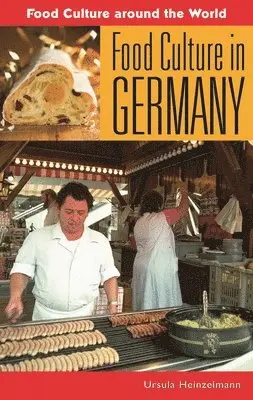
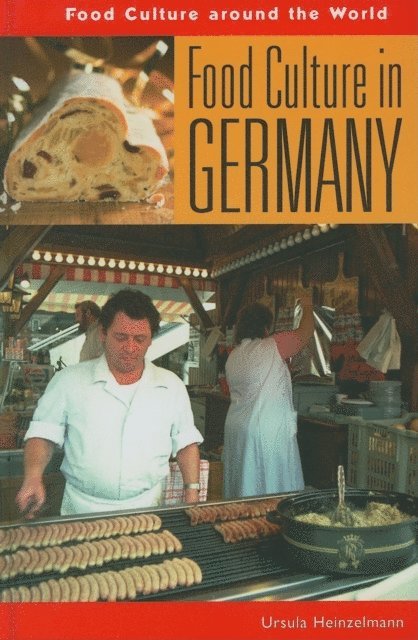
The grown-up Germany of today is able to explore its cultural identity, including its food culture. For some years now, German food has seen a return to regionalism, and beloved traditional dishes have been rediscovered and revived, counteracting to some extent the effects of globalization and industrialization. As well, a host of new culinary traditions brought in with new immigrants makes for an exciting food scene. Food Culture in Germany, written by a native Berliner, is destined to become a classic as the best source in English for a thorough and up-to-date understanding of Germans and their food—the history, foodstuffs, cooking, special occasions, lifestyle eating habits, and diet and health.The Historical Overview chapter takes the reader on a culinary tour from ancient times through the Holy Roman Empire to the Lebensraum of Hitler and on to reunification of the two Germanys until today's return to normalcy. Chapter 2, Major Foods and Ingredients, highlights the classic German staples. Chapter 3, Cooking, discusses the family and gender dynamics plus cooking techniques and utensils, the German kitchen, and the professional chef as media figure phenomenon. The Typical Meals chapter gives an in-depth insider's look at how and what Germans eat today. Chapter 5, Eating Out, describes the wide range of opportunities for eating out, from grabbing Currywurst on the street, to lunching in office and school cafeterias, to meeting friends for coffee and cake at the Konditerei. German holidays and special occasions are elaborated on in the context of more secular and younger influences in Chapter 6. Chapter 7 covers the German diet and the strong interest in health in the country, with its holistic roots. Food safety, a big topic in Europe today, is also discussed at length. An introduction, chronology, glossary, resource guide, selected bibliography, and illustrations complete this outstanding resource.
317 kr
Skickas inom 7-10 vardagar
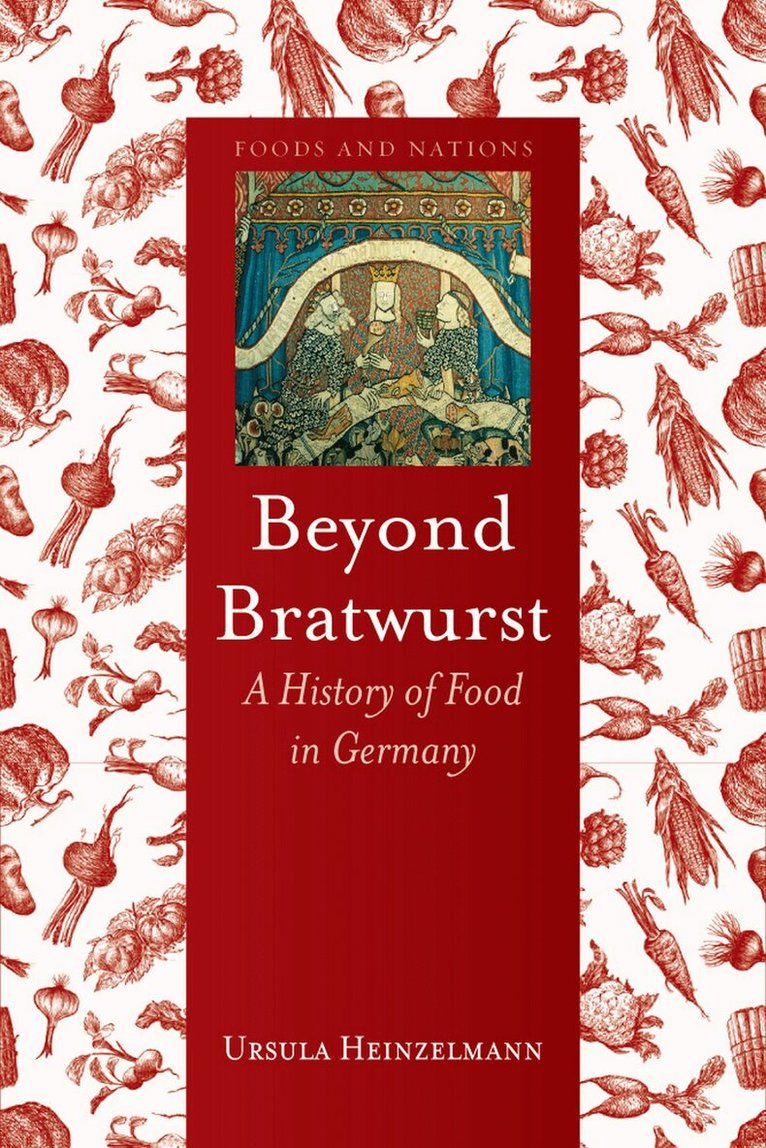
Ask about German food and most people think of beer and sausage, or pretzels and Limburger cheese. However, the 82 million inhabitants of modern-day Germany do not all live exclusively on Oktoberfest fare. In fact, as in most modern countries, Germans have a long tradition of taking outside influences into their cuisine, and there is a wide variety of food eaten within the various regions of the country.Beyond Bratwurst traces the many traditions that have combined to form German food today. From their earliest beginnings, food and cooking in Germany have been marked by geographic and climatic differences between north and south, as well as continuous cultural influences from bordering countries. The book shows that the openness and receptiveness Germans have shown towards these influences have resulted in the frequent reinvention of their cuisine, and a food culture with a remarkable flexibility. The regional variations of today are based as much on political, cultural and socioeconomic history as on geography: the story of German food includes the back-to-the-land movement of the late nineteenth century and the development of modern mass-market products by Justus von Liebig and Dr Oetker, as well as rationing and shortages under the Nazis, post-war hunger and divisions between East and West.Beyond Bratwurst describes who eats what, how, where and when in Germany, telling the stories of many German specialities such as beer, stollen, rye bread and lebkuchen, as well as more surprising German favourites.
253 kr
Skickas inom 3-6 vardagar
319 kr
Skickas inom 3-6 vardagar
224 kr
Skickas inom 3-6 vardagar
248 kr
Skickas inom 3-6 vardagar
729 kr
Skickas inom 7-10 vardagar
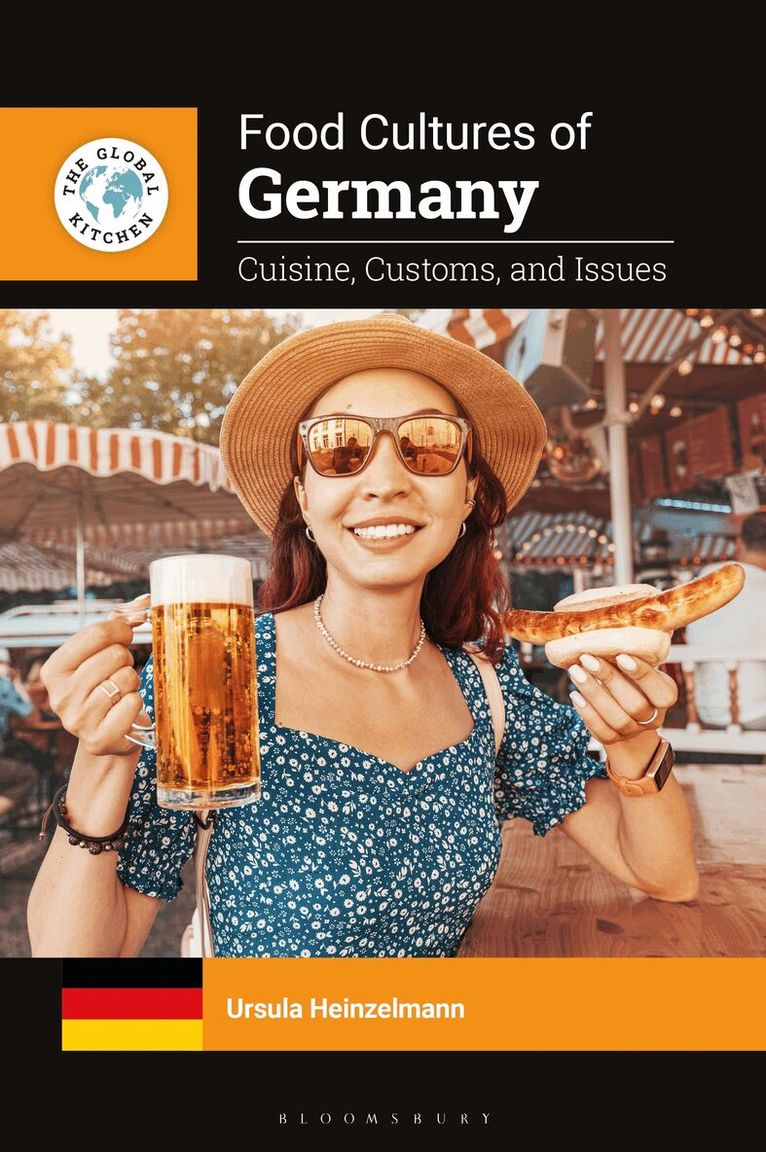
There’s far more to German food than sausages and beer. Discover the history and culture of Germany through its rich culinary traditions.Part of the Global Kitchen series, this book takes readers on a food tour of Germany, covering everything from daily staples to holiday specialties. In addition to discovering Germany’s long culinary history, readers will learn about recent trends, foreign influences, and contemporary food and dietary concerns. Chapters are organized thematically, making it easy to focus in on particular courses or types of dishes. These include influential ingredients, appetizers, main dishes, desserts, and street food, among others. The main text is supplemented by sidebars that offer interesting bite-sized facts, a chronology of important dates in German culinary history, and a glossary of key food- and dining-related terms.